Our Hobbies, Our Metaphors

In every walk with nature, one receives far more than one seeks.” – John Muir

The other day I did a really fun podcast recording with Todd Fulginiti, a musician and former teacher who is also a writer for Wise & Shine. We had a great time talking about trying – what enables and encourages us to try new things, who and what inspires us, what our limits are.

It occurred to me as I listened to this conversation that our hobbies fuel so much of how we see and face the world. For Todd, he gave examples as a musician. And for me as a climber/hiker, so much of my experience in the mountains still helps me face life. So I wrote about it for my Wise & Shine post this week: Climbing Out Of My Gunk

And here’s the link to the podcast in case anyone is interested: On Trying New Things

Miracle or Coincidence?

There are two ways to live your life. One is as though nothing is a miracle. The other is as though everything is a miracle.” – Albert Einstein

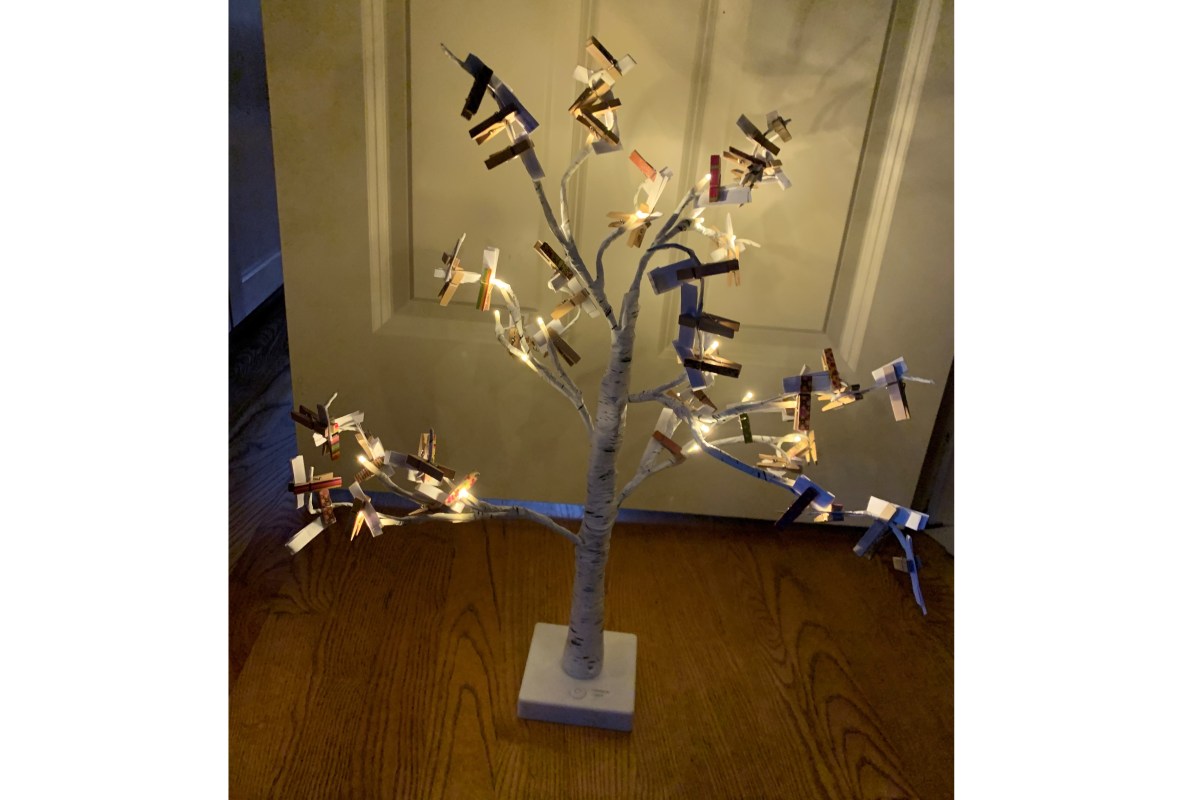
When a friend turned 60 recently, I tried to think of 60 things I could give her that would be relevant, useful and fun. She really didn’t need anything so I created her a little tree with 60 of my favorite quotes.

During the unveiling, my friend and I were looking through the little quotes, taking them down, reading them and then reclipping them. We were rotating the tree so it wasn’t clear which ones we’d already tried and we kept on grabbing one quote, the quote for this post, “There are two ways to live your life. One is as though nothing is a miracle. The other is as though everything is a miracle.” – Albert Einstein

And then just as I was writing a piece about the quote for the Pointless Overthinking blog, Eddie Two Hawks posted that exact quote yesterday.

Coincidence? Or a miracle? It feels as if we are collectively in need of a miracle. Whatever the shade of our belief in God, the Creator, the Universe, optimism, or goodness, we can do the work to develop eyes that see.

I’m better at spotting miracles in the small circumstances of my life but I believe they apply to the bigger view of our world as well. The key is practicing seeing the world that way. Here’s my post about Creating Eyes That See at Pointless Overthinking.

When the Clouds Roll In

One climbs, one sees. One descends, one sees no longer, but one has seen. There is an art in conducting oneself in lower regions by memory of what one has seen higher up. When one can no longer see, one can at least still know.” – Rene Daumal

Twenty-three years ago when I was practicing to get ready for a five-day expedition on Mt. Rainier, my friend Jill and I went up to the mountain to do a day climb up to Camp Muir at 10,200 feet. It’s is a non-technical climb of almost 5,000 vertical feet starting on trails and then trudging up the Muir snowfield which is snowy but not glaciated. On that June morning it was a lovely 4-5 hour hike up with views of the mountain and surrounding peaks to the south. It was early enough in the season that there were a few people on the route but it was comparatively quiet to the really busy high summer season.

When we got to Camp Muir, we sat on a rock outcropping and were eating our sandwiches when we saw the clouds coming in. They started from below and then just rolled up the mountain, thick and gray. Jill had summitted Mt. Rainier the year before, I had attempted it but not summitted so even though we didn’t have a lot of experience, we had heard warnings of how conditions on the mountain could change quickly with dire consequences.

Jill and I started hiking down and very soon were enveloped in the clouds. It was so thick, we couldn’t see the route. If you hike straight down from Camp Muir, you end up off the snowfield and in dangerous glacier territory strewn with crevasses. So Jill and I searched for the wands left by the guiding service. We couldn’t see from one wand to the next one about 150 yards away so we developed a strategy. We’d hike down about 50 yards from one wand until we could just barely see it and I’d stay there while she went down about 50 yards until she could see the next one and then I’d join her and we’d walk together to the next wand. It took us several hours to get down but eventually we reached the paths and got safely to the parking lot.

This hike makes me think of what we do when the clouds roll in. When we can’t see the horizon or any way points and everything looks white, grey or something in between. Do we look for the Divine waypoints marking the route? Do we ask our friends, therapists or other professionals to help us navigate safely through? Or do we keep walking in hope that motion will carry us down?

I think there as many answers to these questions are there are Wisdom traditions and personality types. But life has taught me that there are markers out there, just like the wands in the snowfield, if we bother to look.

The older I get the more I find it easier to stop and ask for Divine guidance. And when I have trouble discerning that, to seek out help from my friends. Whether it’s my ability to be vulnerable, imperfect or just because I know more quickly that I’ve lost perspective, I’m quicker to seek safety. When I’m having trouble finding my way, I have found that talking or writing about it helps me immensely.

The reason I remember this particular hike so well was the day after we returned the news reported that a 27-year-old doctor that had just moved from Georgia for a resident program in Seattle was missing after snowboarding on Mt. Rainier the same day we were climbing. The park rangers were out searching for him but in the days and week to follow there was no luck finding any sign of him.

Then the epilogue to the snowboarder story came for me about 3 years after that climb. The “nice guy” (from The Deep Story post) I dated told me that he had been hiking on Mt. Rainier the summer before with a friend and had gotten lost in the clouds. Knowing they were in dangerous territory, he set up camp and they waited out the night. The next morning rangers found them right on the edge of the Nisqually Glacier. And right around the corner, under a waterfall, was the body of the missing snowboarder who hadn’t been discovered for 2 years.  

While I drew parallels between my hike and life experience in this post, I don’t mean to infer any parallels or judgment on that snowboarder, a promising young man tragically lost too early.

(featured photo is of me and my parents at Camp Muir that same summer)
Dancing with Our Stuff

Wherever I go, I meet myself.” – Tozan

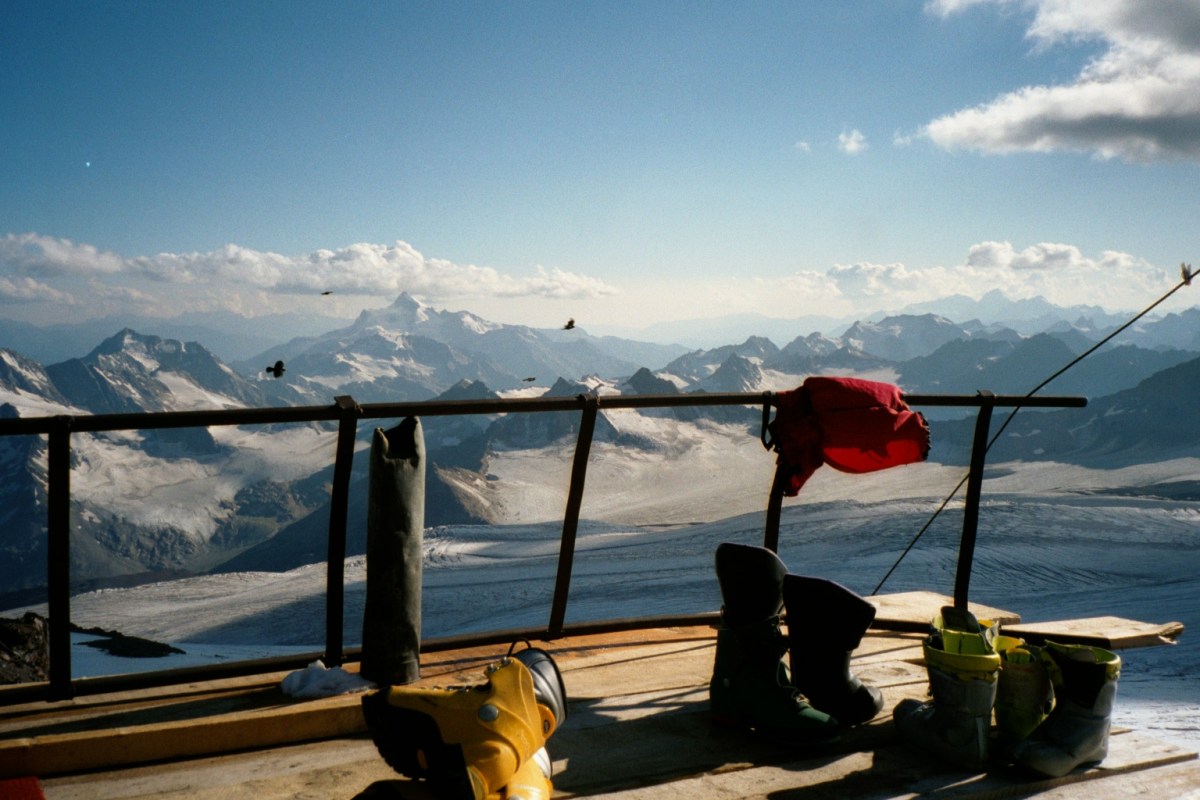
When I was climbing Mt. Elbrus in the Caucasus Mountains in Russia about twenty years ago, the first stage of the ascent was to climb to the hut we stayed at until our summit attempts. At about 13,000 feet, it was a pretty rough shelter with nails that hadn’t been all the way hammered in, porch railings that didn’t go all the way around (see featured photo) and no exterior finish but it afforded us a good place to rest and try to summit the 18,510 feet peak.

The outhouse was just down a little path and set right on the edge of the ridge. That is to say, the hole in the floor opened directly onto a rock field. The placement was interesting and created some aerodynamic challenges. Anything light put down the hole would come right back up again.

This was discovered by the first climber from our group to go in there — a really funny, nice guy from California. He came back to the hut with his cheeks flushed, a little out of breath with a surprised look on his face. He announced, “I just spent 5 minutes dancing with my toilet paper.” At that altitude, any kind of dancing would take your breath away.

This always reminds me that, as the quote at the top of this post says, wherever we go we meet ourselves. Even when we are in the most scenic places, poised to accomplish some personal milestone, we still might have to dance with our toilet paper. If we’ve done our work, that can be more amusing than horrifying.

(featured photo is mine)

Other climbing posts:

Life Lessons

Every day is an opportunity to make a new happy ending.” – unknown

The other evening on a clear night my kids and I were out riding bikes. As I pumped up a hill, my two-year-old son sitting on the back on my bike noticed the moon bright in the sky. He softly said, “I want to hold the moon.”

It’s a good thing parents and lovers aren’t omnipotent. I assume it would result in the moon being pulled out of the sky on a regular basis.

A few days later my 6-year-old daughter was excitedly awaiting a new clock to arrive from Amazon. She was so excited to have the very first clock that she picked out herself and could set the alarms on. I question why she’d want to start with alarms so early in life but keeping my opinion to myself, helped her track the package. On the day it was supposed to arrive, the status went from “out for delivery” to “undeliverable” right before bedtime.

My daughter was so disappointed. Rightly so and exacerbated by being tired. In that moment, I would have driven the Amazon truck myself to make sure there wasn’t a tired six-year-old lamenting about unpredictability.

Sometimes I wonder what I’m teaching my kids. Fortunately life partners with me so that I have plenty of opportunities to talk about what we dream about. I get to review what we can and cannot control. And I can demonstrate how we can to flex our muscles of patience and perspective when things don’t work the way we want.

Gratefully, I have the chance to assure my kids that we might not always get what we want but we always get what we need. And remind myself of the same along the way.

(featured photo from JOOINN)

The Long Good-Bye

The aim of life is to live, and to live means to be aware, joyously, drunkenly, serenely, divinely aware.” – Henry Miller

I was working on my office yesterday half-listening to my daughter and her best friend chattering about the project they were working on when I suddenly felt a wave of grief. This has been happening on and off since I learned that the best friend and her family, our next door neighbors, will be moving in three months. It’s a very sweet sense of “Wow, I’m going to miss this.”

And then I want to turn it off knowing that it will last for 3 months. That seems like a very long good-bye.

In his book, Predictably Irrational, behavioral economist Dan Ariely talks of his experience when he was a teenager spending months in an Israeli burn ward getting treatment. The hardest part was when the nurses had to change his bandages and they’d work quickly to remove them. They were operating from the reasoning that it would hurt him less if they ripped off the bandages faster.

After he recovered, he actually studied the adage about ripping off the bandage – it turns out that it doesn’t hurt less for the patient (I believe he found that it was the same for the patient either way) but it is easier on the nurse because they don’t have to witness the patient be in agony for as long.

Which tells me what I already intuitively know – that it’s hard to stay open to pain. But the alternative of ripping off the band-aid faster, in the case of my daughter’s friend moving, would be to close ourselves off to the sweet litany of “lasts” that we’ll be able to do.

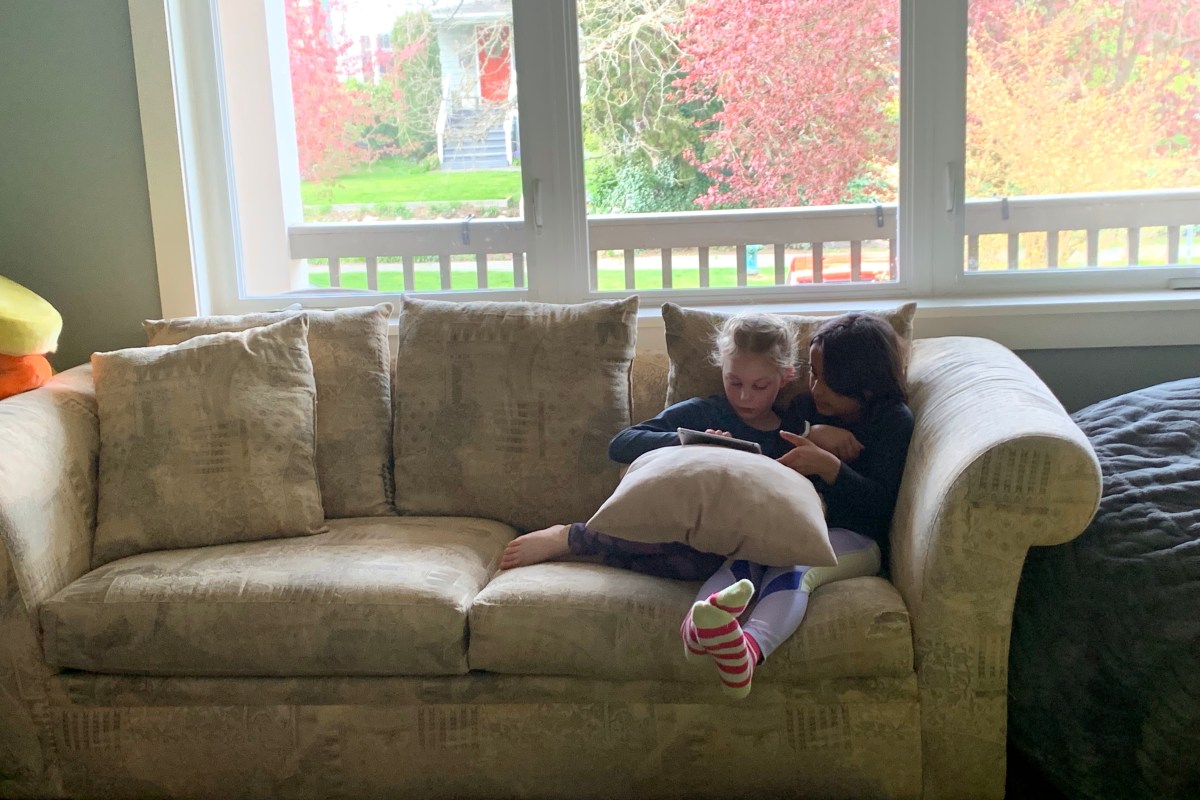
Instead I snapped a picture (the featured photo) of the two girls sitting as they usually do, practically on top of each other, taking up about one foot of a seven foot couch. We won’t always have the luxury of being so near so I’m working on celebrating every inch of it.

The people that I haven’t had the opportunity to say goodbye to, like my dad who passed suddenly in a bike accident, have left me with an appreciation for the bittersweet good-bye, even though it is so hard to do well.

What about you – do you rip the band-aid, real or metaphorical, off slowly or quickly?

In The Middle

The longer I live, the more beautiful life becomes.” – Frank Lloyd Wright

A little while ago my 6-year-old daughter went to a friend’s house to watch a movie. When she came home that night and for the couple weeks afterwards, she was so much more solicitous of me. “Mom, do you want a glass of water?” or “I’m sorry you banged your hand.” So I dug deeper into the storyline of the Netflix family movie Over the Moon. Not surprisingly, it’s about a little girl whose mom died from cancer.

I don’t want my kids operating from a space of worry about me. But I was fascinated about the noticeable change of behavior. It suggested how much our awareness is influenced by our focus.

So I was listening carefully when I heard author Susan Cain describe the research of Dr. Laura Carstensen on Brené Brown’s Unlocking Us podcast. Dr. Carstensen is a professor of psychology at Stanford specializing in the psychology of older people. Here’s Susan Cain’s description of the research:

“[The] elderly tend to be happier and more full of gratitude, more invested in depth relationships, more prone to states of well-being. She has linked all of that with the fact… not as we might think that we get older and have acquired all this wisdom from the years we’ve lived. It has nothing to do with that, it only has to do with the fact that when you are older you have a sense of life’s fragility. You know it’s coming to an end.

“Younger people who for other reasons are in fragile situations [also exhibit this]. She studied students in Hong Kong who were worried about Chinese rule at the end of the 20th century. They have the exact same psychological profile as older people did. Because the constant was the fragility.”

Susan Cain describing the research of Dr. Laura Carstensen

Since at 52-years-old I’m closer to the middle of my life (hopefully) rather than the end, it begs the question of how to cultivate an appreciation for relationships, health and the good times. Especially to enjoy them without the sense of fragility that I understand but don’t quite viscerally get yet.

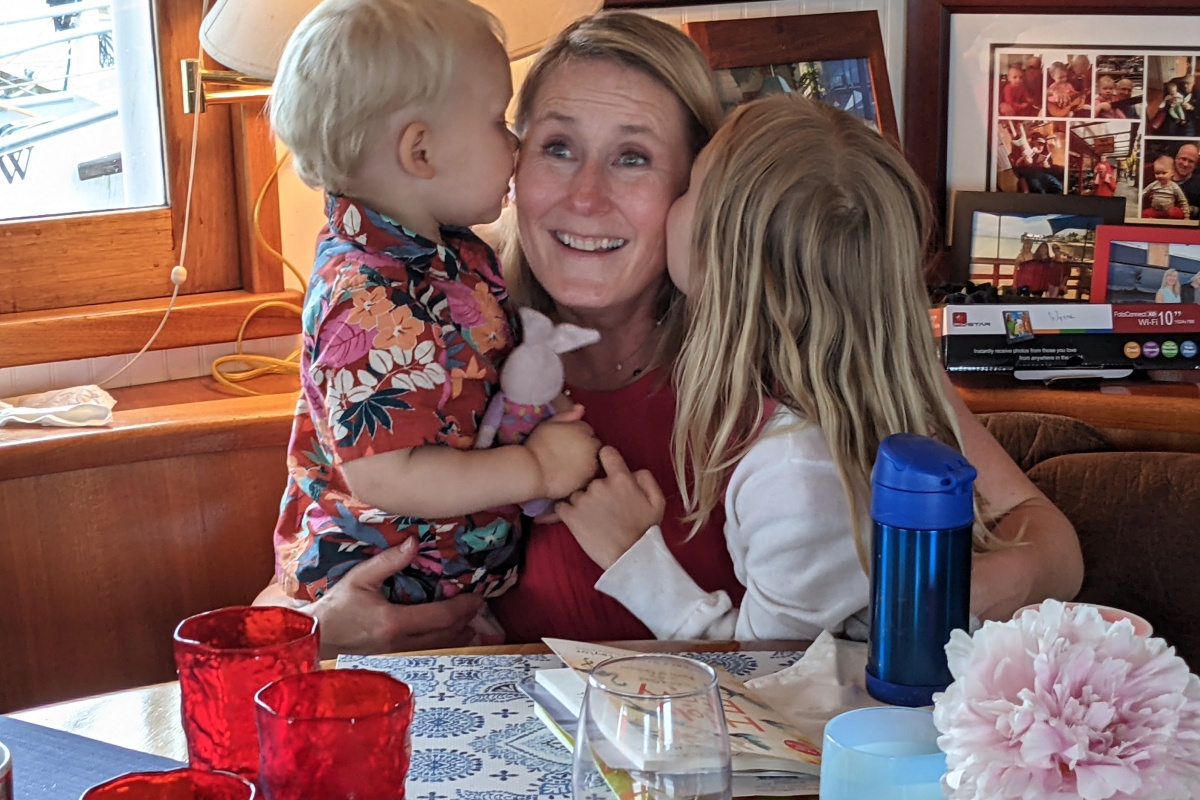
This made me ponder the nature of the middle and I realize I couldn’t name a middle of something that I really savored – the middle of the day, the middle of a meal, the middle of a relationship, the middle of a project, the middle of my body. (That is, other than being in the middle of my children, as shown in the featured photo.) Especially when it comes to projects (and maybe even days), I’m always in a rush to get to the end so that I can celebrate and then start a new one.

Someone wisely pointed out that we can’t remember things we don’t pay attention to. So I’ve started taking a brief pause in the middle of the day to just notice how things are going. It’s a small practice that I hope will help me appreciate the middle of my life more.

I was thinking about what to say to my daughter about the movie and death when one night she said, “I’d be kinda sad to die but also a little interested. I have to see the way the rest of my life works out and I’d miss you. But it’ll probably be your turn first.” And then all the solicitousness was gone. Which is fine. I want my kids’ memories and mine to be defined by not what we worry about but what we pay attention to.

What about you? Do you rush right past the middle or do you have a way to mark the middle of a journey?

The Flow of Life

Travel light, live light, spread the light, be the light.” – Yogi Bhajan

In 2014, I had worked up the nerve to have a child on my own. I’d chosen a fertility clinic, gone through all the screening and work-up process so by November 6th, I was sitting at my desk signing the last document I needed to begin the invitro fertilization process. I clearly remember that moment at my desk with my beloved dog at my feet thinking wondrously, “Life is about to change.”

Then the next day I got a call from my mom that my dad had died in a bicycling accident in Tucson. Sh!t! That wasn’t how life was supposed to change.

Seven years later I think through all the changes, big and small:

I have a beautiful baby girl.

My gorgeous dog dies.

My mom moves to be only 1.5 miles from me.

I miscarry a baby.

I get pregnant again and have a beautiful baby boy.

The pandemic happens.

My daughter turns 5 and goes to Kindergarten.

Kindergarten is virtual.

My son learns to walk.

And it goes on and on. Perhaps it’s because my kids change so quickly that’s making me learn to just enjoy the flow. One minute they have a habit that’s irritating me – like playing with water at the kitchen sink and getting it all over the floor and the next they’ve moved on and can now zip their own coats.

Yesterday I got a delightful message from someone I went to high school with offering me and my family free accommodations in Colorado for 4 nights in April. Yay – what a fun surprise. And it was also my dad’s birthday so he was close to my thoughts and I missed him.

The longer I go on, the more I realize that this is the flow of life – we go up and over some things and under others. It’s when I try to grab on to some branch to cling on and stay in one place that I suffer most. The more I work at my spiritual depth and faith, the easier it becomes to stay centered in the flow and live it all with openness and curiosity.

What a ride!

(featured photo from Pexels)

The Outer View

To see what is in front of one’s nose needs a constant struggle.” – George Orwell

I sent this picture to my mom. She wrote back that it looked like something that could be on the cover of the Saturday Evening Post. I laughed because I snapped it to capture one sweet moment that was somewhat unusual in the typical the after-dinner chaos.

Life always looks easier from the outside, doesn’t it?

I think of a picture I took of a friend at a beach on a school field trip (back a few years ago when we could do those). She was sitting on a log with her two children nestled in her arms and I texted the picture to her adding that she looked like the quintessential mom. Her reality was probably that she was struggling to keep her children warm on a cold June day and to feed them without dropping anything into the sand.

Which is right? The inner view or the outer view?

The more I meditate, the more that I’ve come to believe that the outer view holds great promise. When meditation helps me drop the dialogue in my head that is always taking me out of the moment by planning for the next thing I need to do or recovering from the last thing that went wrong, I can see the outer view. Like in the case of the picture, I was still recalibrating after getting my kids to stop vying for a turn on the piano and also calculating how long til we started our bedtime routines.

It seems like there is a healthy and an unhealthy way to think of the outer view of our lives. The unhealthy way is to work hard to make everything appear in a certain way and then use other people’s perceptions to check to see if we are meeting up.

The healthy way is to get a glimpse every once in a while of what a trusted person sees in order to be reminded of what is so delightful about this moment.

So here’s a moment of my picture perfect life. There are other moments that aren’t as sweet but I bet when I look back on this time, this is how I’ll remember it.

Why Wine?

Longer-term consistency trumps short-term intensity.” – Bruce Lee

I can still remember being at an 8th grade party when a boy from school, Corey, came up to me and told me he had a crush on me. He had been drinking and was acting all goofy. Because none of the rest of us were drinking (or ever had), it was my friend that took me aside to explain that alcohol made people reveal their true feelings.

Which is something that I hadn’t updated until I recently heard a Super Soul Sunday with Oprah and Malcom Gladwell. In the podcast, there were discussing his book Talking to Strangers and revealed “Many of those who study alcohol no longer consider it an agent of disinhibition. Instead they think of it as an agent of myopia.”

According to this Psychology Today article, myopia in the context of alcohol means short-sightedness. It means we lose perspective, our ability to place our actions in the context of anything other than the current moment and consider the long-term consequences.

Which explains my recent response when a friend came over to dinner and asked if I wanted a glass of red wine. I said, “No, it makes me a crappy parent.” It makes me feel tired. This is surprising because I love red wine and used to drink copious amounts of it. But now, it not only means I will not sleep well but it also creates an impatience in me that feels uncomfortable.

Putting this feeling together with the research, I think I rely a great deal on perspective to be an understanding and supportive parent. I need the long view to energize me. When I see my kids’ actions in the context of learning the overall lessons in life, I feel an expansiveness to give them room to grow. When I’m feeling myopic, I am feel hemmed in by the mess and chaos of now.

Corey and I never talked about his crush once he sobered up. While I felt that giddy attention for the night he said it, the light of day squashed it. It’s a little like how I feel about wine now – I like the idea of it far more than I like the actual experience of it. It seems that perspective, in love and in parenting, is a very good thing.

(featured photo from Pexels)