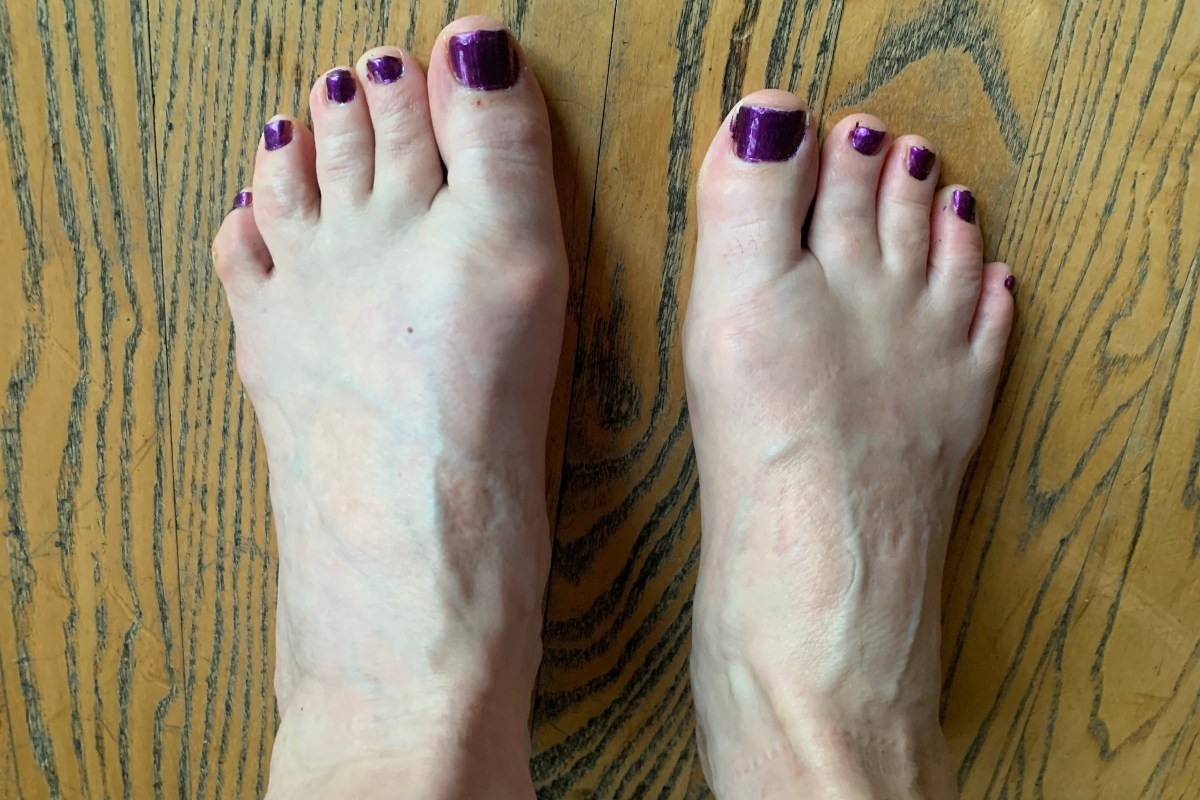
Feet

May your feet take you where your heart wants to go.” – unknown

When my mom went to the marketing seminar five years ago for a senior residence community she was considering moving to, I went along with her. In the presentation, they talked about how important care of the feet is for the elderly. Specifically the presenter mentioned an anecdote from Atul Gawande’s book Being Mortal that what geriatricians often look at when they see a patient, regardless of the symptoms presented, are the feet. Because when the elderly don’t take care of the feet – if they are overly callused, have ingrown toenails, or have sores, it exposes them to falls. And falls for older people are hard to recover from and can cost them their independence.

I was chastened by the discussion because even though I was only in my late 40’s at the time and not in any particular danger of falling, I was taking terrible care of my feet. Case in point, the massage therapist I’d seen on and off for years had commented that I needed to shave down the corn on my left pinky toe and I’d replied, “Why? It’ll just grow back.”

And indeed it will but clearly I was missing the big picture – that feet need to be cared for, just like the rest of the body, repeatedly. In fact, my feet are a disaster. They have calluses from jamming them in rock climbing shoes and bone spurs sticking out of the top of my big toes, maybe from my hiking or climbing boots that restrict range of motion, and plantar fasciitis from all the dogwalking, hiking and climbing. And given that I like to be on my feet and walking, one would think that I would have learned earlier to care of these precious platforms on which everything else balances.

I read a delightful meditation on the foot by Frederick Buechner in Listening to Your Life: “I say that if you want to know who you are, if you are more than academically interested in that particular mystery, you could do a lot worse than look to your feet for an answer. …when you wake up in the morning, called by God to be a self again, if you want to know who you are, watch your feet. Because where your feet take you, that is who you are.”

And adding to that, I’d add that if you want to check in on how you are taking care of your body, we could check with our feet for evidence for how well we are doing. Because as the geriatrician in Atul Gawande’s book notes, they feel further away and harder to care for as we age.

What are your feet doing today?

(feet pictured are my own)

Pain and Suffering

The greatest miracle is to be alive. We can put an end to our suffering just by realizing that our suffering is not worth suffering for!” – Thich Nhat Hanh

This weekend my son wanted to be like his sister and asked me “Can I have a pony?” Which is his shorthand for a ponytail, but before I’d even touched his hair to make a teeny-tiny ponytail, he said, “I’m going to say ‘Ow’”!

That little snippet of interaction so clearly illustrated the idea of pain versus suffering. I was fascinated by this idea when I first read about it in Temple Grandin’s book Animals in Translation. In the book, she discusses her work as an animal scientist from her unique perspective as an autistic person. Her fascinating work brings together so many different perspectives.

Dr. Grandin talks about all the tests and observations they’ve done to study whether animals experience pain. Because animals, especially prey animals, mask pain so that they don’t stand out in the flock, in the case of sheep, it’s sometimes hard to observe whether they are in pain.

But then she moves on to talk about suffering. Looking at humans who have chronic pain, she cites studies that show that chronic pain patients have a great deal of pre-frontal lobe activity which suggests something other than pain which is a lower-down brain function. In cases where a patient with intense pain had a leucotomy, which disconnected the frontal lobes and the rest of the brain, the patient still had pain but didn’t care about it.

Pain and suffering are two different things. Whereas I can address pain with a bandaid, ice or other treatment, taking on suffering for me is a spiritual practice. It is best treated by bringing light and breath to it and then having faith that it will not only move on through but also usually inform some enlightenment. As the great Buddhist teacher Thich Nhat Hanh says in the quote for this post, “The greatest miracle is to be alive. We can put an end to our suffering just by realizing that our suffering is not worth suffering for!

The most prominent of this for me was my divorce a dozen years ago. After my marriage fell apart, it was so easy to stay stuck in the storyline of my husband’s infidelities that I mucked around for a couple of years without owning my part of the story and acknowledging that I wanted out. Until I found meditation and faith as a tool to empty those pockets of stale dead air, I suffered from lack of perspective and inability to listen to the larger chorus of the Universe inviting me out of the pain and onward.

When I started to make the pony for my son, he said, “Ow” and decided he didn’t really want it. I guess he know it wasn’t worth suffering for.  

(featured photo from Pexels)

Spiritual Leaders

Gaining knowledge is the first step to wisdom. Sharing it, is the first step to humanity.” – unknown

Several years ago I had a friend who was struggling to keep his marriage together after it was revealed that his wife was having a long-term affair. From time to time he’d recount some of the help and advice they were getting as they tried to heal – from therapists, friends and books. One of the most insightful pieces of advice he got was from his pastor who sagely counseled, “You are going to have to say ‘good-bye’ to that marriage. If you two are going to go forward, you will have to build a new marriage together.”

It takes a special role to be able to drop truth bombs and still be heard. Friends might be able to do it, but often have a vested interest in offering up advice. More often than not, they offer idiot compassion as therapist and author Lori Gottlieb calls it. “Idiot compassion is where you want to make somebody feel better, and so you don’t necessarily tell them the truth. And wise compassion is where you really hold up the mirror to them in a compassionate way, but you also deliver a very important truth bomb.”

Therapists can deliver truth bombs but I think we often forget that our spiritual leaders have that capacity too. Given that church affiliation in the US has dropped below 50% for the first time ever, I wonder if we are losing touch with a unique group of people who want to help and also celebrate with us.

Twelve years ago when I was in crisis going through a divorce, I was lucky enough to find my way to a meditation teacher that helped guide me into that practice that has changed my life in many ways. And often when I have a spiritual question or even a lapse in understanding, I will go to my meditation teacher.

I also have the added benefit of relationships with a number of pastors since my dad was in the profession. They teach me again and again that our spiritual leaders whether they be pastors, rabbis or yogis have deep wisdom and history to access whether or not you agree with every bullet point of their theology.

When I asked my dad about that job/role/life calling as a Presbyterian pastor in the years before he died he said,

“I never would have imagined, at 20 years old when I finally made the decision to go in to ministry, I never would have thought that this is what my life would be like. I am so grateful to God for what that has meant, the number of lives that I’ve been able to be a part of. One of the unique things about ministry is that you are able to be with people in some of the most precious, important, holy moments of their life . . . birth, death, baptism, marriage, funeral, crisis. A pastor steps in to the middle of someone’s life at those unique times and that is pretty rare.”

So on this day that is Good Friday for Christians and the start of Passover for Jews, I dedicate the post to all our spiritual leaders that are willing to help us through the important moments of our lives. May we all find ways to support and honor them.

(featured photo is one of my favorite pictures of my dad)

Sacred Objects

Everything you can imagine is real.” – Pablo Picasso

My two-year-old son has a stuffy he likes to carry everywhere. It’s a small pink bunny that fits perfectly in his hand and he carries it when we are biking, hiking and most everywhere else, except swimming.

Knowing how important this bunny is, I ordered a backup of the same stuffy. Fake stuffy isn’t worn in the same way so it doesn’t work to soothe if he’s lying down for a nap and I can’t find the real one – it just infuriates him. So when fake stuffy went missing for 6 months, it was no problem.

Until he resurfaced a month ago and now my son likes to carry around both the real one and the fake one, multiplying my problem of making sure we have the necessary parts before embarking on the next part of the schedule.

So, I ordered 6 backups of the fake stuffy for $2 each on eBay and implemented a rotation schedule so there’s only one out at a time but they all look more of less the same amount of worn.

It’s a silly routine but it’s made me appreciate the power of sacred objects. I drink my tea every morning from a mug that says “LOVE” and was the first thing my daughter ever bought me with her own money. Everything tastes sweet in that mug.

And when I use the tools that used to be my father’s, I feel his warmth, energy and enthusiasm welling up inside me and I’m more certain the project will turn out fine.

I have a gold-plated Angel token that I bought for $3 and carried in my pocket a dozen years ago when I was going through my divorce. The touch of it reminded me to have faith that life would work out. Although I don’t carry it anymore, when I come across it in my drawer, I smile and celebrate what faith has delivered.

I can visit the places I’ve traveled in a short trip through my house remembering the laughter with friends as we picked out Tibetan singing bowls or travel through time when I touch my stuffed koala from childhood. They are just objects but they open doors that are shortcuts to places that I want to go.

So I happily do the stuffy dance with my son. He’s taken to telling me “Don’t say ‘Yay’” when I want to celebrate a potty training victory. Something about my natural enthusiasm is overwhelming to him in that private context. Instead I channel it along with my love, sending it along with him in his sacred objects.

What are your sacred objects?

The Unified Theory of Breathing

Sometimes it’s okay if the only thing you remembered to do today was breathe.” – unknown

Long before I learned to meditate, I learned a breath practice while climbing mountains. Guides call it the “pressure breath” and it involves intentionally breathing out all the air in our lungs so we can take a full inhale. They explained the reason for the pressure breath because we often don’t exhale all the air in the lungs. Without consciously thinking about it, our bodies can short cut a full exhalation. But at altitude, the air is thinner so we need a full inhale.

If you climb to Camp Muir on at 10,000 feet on Mt. Rainier where I learned the practice, you will be taking in only 2/3 the amount of oxygen that you would at sea-level. For every 1,000 feet you climb, it decreases by about 3% so at 18,200 feet (my personal high point), it is about 45% of the oxygen at sea-level.

So the pressure breath helps to counter the effect of thinner air by forcing a breath that takes in more air and therefore more oxygen. (For anyone who is interested, the reason there’s less oxygen is that there’s less pressure at altitude so that there are fewer oxygen molecules in the same volume of air).

Twenty years after I learned to pressure breathe on a mountain, I’ve stumbled on the science of other reasons to fully exhale. It feels like a moment of a unified theory – understanding why something I learned in one context is so healthy for many other reasons.

The book Breath: The New Science of a Lost Art by James Nestor inspires me to try to reform everything about my breathing. It is so well-written, researched and told through personal anecdotes and other living examples. In his chapter, Exhale, he cites two studies that set out to measure lung capacity as it related to longevity. They both found “that the greatest indicator of life span wasn’t genetics, diet, or the amount of daily exercise, as many had suspected. It was lung capacity.”

And the way to bigger lung capacity? James Nestor provides a couple of different examples but they involve extending the range of the diaphragm (the typical adult only uses about 10% of the range) by practicing exhaling fully. In short, Nestor said we need to take as few breaths as we can to sustain our metabolic rate. Take fewer breaths and get more oxygen and then the diaphragm moves up and down and helps with circulation and moving lymph fluid. The perfect breath is 5-6 breaths/minute. Cite the Ava Maria or Om Mani Padme Om or the Sa Ta Ma Na (Kundalini Chant) – they all take about the same amount of time of 5.5 seconds.

Adding to this science, I also recently heard Ten Percent Happier podcast with therapist and author, Deb Dana. In it she explained poly-vagal theory and the three states for our nervous system:  ventral state which is calm and regulated, sympathetic which the fight or flight response and dorsal which is when the nervous system has been so overstimulated that it shuts down. And while all three states work to help us navigate particular circumstances of life. But when we need to get back to a ventral or calm and regulated space, there are breathing practices that help us do so. A longer exhale is one of them.

So there it is – the unified theory of the full exhale. I thought living at sea-level made pressure breathing unnecessary for me. Until I realized that I’ve been doing it in different ways all this time – the exasperated sigh, the mindful breath practices and everything in-between that continues to teach me that the things we learn in one context continue to be effective everywhere else, helping me climb all sorts of metaphorical mountains one step at a time.

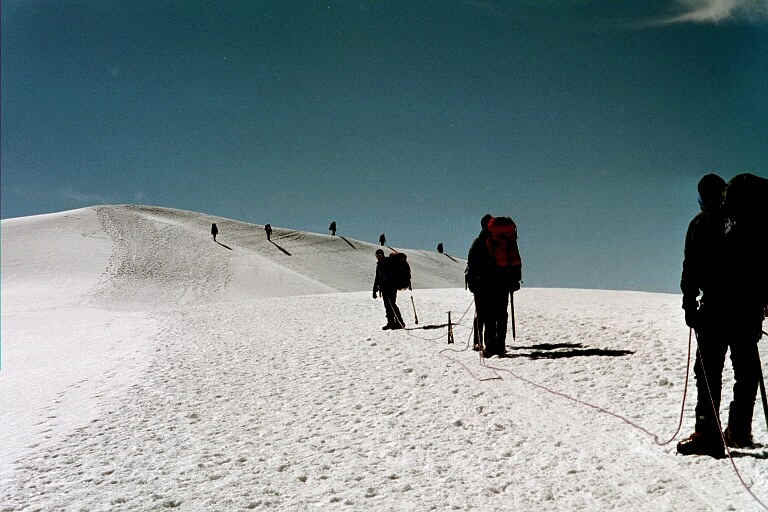
(featured photo is mine of a team of climbers leaving the summit of Mt. Ixtacchuatl, 17,600 feet)

Worth Quoting

Do small things with great love.” – Mother Teresa

I like quotes. I curate them the way my dad did humor – but instead of using notecards, I use an Excel spreadsheet with a column for where I’ve used them and where I got them. I loan my spreadsheet out now and again – like to my friend who was taping quotes to her teenager’s mirror every morning as they waited for college admissions results to come in.

Quotes have such an elegance – a succinctness of capturing a particular idea so that it can be passed on. It’s an amazing gift to be able to do that, to coin a phrase or sentence worth repeating. And worth repeating outside of the context of any longer writing.

There is also an inferred meaning of a quote based on who said it, if attributed to someone. One of my favorite quotes is from Anne Sexton “Put your ear down close to your soul and listen hard.” It doesn’t take much looking to find that while Anne Sexton tackled some deep and revealing subjects in her work, she also is alleged to have physically abused her children. Knowing that, I find it harder to use that quote because who said it matters.

When I first started writing, I had a difficult time believing my own voice had any credibility so I wanted to rely on quotes as a crutch. To counter that, I changed my process so that I wrote and only when I was done or had trouble pulling together the last sentence did I go and find a quote that helped me clarify my topic. In that way, I’ve found a way to add another voice to what I’m writing without silencing my own.

The quotes that I think of when I’m in a crunch or stuck change with the major themes in my life. I had a different set of go-tos when I was trying to work up the courage to have kids then now when I’m in the thick of parenting. With that said, here are a few of my personal favorites.

You have to participate relentlessly in the manifestations of your own blessings.” – Elizabeth Gilbert

Whether you think you can or think you can’t – you’re right.” – Henry Ford

Above all, watch with glittering eyes the whole world around you because the greatest secrets are always hidden in the most unlikely places. Those who don’t believe in magic will never find it.” – Roald Dahl

“Everything you’ve always wanted is on the other side of fear.” – George Adair

When I stand before God at the end of my life, I would hope that I would not have a single bit of talent left and could say, ‘I used everything you gave me.‘” – Erma Bombeck

Why do you see the speck that is in your brother’s eye, but do not notice the log that is in your own eye?” – Matthew 7:3

The two most important days of your life are the day you are born and the day you find out why.” – Mark Twain

“God breaks the heart again and again and again until it stays open.” Hazrat Inayat Khan

“Please remember, it is what you are that heals, not what you know.” – Carl Jung

Take the first step in faith. You don’t have to see the whole staircase. Just take the first step.” – Martin Luther King Jr.

Great things are done when men and mountains meet.” – William Blake

You don’t have a soul, you ARE a soul.” – Dick Leon

And the perfect one to end this post comes from the movie The Best Exotic Marigold Hotel, “Everything will be alright in the end, and if it’s not alright, it’s not the end.

Do you have any favorite quotes?

(featured photo from Pexels)

Do One Thing Well

A year from now, what will I wish I had done today?” – unknown

Deep into the section on expectations in Brené Brown’s book Atlas of the Heart, I had a huge a-ha moment. She was talking about a conversation with her husband in which they both confessed to each other that they had an easier time parenting on the weekends they did it solo. Because they set aside their expectations to be able to do anything other than parent for that weekend.

This put a shape to the experience I have had as a single parent. Because I never expect that someone else will take the night shift or be there on the weekend, I have had to set really clear boundaries on the work and hobbies that I do because I know I won’t be able to duck out for a couple of hours.

That means that nights and weekends, I pretty much focus on hanging out with my kids. I do get a few chores around the house done with their “help.” The tradeoff for giving up Saturday morning hiking with my friends has been the gift of not believing I can try to do both things.

I know many of my parenting friends do an incredibly great job of splitting up the parental labor. One person will do the 9am-noon shift on Saturdays so that the other can go swimming and then they switch and the other gets “time off.” I have a pretty good inkling that if I was doing parenting with a partner that I would try for that approach and be a lot more confused about what I could handle.

I don’t know who said “Do one thing at a time and do it well.” My mom? Winnie-the-Pooh? Or maybe it’s not ascribed to a particular person because everyone who has learned the wisdom repeats it. When I wrote the post a couple of weeks ago about being invited to climb a mountain this summer, so many of my dear and wise blogging friends reminded me that parenting goes fast and there will likely be time to return to my hobbies later.

I believe that at some point I will have a partner again and more personal freedom. However, there isn’t anything I would trade for this uncomplicated time where I learned to really spend time with my children and enjoy it. Sometimes not having help forces us to distinctly draw boundaries we wouldn’t know to set otherwise.

(featured photo from Pexels)

Celebrating the Messy Middle

Half the trouble in life comes from pretending there isn’t any.” – Edith Wharton

On Monday, I was practicing a short mindfulness break in the middle of the day to create more awareness of the middle of my life as I wrote in this post. What I noticed was that my day was kinda awful.

On the carpool to school, our neighbor and my daughter’s best friend broke the news that in three months they are moving 1200 miles away.

I’d just set aside all the gratitude and grief that arose as I thought of this big change in my daughter’s first real friendship so that I could work. Then the phone rang and it was my son’s daycare and they’d had an outbreak of Hand, Foot and Mouth Disease and needed me to come pick him up right away and get a note from the doctor before he could return.

I canceled all the rest of my work appointments for the day while I was driving to school to retrieve him, scheduled a doctors appointment for him in the afternoon. Then I asked the neighbors if my daughter could stay with them after school until I returned from the doctor which brought another wistful realization of how much I’ll miss them when they move in three months.

In short, the day was reactive, unsettling and bumpy. As I mindfully checked in with this, I had to chuckle because it reminded me of something I learned from Buddhist nun Pema Chödrön. That meditation and mindfulness are not ways to always be feeling good – in fact, it often brings more irritation because we are aware.

Aware and irritated by it fit how I felt during that check-in perfectly. However, the awareness brought the ability to move through it instead of just locking it up in a box. And that is always a gift I appreciate because I learn that I can handle it. I’ve come to think of meditation as my way of irrigating the irritations so I can flow past.

Sitting with this, I could touch the powerfully poignant moment when my daughter’s first friendship changed. More than that, I was able to notice it before my optimism overwrote it with dreams of new neighbors, a new carpool and the next friend. And I suppose that’s exactly the point of focusing the spotlight of awareness.

It seems perfectly fitting to write about this in the middle of the week. 🙂

(featured photo from Pexels)

I Haven’t Tried Anything and Nothing Works

I believe you have to walk through vulnerability to get to courage.” – Brené Brown

I was talking with a friend the other day about her marriage. On the surface everything is fine but underneath one partner feels the pull towards adventure and the other partner doesn’t want anything to change. In fact as we talk through different possibilities of things that could give the relationship new ground – therapy, different types of dates, a shift in the balance of things – the answer was no to everything because it was too threatening.

It reminded me of a man I used to work with who would describe his team as running around with their hair on fire whenever there was a problem, which since it was a technology company, was often. If you asked them what they tried, he’d joke that they’d say, “I haven’t tried anything and nothing works!”

My friend’s situation also reminded me of my marriage after my husband’s infidelities were revealed and we were trying to work on it. He sat around and stoked his anger at his friend who had told me. Meanwhile I was casting about trying to find ways to heal. It felt like his check-ins consisted of asking me if I was better yet while he pursued nothing to find change and healing in himself.

While that might sound overly harsh, let me also admit that I’ve been the person in a relationship too frozen with insecurity and fear at what I might find to look under the hood. I’m thinking of a relationship I had in my 20’s where I found it too threatening to take that step towards introspection so that I preferred breaking apart rather than seeing whether we could alter our patterns and change together.

In the work scenario, I know it was our office dynamic that led to people not being willing to try anything because there was a company culture that was big on blame. Stepping your toe out to fix something could result in exposing yourself to fire. Creating an environment where it’s safe to be vulnerable seems like the best way to lead people to change, whether that be a family or a workplace.

Thinking about my friend and her marriage, I think relationships often set us up in dichotomy with each other. The adventurous one – the stalwart one. The one who wants to look – the one who wants to avert their eyes. So I silently root from the sidelines that they can cultivate a little more vulnerability to face change together.

I understand the fear that looking inside might reveal something ugly but I’ve come to learn it’s the not looking that is the real threat. If you don’t change from the inside, life will often change you from the outside. “I haven’t tried anything and nothing works” was a great company joke but it always required someone brave enough to break the trend to fix the problem.

(featured photo from Pexels)

In The Middle

The longer I live, the more beautiful life becomes.” – Frank Lloyd Wright

A little while ago my 6-year-old daughter went to a friend’s house to watch a movie. When she came home that night and for the couple weeks afterwards, she was so much more solicitous of me. “Mom, do you want a glass of water?” or “I’m sorry you banged your hand.” So I dug deeper into the storyline of the Netflix family movie Over the Moon. Not surprisingly, it’s about a little girl whose mom died from cancer.

I don’t want my kids operating from a space of worry about me. But I was fascinated about the noticeable change of behavior. It suggested how much our awareness is influenced by our focus.

So I was listening carefully when I heard author Susan Cain describe the research of Dr. Laura Carstensen on Brené Brown’s Unlocking Us podcast. Dr. Carstensen is a professor of psychology at Stanford specializing in the psychology of older people. Here’s Susan Cain’s description of the research:

“[The] elderly tend to be happier and more full of gratitude, more invested in depth relationships, more prone to states of well-being. She has linked all of that with the fact… not as we might think that we get older and have acquired all this wisdom from the years we’ve lived. It has nothing to do with that, it only has to do with the fact that when you are older you have a sense of life’s fragility. You know it’s coming to an end.

“Younger people who for other reasons are in fragile situations [also exhibit this]. She studied students in Hong Kong who were worried about Chinese rule at the end of the 20th century. They have the exact same psychological profile as older people did. Because the constant was the fragility.”

Susan Cain describing the research of Dr. Laura Carstensen

Since at 52-years-old I’m closer to the middle of my life (hopefully) rather than the end, it begs the question of how to cultivate an appreciation for relationships, health and the good times. Especially to enjoy them without the sense of fragility that I understand but don’t quite viscerally get yet.

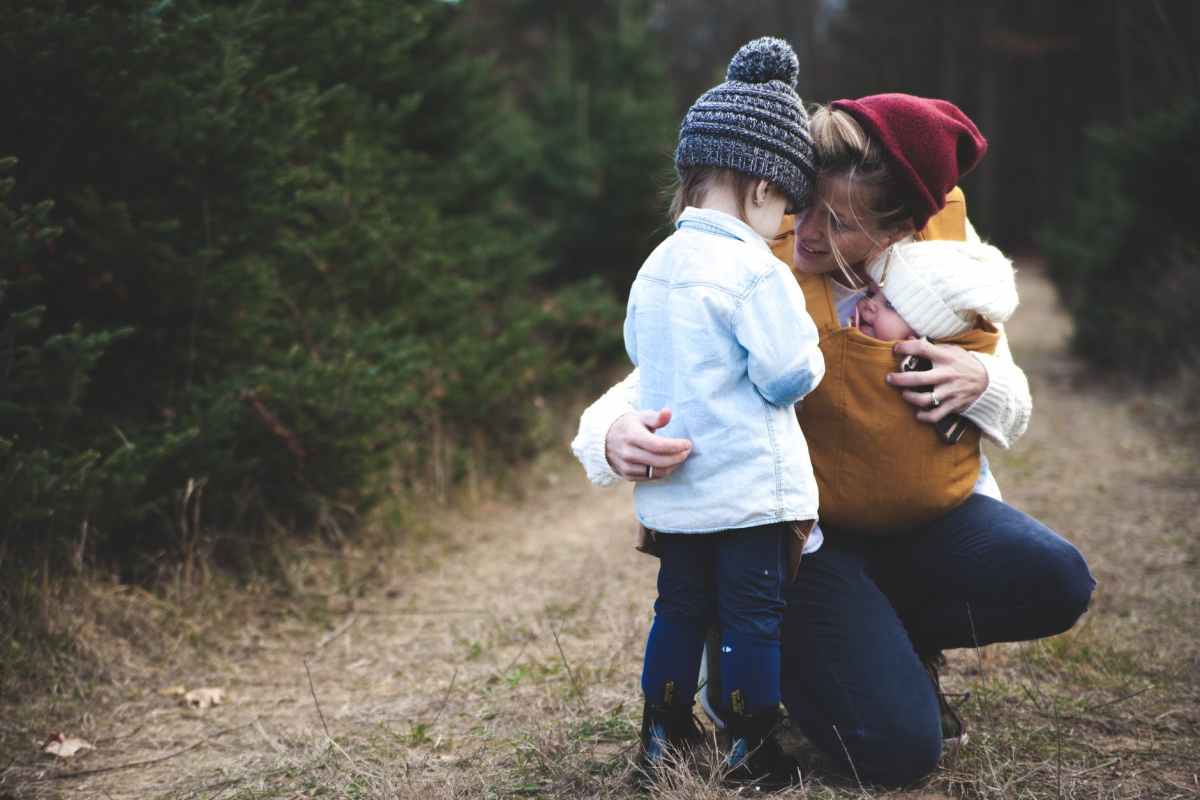
This made me ponder the nature of the middle and I realize I couldn’t name a middle of something that I really savored – the middle of the day, the middle of a meal, the middle of a relationship, the middle of a project, the middle of my body. (That is, other than being in the middle of my children, as shown in the featured photo.) Especially when it comes to projects (and maybe even days), I’m always in a rush to get to the end so that I can celebrate and then start a new one.

Someone wisely pointed out that we can’t remember things we don’t pay attention to. So I’ve started taking a brief pause in the middle of the day to just notice how things are going. It’s a small practice that I hope will help me appreciate the middle of my life more.

I was thinking about what to say to my daughter about the movie and death when one night she said, “I’d be kinda sad to die but also a little interested. I have to see the way the rest of my life works out and I’d miss you. But it’ll probably be your turn first.” And then all the solicitousness was gone. Which is fine. I want my kids’ memories and mine to be defined by not what we worry about but what we pay attention to.

What about you? Do you rush right past the middle or do you have a way to mark the middle of a journey?