How To Share Optimism

“Light and shadow are opposite sides of the same coin. We can illuminate our paths or darken our way. It is a matter of choice.” – Maya Angelou

You know the skit about positivity? It goes something like this:

Johnny: “We have to drive three hours to have lunch with relatives I’ve never met? This is going to suck!”

Mom: “Johnny, you haven’t even met these people. You need to be more positive.”

Johnny: “I’m positive this is going to suck.”

I’m a congenital optimist. It’s taken me decades to understand my own filter and figure out how it effects others. As a parent, an entrepreneur and as a leader, I’ve come to see that optimism can be helpful when encouraging others, but it has to be tempered with genuinely acknowledging the ups and downs. In the end, I see optimism more as fuel to keep trying than an expectation about an outcome.

Which aligns with the How to Share podcast conversation I had with the incredible author and blogger Mark Petruska. He also is an inveterate optimist and together we explore the concept of optimism, discussing its definition, the importance of timing when sharing optimistic views, and the audience’s receptiveness to such messages.

We delve into the relationship between optimism and empathy, the balance between optimism and realism, and the idea that optimism can be cultivated as a skill. Our conversation emphasizes the significance of understanding individual circumstances and the stages of acceptance and grief when offering encouragement.

How To Share Optimism Takeaways

  • Optimism is defined as a favorable view of the future.
  • Timing is crucial when sharing optimism, especially during difficult times.
  • People may not be receptive to optimism until they reach acceptance
  • Empathy plays a significant role in how we share optimism.
  • Optimists may live longer due to lower stress levels.
  • Optimism can be cultivated and strengthened like a muscle.
  • It’s important to balance optimism with humility and realism.
  • Sharing personal experiences can enhance the impact of optimistic messages.
  • Understanding your audience is key to effectively sharing optimism.

This is a great episode that will get you thinking about the lens you look through – and how to share it with others. I’m optimistic that you’ll love it.

Here’s a sneak peek of the great conversation with the amazing Mark Petruska:

Here are some ways you can listen and watch to the full episode:

Please listen, watch, provide feedback and subscribe.
How To Share a Ghost Story with Alyson Richman (updated) How To Share

In this episode, hosts Wynne Leon and Vicki Atkinson talk with best-selling author, Alyson Richman. They talk about Alyson's latest historical novel, 'The Missing Pages', inspired by the true story of Harry Elkins Widener, who perished on the Titanic. The conversation delves into Alyson's research process, her writing style, and the emotional themes of grief and memory woven throughout her work. They also touch on the adaptation of her previous best-selling book, 'The Lost Wife', for film and Alyson's current writing projects.TakeawaysAlyson Richman's novel 'The Missing Pages' is inspired by a true story.The book intertwines the past and present through a ghost narrative.Richman emphasizes the importance of being open to unexpected gifts.Her research process involves extensive historical exploration.She writes organically, without a strict outline.The themes of grief and memory are central to her storytelling.Richman's characters are deeply developed and emotionally engaging.Historical facts serve as building blocks for her narratives.The adaptation process for film can be lengthy and complex.Richman is currently working on a new novel about Edith Wharton.Links for this episode:The Missing Pages on ⁠Barnes & Noble⁠ and ⁠Amazon⁠⁠Alyson Richman's website⁠From the Hosts:Vicki’s book about resilience and love: ⁠Surviving Sue⁠; Blog: ⁠https://victoriaponders.com/⁠Wynne’s book about her beloved father: ⁠Finding My Father’s Faith⁠; Blog: ⁠https://wynneleon.com/
  1. How To Share a Ghost Story with Alyson Richman (updated)
  2. How to Share a Ghost Story with Alyson Richman
  3. How to Share Nutrition and Safety with Meg Bowman
  4. How to Share the Ball with Glenn Mutti-Driscoll
  5. How to Share a Sandwich with Karen Olson

Links for How To Share Optimism podcast episode:

Storyteller and writer Mark Petruska

Is Optimism Something We’re Born With? | Psychology Today

Hope and Optimism as an Opportunity to Improve the “Positive Mental Health” Demand – PMC

The Difference Between Hopeful Optimism and Toxic Positivity | Psychology Today

(featured photo from Pexels)
Authentic Pride

Doing stuff is hard, shout-out to anyone doing anything.” – unknown

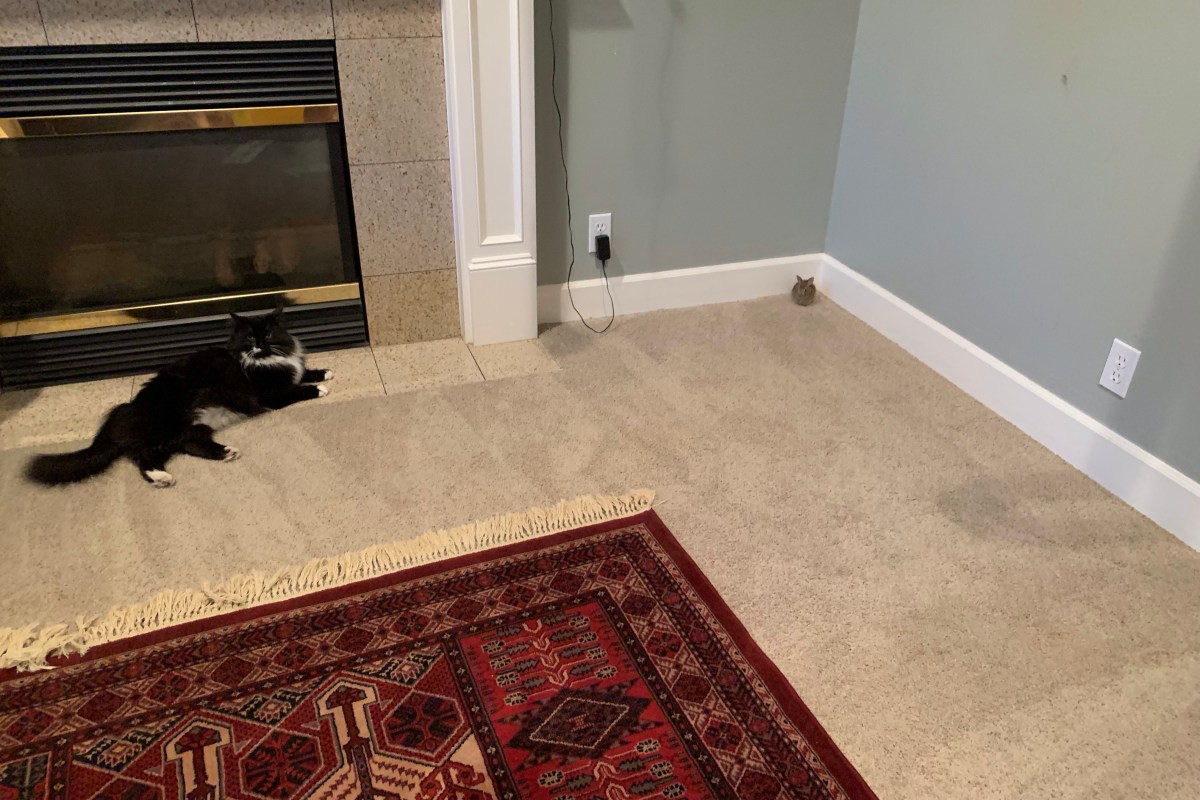
Last night as I was taking out the food scraps to the compost bin, I saw a bunny nestled by a tree. I got down low in the evening light to try to get a closer look. It was the same color as the bunny I saved when my cat brought a baby bunny in the house a couple of months ago. I started to feel some kinship and pride with this little creature – maybe this was the bunny I rescued from the jaws of my cat.

And as soon as I did that, I felt the reflex to believe pride was a bad thing. You know, one of the seven deadly sins and all that. Perhaps I shouldn’t personalize this bunny at all because its survival was 99% not about me.

Here’s the thing that I’m thinking as I type this. Is there a middle ground? Because on the morning the cat brought a baby bunny in, I managed to get the cat put away downstairs and shooed the bunny safely away. ALL without waking my kids and I got a video so I could show them.

No, I’m not responsible for the survival of the bunny in the big picture. But I did step in for a moment when the bunny’s life teetered between chaos and freedom. I got my butt off the meditation cushion for long enough to feel the pulse of life and opted for action. Which is a great of why I bother to meditate – to pay attention to the sacred moments as I described in my post Sacred Time.

If we can’t feel the reward for moments when we do act well because pride is a sin, do we undercut our own feedback cycle? And I’m not talking about a conscious decision not to celebrate the win – I’m talking about generations upon generations of family tradition to endeavor to be humble, maybe even falsely humble.

So I checked Brené Brown’s definition of pride from Atlas of the Heart. “Pride is a feeling of pleasure or celebration related to our accomplishments.” She added that pride related to an accomplishment has a positive connotation and is differentiated from hubris. Sometimes we refer to this authentic pride.  

I officially write this post feeling proud. I saved a bunny and maybe I even saw that bunny again last night. I think celebrating our good moments is worth mentioning. Don’t you?

An Honest Mistake

Make your ego porous. Will is of little importance, complaining is nothing, fame is nothing. Openness, patience, receptivity, solitude is everything.” – Rainier Maria Rilke

I wrote a post for today to celebrate one year of doing a post every day. Then I looked back at my posts to confirm whether it was May 19th or May 18th when I started the practice, I found that I skipped a post on June 11th. Damn! If I hadn’t looked, I could have posted my victory lap and it would have been an honest mistake but once I knew, then I couldn’t celebrate because it became a dishonest mistake.

Not that I think anyone who reads the blog would have noticed. In fact, there could be some followers who wished I skipped more than one day, if you know what I mean… 😉

But somehow it matters to me because I think that if I’m going to go to the effort to write about my life, I might as well be as honest as I can be. I’m sure I have blind spots that keep me from seeing who I am in totality but at the very least I can not believe the BS my brain produces when I see it. Because when I do buy into the fiction, it just wraps one more layer between me and my experience of life that keeps me from feeling the beautiful, joyful, and yes, sometimes gritty reality.

I dated a guy when I was in my early 30’s who was always telling me what a nice guy he was. He’d usually say that as an addendum to a story he’d be relating from work or his first marriage that involved a kerfuffle of some sort. And because he got into a lot of disagreements that related to him needing to be in control or not listening very well, he had to tell me quite often what a nice guy he was. I think he really thought of himself that way but (and this probably goes without saying) I think that he was many things good and bad but objectively speaking, he wasn’t that nice of a guy.

Reflecting on the relevance of this to life, I went looking through Brené Brown’s book Atlas of the Heart to find the section on Places We Go To Self-Assess. There are three definitions offered there:

Pride: Pride is a feeling of pleasure or celebration related to our accomplishments or efforts.”

Hubris: Hubris is an inflated sense of one’s own innate abilities that is tied more to the need for dominance than to actual accomplishments.”

Humility: Humility is openness to new learning combined with a balanced and accurate assessment of our contributions, including our strengths, imperfections, and opportunities for growth.”

I loved that Brené Brown includes that word humility derives from the Latin word meaning groundedness. So I’m practicing humility to try to accurately assess my blogging contribution and opportunities for growth until I actually reach the 365 days of posting. And then I’ll celebrate the milestone with pride, not hubris, I hope!

Anyone else meet a “nice” guy that wasn’t? Or discovered an honest mistake recently?

(featured photo from Pexels)

Stubborn Acceptance

Wherever I go, I meet myself.” – Tozan

My friend Eric, called me stubborn this weekend. He didn’t say it directly to me but as an aside to my mom loud enough for me to hear because I didn’t want the pots in the dishwasher. It didn’t call for an answer but it’s an observation he’s made before so I thought about more deeply as my reactions rolled through me.

First, I got defensive and started wanting to point out all the ways and times that I am flexible.

Then, I got argumentative and created a list in my head of all the ways he is stubborn.

Next, associations started to weigh in and it reminded me of when my ex-husband used to call me in-de-pen-dent in four long syllables that made it clear it wasn’t a compliment.

And then I finally rolled to acceptance. It’s probably true. I’ve gotten a whole lot done in my life because I am pretty determined. This is the shadow side of that.

I wonder why it takes me so long to accept who I am. Probably because I’m stubborn. 😉

But I have hope because my determination to sit and meditate every day seems to help me cycle through all the defenses, arguments, and associations with less friction. It makes me think of the word humble and it’s origins in Latin from humus, meaning ground. Sitting on the ground meditating brings a repeated lesson of my small place in this Divine mystery, a humility that keeps me moving toward the reality of who I am and shedding of who I’m not. I find that most everything works better when I’m grounded.

(featured photo from Pexels)

Fear of the Dark

Go into yourself and see how deep the place is from which your life flows.” – Rainier Maria Rilke

I have a clock that projects the time and temperature onto the ceiling of my bedroom so that lying in my bed I can open my eyes and when they finally focus, I can see what time it is without so much as moving a muscle. It’s a pretty silly gadget but I’ve had it for more than 10 years and since it continues to display the time, I can’t very well justify getting a new clock. But it has to be dark enough in the room to see the numbers so I was surprised this morning when I awoke at 5:24am and could see it on the ceiling. The 16-hour days of summer have passed and even though it took me a couple more minutes to adjust to that and get myself out of bed, I loved getting up in the dark, it has an extra layer of quiet.

When I was younger, my sister used to call my “Pollyanna.” Which I think was a compliment but our relationship is fraught so it’s hard to tell for sure. Whether she meant it kindly or not, she definitely was using it according the Meriam-Webster definition “a person characterized by irrepressible optimism and a tendency to find good in everything.” In other words, I’m a little bit sunny – or maybe a lot.

So it’s taken me a long time to appreciate my dark sides. Like how uncomfortable I am when things are edgy and pessimistic. And my inability to foresee that things just might not work out. The era of COVID has been a terrible time to be an optimist – I’ve been wrong on every prediction of when things would go back to “normal.”

Just as I’m enjoying the shorter days, I’m also learning to accept that I can be both light and dark. In fact, sunniness without some down time is exhausting. There’s very little I can do about my optimism which seems to be innate but as I’ve learned to listen to my fears, anxieties and wounds I’ve found a deeper humility by leaning into all of me. As I help my kids name their frustration, disappointment, envy and jealousy, I am finding it easier to name mine. The other day when I was feeling envious of a professional colleague who seemingly has no trouble promoting themselves, something that is very difficult for me, I named it and instantly felt more human.

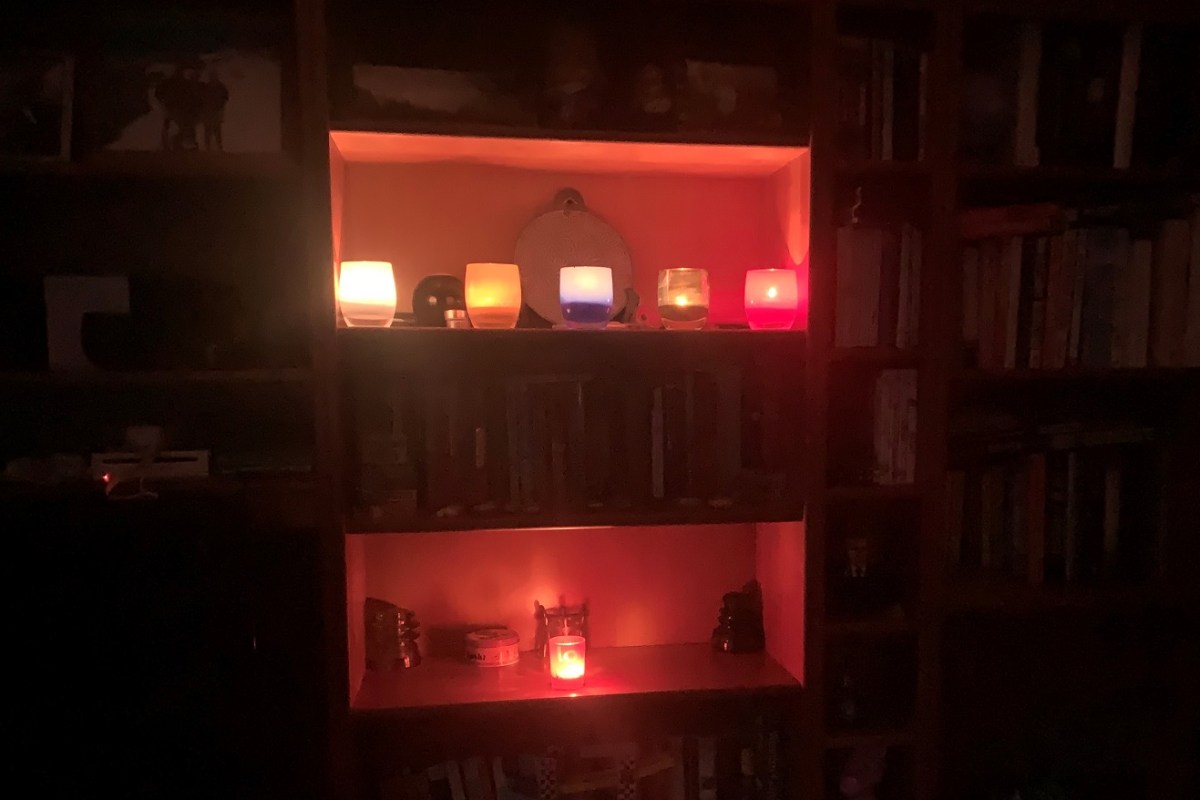
When I rolled out of bed in the dark this morning, I found it more accepting of my sleepiness and more sacred in the quiet. Somehow, it’s easier to bring all of me, light and dark, to the meditation cushion when the sun hasn’t yet come out. The candles I light every morning glow brighter in the dark and I’m starting to discover that I need to accept both in order to fully see.