The Ripple Effect

I’ve learned that people will forget what you said, people will forget what you did, but people will never forget how you made them feel.” – Maya Angelou

My dad once made a comment that when he focused on a topic for a sermon, there was a noticeable effect on his life. If he was preaching about parenthood, he’d be a better parent for that week. Likewise about being a better husband, friend or citizen as he focused on those topics.

As I was writing my post for Pointless Overthinking this week, The Art of Apology, I found the same ripple effect in my life. Reading through Dr. Harriet Lerner’s book Why Won’t You Apologize gave me so many great talking points for how to sincerely apologize and it also reminded me of the practice of accepting apologies, especially from kids.

Two points that really resonated with me. The first was not to brush off an apology with a “it’s no problem” when someone, especially a child, has worked up the courage to offer one.

And the second was not to use an apology as a springboard to a lecture. Responding to an apology with something like “Well, I’m glad to hear you apologize for hitting your brother because we don’t do that in this family” is the best way to make kids regret ever offering one.

When we apologize, we help heal the wound however slight for someone else. When we accept an apology, we affirm the courage of someone else to voice their mistakes.

As Dr. Lerner says “We take turns at being the offender and the offended until our very last breath. It’s reassuring to know that we have the possibility to set things, right, or at least know that we have brought our best selves to the task at hand, however the other person responds.”

The other day my 6-year-old daughter was making sticker art for people in her life. One mermaid that she made lost an itty-bitty piece of her tail and my daughter said, “I’m going to give this one to Nana. Because even though I lost the sticker, she’s a great forgiver.”

Isn’t that a great way to be known?

Taking the Crust Off

I have no special talents. I am only passionately curious.” – Albert Einstein

Around Christmas, my mom was helping my 6-year-old daughter with some Legos. Frustrated by something she tried many times, my mom turned to me and said, “Do they sometimes forget to put pieces in these kits?”

I laughed because I’ve thought that many times. When the instructions don’t work and everything seems to almost but not quite fit and I want to blame the instructions. But from my experience, it has never been the instructions that have been faulty. I’ve usually found an error in previous steps that once reversed, it works fine.

Life has taught me that this just doesn’t happen with Legos. That when life feels blocked, often we spend a lot of energy trying to problem solve where we are at before realizing we go back a few steps to fix what is fundamentally causing the issue. It may be a wound we try to cover over instead of heal or a belief about ourselves, others or life that we never revisit to test if it is true.

Recently I was listening to an On Being podcast where writer Katherine May interviewed author Michael Pollan. He was talking about his research into using psychedelic drugs for therapeutic purposes. One of the benefits he said was “Recovering the profundity that we already know. Like ‘love is everything.’ We spend a lot of time encrusting these fundamental ideas about life and reality with irony and all these protective rhetorical devices to keep them at bay. And suddenly that crust comes off.”

While the chances of me doing a psychedelic trip are about zero, I was struck by the notion of uncovering what we already know. Or in Michael Pollan’s words, taking off the crust. Going back a few steps, in Lego speak.

Praying, meditating, writing, therapy, honest dialogue, vision journaling – all these tools remind me of a mediation retreat but I think they are our ways of discerning where in the directions we went wrong. To somehow reveal that thing that keeps bugging us but we can’t quite put a finger on.

In the On Being interview, Michael Pollan described why insightful experiences, however we come about them, have such power to create long term change in us. He brought up the work of William James who was talking about mystical experiences 100 years ago. Michael Pollan explained, “One of the characteristics of that [mystical experience] besides ego dissolution and transcendence of time and space was the Noetic quality. That is the quality that what you learned, the insights you had were not merely opinions but revealed truth. They have a stickiness and power that I think is central to people being able to change. The difference between knowing in your head and knowing in your heart and whole being.”

When my mom was having trouble with the Legos, I sat down with her (my daughter having wandered off long before) and we looked at the directions, the picture and our pieces. Then my eyes, new to the project, were able to spot the tiny extra red piece that made all the difference. I wouldn’t call it a mystical experience but we whooped with delight at fixing something. When we take off the crust and look inside, especially together, it’s fun to discover how it all works and put it together better.

(featured photo from Pexels)

Secrets

Put your ear down close to your soul and listen hard.” – Anne Sexton

This week when we are returning from holiday breaks always reminds me of one of the wackiest stories from when I was in business with two partners and we had almost 20 employees. On the Monday after New Years Day in 2008, I was in the office when the office manager came in to say that we hadn’t heard from our program manager, JE, since the Christmas party two weeks prior.

JE didn’t work for me but in a small company, I certainly knew him. I liked him too. He was smart, quiet and diligent about getting his work done. He’d left Microsoft six months before to come work for us and except for one scheduled break in late October, he’d always shown up. It wasn’t unusual for our folks to work from home, especially over the holidays but not answering emails and phone calls was definitely odd.

Since my two business partners to whom JE did report were in Mexico on a hang gliding trip, I jumped in to help. Thinking that maybe we could find his girlfriend’s name and call her to check in, I googled his name. The top result was a memo from the United Stated Department of Justice dated in October of the previous year (the same days of his scheduled absence) that read something like this:

“<JE’s full name>, 27, of <city>, WA was sentenced to six month in prison for his role as the leader of a software pirating group. He will be reporting to <low security prison> on January 1, 2008.”

Well, that explained why we couldn’t get ahold of him! When we finally talked with his girlfriend, she said that JE would be disappointed to know we’d found out because he didn’t want to let us down.

Of course, had he quit before he went to prison, we would have never looked for him!! Granted he had bigger things to worry about in the 8 weeks between sentencing and reporting to the facility but as a logical young man, it seemed obvious that if you don’t want people to look for you, you need to break up with them first.

I think of this often when someone is carrying a secret. It is an immense burden that sometimes precludes thinking and acting rationally. And often the secret itself prevents the carrier from finding the tools to heal – because developing any depth is dangerous, lest it unearth the core of what they are carrying. The secret has a life of its own that requires it to stay buried and drains a lot of energy to support itself.

At the time of my life when this happened, I had a secret too. I was unhappy in my marriage and way of life and I was diligently trying to keep that a secret, mostly from myself. I drank too much wine and then smoked cigarettes when I drank as a way to numb myself from feeling what was really going on.

Thinking back now, I realize that I was forcing myself daily to keep walking down a path that didn’t feel right. I was in a relationship that wasn’t supportive of me, I was in a business partnership with a charismatic that was making me crazy and I had developed no spiritual depth with which I could heal these wounds. All these secrets were a prison in their own way.

As it turned out, I kept my misery under wraps for another year after JE went to prison. Then the charismatic business partner told me of my husband’s infidelities and it all blew apart – the business and my marriage. Finally, no one had any secrets left and I could begin to heal. With nothing left buried, it was finally safe to develop some spiritual depth that carried me out of my prison. I can only hope that JE was able to heal once his secret was out as well.

(featured image from Pexels)

The Power of Being

Please remember, it is what you are that heals, not what you know.” – Carl Jung

This weekend I invited a friend who is dealing with a long-term illness to come hang out with us. Her husband called me afterwards to tell me that is exactly what she needs. When I asked what I could do to help, he responded that she just needed more of the same. Time spent just being with little ones.

I love spending time with my kids. But I often get wrapped up in the logistics – preparing food, changing diapers, keeping healthy. So it often surprises me when my friends visit and say, “That was good for my soul.”

There is a lot of mystery in what is good for our souls. But in this context I understand that to mean that being around humans that are so close to the source helps us shed a few layers. When enveloped in activities that have only to do with the fun of the moment, we get to leave behind the news, our plans for becoming something and maybe even our worries.

As I was talking with my friend’s husband, I realized I kept asking what I could do and his consistent response was just to be. It reminded me that isn’t just kids that can be good for our souls. Anyone committed to just showing up with each other and fully being is far more restorative than much of the busy-ness grown-ups often cook up. As Carl Jung says, “Please remember, it is what you are that heals, not what you know.”

Our Deepest Fears

Too many people overvalue what they are not and undervalue what they are.” – Malcom S. Forbes

I have a friend whose affable and outgoing father has developed a little bit of memory loss in his 80’s. To talk with him you wouldn’t notice it but it manifests in that he thinks he doesn’t have enough money. No matter how many times his daughter tells him he’s does and he’s fine, he feels like he’s broke.

It reminds me of my grandmother who became very self-conscious about the way she looked as she aged. She thought other people in her senior living home were gossiping about her when she ate in the shared dining room because she didn’t look right. No amount of reassurance would overcome her inclination to stay in her room.

These stories make me wonder if we all have some deep insecurity or worry that if we never fully heal could define our golden years.

I know what mine is. I feel self-conscious talking about faith. My beloved dad was a Presbyterian pastor with such a specific theology. But what resonates with me is less defined – examples of faith, depth, authenticity, grace, forgiveness, selflessness from all spiritual traditions inspire me. (To be fair, my dad called himself a big tent guy meaning however you got into the faith tent was fine by him).

When I go to speak about faith, I get hung up on the words to use because my upbringing gave me a specific dialect. My meditation practice has given me the feeling of deep faith but not the words to replace it. So somehow my respect for my dad has muted my lived experience and created an impediment to speak of my Budheo-Christian path.

It calls me to heal it so that I can speak of the Divine miracles and great gift that faith has been for me. I have been so fortunate to stand on the top of mountains, feel the Universe all around me and stand in awe of the wonder of creation. And I’ve experienced this feeling of being carried by God in so many pivotal moments when I have been confused, unsure, and broken. Nurturing the small voice of God inside me has repeatedly enabled me to navigate to the next right thing in my path.

I’m heartened by the story about my friend’s dad because even though he feels like he doesn’t have enough money, he has a deep faith that makes him feel secure. So I work on my confidence to speak of all that God has done in my life all the while having faith that it will all come out okay.

(featured image from Pexels)

Stories Again

The best and most beautiful things cannot be seen or even touched – they must be felt by the heart.” – Helen Keller

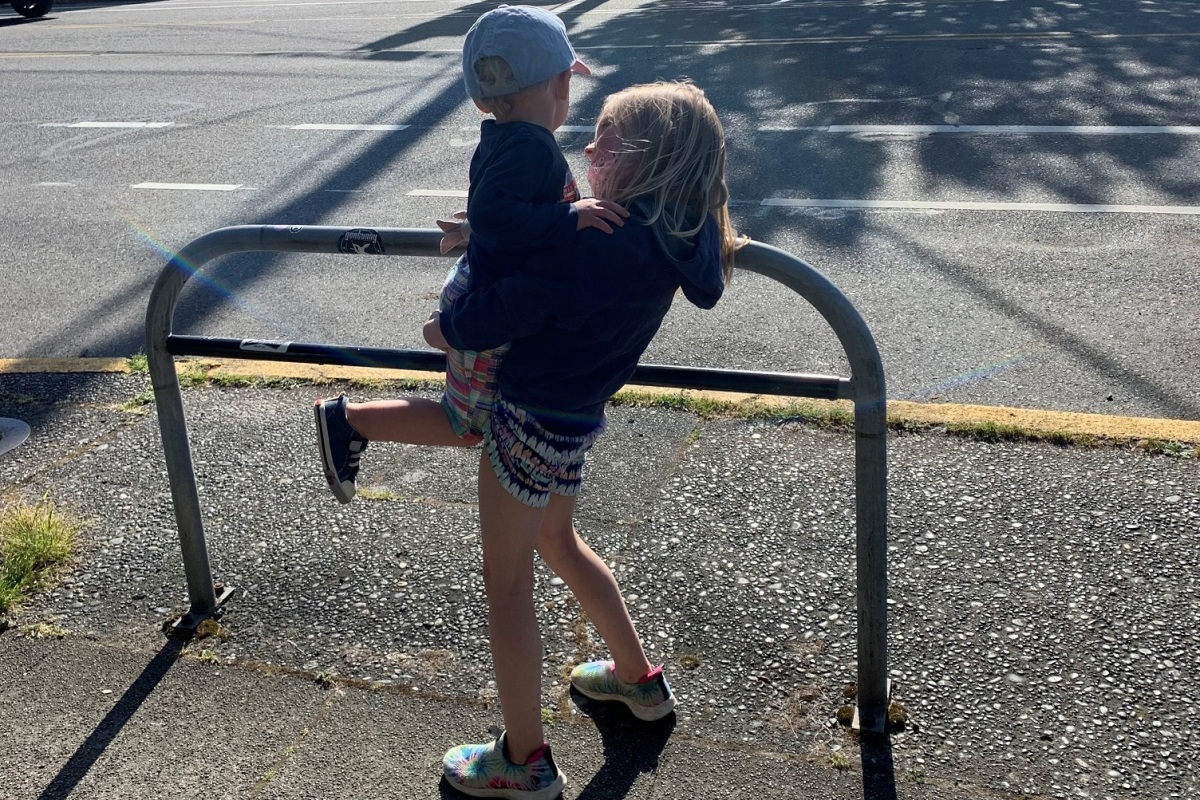
My 6-year-old daughter declared the other day that she had it all planned out. She was going to go back to being a baby. That way she could be carried everywhere, be picked up every time she cried and wear diapers so she never had to use the bathroom.

I started gently exploring this idea. I asked “So you are going to give up reading?” Her answer “No way!” And then I asked if she was going to sleep in a crib again so that she wouldn’t be able to get out and come sleep in my bed whenever she pleased. Again – “NO!!”

We’ve had extensive conversations about the fact that when she was 2-years-old like her brother is now, I only had one kid so she got carried everywhere and my attention was only on her. Not only did she get everything that her little brother is getting now, she got it in an even more focused fashion.

That logic does nothing to stop the feeling of jealousy over the easy life she perceives her brother has. Fortunately, they adore each other so she doesn’t begrudge him much. But she sure wishes she had more and it does not work to rationalize it away.

So on a whim I switched to telling her stories about when she was 2. Like the time we went to the Fall Pumpkin Festival and I was trying to carry her and a big pumpkin and then the pumpkin stem broke off. Or the time we went to Canada and how it seemed like the whole trip she was either on her uncle’s shoulders or being swung by her arms between 2 adults.

The stories work. They calm the sense that her little brother is loved more in a way that logic doesn’t. It’s like fighting fire with fire. They engage her heart and are proof that she is someone and has always been someone worth telling stories about.

It makes me think about the last time I heard someone tell a story about me. It was about the time I invited a family that I didn’t know to stay with me when my son was two-months old. The mom was a friend of a friend and she had come to town to help her college aged daughter after she had gotten hit by a car while jogging. The mom, her daughter, her son and the daughter’s boyfriend ended up staying with us for almost 2 months and we had a great time. The story I heard about me was, “Who invites strangers to live with them when they have a newborn?”

Hearing it makes me feel brave, strong, and open. Maybe a little crazy but in a good way. The stories people tell about us – they convey much more than just the adjectives. And of course, there are the stories we tell ourselves like I wrote in one of my favorite posts The Most Influential Person in the Room.

The power of stories keeps showing itself to me. In our spiritual traditions, in our self management, in our relationships, it seems we have the opportunity to reach down deep, touch our core and lift each other up at such a deep level with this one tool. So I’m practicing responding with prose instead of facts. Sometimes it feels like a lot of work. But hey, it’s better than changing the diapers for two kids if she goes back to being a baby!

Wounds or Scars

Suffering makes an instrument of each of us, so that standing naked, holes and all, the unseen vitalities can be heard through our simplified lives.” – Mark Nepo

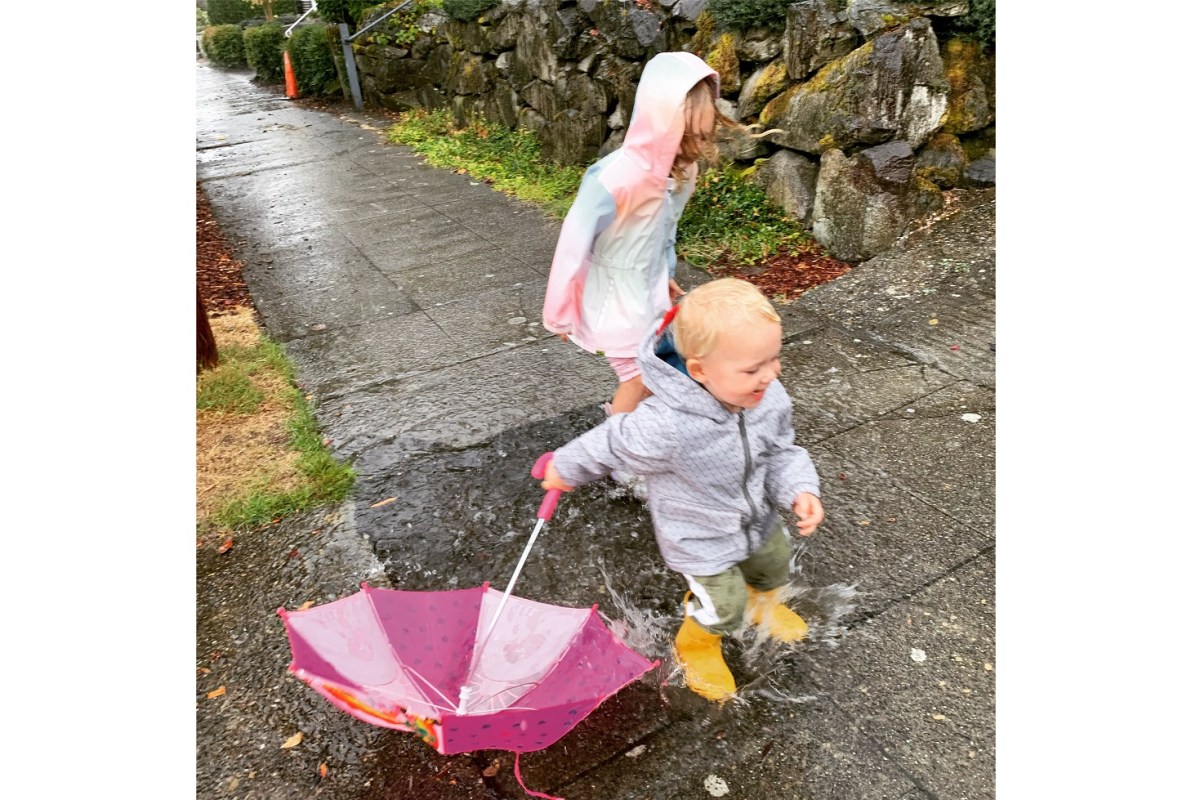
The other day I shook out the blanket that I keep outside for lying on the grass in summer and my son immediately starting looking for the little farmhouse that we usually play with on it. I am fascinated by how quickly my kids make associations. Blanket = Little People farm. A particular cup = hot cocoa. Boots = puddles. Baths = lotion.

But that observation makes me realize how much I do it as well. Fall comes and I think of hot cider. I turn on Grey’s Anatomy and want a glass of wine. When I write I sit in one chair and when I work I sit in another.

It seems to be a way to winnow down our choices so that we don’t have to make as many decisions. But every once in a while a pattern crops up that reminds me of where I stuck. The other day my daughter was carpooling with friends and they asked if there was a particular car she didn’t like. She said BMW’s. And they asked why and she said it was because her mom didn’t like them.

I had to laugh when my carpooling friend told me this story. My daughter and I had been talking about cars and I’d offhandedly said that I didn’t like them because it seemed like the drivers bought them for image. Which is a very unfair broad generalization that I never thought would be repeated. The fact is, my ex-husband bought one to bolster his image and so I created the association. I’ve been over that relationship for some time so I shouldn’t punish BMW drivers forever.

Meditating on this, so many associations came up for me. Many of them are ones that make me smile – places that I walk that remind me of my beloved dog and phrases when I hear them that bring back my dad.

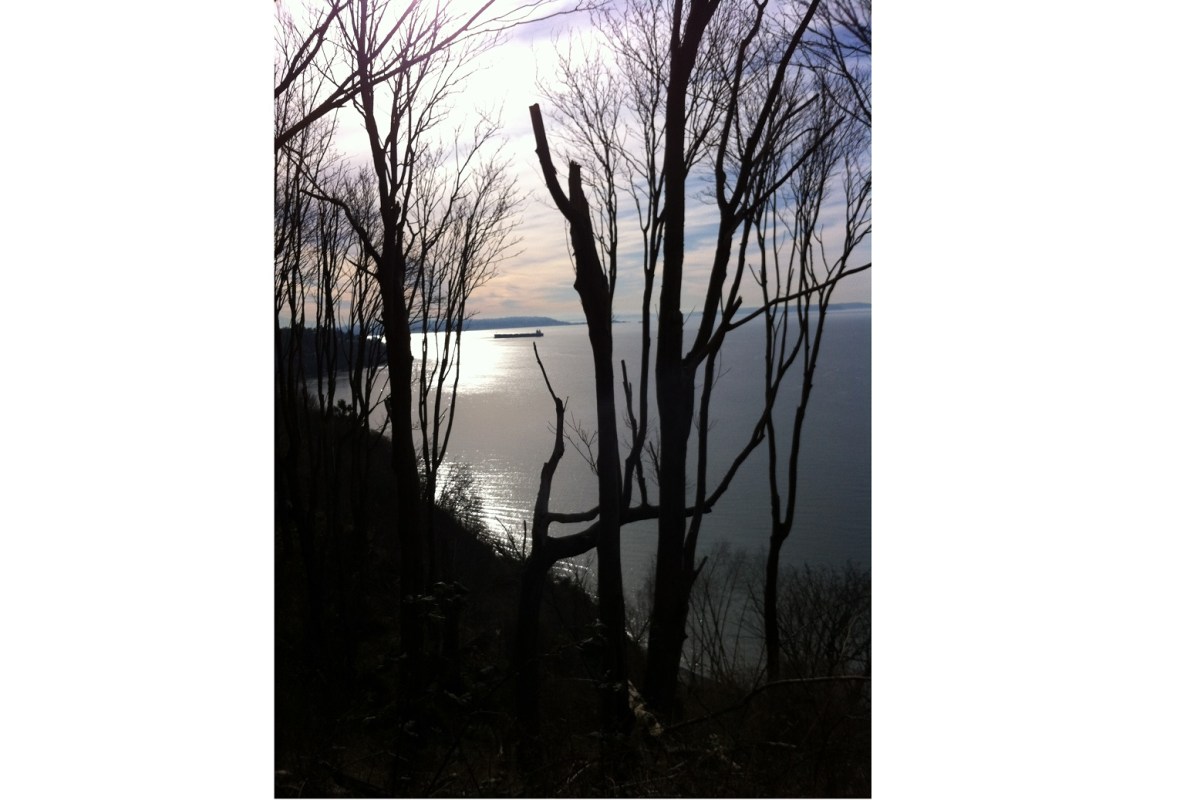
And one that I wasn’t expecting. I miscarried a baby four years ago. When I heard the news, I went to hike a beautiful trail that overlooks Puget Sound. This trail had been my go-to for any time I needed to think. The wind seems to whip whatever is inside me out into the open and the view puts it into perspective.

As I was thinking about associations, I realized that I’ve never been back to that trail since the day I heard the news about my miscarriage. Obviously I went on to have a beautiful son and so I filed the miscarriage away as old news. It isn’t something that I mourn or think of as painful. It just was. But every time I think of hiking that trail, I think “nah” without ever digging deep for the reason.

Life keeps teaching me I can carry around wounds or scars. If I choose wounds, they drain a lot more energy as they try to heal without ever been unpacked. But if I do the work to clean them out and then heal into scars, they just become part of the patchwork quilt that is me.

All of this introspection is a great reminder to me that I can pass things on based on my loves or my losses. And given how easily they clearly stick for my kids, I think it’s time to heal those wounds before any other misguided association gets repeated!

Happy Families

There is no greater agony than bearing an untold story inside you.” – Maya Angelou

My mom told me that one of her friends from her retirement community keeps asking her about my kids. He’s 98 years-old, never married and has no kids, and he asks repeatedly about how I conceived them as a single mom and what I tell them about their parentage. As she was telling me this, I thought “Given that they didn’t even invent invitro-fertilization until he was in his 60’s, I can’t imagine what he thinks.” But in this most recent conversation they had, he started telling her about the traumatic childhood he had — his father’s abuse of his sisters, his mother’s nervous breakdown when she discovered the abuse and his mother’s instruction to him to make sure he never left his younger sister alone with his dad. At the end of relating the story he simply said to my mom, “I would have been a lot better off without a dad.”

This makes me so sad. First of all because I had a great dad. Nothing about what I’ve done is a commentary on dads in general. It was simply a matter of not having the right one for my kids and running out of time.

Secondly because of the shame he still seems to carry. The answer to his question about what I tell my kids is that I tell them whatever they ask but I don’t complicate it with more than they want to know at the time. The first time my daughter asked she said, “Did I have a dad when I was born?” and I said “no” and then she followed up with “Did I have a dog when I was born?” and I thought “that’s where you’re going with this?” and answered “yes”. We’ve had more in-depth conversations since then about me going to the doctor to become pregnant and a little about sperm donors but she’s not all that interested yet. I have no way of knowing how she or her brother will come to feel about this (and it’ll probably be many things) but whatever it is, I will do my best to make sure it isn’t shame. My primary tool to combat that is not to have any secrets about their origins.

I’ve been thinking a lot about a Tolstoy quote I recently came across, “Happy families are all alike, but every unhappy family is unhappy in its own way.” Given that Tolstoy lived long before invitro fertilization and also gay marriage, I’d say maybe in his time happy families were all alike. But they can look pretty different these days.

But I think Tolstoy was right that unhappy families have many possible reasons that can echo for a long time. I hope that we see my mom’s friend again soon and somewhere in the telling of his story and the grace of being interested in my happy children since he never had any of his own, he finds peace for his inner child.

Marking the Trail

The softest things in the world overcome the hardest things in the world.” – Lao Tzu

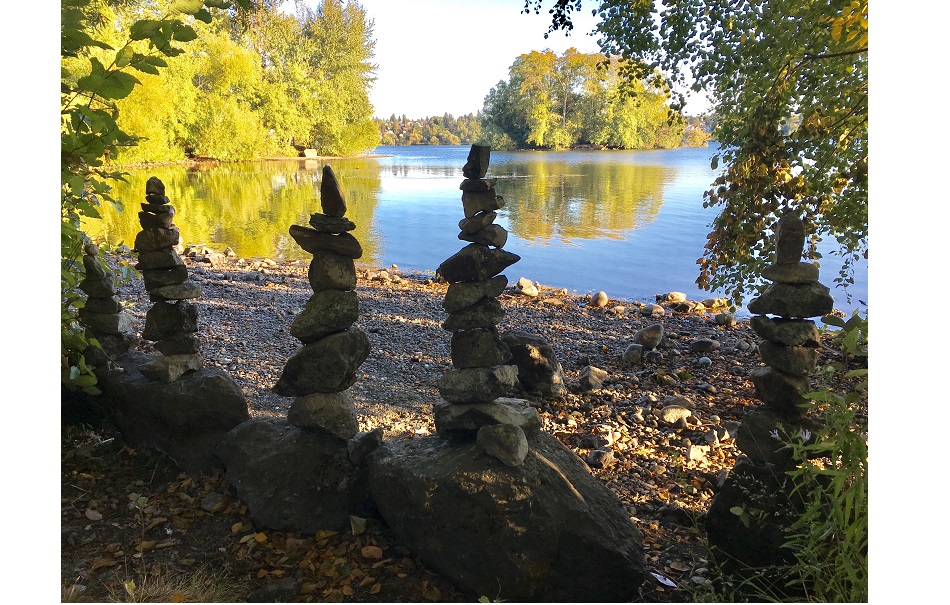
Almost 4 years ago I was out walking on the day after the mass shooting in Las Vegas and came across these beautiful rock cairns on the shore of a little local lake. It was a calm and quiet morning with the chill of October in the air and I just stopped in my tracks, wanting to spend a sacred moment in the presence of this inspired creation.

I imagined that in the wake of something so horribly violent, someone needed to make themselves feel calmer by creating something beautiful. Of course I’ll never know if it worked for them but I do know that just looking at this impromptu art installation worked to soothe that raw and exposed grief I was feeling.

When I think about whether anything I do, say or write has any meta-effect on the world at large, I think of those rock cairns. I might be working out my own grief, demons, cares and worries but if I do it in a peaceful and creative way, I have a small chance that it will express empathy and understanding for others walking a similar path.

Most of the rock cairns I’ve come across are on hiking paths marking the way to go. They are minimally invasive ways to communicate that the trail continues here. They are ways that one human tells another that they’ve walked this same way and don’t want anyone else to feel unsure or to be lost. May we all continue to be rock cairns for one another, marking the trail with peace.  

Five Pieces of Writing that Inspired Me: #3 Prayer

Ask and it will be given to you; search, and you will find; knock and the door will be opened for you.” – Jesus

Prayer is so personal that I got to the middle of my life either reciting a memorized prayer or confusing it with the jumble of thoughts, aches and needs in my head. But when I read this description from Frederick Buechner about a conference he once went to led by a faith healer, I all at once saw the possibility of miracle and longing in prayer.

I saw Agnes Sandford first in the dingy front hall of the building where the talks were to take place, and after no more than a few minutes’ conversation with her, I felt as sure as you can ever be in such matters that if there was such a thing as the Real Article in her line of work [faith healing], then that was what she was. She was rather short and on the plump side with a breezy matter-of-factness about her which was the last thing I would have expected. She had far more the air of a college dean or a successful businesswoman than of a Mary Baker Eddy or Madame Blavatsky. She seemed completely without pretensions, yet just as completely confident that she knew what she was talking about. She had an earthy sense of humor.

The most vivid image she presented was of Jesus standing in church services all over Christendom with his hands tied behind his back and unable to do any mighty works there because the ministers who led the services either didn’t expect him to do them or didn’t dare ask him to do them for fear that he wouldn’t or couldn’t and that their own faith or the faith of their congregations would be threatened as the result. I recognized immediately my kinship with those ministers. A great deal of public prayer seemed to me a matter of giving God something that he neither needed nor, as far as I could imagine, much wanted. In private I prayed a good deal but for the most part it was a very blurred, haphazard kind of business – much of it blubbering, as Dr. Muilenburg had said his was, but never expecting much back by way of an answer, never believing very strongly that anyone was listening to me or even, at time, that there was anyone to listen at all.

That was the whole point, Agnes Sanford said. You had to expect. You had to believe. As in Jesus’ parables of the Importunate Friend and the Unjust Judge, you had to keep at it. It took work. It took practice, was in that sense not unlike the Buddhist Eightfold Path. More than anything else, it took faith. It was faith that unbound the hands of Jesus so that through your prayers his power could flow and miracles could happen, healing could happen, because where faith was, healing was too, she said, and there was no power on earth that could prevent it. Inside us all, she said, there was a voice of doubt and disbelief which sought to drown out our prayers even as we were praying them, but we were to pray down that voice for all we were worth because it was simply the product in us of old hurts, griefs, failures, of all that the world had done to try to destroy our faith. More even than our bodies, she said, it was these hurtful memories that needed healing. For God, all time is one, and we were to invite Jesus into our past as into a house that has been locked up for years – to open windows and doors for us so that light and life could enter as last, to sweep out the debris of decades and drive back the shadows. The healing of memories was like the forgiveness of sins, she said. Prayer was like a game, a little ridiculous the way she described it, but we were to play it anyway – praying for the healing both of ourselves and others – because Jesus told us to and because most of the other games we played were more ridiculous still and not half so useful.

We were to believe in spite of not believing. That was what faith was all about, she told us. “Lord, I believe; help thou mine unbelief,” said the father of the sick son (Mark 9:24), and though it wasn’t much, Jesus considered it enough. The boy was healed. Fairy-tale prayers, she called them. Why not? Jesus prayers. The language of the prayer didn’t matter, and her own language couldn’t have been plainer or her prayers more unliterary and down-to-earth. Only the faith mattered. All of this she spoke with nothing wild-eyed or dramatic about her, but clearly, wittily, less like a mystic than like the president of a rather impressive club. And you could also get too much praying, too much religion, she said and when that happened, the thing to do was just to put it aside for a while as she did and do something else. She herself read murder mysteries, she said. Or just collapsed.

Listening to Your Life by Frederick Buechner