The Work of Friends

My friends are the beings through whom God loves me.” – Saint Martin

My six-year-old daughter’s friend called her bossy the other day. Oh-boy, did this touch a whole chain reaction of feelings in me, not many of them that I’m proud of. Judgment of the little girl, defensiveness for all girls who dare to live out loud, and an instinct to criticize the name-caller in order to reduce the sting to list a few. But more than that, an internal outburst at the insidious nature of learning so that just when I’ve finally figured out how to belong to myself and not worry too much about what anyone else thinks, life takes it up a notch so that I have to master NOT reacting on the behalf of my children.

Assuming (and hoping) that I have many years to go with this experience of supporting these children as they grow through self-acceptance and however they come to terms with the good and bad of other’s acceptance, I brought this question of how I was going to deal with it to the meditation cushion.

Here’s what showed up. I wouldn’t do my kids homework for them because it steals their opportunity to learn and grow. But I will answer questions, fuel their desire for learning, sit with them and hold their hands if necessary.

In the same way, I can’t do their social work for them. It also would steal their opportunity to learn and grow. So my job is the same – to sit beside them, help them uncover their own wisdom and hold their hands if necessary.

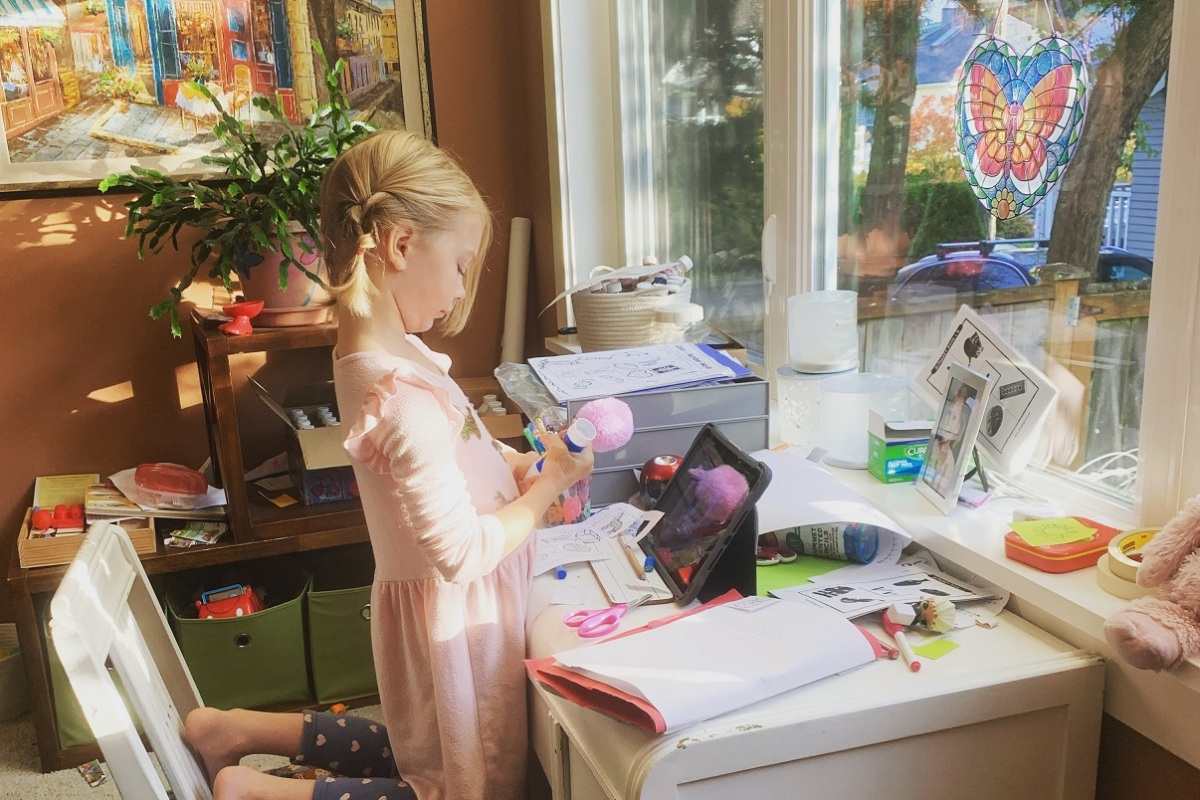
My daughter and I talked about how she felt. She decided to ask her friend if she had been called bossy, how that felt and talk about treating others the way she wants to be treated. I heard a little bit of the conversation and kept my mouth shut. As first steps in the realm of friendship go, it went okay.

Then I went and talked to my friends about this indirect experience of life that comes with parenting. More than anything, the fact that I’ve had these friends through many ups and downs in life and friendship, helped widen my perspective. I’ve never been able to solve their problems either. But through them I’ve learned to walk alongside others, letting go of what I can’t control and breathing in to the faith that showing up is what we are called to do with others and it works!

Listening, the Next Generation

The art of conversation lies in listening.” – Malcom Forbes

I’ve been discovering the joys of carpooling 6-year-olds this week. As we’ve driven the 25 minutes to camp, my daughter and her friend have been sitting in the back telling jokes and commentating on the things we see.

Her friend, a boy she went to both co-op preschool and now elementary school with, isn’t as quick with words as she is. So early in the week, we were playing a game where we were naming things in a category (like name how many places you’ve been to on vacation) and I found myself continually jumping into the conversation to remind him of words and answers he might have been searching for. I was afraid he wouldn’t ever get a fair chance given my daughter’s ability to rapidly pounce into any silence.

This phase of parenthood where I don’t always have to be the entertainer is both restful and fascinating to me. It seems so sudden that it’s upon us even though that’s probably just because we missed a good part of a year and a half being with other kids. As I pondered this, I realized I was struggling to just listen to my daughter figuring out how to listen.

It’s taken me a good part of 50 years to learn how to listen and I’m still working on it. To delay that part of myself that wants to jump in, ask questions, prove I’m listening, prove I’m worthy, or tell my story long enough to let my heart soak in what the other person is saying before responding. And also to find the quiet in myself so that I can hear the small insistent voice of the Divine when it speaks. Now, in the insidious nature of life taking lessons to the next level, I have to learn to just sit back and listen as my kids figure out the same knowing it could take them equally as long.

Yesterday as we drove, my daughter came up with this game where she put a ring in each of her hands and her friend had to guess which one was in which. After she’d done a couple of rounds, I so badly wanted to jump in and tell her to give her friend a turn but I stayed quiet. And a little while later her friend spoke up that he wanted to a chance to do the hiding. I’ve found a new delight in the art of listening: creating space for others to find their voice.

A Safe Place

Piglet sidled up to Pooh from behind. ‘Pooh!’ he whispered. ‘Yes, Piglet?’ ‘Nothing’ said Piglet taking Pooh’s paw, ‘I just wanted to be sure of you.’ “ – A. A. Milne from The House at Pooh Corner

The other day I picked my son up from preschool and my daughter from spending an afternoon with my mom and from the instant we were in the car together, the fussing started. My daughter was covering my son’s eyes and he didn’t like that, she didn’t like her attempts at play not being well received and the crabbiness mushroomed from there.

As a mom with two young kids, I’ve thought a lot about being someone’s safe place. My kids fuss, fret and freely object with me in a way that they don’t with anyone else. Often it’s after they have been somewhere else and behaved marvelously according the reports I get, that they fuss the most. It’s as if holding themselves together comes with this letting down of the hair with me. I’m pretty patient but whining gets my goat. I don’t whine (not out loud at least) and I hate (thinking about whether there is a less potent word to be used here but nope, hate is accurate) when my kids whine. Crying, having a fit, objecting strongly – all of that I can handle but whining, especially symphonic whining that moves from one kid to the next and ARGH!!

It’s the idea of being someone’s safe place that both fascinates and saves me. In a world where it’s not possible to be happy all the time but not acceptable to express anything but happiness, safe places are where we get to act out that shadow side. Our safe people are the ones who can help us process the grime that collects during the day and practice shaking it off, sometimes by creating friction and rubbing up against others who help us shine again.

When my daughter was about 3-years-old she became very interested in the Narrator in the Winnie-the-Pooh chronicles. She wanted to know who the voice was that was providing context and integrating the story. She’d want me to pretend I had a microphone and narrate her activities. I’ve come to think of being my kid’s safe place like being that personal narrator – someone who helps them understand the bigger story around the things they are seeing and learning when out and about in the world. Someone who helps them figure out how they are feeling and reacting to it all.

Once I learned from Mark Nepo that the German root of the word friendship means place of high safety it changed how I think of that hallowed ground between friends. Because I believe we do the same thing for our friends that I do for my kids – we help each other work out our stories. We listen to the bumps, bruises, moments of awe and renewal again and again if necessary until we work out our narratives.

When I see it that way, I feel less abused by the acting out. While I’d prefer that I bring out the best in my kids, I can handle when it seems I bring out their worst. I can find grace for the fact that I’m allowing the authenticity of my kids to show and opening the opportunity to talk about our values, respect for others and ways of handling things when we are overloaded with information and activity. And when I sometimes growl, “Stop whining” which isn’t my best either I’m glad I get to work that out in my safe space too.
A Thin Place

“Nothing among human things has such power to keep our gaze fixed even more intensely upon God than friendship.” – Simone Weil

We baked cookies for our neighbor and her husband yesterday. They have been taking 24/7 care of her elderly mom for a week now since she suddenly became sick and unable to care for herself. My daughter made a card for them and we put the card with the cookies and some puzzles and set off to deliver them. My neighbor’s mom only lives around the corner. My daughter wanted to carry the basket and when she handed them over, our neighbor cried. Then I cried.

It was a holy moment, the kind of moment that Bishop Michael Curry of the Episcopal church calls a thin place where God is just that much closer. The unexpressed weariness and worry in our neighbor met the softness of a kind gesture and out leaked some tears from the River of Life.

I’m completely flummoxed by how to teach faith to my kids. I look back to the Sunday School and all the church activities from my youth and while they were fun, I just didn’t get it and neither did my siblings.  It was only life in it’s raw, humbling way that made me search for the wider current that unites us all. Now I can tell you Christian stories, practice Buddhist-inspired meditation, find God out in nature and read anything deep in order to keep life vital.

So I’ve tried Sunday School for my daughter as a base hoping that it starts the seed that will grow into whatever works for her. But yesterday, witnessing two grown-ups cry over a plate of cookies while the spark of the Divine crackled in the air taught more than 100 Sundays. Even my toddler just stood there smiling watching something he didn’t understand. It reminded me that the unplanned lessons sometimes are the best.

You Should Say “Thank You”

“Wear gratitude like a cloak and it will feed every corner of your life.” – Rumi

My 5-year-old got a new bike from her grandmother. We intentionally got it bigger because she’s growing so fast but it means she can’t touch the ground while sitting on the seat. So the way she was starting by pushing off with her feet and stopping while sitting on the seat wasn’t working. To help her practice, I was helping her start on the sidewalk out front of our house and then running about 200 feet to the corner and helping her stop. The standard parenting job for kids learning to ride bikes. We were doing it for about a half an hour, I was dripping with sweat when on one of our runs she says over her shoulder, “You should thank me.” And I huffed out the question as I ran, “For what?” She replies “For slowing down so you could catch up.”

If I could have belly laughed while running and out of breath, I would have. But it also rang an interior bell for me – how many times in life have I felt pretty smug for what I was doing and completely missed the big picture of what God was doing?

It reminds me of the time about a year and a half ago when I invited a family I didn’t know to live with me for three months. I wrote about it in my post Power Stance. I was feeling pretty gracious for being willing to open my house when I had a newborn and 4-year-old. But yesterday as I sat talking late into the night with the mom of that family who came this weekend for a quick visit, I realized that it was completely analogous to my daughter on the bike. While I was feeling so self-satisfied, God had been working to give me a lifelong deep friendship with a kind and thoughtful woman who affirms my spiritual nature. Now there’s something I should say “thank you” for!

I assume that it’s a little like riding a bike. Once we learn to balance on two wheels and get some momentum, we gain a whole lot of confidence and freedom. But every once in a while we skid on a patch of gravel and remember to say, “thank you!”  

Making Friends in Online Kindergarten

“Those who bring sunshine to the lives of others cannot keep it from themselves.” – J. M. Barrie

When I took my daughter to her five-year-old check-up this past fall, the doctor asked how online Kindergarten was going and she answered, “It’s stressful.” And it was! In this year of virtual Kindergarten, my daughter colored on her iPad with a crayon, learned a great deal, and much to my amazement, also made friends.

I’m so grateful to Seattle’s Child Magazine for publishing my essay on making friends in online Kindergarten.

Renewal Isn’t Just for Spring

“When you are finished changing, you are finished.” – Benjamin Franklin

I was talking with a friend who is having a hiccup in a long-standing relationship she has with some friends, a couple. We were talking about what was frustrating her and how she views them and their history and it seemed clear to me as an outsider that there was a different way to see it. She decided that there were two ways she could proceed, do nothing and trust that God would help work it out or to speak up and say something, though she wasn’t quite sure what. I asked her if she felt like the relationship needed to change even if it was her that had to change, maybe just by seeing them differently? She wasn’t sure.

Which I think was a fair answer but it made me wonder, when do we say “yes” to change? I think back to long before I had kids, when I was married and was dying in a relationship with someone who needed a lot of care but gave very little back. And still, I was hanging in there until someone told me of his infidelities and it all blew up. Best thing that ever happened to me. But, why was I unwilling or unable to make a change before then even though I knew I was unhappy was largely about not wanting to break my word.

Recently I read a blog post by Rebecca that told of her experience of being laid off after more than 30 years when COVID hit. She walked through the dismay and disbelief that this happened and then she did the work to reframe it as best thing that could have happened to her. Is it loyalty that keeps us from changing before it’s foisted on us?

I assume that we aren’t in charge of the big seismic shifts that happen to us. They come along to blast us out of our ruts when we’re in too deep. So instead I’ve been working on recognizing that everything is seasonal. If I like something, perhaps the way my baby runs to me for reassurance when he hears a loud sound, that’s great but it’ll change. And if I don’t like something like how hard it is to clip the baby’s fingernails, that’s also okay because it’ll change. I look outside and watch my yard grow, bloom and shed and try to stay soft.

We can embrace renewal from within or be eroded by change from the outside. In my lifetime, both have and will continue to happen and what I’m finally realizing is that the benefit of embracing it is that it’s a lot more graceful. The flexibility that I am trying to practice on little changes helps keep me from stiffly falling over when the big changes come. Talking through this with my friend helped me see this in my experience of relationships as well. Planting that seed with her, the idea that change is always happening, helped her see it a little differently and she found the words she needed to say to be a part of where’s it’s going. That inspired me to see her differently and so the renewal grows and grows!

Vulnerability and Courage

“I believe that you have to walk through vulnerability to get to courage.” – Brene Brown

My friend sent me an email the other day that made me feel like the wind was knocked out of me. It said in essence that she was hosting Thanksgiving at her house but we weren’t invited. There are so many ways to explain this away – she didn’t mean it to be hurtful, the pandemic has made gatherings risky so to protect our older generation this is wise and so on. But the fact of middle age is that we very rarely wound each other. Our lives and patterns of communication have solidified so that no one needs to either extend themselves very far nor risk being hurt. It was such a surprise for me to feel so pierced that it threw me and my productivity off kilter for the rest of the afternoon.

I’ve been listening to a lot of podcasts about vulnerability. it started with University of Houston research professor Brene Brown but now I’m finding that thread in so much of what I’m reading and listening to. That vulnerability means that we are daring to live out in the open, to try things and to fail, that if marks whether we are doing something meaningful. And by meaningful, I mean meaningful as in measured by personal growth.

So I’ve been consuming all this content about vulnerability, I know it’s one of my weaknesses and then my friend sends that email that hurts me. My first reaction was to hide, to pull back into my shell and just nurse the wound. I’m a pretty affable person and I can shake things off as unintended. But one of the reasons the email wounded me is that it feels like my friend often makes unilateral decisions without consulting me. And the second reason is because I secretly fear that I value her friendship more than she values mine. And the third is because I’ve never told her the previous two reasons.

Instead of hiding, I waited a few hours and sent an email back saying that I was wounded. I’ll be honest here – it felt yucky. Her response was lovely and though we probably won’t still get our families together for Thanksgiving as we have for every year for the past ten, it won’t stick like a turkey bone caught in my throat blocking my ability to breathe or be grateful. I continue to feel a little tender but within that tenderness is a kernel of additional belonging that I didn’t have before. I can speak my truth and still be accepted. My right to be here isn’t conditional on me behaving affably. I feel a little more wise about how to coach my kids about friendship. I crossed that chasm between learning about something and doing something and it makes me feel brave!