Moral of the Story

Follow your inner moonlight; don’t hide the madness.” – Allen Ginsberg

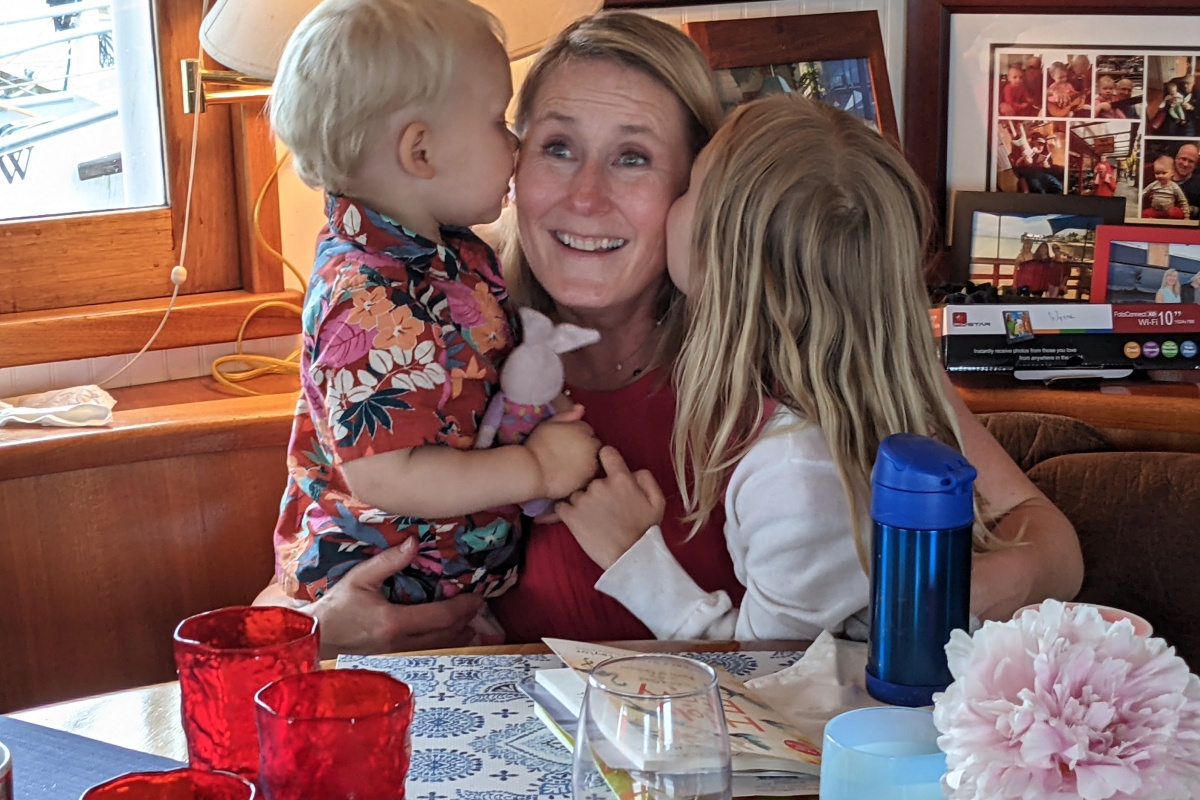
My 6-year-old daughter told me a story she heard from her Parkour coach, Lewis.

Lewis and his brother were at a water park. On one slide, there was a man and his daughter in front of them. The man, who was really big, put his daughter on his lap and pushed off when it was his turn.

When it was Lewis’ turn, he found that the man had gotten stuck and he had to push him all the way down the slide. At the bottom the man said, “That was fun!”

My daughter then turned to me and said, “Do you know what the moral of the story is?” I waited with baited breath until she revealed, “When you go to a water park, you’ve got to have fun!”

Ha, ha, ha. Not the moral I was expecting. But we all get to have different takeaways on this thing called life!

Dispelling Shame

What you cannot turn to good, you must make as little bad as you can.” – Thomas More

We bumped up against shame a couple times this past weekend. As always, it left a mark.

The first time was when a group of young kids, including my 6-year-old daughter and her friend were looking into a stream that’s on the way to the salmon spawning grounds. They weren’t doing anything wrong and I believe the grown-up that was with them was making sure they weren’t going to but an activist yelled at them in case they were thinking of stepping into the water.

The second was when my daughter dropped an old iPhone that I’d given her to play with. It’s so outdated that it doesn’t have any value to a grown-up and can’t connect to the Internet but it does turn on and take pictures. She’s old enough now to understand the cachet of a phone and was so excited that she even put on jeans so that she’d have a pocket to carry it in.

But when she discovered that after dropping it a few times the screen had cracked, she followed suit and cracked. Her melt down was in part because she accurately assessed that I wouldn’t replace it. But more than that, she was ashamed that people would know she was a person who couldn’t take care of a phone.

Shame reminds me of an incident when I was 18-years-old. I was with a group of guys in a bar in Idaho. We were too young to buy drinks so we were just standing around when someone who we’d helped tow his boat earlier in the day offered to buy us a pitcher of beer. I was the closest and because I didn’t drink, I said, “no thank you” even though I meant “not for me.” The guys I was with could have killed me. But no one said anything.

This incident still marks me more than 30-years-later because I’ve never talked about it. I felt like a goodie-two-shoes even though I didn’t care – I just misspoke. Even typing it makes me feel that burn all over again. It’s because it’s so trivial and yet I still remember that I know how powerful shame can be.

After the incident at the stream this weekend, my daughter and her friend bumped into each other and they got into a kerfuffle about space. As an observer, it was clear it had nothing to do with who bumped whom and everything to do with discharging the shame of being yelled at by a stranger when they very much like to follow the rules.

The night the phone cracked I sat with my daughter at bedtime and we talked about shame. About how silence and secrecy are the things that shame feeds on and if we want to stop the shame spiral, we have to talk about it lest we give it the power to make us feel unworthy.

As we talked, I realized that I was confused as a parent about which message to emphasize because I think taking care of the things we own is important. But making the distinction between it was bad to drop the phone and being a bad person because she couldn’t take care of the phone was more important to me. Because shame leaves a mark. But how deeply etched the mark is depends on how quickly we can pull out of the shame spiral.  

As a postscript, when my mom came over last night, my daughter pulled out the phone she had hidden when she was ashamed and talked about what was on the phone, how it got cracked and what we need to do to take care of our stuff. It was like getting immediate feedback on a test and we passed. Phew!

Truth Telling

Honesty is the first chapter in the book of wisdom.” – Thomas Jefferson

The other night we were with a family from school and the dad started to tell a story and then turned to his 4-year-old son and said, “James, can I tell a story about you?”

Such a sweet moment of respect and communication. It started me ruminating about how it gets more complicated to tell the truth as our lives get more intertwined. I try to be careful not to tell stories about my kids that I think they would mind reading 10 years or more from now but of course that’s a judgment call.

It reminds me of a story I heard the other day about a friend of a friend. On the outside, everything looks perfect – she’s attractive, healthy, has plenty of money, married with two grown kids, has a cute new puppy. But she’s unhappy, mostly because her marriage isn’t working for her. Nothing is egregiously wrong but her husband is busy with his work and friends and so he’s not interested in making a vital relationship. So she’s working on taking on new things – most recently writing. And here’s where I’ve imagined it lands –if she tells the truth, it’ll crack her life apart.

Of course this resonates for me because it was me 13 or 14 years ago when I was married. Everything looked fine from the outside of my life but on the inside I was starving. I had a husband, who as my dad gently put it after we divorced, “Loved to be loved.” The core of me was stifled into silence because it knew that if I spoke up and said I wanted more depth and meaning than just taking care of my husband it would be the beginning of the end of that relationship. I drank a lot of wine at the end of each day. Numbing was the only thing I could do to stay and not tell the truth.

I know I’m in trouble when I have to stuff down what I know to be true in order to do something. Having gone through it in my marriage, the moment I get a whiff of a situation that can’t withstand the sincerity of living out loud, it screams DANGER to me. When I write or say the small things that I haven’t dared to acknowledge outside myself before but I know are real, it feels vital and like a bridge to others that will hold up because it’s true.

So where does that leave my family? I think like the father the other night, asking to tell a story is a pretty good idea. And the story the dad told was about sitting in a car with his four-year-old, not paying attention to him because he was doing something on his phone. Finally he realized that his son, who he didn’t know could read, was saying, “It says ‘Pizza Bar.’” Hearing that story reminded me not only to ask my kids if I can tell a story but also to remember that they have learned to read or soon will. My truth needs to be told without risking anyone else’s.

The Conditions of Creativity

“Fill the paper with the breathings of your heart.” – William Wordsworth

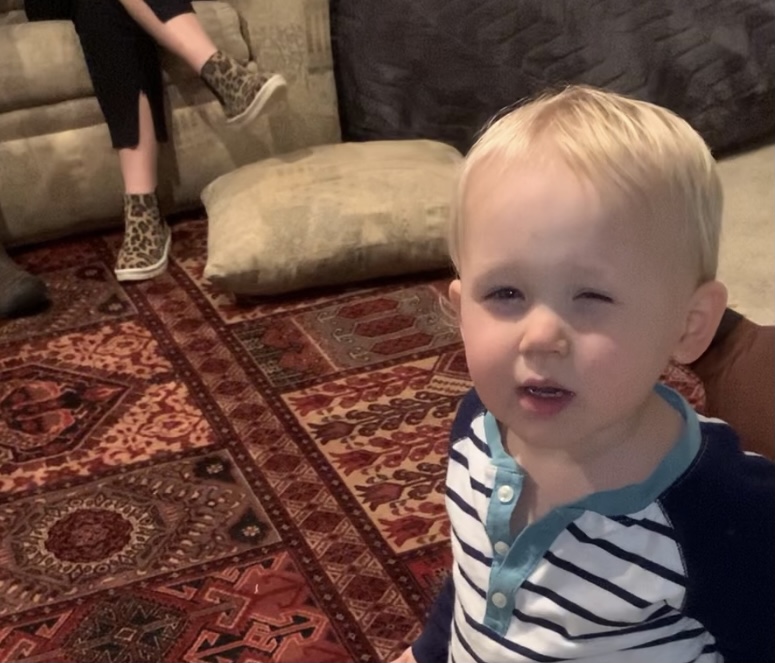
The other night we had some friends over. In the raucous atmosphere of an audience after so many months without one, my kids were showing off. My toddler was falling off a bouncy horse over and over and when I went to video him on the fifth time through, I asked, “Did you do that on purpose?” and he turned to me and winked.

It has taken me five days to write about that one funny and wondrous moment of connection with a not-yet verbal human. For me, I need to write in the morning, when I am still fresh from sleep. I can’t write when taking care of my kids, I can’t write in the middle of the day when I’m in work mode, I can’t write at the end of the day when I’m completely worn out. I once heard an interview with the author Ursula Le Guin and she said something about writing whenever she could. Except when her kids were young because she said, “of course you can’t write when your kids are young.” My reaction at the time was, “Why not?”

But now I’m starting to understand three things about being in the thick of life. First, that the moments that I see into the depths of life are precious. Just because we love them doesn’t mean our loved ones can’t muddy our waters. Second, that I can’t be a participant and an observer at the same time. Like the danger of being behind a camera on vacation, seeing everything through a viewfinder with one eye closed instead of seeing the full experience, I can’t digest the meaning of whatever is happening at the moment without creating a barrier to whole-hearted participation. I have to process it later. And third, that the conditions of creativity must be right to write. Even though my kids are so much of the inspiration of living without reservation, the attention they require engages my head in a way that blocks the quiet presence of the heart behind my words.

So I’ve waited until I was clear before writing this to you. That I can do so feels like a miracle, having a free moment, finding some words and depth about how they come, and even to have a medium that allows me to connect with others. It feels a lot like that wink from my son, a small sign that we might truly be communicating. Hopefully the sacred flow of creativity stays open long enough for me to ring true for you.