My Window Washing Friends

A friend accepts us as we are yet helps us to be what we should.” – anonymous

When we arrived at the place on the Whidbey Island beach that we are staying this week, the windows facing the water needed to be cleaned. Last year when we rented this place for vacation, I didn’t think to wash the windows until the end of the time we were there.

But in the spirit of live and learn, I remember this year on the second day we were here. Luckily, two of my dearest friends, Katie and Eric were with my kids and me on that day and we washed off the salt spray residue together.

I think window washing is one of my new favorite metaphors for friendship. Dear friends are the ones who you allow to see through the most transparent layer. They are the people who help wash your interior windows. Friends as the people who know when your outlook has gotten grimy and apply a good helping of elbow grease to clear it. And who you trust when they say, “Looks good!”

I could run this metaphor into the ground. But I’ll stop there and say how grateful I am for dear friends who make washing windows fun!

Because it’s a great segue to the podcast episode my dear friend, Vicki Atkinson and I did this week. Dr. Stein has become a great friend of the Sharing the Heart of the Matter podcast so it was so fitting that he came on to share revealing and delightful stories about friendship.

He tells of the three categories of friendship according to Aristotle. And we talk about the investment that it takes to build a platonic relationship with another.

Of course, with investments come payoffs. And Dr. Stein coaches us through how to think about that term when it comes to friendship.

In the course of any lasting relationship, apologies come into play. Dr. Stein tells us some wonderfully illustrative stories about apologies that help to get to the heart of apology.

I’m certain you’ll enjoy the scenic and beautiful places we go when we share the power of story.

We know you’ll love it!

Search (and subscribe!) for Sharing the Heart of the Matter on Apple, Amazon, Spotify or Pocket Casts OR Listen to it from your computer on Anchor: Episode 78: The Blessings and Responsibilities of Friendship with Dr. Gerald Stein

AND subscribe to our YouTube channel to see a video clip of each story: @SharingtheHeartoftheMatter.

(featured photo from Pexels)

Links for this episode:

About Friendship⁠ by Dr. Gerald Stein

⁠Becoming Close Friends: A Practical Guide ⁠⁠by Dr. Gerald Stein⁠

Episode 78 post by Vicki Atkinson on Sharing the Heart of the Matter

Dr. Gerald Stein’s Blog: ⁠Dr. Gerald Stein⁠

Other podcast episodes with Dr. Stein:

⁠Episode 60: The Perils of Prediction with Dr. Gerald Stein⁠

⁠Episode 46: Being Your Own Best Friend With Dr. Gerald Stein – Part I⁠

⁠Episode 47: Being Your Own Best Friend With Dr. Gerald Stein – Part II⁠

⁠Episode 37: The Waiting Game with Dr. Gerald Stein⁠

⁠Episode 29: Accidental Philanthropists with Dr. Gerald Stein⁠

⁠Episode 20: The Art of the Interview with Dr. Gerald Stein⁠

From the Hosts:

Vicki’s recently released book: ⁠Surviving Sue⁠

Wynne’s book about her beloved father: ⁠Finding My Father’s Faith⁠

The Art of Apology

And now that you don’t have to be perfect, you can be good.” – John Steinbeck

This piece was originally posted on 3/9/2022. Heads up – you may have already read this.


The other night my two-year-old son wanted me to get a step stool out of the closet. As I was lifting it out of the storage space, he reached for it and his littlest pinky finger got pinched in the hinge that connects the sides of the ladder as it opens.

Yikes! I put the step ladder down, scooped him up and said, “I’m so sorry.”

I wanted to say, “But you need to wait til I get it all the way out.” And “That’s why these things are grown-up things.” And probably 15 other things in order to make myself feel better because I very much didn’t like being responsible for an action that pinched his finger.

But I didn’t, because I remember listening to a podcast with psychologist Harriet Lerner on Brené Brown’s Unlocking Us series that was like a master class on apologies. It was 2 years ago and so well done that I still remember some talking points. One being “When ‘but’ is tagged on to an apology, it undoes the sincerity.” If there is a genuine counter point or excuse to the apology, it needs to happen as a separate conversation.

So I looked up some more details from Dr. Lerner’s book, Why Won’t You Apologize: Healing Big Betrayals and Every Day Hurts. She notes there are cultural differences when it comes to apologies. There are also gender differences – males are more likely to be non-apologizers, women are more likely to be over-apologizers. But for anyone trying to craft a sincere apology, here are some pointers she provides of things not to do:

  • Saying I’m sorry you feel that way: These are apologies that don’t address what happened but instead try to target the emotions of the other party.
  • The “IF” apology: I’m sorry IF you thought is a weaselly effort to not own what happened.
  • The mystifying apology: What is it that the apologizer just said? Apologies that usually are too wordy and talk around the issue, leave the other party feeling confused.
  • The apology as instant expectation of forgiveness: I apologize now you must forgive me is a quid pro quo that undermines the apology as a genuine offering and not just a means to an end.
  • Not listening: If we don’t hear the injured party out, they will not feel heard and any apology will fall short of the entire wound.

So what is a good apology? A simple statement expressing remorse for the action we are apologizing for, owning what we did, not taking more that our share of blame (because that comes across as insincere) and not trying to speak to how the other person feels.

Just thumbing this book reminded me of some old wounds that I was surprised to find hadn’t fully healed over because I can still think of the poor apologies I’ve received. The down-played sorry – “I’m sorry that I called you a ‘brat’ when I was feeling crappy” when that wasn’t the word used at all. The blame-shifting excuse: “I was feeling sick, what was I to do?” when someone no-showed/no-called to the birthday party I threw for her. And the non-apology because the person who caused the injury paraded around all his own hurts as a way to claim he couldn’t be responsible for his actions.

And it also brought to mind incidents where I owed an apology and fell short. The little hitches where I still feel a little guilty or ashamed because my actions were thoughtless, careless, or uninformed and I never had the guts to address it properly.

All these memories make the case of how important a good apology is. As Dr. Lerner says, “I believe that tendering an apology, one that is authentic and genuinely felt, helps the other person to feel validated, soothed and cared for and can restore a sense of well-being and integrity to the one who sincerely feels she or he did something wrong. Without the possibility of apology and repair, the inherently flawed experience of being human would feel impossibly tragic.”

This makes me think of one of the best apologies I’ve ever heard. When my friend Jill was feeling tender because something her partner did, he said, “Please tell me what I did so I can never do it again.”

Fortunately having two young kids gives me plenty of opportunity to apologize. Thankfully it’s usually for skinned knees and stubbed toes for which I have no responsibility but am still sorry they happen. Then I get to participate in the healing. As my son said for the pinched finger incident, “Mama, kiss it?” And then we get to continue growing and learning, all the while in relationship to each other.


Saying “I’m sorry” reminds me of the power of keeping it simple. I’ve posted about The Power of Short Sentences on the Wise & Shine blog today.

(featured photo from Pexels)

The Confidence to Be Wrong

There is no better test of man’s integrity than his behavior when he is wrong.” – Marvin Williams

My dad was a very good apologizer. He had a favorite quip, “If you have to eat crow, eat it early when it’s tender.” When we sat down to talk in-depth when he was in his late 70’s, in what turned out to be his last couple of years before he died suddenly in a bike accident, he readily admitted his mistakes without defensiveness or blame.

For instance, in the 1980’s, the Presbyterian church adopted the rule not to ordain gay ministers and my dad went along with that policy in the churches he led. When I talked with him about it in 2012, he said, “I was wrong.” He didn’t try to hide behind the policy of the church overall or explain it away because the fear about AIDS at the time.  He told me, “You learn in ministry that you move to the problem, not away from the problem. When a problem arises, that’s the same issue you mentioned with procrastination. When an issue arises, you jump in and if you are going to get beat up, get beat up right away. Don’t wait til later. If you have to apologize and ask for forgiveness, do it quick.

But I hadn’t put together his willingness to admit he was wrong with confidence until Dr. Gerald Stein put it together for me in a comment he made on the Airing the Wounds Out post. He said, “Confidence and acceptance play into the surrendering of the desire to rebut every criticism.

The confidence to be wrong. The ability to lean in to what we haven’t done well and try to do better without contorting ourselves in all sorts of unnecessary shapes in order to try to avoid the blame. It seems to work on two levels.

The first is to lean in and keep us open to life. Our spiritual traditions speak to this idea. The Roman Catholics have confession. The Buddhists talk about egolessness as explained by Pema Chödrön,

“In the teachings of Buddhism, we hear about egolessness. It sounds difficult to grasp: what are they talking about, anyway? When the teachings are about neurosis, however, we feel right at home. That’s something we really understand. But egolessness? When we reach our limit, if we aspire to know that place fully – which is to say that we aspire to neither indulge nor repress – a hardness in us will dissolve. We will be softened by the sheer force of whatever energy arises – the energy of anger, the energy of disappointment, the energy of fear. When it’s not solidified in one direction or another, that very energy pierces us to the heart, and it opens us. This is the discovery of egolessness. It’s when all of our schemes fall apart. Reaching our limit is like finding a doorway to sanity and the unconditional goodness of humanity, rather than meeting an obstacle or punishment.”

When Things Fall Apart by Pema Chodron

I was in my mid-20’s when I cheated on the guy I was dating. When I eventually broke up with him, I didn’t tell him the truth when he asked if there was someone else. It wasn’t until 4 years later when he sent me an email that I finally told him. It didn’t make us fast friends, but it finally made us honest friends. I didn’t have the confidence to be truthful right away because I wanted so much to be liked and I did a lot of damage to us both in the meantime.

Which is a segue to the second part, to do it quickly. That’s advice that is also common in the high-tech world as a business strategy called failing fast. It refers to the strategy to identify ideas that don’t work quickly before you get too invested in them. It works because one of the things that undercuts our confidence is rumination and overthinking. When we get caught up in the cycle of second-guessing and reviewing where we went wrong, we move out of action and into our heads. Authors Katty Kay and Claire Shipman explain:

“Failing fast allows for constant adjustment, testing and then quick movement toward what will actually work. The beauty is that when you fail fasts, or early, you have a lot less to lose. Usually you are failing small, rather than spectacularly. And you have a lot to gain from learning as you fail.”

The Confidence Code by Katty Kay and Claire Shipman

As I discovered from watching my dad, it takes a lot of courage to be wrong. But when you can do it well, it actually builds confidence because we do it quickly, stay open and can move on.

This is my 7th post on confidence. The others are:

I Can

Fear and Confidence

Growth Mind-set

Bossy Pants – Confidence and Leadership

No Name Calling

Speaking Up

(featured photo from Pexels)

Simple and Direct

The problem of distinguishing what we are and what we are not responsible for in this life is one of the greatest problems of human existence.” – Dr. Scott Peck

We were at a community swimming pool the other day when we walked by a grown-up forcefully saying to a boy who looked about 12 years-old, “Stop talking. All I hear from you is blaming others, saying how they made you do what you do instead of taking responsibility. Stop talking.”

It was easy to have great sympathy for both of them. The grown-up who also had 3 other children younger than the boy with her and the boy who looked stunned to have a grown-up yelling in his face.

Thinking about it, it reminds me of the quote for this post, a great line from psychiatrist and author, Dr. Scott Peck, “The problem of distinguishing what we are and what we are not responsible for in this life is one of the greatest problems of human existence.

We all personalize or project. When we personalize, we think that everything happens has to do with us. If the boy at the swimming pool personalized, perhaps he thought that the grown-up’s mood was his fault. And when we project, we take our feelings and color everything around us.  In the swimming pool scenario, the grown-up could have been tired and frustrated after the effort to get four children dried off and changed after swimming so she projected that frustration onto the boy.

Dr. Peck wrote that we all exist on a continuum between neurotic and character disordered. When we are neurotic, as I tend to be, we take too much responsibility for things and when we are character disordered, we take too little. We see it all through our lens and then it’s a struggle to find a way to just own our part.

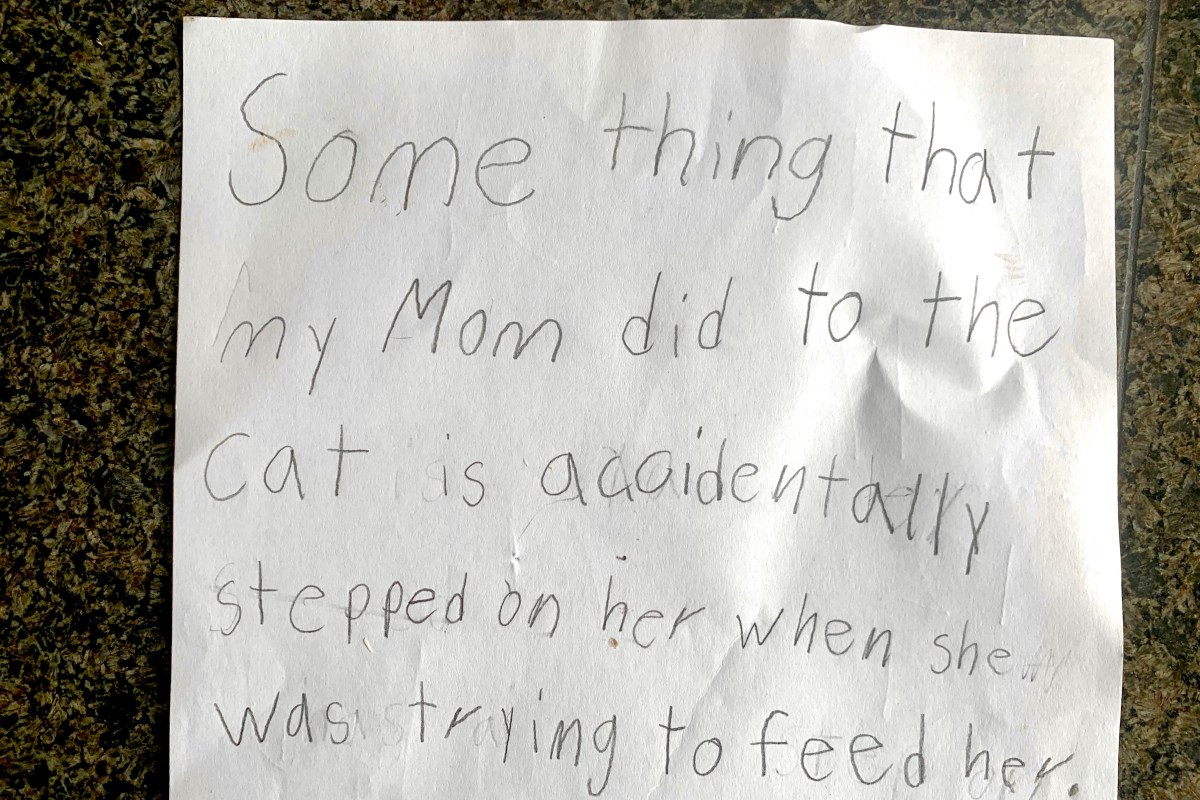
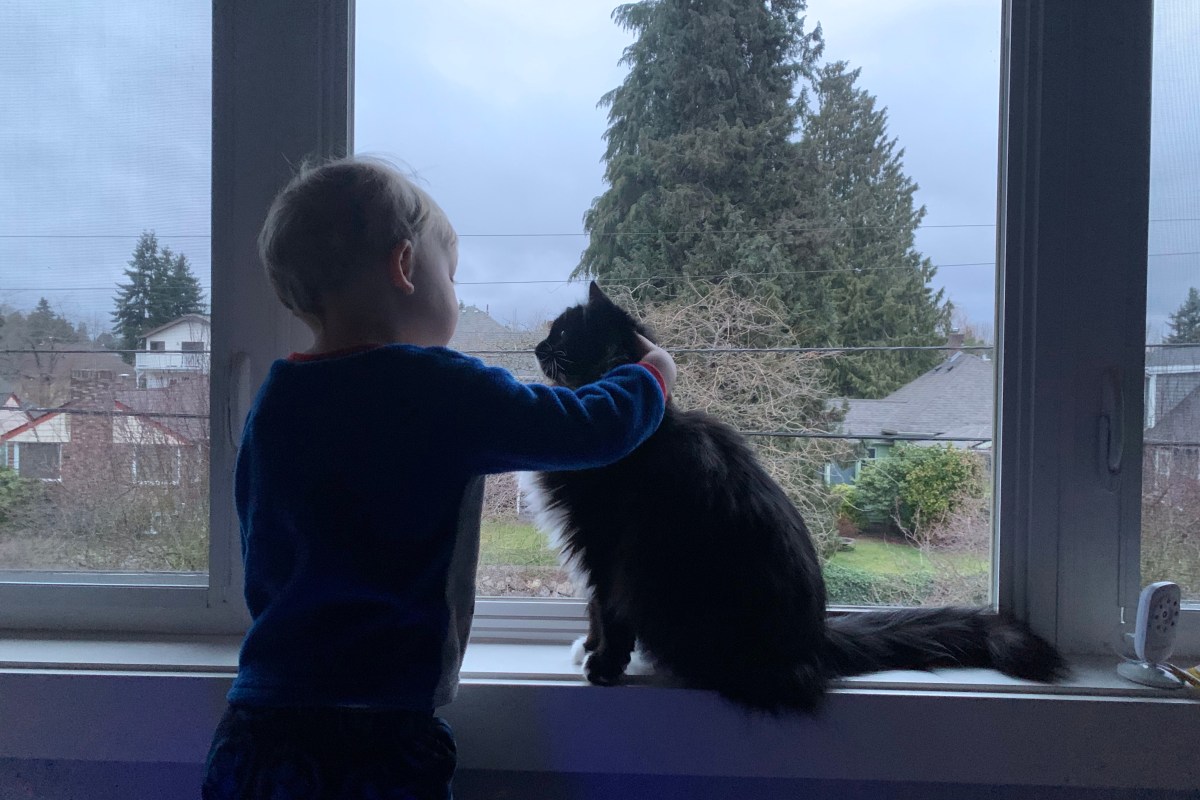
It’s a hard thing to teach to my kids since I’m still working it out myself. But I’ve been practicing just being direct – not embellishing either why it happened or owning too much or the scenario. When I step on the cat’s paw when she is winding her way around my ankles as I feed her, I try to model just saying “I’m sorry I stepped on your paw” instead of “I’m so sorry, it’s all my fault” or “you made me do it, you shouldn’t have been underfoot.”

At the swimming pool, I walked by the intense scene and then went out the double doors just past them. I’ll never know if the boy was able to say, “I’m sorry I did that” and the woman to say, “I’m sorry I took my frustration out on you” but I hope so.

Pass the Sniff Test

When people show you who they are, believe them.” – Maya Angelou

I started this morning by apologizing at 5:15am. The cat was wending her way around my ankles as I fed her and I accidentally stepped on her little soft paw. It caused her to yowl and me to let loose with a stream of apologies.

It brought back a memory of a guy that I went on a handful of dates with after I got divorced. One time we went snowshoeing but had to drive farther than planned to find snow. When we returned a couple of hours later than expected, I knelt at the front door, ruffled my beloved dog’s fur and apologized to him.

The date, standing behind me said, “Never apologize to an animal.” I turned thinking he must be joking but he wasn’t that funny – and he wasn’t joking.

If we can’t apologize to our animals that depend on us for their well-being, never lecture in return and love us anyway, who can we apologize too?

So I didn’t go out with the guy again. No apology necessary. 😊

Anyone else have an example of a sniff test?

(featured image is mine)

The Ripple Effect

I’ve learned that people will forget what you said, people will forget what you did, but people will never forget how you made them feel.” – Maya Angelou

My dad once made a comment that when he focused on a topic for a sermon, there was a noticeable effect on his life. If he was preaching about parenthood, he’d be a better parent for that week. Likewise about being a better husband, friend or citizen as he focused on those topics.

As I was writing my post for Pointless Overthinking this week, The Art of Apology, I found the same ripple effect in my life. Reading through Dr. Harriet Lerner’s book Why Won’t You Apologize gave me so many great talking points for how to sincerely apologize and it also reminded me of the practice of accepting apologies, especially from kids.

Two points that really resonated with me. The first was not to brush off an apology with a “it’s no problem” when someone, especially a child, has worked up the courage to offer one.

And the second was not to use an apology as a springboard to a lecture. Responding to an apology with something like “Well, I’m glad to hear you apologize for hitting your brother because we don’t do that in this family” is the best way to make kids regret ever offering one.

When we apologize, we help heal the wound however slight for someone else. When we accept an apology, we affirm the courage of someone else to voice their mistakes.

As Dr. Lerner says “We take turns at being the offender and the offended until our very last breath. It’s reassuring to know that we have the possibility to set things, right, or at least know that we have brought our best selves to the task at hand, however the other person responds.”

The other day my 6-year-old daughter was making sticker art for people in her life. One mermaid that she made lost an itty-bitty piece of her tail and my daughter said, “I’m going to give this one to Nana. Because even though I lost the sticker, she’s a great forgiver.”

Isn’t that a great way to be known?