The Wall of Defense

Fear is the cheapest room in the house. I’d like to see you in better living conditions.” – Hafiz

Last week the most worrisome thing happened. My mom invited me out to lunch. Since I see her usually a couple of times a week at my house when my kids are there and we text every day, I immediately decided that I must be in trouble.

I spent the two days between when she invited me and our lunch date in the back of my mind trying to think of everything I could be doing wrong and my defense for each.

Giving my kids too much salt or sugar to eat?

Spend too much on toys?

Needing to reprioritize saving money?

Not working out enough?

It doesn’t seem like anything very serious but we have enough history over this handful of points so even if I don’t necessarily disagree with her, I can muster a strong defense along the lines of “I’ve got bigger things to worry about” and “I’m doing the best I can.”

Then I had lunch with my mom. She just wanted to know how I was doing. I spent the first half of the lunch just unwinding inside. And for what it was worth, taking stock of what I might be doing wrong wasn’t a bad exercise. It was building the defenses that was a waste of mental energy. It reminded me that any conversation that I prepared for like that would never be open or productive.

And I learned that sometimes the best trick of a parent is to say nothing. And that the power of a parent lasts forever.

Tears Worth Shedding

Never apologize for showing feeling. When you do so you apologize for truth.” – Benjamin Disraeli

My mom was asking if my son still cries when I drop him off at daycare. He switched into a new class about two weeks ago and since the change, he’s had a harder time with that initial separation even though he’s perfectly happy after I leave. At the same time he switched classes, I also started taking him to Starbucks before school so that we could sit, look at cars and dogs and have a touch point for just the two of us after I drop his sister at school. My mom suggested, “Maybe he’s having a hard time at drop off because he likes the time with you at Starbucks so much.”

Which could very well be the case. But it begs the question if we should be distant with others so that they don’t miss us too much. Or we could be downright crappy to them. I know that my mom was not exactly suggesting that but it’s a little bit of a family tradition to be difficult when doing something for someone that you don’t want to have to do again. The unspoken strategy is to make it so painful that they’ll never ask again. Doesn’t that sound more fun that just saying “no”? 😊

I’ve consciously or unconsciously used this ploy for every guy I’ve broken up with. So I can say from experience, it doesn’t make the separation any easier. It just tinges all the memories with gray.

All of this reminds me of something I heard the writer Ashley C. Ford say, “I tried to live a disappointing life in order to not be disappointed.”

I understand the pull to stay very small in order to have a tidy life and never disappoint anyone else or myself. But I’ve learned that it doesn’t work to do anything but limit life experiences and connection to others.

This morning, my son and I went to Starbucks and had fun. We joked about who was going to school and who was going to work. He still cried when I left but I heard it differently. They were the cries of a huge love, the pain of missing each other and a big life. Those are the tears I think are worth shedding!

Happy Families

There is no greater agony than bearing an untold story inside you.” – Maya Angelou

My mom told me that one of her friends from her retirement community keeps asking her about my kids. He’s 98 years-old, never married and has no kids, and he asks repeatedly about how I conceived them as a single mom and what I tell them about their parentage. As she was telling me this, I thought “Given that they didn’t even invent invitro-fertilization until he was in his 60’s, I can’t imagine what he thinks.” But in this most recent conversation they had, he started telling her about the traumatic childhood he had — his father’s abuse of his sisters, his mother’s nervous breakdown when she discovered the abuse and his mother’s instruction to him to make sure he never left his younger sister alone with his dad. At the end of relating the story he simply said to my mom, “I would have been a lot better off without a dad.”

This makes me so sad. First of all because I had a great dad. Nothing about what I’ve done is a commentary on dads in general. It was simply a matter of not having the right one for my kids and running out of time.

Secondly because of the shame he still seems to carry. The answer to his question about what I tell my kids is that I tell them whatever they ask but I don’t complicate it with more than they want to know at the time. The first time my daughter asked she said, “Did I have a dad when I was born?” and I said “no” and then she followed up with “Did I have a dog when I was born?” and I thought “that’s where you’re going with this?” and answered “yes”. We’ve had more in-depth conversations since then about me going to the doctor to become pregnant and a little about sperm donors but she’s not all that interested yet. I have no way of knowing how she or her brother will come to feel about this (and it’ll probably be many things) but whatever it is, I will do my best to make sure it isn’t shame. My primary tool to combat that is not to have any secrets about their origins.

I’ve been thinking a lot about a Tolstoy quote I recently came across, “Happy families are all alike, but every unhappy family is unhappy in its own way.” Given that Tolstoy lived long before invitro fertilization and also gay marriage, I’d say maybe in his time happy families were all alike. But they can look pretty different these days.

But I think Tolstoy was right that unhappy families have many possible reasons that can echo for a long time. I hope that we see my mom’s friend again soon and somewhere in the telling of his story and the grace of being interested in my happy children since he never had any of his own, he finds peace for his inner child.

To Be Fair

“Comparison is the thief of joy” – Theodore Roosevelt

I grew up in a household that was very fair. My mom kept track of each birthday present down to the penny so that she could spend exactly the same amount on each child. The issue of fairness shaped so much of my upbringing that I was surprised when I had a second child how hard it is to be fair.

First there’s the problem that it isn’t possible for the second child to have the same experience as the first because the first child is there influencing the process. Second there’s the reality that every child is different. And then there’s the matter of perspective so that even if I believe something is fair, it doesn’t necessarily seem so to others. Finally, there is the problem that life isn’t fair!

But I still struggle with measuring myself against the belief of fairness. Like with preschool. My daughter went to a co-op preschool where I worked in the room with the teacher and other parents one day a week. I loved that experience, getting to see her play with other kids and being able to get to know the families of the other children. But because of the complicated logistics that come with two children, COVID and my work schedule, I have my son in daycare instead of co-op preschool. That doesn’t feel fair to me although who it is unfair to is unclear – me or him?

Then yesterday I realized that some of this effort to balance things is just a way to be defensive about parenting. To preload the excuse that I did my best because everything was fair. And to bypass having to be mindful about how to participate in each child’s life in the way that is best for them.

Again and again I keep finding vulnerability and showing up as the guideposts as my parenting. That there is no way to portion a parent’s love so that it can be measured equally. Maya Angelou said, “Your eyes should light up when your child enters the room.” And that is the parenting maxim that I want to live by. Fairly, for each child of course.

Five Pieces of Writing that Inspired Me: #2 Self-Compassion

Wisdom is oft-times nearer when we stoop than when we soar.” – William Wordsworth

I’m a master at slicing and dicing things so that I have to be perfect even as I cut everyone else slack. Most recently it’s that as a single parent, I better have things totally dialed otherwise people will think I expect help. Before that it was because I was the only female in a group of mountain climbers, I couldn’t forget anything or be the last to have my pack on to leave camp or the other climbers wouldn’t want to have a woman in their group again. And before that it was because I was the only blonde in an electrical engineering class, I better get a good grade or be a disgrace to all blondes.

Reading the work of Brené Brown has shown me that I’m better off at using my energy to practice self compassion than to keep believing that I’m the one person that can’t make mistakes.

We don’t claim shame. You can’t believe how many times I’ve heard that! I know shame is a daunting word. The problem is that when we don’t claim shame, it claims us. And one of the ways it sneaks into our lives is through perfectionism.

As a recovering perfectionist and an aspiring good-enoughist, I’ve found it extremely helpful to bust some of the myths about perfectionism so that we can develop a definition that accurately captures what it is and what it does to our lives.

  • Perfectionism is not the same thing as striving to be your best. Perfectionism is not about healthy achievement and growth. Perfectionism is the belief that if we live perfect look perfect, and act perfect, we can minimize or avoid the pain of blame, judgment and shame. It’s a shief. Perfectionism is a twenty-ton shield that we lug around thinking it will protect us when, in fact, it’s the thing that’s really preventing us from taking flight.
  • Perfectionism is not self-improvement. Perfectionism is, at its core about trying to earn approval and acceptance. Most perfectionists were raised being praised for achievement and performance (grades, manners, rule-following, people-pleasing, appearance, sports). Somewhere along the way we adopt this dangerous and debilitating belief system: I am what I accomplish and how well I accomplish it. Please. Perform. Perfect. Healthy striving is self-focused – How can I improve? Perfectionism is other-focused – What will they think?

Understanding the difference between healthy striving and perfectionism is critical to laying down the shield and picking up your life. Research shows that perfectionism hampers success. In fact, it’s often the path to depression, anxiety, addiction, and life-paralysis. Life-paralysis refers to all of the opportunities we miss because we’re too afraid to put anything out in the world that could be imperfect. It’s also all of the dreams that we don’t follow because of our deep fear of failing, making mistakes and disappointing others. It’s terrifying to risk when you’re a perfectionist; your self-worth is on the line.

The Gifts of Imperfection by Brene Brown

Whole-Hearted Joy

Hem your blessings with thankfulness so they don’t unravel.” – unknown

One of my friends has a beautiful ten-year-old golden doodle. They walk miles together every day and he’s constantly by her side. From nearly the moment she got him as a puppy, I’ve heard her say, “Oh, I’m going to miss you when you’re gone.” Foreboding joy. Trying to protect from feeling so much love by reminding ourselves it will end.

I remember hearing MSW and research professor Brené Brown talk about that feeling that steals over us when we go in to check on our kids at night. Standing over their beds watching them sleep, she said it’s nearly universal that we imagine the horror of losing them. I was so relieved. I thought it was just me. Foreboding joy. As Brené Brown says, “What we do in moments of joyfulness is, we try to beat vulnerability to the punch.”

It’s the reason I never want to have it all – happy marriage, beautiful family, good health. If things are going too well, I’m afraid that something will have to fall apart. Is it possible that the hidden underlying reason that I chose to become a single-parent is not wanting to have too good of a life? There are too many circumstantial things to go that far but there’s a nugget of truth that I feel in some twisted way less vulnerable when life is as much work as I’m putting in each of these days.

The antidote the Brené Brown has found through her research is gratitude. The people that Brené calls whole-hearted people from her studies are the ones who can embrace joy with open arms because they are so grateful. And practicing gratitude every day with a gratitude journal or a routine at dinner for everyone to name something they are grateful for is the way we lean in to it.

I wrote a post recently about my dad dying suddenly in a bike accident so I’ve been thinking a lot about what happens when the phone rings with terrible news. I know that gratitude has carried me through many of those tough moments – grateful that I was lucky enough to get him as a father, grateful that he didn’t suffer, grateful that we didn’t have to make tough choices about his care had it not been a sudden death, grateful that I have half of my lifetime of fun memories with him. None of the grief has been easy but the more I’ve celebrated who my dad was and the relationship we shared, the less I’ve suffered the ache of not having him.

So it seems like gratitude works on both ends – to keep us feeling the full joy of things as they happen and comfort us when the worst comes to pass. A worthwhile price to pay for whole-hearted joy!

Celebrating Independence

Time has a wonderful way of showing us what really matters.” – Margaret Peters

It’s Independence Day in America. Which is of course about the country and not about me but it makes me think about the long history I have with the word independence.

Independence was one of the most prized attributes a kid could have in my family. I wonder if that’s because I am the youngest of three and my mom was busy trying to find out how to best challenge her very smart brain within the confines of being a minister’s wife and a mother of three kids. If I’d ask for a ride, she’d hand me the bus schedule. If I wanted her to play tennis with me, there was a certain amount of practice I had to do on my own before I’d qualify.

Then there was the college boyfriend who broke my heart for the first time. He had introduced me to the poem, Comes the Dawn by Veronica Shoffstall that includes the lines, “So you plant your own garden and decorate your own soul, Instead of waiting for someone to bring you flowers.” In my bereft state after we split apart, I remember those lines popping into my head as the best idea of independence I’d ever heard.

So when I was 30-years-old and wanted to buy a house, I was dating a guy whose only contribution to the effort was a list of the neighborhoods he’d like to live in. He clearly wasn’t the right one for me and I knew I could do it independently so I broke up with him and did.

Then my father came over and taught me so many of the skills I would need to own a home: tiling, replacing a toilet, installing crown molding. On one of our projects to dry wall a room, we couldn’t finish before he had to leave so he helped me build a system of platforms so I could finish independently. He knew I couldn’t wait until he had time to return.

 When I got married in my mid-30’s, one of my husband’s complaints about me was that I was so independent. He could say the word so harshly that the last syllable cracked like a whip. It stung because I had always thought that was one of most prized qualities, after all my parents thought it was. And wow, he seemed so needy to me which might have been one of his qualities that led him to be unfaithful.

So we got divorced and even though I’d refused to have kids when I was married, I wanted them now that I was alone and 45-years-old. I went to a fertility clinic and found out that I could have them independently and so, I did!

Now I have two beautiful kids and am wondering if independence will be once of the most prized traits that I teach them. The mirror of introspection tells me that my version of independence might be an avoidance of vulnerability. I have an inkling that my greatest strength might also be my greatest weakness.

It’s taken me half a lifetime to realize that there is a fine line between independence and isolation, something that applies to both me as an individual and us collectively as a country. Believing that you don’t need anyone else to help solve your problems only tends to increase the size of the problems that you need to solve. Like climate change. Or world peace. So on this Independence Day, I celebrate the kind of independence that comes with the knowledge that we need others to be our best selves!

Three Things

Three things cannot be long hidden: the sun, the moon and the truth.” – Buddha

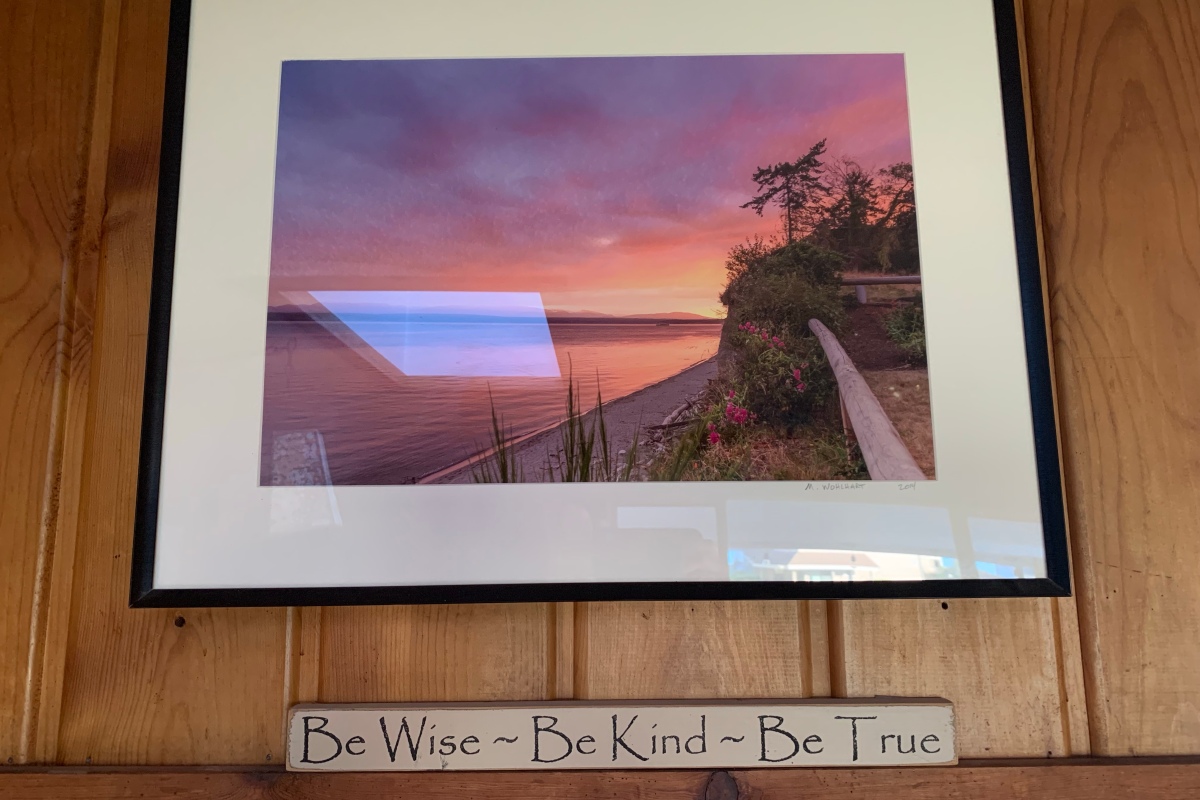
I’m a sucker for things are written in wood, anything that advises to be kind and advice that comes in three. So I couldn’t help but notice this sign when we’re stayed at a beach footage this weekend.

It made me think about what my three instructions would be. Be curious. Be vulnerable. Be kind.

But I keep wanting to add on with things like never stop trying and it’s going to be great, kid! Which is why I never write in wood.

Airing the Wounds Out

“Courage is what it takes to stand up and speak; courage is also what it takes to sit down and listen.” – Winston Churchill

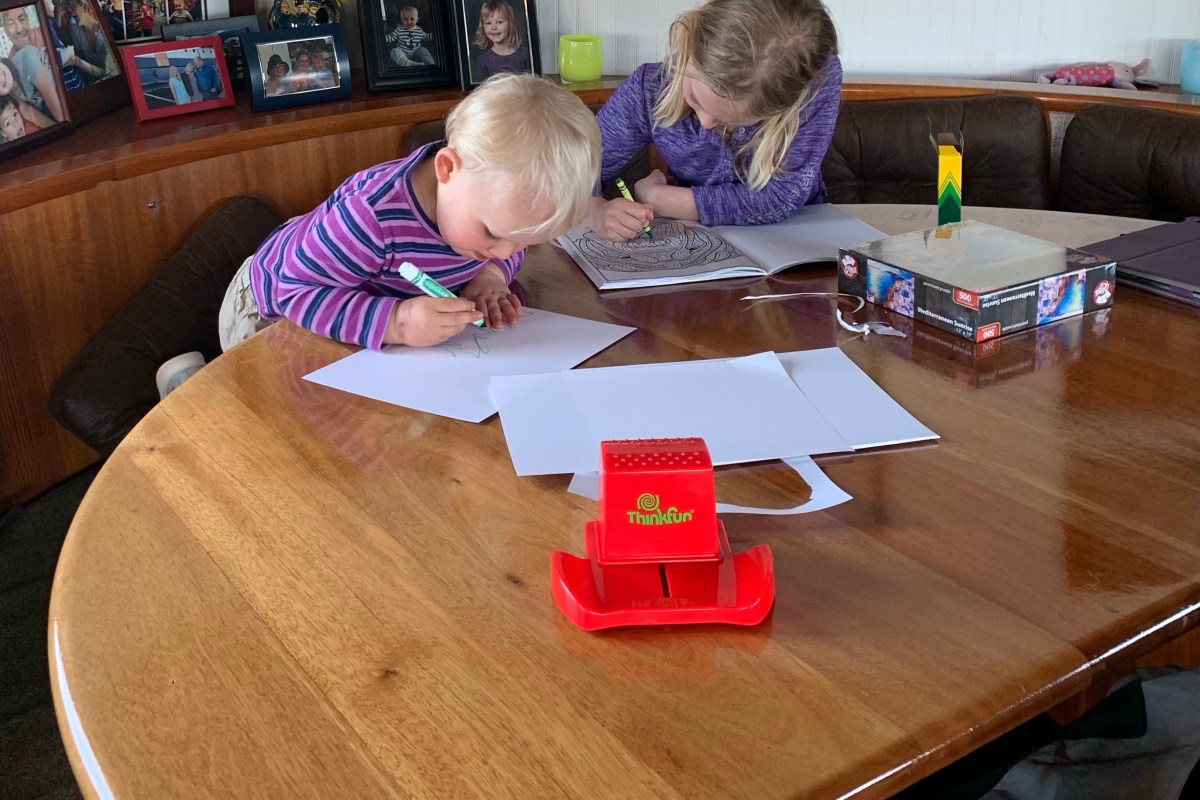
My kids and I spent the weekend with my brother and sister-in-law. Sitting around their semi-circular teak dining room table with a padded bench seat, I was reminded about a conversation we had there about a year ago.

“My mom said I should go find another mom,” My daughter said to my brother and sister-in-law. It was all I could do to not explain but because they are wise, they teased out the story from her. She was having a fit that seemed to be part of what came with being four because I wouldn’t let her do something. It had been going on for a while (it seemed like a fifteen minutes although it was probably five) and she said, “I’m going to find a new mommy, a nice one.” and I said, “Go!”

In the months after it happened she kept bringing it up and part of me died in shame whenever she did. She’d mentioned it a few times to just me and I’d apologized profusely. “I said something that I shouldn’t have because I was angry and frustrated, Sweetie” I said over and over again but then it came up again with two of her most trusted other adults. I sat there listening and they talked through it.

Listening quietly to that unfold was one of the hardest things I’ve ever had to do. But love did two things as I watched. It held me silent, knowing that unpacking the hurt for my daughter was far more important than defending myself. And I also felt held by the love of my brother and sister-in-law. I could trust that they know me well enough to know my strengths and weaknesses and all the care I put in between.

In the year since that conversation, my daughter has never brought up that comment again. My silence allowed my daughter to talk about her hurt without it being compounded by feeling ashamed to talk about it. In addition to eating great meals of delicious food, there are so many things we’ve done at that table in my brother’s living room – colored pictures, worked on crosswords, celebrated birthdays, had long conversations about life, reviewed the fun of the day. But now I add to that list – relaxed into our imperfections and healed mistakes.

Walking Boldly into Truth

“Everything you have ever wanted is on the other side of fear.” – George Adair

Last year a friend of mine realized that she was gay at 50 years of age. In the 6 months that followed her discovery, she came out to everyone significant in her life. She didn’t have a girlfriend or any other forcing function to do it, she just walked boldly into her Truth. I know that some of those conversations, especially with the older generation were hard but when I asked her about how she did it she told me she was ready to find love and hiding who she realized she was would only hinder her path.

As someone who is walking a less traditional path by having kids as a single person at age 46 and 50, I am so inspired and in awe of my friend. I remember being five months pregnant and feeling really glad I wasn’t showing because then I’d have to tell people what I was doing. (Yeah, that wasn’t going to stay hidden forever. 😊) I had told everyone close to me, but for strangers and acquaintances, I was sure they’d think I was some loser that couldn’t find a partner. Over the years it has gotten so much easier but I really had to work hard to be able to say it without fear.

I told a lifelong friend this the other day and she was surprised. “What?” she said “we just always assumed you were some super-empowered woman.” Ha, ha. If it were that easy, there wouldn’t be a whole genre of stories about heroes who spend the entirety of the middle act wandering around trying to do everything they could to pursue their path without being vulnerable. I can say with complete certainty that if the constriction around my heart hadn’t been so tight and getting tighter every time I thought of having a family and time hadn’t been running on out my ability to have or adopt children, I would still be wandering around trying to find the right husband with which to have children. Anything so as not to have to face the vulnerability of saying, “This is what I was certain I had to do even though the circumstances at that time of my life meant doing it alone. I didn’t want to rush finding the right man and in doing so, make a mess of it.”

In Harry Potter, the young witches and wizards learn to run into the brick wall between platforms 9 and 10 to get to the Hogwarts Express train leaving from platform 9 3/4. We reach thresholds in our lives and need to change something — a job, a place we live, a relationship, a way of thinking or being, or something we just have to do — and they feel a lot like that brick wall. It is terrifying to consider running into, always looks easier when someone else does it, and once across, it is the place that transports to the magic life beyond. It’s only a perception that we don’t want to stand out that keeps us from walking into our Truths. When we do, we break that constriction around our hearts and can feel the full power of the vital heartbeat of life.

The postscript here is that with one year of my friend coming out, she has found her person and they’ve bought a house together. She crossed her threshhold and is living in the fullness of her life and it’s a joy and inspiration to watch!