“If you believe it will work out, you’ll see opportunities. If you believe it won’t, you will see obstacles.” – Wayne Dwyer
When my friend, Eric, was over for dinner last week, I asked him if he had room in his car to take his chairs home. In the pause as he considered it, Miss O jumped in and said, “Yeah, they were just dumped here.”
Eric surprisingly showed up with chairs unbidden on the morning of Thanksgiving of 2023. And while we used them around the table for that Thanksgiving and this past one, they haven’t been used otherwise.
I think Miss O was doing the thing we often do – saying one sentence too much when there’s a pause because we’re afraid the answer will be “no.” Call it pressing the point or making the case, often it’s trying to shift the answer in our favor. Sometimes it comes with an unnecessary punch.
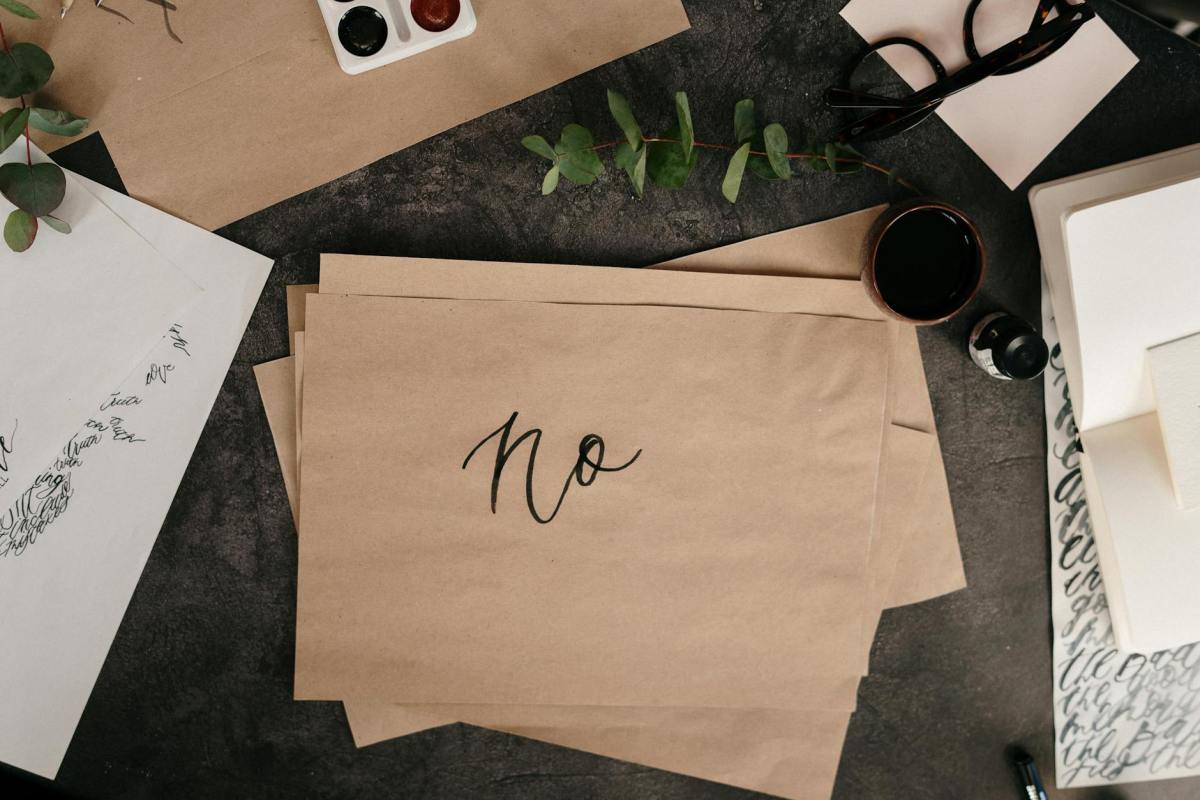
Because “no” isn’t the worse thing we can hear. Sure, it means we aren’t getting our way for the moment. But consider all the missed opportunities if we didn’t ask at all. Things like dates you didn’t go on, the path you didn’t take, and the pitches you didn’t make.
And the chairs we stored for 420 days because I hadn’t asked my friend to take them. Fortunately, Eric did have room for chairs in his car that night. As we carried them to his car, he and I had a good laugh about the chairs that were “dumped.” Not the word I’d use because they came with good intent and thankfully left in the same spirit.
“Take risks: if you win, you will be happy; if you lose, you will be wise.” – unknown
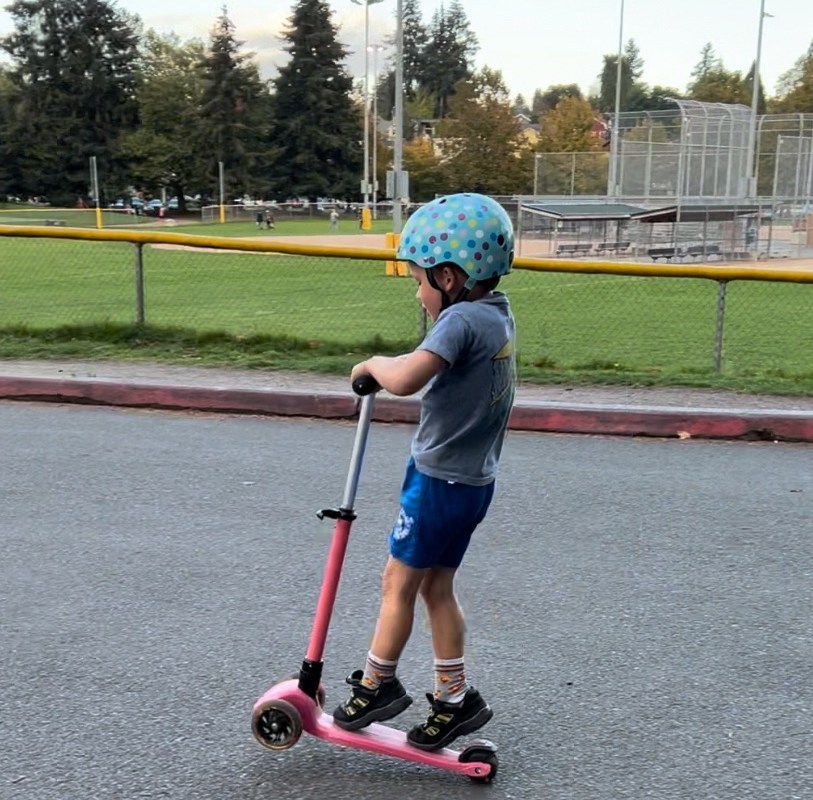
A couple of weeks ago, on the third time I took five-year-old Mr. D to the skate park, we ran into a fifth grader at school who is the boy that Mr. D admires the most. And this boy is a terrific scooter rider. Is that the right way to put it? I’m unsure of my skate park lingo.
This boy rides a scooter and can drop in to the steepest of the bowls, propel himself out, kick the base of the scooter around so it does a 360 and then land it, bringing all the energy to an elegant stop. It is truly impressive.
I watched Mr. D observing this boy and wondered if it would make him reckless. Mr. D stood quietly for a while just taking it all in and then he started scootering back and forth on the flat concrete practicing popping a wheelie.
On the next visit, he found the most gradual of the slopes and started practicing going down one side and back up the other. This sport is not in my wheelhouse so I’m of no help to him. But he figured out how to bend his knees at the bottom of the slope.
He keeps making incremental risks and discoveries with each visit. I remarked on this to my friend, Eric, and he quipped, “Even five-year-olds have a built in risk meter.”
To which I’d add – “that works.” A certain amount of risk is necessary in order to learn. We have to be willing to look foolish, expose ourselves as newbies, and try something in order to quit it. I mention that last one because it’s often my barrier – I hate quitting things so I often won’t start something so that I can prevent having to quit.
So, I’ll speak for myself when I say that one way that life becomes rutted for me is when my risk meter breaks. Everything new will peg too high on the meter so then I try nothing. I’ll claim my past risks as badges that insulate me from ever having to try anything new again. And then I stop learning.
The funny thing about risk is that it’s a little contagious as well. The next time we went to the skate park my nine-year-old daughter, Miss O, came along. Seeing her brother try the gradual slopes encouraged her to do the same.
So here’s to being open to taking the right risks in life.
“A man with outward courage dares to die, a man with inner courage dares to live.” – Lao Tzu
This was published previously on 3/22/2023. Heads up – you may have already read this.
Before I left for three-hours the other day, I told my three-year-old son that his favorite babysitter was going to come hang out with him. Because he adores her, I was surprised at his answer and the vehemence with which it was said, “This is dumb. I don’t like her. No, you can’t go.”
It took me a second to realize that the last time I left him with her, it was for four days. I started to explain, “I’m just going to be gone for a few hours.”
He replied, “Mama, I’m scared.”
As soon as he said he was scared, his mood changed from angry to calm. It’s like it popped the bubble of fear so that we could move on.
I said, “Right. I can understand that. But I’m not going on a trip. I’ll be back by lunchtime.”
He said cheerily, “Kay. How bout this deal? I play with her and then we’ll have lunch.”
Deal.
“Everything you’ve ever wanted is on the other side of fear.”
George Adair
I think somehow I missed the memo about acknowledging fear. Growing up in a household with infectiously joyful and confident parents led me to assume they didn’t have any fears. So I’ve blustered through life without admitting my own.
One of the most ironic is that I have a fear of heights and yet I choose mountain climbing and rock climbing as hobbies and tried to just stampede over my fear. I remember a few years back doing a bouldering route at the climbing gym. These bouldering routes 12 -18 feet high and are climbed without ropes in a section of the gym padded with thick mats. I was on a wall that was angled out so I was climbing horizontally, my body almost parallel to the ground, couldn’t see what I was reaching for, and needed to shift my weight carefully to stay on the wall. I was in a position somewhat like I am in the photo below but I wasn’t smiling!
All of a sudden, I felt the full impact of my fear which amped up because I was five months pregnant at the time. I couldn’t move, my arms felt like they weighed two tons, I felt a heat flush all over my body. Then it passed, and I was 10 feet up, completely exhausted and wrung out. I managed to down climb a couple of feet and drop from there, landing on my feet and rolling tiredly onto my back.
I still climb – but not without acknowledging my fear before I get on the wall. It’s like saying “hello” on flat ground so I don’t have to greet it on trickier ground. I also didn’t climb again while I was pregnant. Regardless of all the assurances that babies in utero are fine being jostled, I realized it magnified my anxiety too exponentially.
This incident in concert with becoming more willing to be authentic and vulnerable have led me to understand that there is more room for courage once I let out my fear. That is to say, once I admit I’m afraid, it’s like a full exhale, after which I can take in a deep breath of courage.
“The perfect breath is this: Breathe in for about 5.5 seconds, then exhale for 5.5 seconds.”
James Nestor in Breathe
I bring up the perfect breath as described in James Nestor’s book Breathe because it has a spiritual connection. Nestor also notes that if we recite the Ava Maria or Om Mani Padme Om or the Sa Ta Ma Na (Kundalini Chant) – they all take about the same amount of time of 5.5 seconds.
That ties to the final element to expressing my fear that I’ve found to be at play – the spiritual connection. It isn’t until I own my vulnerability that I can receive help. Sometimes that’s from another person but more often it’s delivered in spiritual and mysterious ways. It’s the element I couldn’t see about my dad – that he didn’t seem to have any fears because he had so much faith.
“Our strength with continue if we allow ourselves the courage to feel scared, weak, and vulnerable.”
Melody Beattie
My lived experience resonates with Melody Beattie’s words. We can’t receive courage until we acknowledge that we need it because we’re afraid. Whether it’s taking on a bully, walking your authentic and individual path, risking to be vulnerable in a relationship, or any of the other million ways we need courage, I’ve found the relief comes much more quickly if we don’t muscle our way through but simply say, as my son did, “I’m scared.”
 Surprised By Joy