Why Wine?

Longer-term consistency trumps short-term intensity.” – Bruce Lee

I can still remember being at an 8th grade party when a boy from school, Corey, came up to me and told me he had a crush on me. He had been drinking and was acting all goofy. Because none of the rest of us were drinking (or ever had), it was my friend that took me aside to explain that alcohol made people reveal their true feelings.

Which is something that I hadn’t updated until I recently heard a Super Soul Sunday with Oprah and Malcom Gladwell. In the podcast, there were discussing his book Talking to Strangers and revealed “Many of those who study alcohol no longer consider it an agent of disinhibition. Instead they think of it as an agent of myopia.”

According to this Psychology Today article, myopia in the context of alcohol means short-sightedness. It means we lose perspective, our ability to place our actions in the context of anything other than the current moment and consider the long-term consequences.

Which explains my recent response when a friend came over to dinner and asked if I wanted a glass of red wine. I said, “No, it makes me a crappy parent.” It makes me feel tired. This is surprising because I love red wine and used to drink copious amounts of it. But now, it not only means I will not sleep well but it also creates an impatience in me that feels uncomfortable.

Putting this feeling together with the research, I think I rely a great deal on perspective to be an understanding and supportive parent. I need the long view to energize me. When I see my kids’ actions in the context of learning the overall lessons in life, I feel an expansiveness to give them room to grow. When I’m feeling myopic, I am feel hemmed in by the mess and chaos of now.

Corey and I never talked about his crush once he sobered up. While I felt that giddy attention for the night he said it, the light of day squashed it. It’s a little like how I feel about wine now – I like the idea of it far more than I like the actual experience of it. It seems that perspective, in love and in parenting, is a very good thing.

(featured photo from Pexels)
The Feelings Expert

The more we sweat in peace, the less we bleed in war.” – Vijaya Lakshmi Pandit

The other day my daughter, Miss O, came home from school upset because she had a little kerfuffle with a fellow 1st grader at school. He kicked down the wall of wood chips she and her friends were building and when she went to talk to him about it, he started talking before she could get the words out. This is the conversation she reported to me.

Miss O: “You can’t take the words out of my mouth.”

Boy: “Yes, I can.”

Miss O: “Er…I’m going to talk to my mom about this. She’s an expert on feelings. I’ll tell you what she says tomorrow.”

I’m amused by the title she’s given me. I remember reading Brain Rules for Baby by University of Washington professor John Medina when she was a baby. It said that to help our kids manage their big emotions, we had to model naming our emotions, even the less desirable ones. I clearly thought “no thank you” to that but I guess I must have made some inroads countering my own resistance and stoic modeling from my childhood.

But more than that, I find my daughter’s story to be so relatable. Communication is hard isn’t it? Especially in those tight moments when you are disappointed or angry and the words, if they come, get muddled.

Last week I was listening to a 10 Percent Happier episode titled How Not to Ruin Your Relationships with Drs John and Julie Gottman and they were talking about situations where we are overwhelmed by emotion. In that case, we are flooded and there’s no point in continuing to talk. They recommended walking away, doing something completely different until we can return to the conversation.

Which is what Miss O did. We talked through not calling any names or labeling the other person and instead just stating what she felt and needed like being able to finish her sentence. When I asked her if she’d said any of that to the boy the next day she said, “Nah, it wasn’t that big of deal.”

It reminded me – learning to talk is one thing and learning to communicate is a whole other thing. One that takes a lifetime to work on. But I’m inspired by the quote at the top of this post from Vijaya Lakshmi Pandit, “The more we sweat in peace, the less we bleed in war.”

(featured photo from Pexels)

Do We Have to Be Nice to Alexa?

Hem your blessings with thankfulness so that they don’t unravel.” – unknown

I was in the kitchen making dinner last night when I overheard my mom talking to the Amazon Echo device we have in the other room. It’s the device we have plugged in that is connected to the Internet so that the kids can request music for their endless dance parties (I know it does a lot more than that but that’s what we primarily use it for). Because the Echo doesn’t quite understand my son’s two-year-old voice yet, my mom was requesting a song for him, “Alexa, play Baby Shark, please.”

It made me think of manners and respect. I suspect that my 82-year-old mom’s manners are so engrained she doesn’t have to think whether or not she’ll say “please” any more, even when talking to a device. And I tend to say “please” as well when talking to Alexa because I appreciate anyone (or anything) that responds to my requests.

But is it an empty gesture when talking to an Artificial Intelligence device?

It reminds me of training a dog. To give commands, you have to be in control of yourself enough to be clear. In addition, the whole process teaches as much to the trainer as the trainee as you figure out what works and what doesn’t. And finally, there’s a loyalty built when you work together.

Besides, I think modeling respect for everything in our world for my kids builds a good foundation of choosing respect more often than not. Respect for the people that designed it, respect for the shared intelligence it delivers and respect for all the songs we can access through it. Given all that, I think Alexa deserves a please and a thank you!

(featured photo from Pexels)

Seeds of Faith

Believing is all a child does for a living.” – Kurtis Lamkin

The other day my 6-year-old daughter called for me. When I came into the room, she was holding her little brother because he’d tripped and fallen. When I took him from her and started checking for injuries, she huffed off.

When all was calm, I checked in with my daughter. She said that I loved her brother more than her. I told her how much I appreciated how independent and helpful she was. Then I listed all the ways we show our love and the privileges she gets because she is older. She nodded and said, “ At his age, you can see the love he gets better.”

Something more than the obvious sibling rivalry and jealousy struck me about that statement. After I sat with it some time, I’ve found such a precious seed of faith in that statement. Like if we could all trace back the roots of what we believe to the essential moments where we start to believe in what we can’t see we’d find seeds from moments like my daughter expressed. Faith in others, faith in love, faith in the Divine,

It’s as if I’ve been privy to watch her operate from within her God spot for all the years until now. She’s been operating from the natural trust that came with being so fresh from the Source. And now I’m witnessing her growth and awareness start to cover that over so that instead of operating without thought from her Seat of Unconscious, as I believe Jung would call it, my daughter is feeling out the ground on the other side.

While this leaves me with a sense of loss, I recognize it as a natural moving forward. Most of us cannot stay in a life free of ambition and embarrassment, fear and worry. We move away from that spot of grace that can bring so much peace and then have to work our way back, again and again.

But it strikes me that as she moves in and out of that unencumbered spot, the awareness is a gift of its own. It makes me conscious of my own God spot as well as hers and allows me to recognize when I need to help water and nurture her seed of faith — and my own.

The analogy of a tree that grows deep roots resonates with me. For my kids to stretch tall in their beliefs, their roots need to grow deep down. And I need to have faith that they will have faith.

(featured photo from Pexels)
The Threshold to Love

The best way out is always through.” – Robert Frost

I’ve been divorced for 10 years and a single parent now for 6 and a half years. I’ve written about the reason I didn’t have kids when I was married and instead chose to do it on my own. Since I went into this phase of my life choosing to be single, I think it’s largely exceeded my expectations. Although there are tough moments, it’s been incredibly joyful for most of the time and I’m grateful for all the people around me that provide encouragement and support.

I’ve always thought that I would circle back around to dating at some point. This pandemic has shown me again and again that my optimism makes me a terrible prognosticator but I still believe I will end up with the love of my love.

The problem is that at a base level I don’t believe that adding a man to my life will improve it. Intellectually I know this to be a result of having a crappy husband the first time around. I don’t think his infidelities hang me up much. The fear is more based on the give/take of our relationship. As my gentle father put it when I finally got divorced, “he loved to BE loved.” Perhaps we were just mismatched but I could never make him feel loved or secure enough, and I exhausted myself trying.

So, I have this threshold between me and my future that I need to cross. It is returning to the belief that I held before I was married that romantic relationships can be life-giving and refreshing. That belief is one that I embody in all my other relationships but have taken a step back from when it comes to love. And as much time as I spend analyzing it, writing about it, knowing it, it is just dancing in front of the door without stepping a toe over.

It is one reason that my breath was taken away when I read this quote by Henri Nouwen’s, “The future depends on how you remember your past.” I know it isn’t just me that needs to do the work of genuine risk to face the thresholds installed by the pain of the past. As the Robert Frost quote at the top of this post says, the only way out is through.

So I take a deep breath in and thank my ex-husband for preparing me to love these two children. They at many times need as much care as he did but show great promise of growing out of it. And then I breathe out the fear of a relationship that only withdraws from me and never gives. When I do this over and over, I prepare myself to walk through that doorway into the possibility of love once again.

(featured photo from Pexels)

Seeing the Whole Mountain

If peace comes from seeing the whole, then misery stems from a loss of perspective.” – Mark Nepo

It’s probably not shocking to admit that the most beloved people in my lives, a.k.a my kids, can sometimes irritate me. The other day, my 6-year-old daughter walked by me as I was sitting at the table and used the back of my shirt as a napkin for her buttery popcorn hands. And the little one loves to get his hands on my dental floss – and pull and pull and pull until there’s a long trail behind him sufficient to find Hansel and Gretel.

But all it takes is one look at them earnestly trying to learn something, or one comment from someone else about how precious they are and my eyes leak as my heart overfills.

One of the best pieces of advice about love that I’ve heard about love is when feeling the grind of it, to back up and see the whole mountain. Maybe my love of mountains makes this resonate especially with me but it brings to mind some of the toughest spots I’ve faced in climbing.

One of my least favorites is called Cathedral Gap on Mt. Rainier. It’s right next to Cadaver Gap, which because it’s aptly named, is NOT the route we take. But Cathedral Gap, despite its lovely name is grueling. It’s right after you’ve left Camp Muir at 10,200 feet and the first time that rope teams and crampons are required. Often the route is quite pebbly in spots and the mud and muck get jammed between the points of the crampons designed to help grip in snow and ice. When that happens then with each step you have to bang your foot against your ice axe to clear the debris.

The combination of being roped up, coordinating the pace with those on the team all the while climbing, banging your foot with your axe and breathing undoes me. It isn’t that climbing the rest of the mountain is easy but that particular part of the route (approximately located where the yellow arrow is on the picture below) I find to be grating.

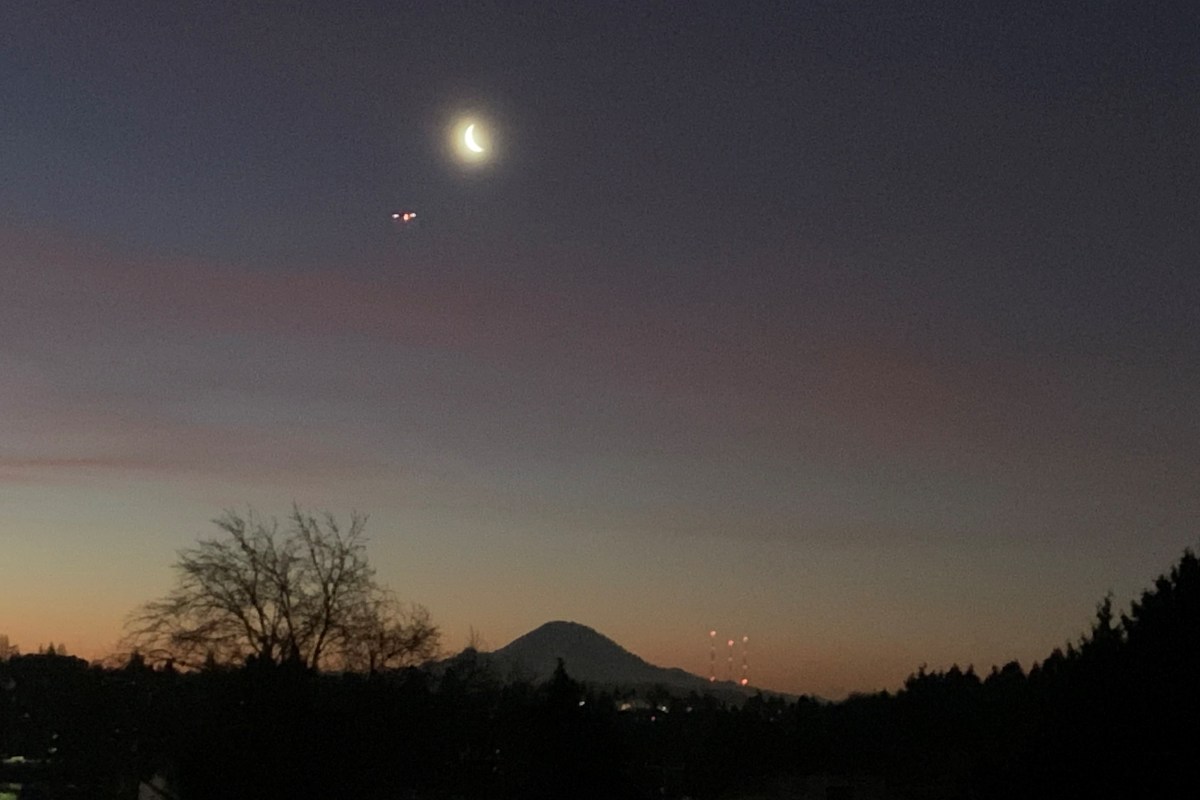
And yet, when I see Mt. Rainier as I do every sunny day in Seattle, it gives me such a thrill. Just a glimpse of The Mountain, as my dad called it, and I’m filled with a tingle of the timeless beauty, daunting majesty and feeling of home it gives me. I feel this overwhelming sense of hope that we can all know beauty and dignity and stand tall against the test of time.

And it’s the same with my kids. There is a particular expression they both have that show when they are feeling confident about something they’ve learned. One glimpse of their little faces and I’ve come home – to my love and my life.

Going All-In

To lose balance, sometimes, for love, is part of living a balanced life.” – Elizabeth Gilbert

I dated a guy when I was in my mid-20’s that told me early on in the relationship, like before we’d even been on a dozen dates, that he would never take me to or pick me up from the airport. That way, he reasoned, it would never look like he loved me less when he stopped picking me up.

Around the same time I had a work colleague who was celebrating his one-year wedding anniversary. He said that the key was to go really small so that he wouldn’t set a precedent that couldn’t be maintained.

What I’ve found interesting is that with taking care of babies, there is no choice but to go all-in. You start out taking care of their every need and then with time have to negotiate new roles, responsibilities and boundaries.

I recently implemented the practice that once I sat down to dinner, I wouldn’t get up until I was done eating. If the kids are excused and they need help getting a toy, I tell them that I’ll get it when I’m finished. If they want something to eat or drink that was included in dinner, I give them choices they can get themselves or that are reachable. If they want me to watch them, I remind them to do it where I can see from the table.

This practice was incredibly hard work for me for about three weeks. I had to resist the temptation to just get up and do it. Or, if they spilled something, I had to let go of muttering under my breath because doing it would be easier than cleaning up when they do it. Setting the boundary meant creating the consistency in me as much as the expectation in them.

But it is the work of maturity – in our relationship as well as ourselves. It made me think about that boyfriend from my 20’s.  It’s no surprise that I broke up with him. Among many things, his practicality limited his openness. There’s a fine line between defining boundaries and not wanting people to breech our walls.

And my colleague – unfortunately the marriage ended in divorce. Life has taught me that hedging our bets almost always limits the full range of feeling. It’s hard to walk the service back, draw better boundaries as relationships mature. But parenthood has taught me that sometimes it’s necessary to start by going all in.

(featured photo from Pexels)

Home

Stay close to those who make you feel alive.” – unknown

In the recent parent-teacher conferences I’ve had for each of my kids, I’ve gotten a feel for how my kids behave when they aren’t with me. It seems they are “go along to get along” people. Generally speaking, they follow the rules, don’t make a fuss, they don’t cry and they don’t get in trouble. My 6-year-old might talk a little too much sometimes but she gets her work done.

That’s not a big revelation since that matches my general approach to life. Although I am surprised that my two-year-old can do it at such a young age, especially because he’s never been told to. But hearing this is reshaping how I think of what my home is.

I used to think home was where our best-selves would shine through because of the love and nurturing there. I still think that – except that I’m realizing our best-selves are NOT our best-behaved selves, they are our most authentic, intimate selves.

Home is where we can take off our armor and practice speaking our truth. It is a place where it’s okay to have a soft underbelly and to let it all hang out. It’s where we can cry, have fits and let it fly (respectfully) when at home. Because, I figure, it’s the only way to get salve onto the sore spots and to receive sympathy for all the growing pains. It’s our place for practicing being leaders and followers and doing neither very well and learning.

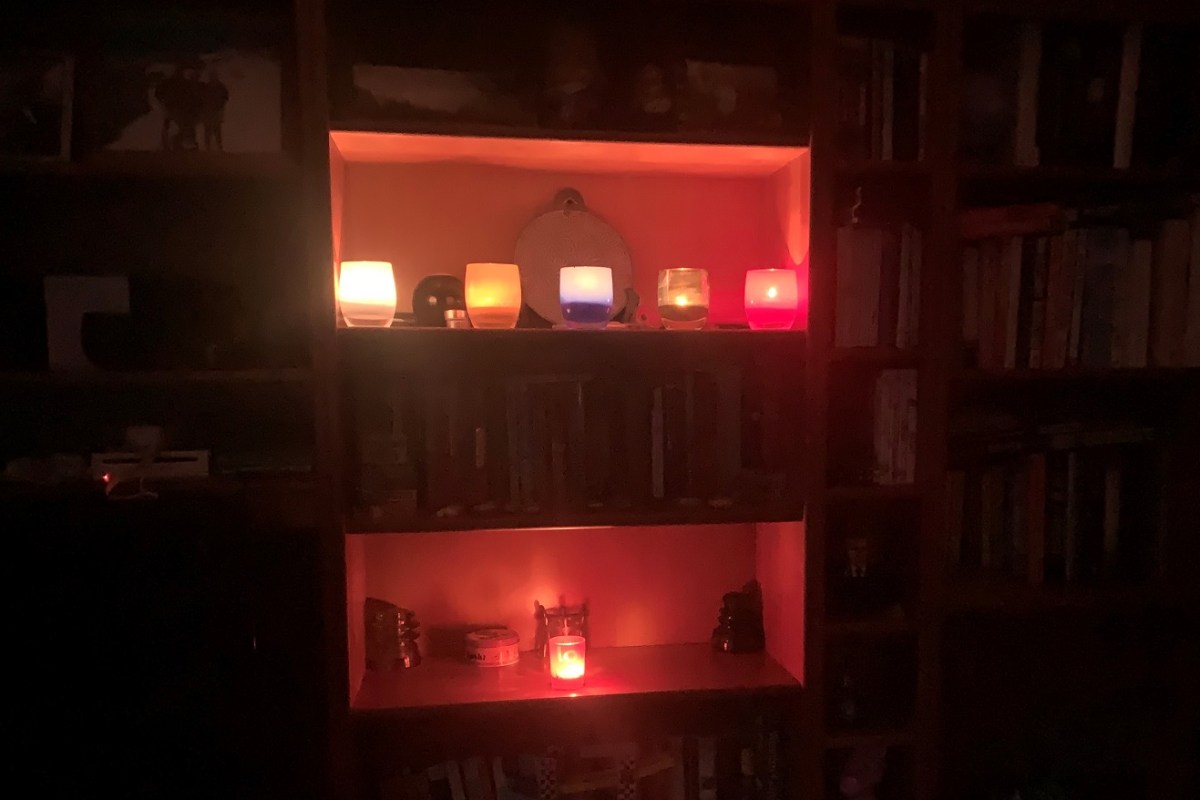
Home is where we learn grace. We can cry when it hurts, express disappointment, find out what truly refreshes us, practice imaginative play, be bored and unscripted. Home is where we light our candles, pray for peace and then figure out how to find that in ourselves. It is where we can be held through it all.

While it seems that I’m writing this for my kids, the truth is, I’m finding great comfort in defining this for myself. Somehow typing out a list of place of where and how we will be received and held is making my slippers feel a little more comfortable. In the years of the pandemic where home became where we do everything, it seems I got a little disoriented about my purpose in this structure.

So, I’m setting this down for all of us. Home is not just where the heart is – it is where the heart feels safest to be open, glow and grow in all directions.

Meet Tenderness with Tenderness

My hands never feel empty because you hold them with care and love.” – unknown

Yesterday, my two-and-a-half year old son and I were sitting in the car goofing around while parked outside Starbucks before I dropped him at school. It was an early Monday morning after a really fun weekend as a family together and he said a couple of times that he didn’t want to go to school. Then he said, “I miss you, Mama.” And I started to protest that I was right there and talk him out of it. But before I could put the words together he followed up, “I miss you Mama atta school.”

My heart was gulping like a fish out of water and tears sprang to my eyes. Before I left the moment to justify that I can’t be do everything or to troubleshoot how we could spend more time together, my thoughts snagged on an idea from poet and author Mark Nepo that tenderness is best met with tenderness.

Frequently, this reflex to solve, rescue and fix removes us from the tenderness at hand. For often, intimacy arises not from any attempt to take the pain away, but from a living through together; not from a work out, but from a being with. Trust and closeness deepen from holding and being held, both emotionally and physically.

The Book of Awakening by Mark Nepo

So I gave him a big hug and said, “I miss you too, Buddy.” Then we went on our way.

I found out from his teacher that when the kids at school miss their families, she gets out a picture of their people for them so they can look at it. It’s the daycare version of the pictures I keep on my desk that give me a little zing whenever they catch my eye.

I felt my son’s statement all through the day as I went about my business. When it sparked a feeling of guilt or responsibility I kept practicing the return to the beauty of having a relationship worth missing.

Friendship Brownies

A friend may well be reckoned the masterpiece of nature.” – Ralph Waldo Emerson

I was talking to my friend, Doug, the other day. He is planning a climb of Mt. Adams with his son this summer. It’s a 12,280 foot mountain in Washington State – tall enough to be a challenge but not technical enough to need a lot of equipment and training. The last time we summitted this mountain was with his daughter about 10 years ago when she was 14 years old.

Doug wanted to know if I remembered what packs we carried between our camp at about 9,000 feet and the summit. He is a meticulous packer and doesn’t carry anything more on his back than necessary.

These questions reminded me of a time we were planning a climb on Mt. Rainier that would take place over Doug’s birthday. His wife asked me if I would carry some brownies up to celebrate Doug’s birthday. It was only after I happily agreed that she told me that Doug said he wouldn’t carry them because he didn’t want that unnecessary weight in his pack.

It is probably because of all this carrying of loads that makes one of my favorite meditations is one where I imagine I sit down, empty everything out of my pack, look carefully at each thing I’m carrying. When I’m done sorting through the worries, the presumptions, and fears as well as the love, the purpose, the nostalgia, the energy stored for digging deep, the vulnerability, I mentally load the pack again with only what I need. I always carry a lighter load after that meditation.

But in thinking about those brownies, I realize that friendship means we are willing to carry things for other people that they won’t carry for themselves.

We hold in our packs a version of our friends at their brightest and most creative that can be shown to them when they are in a slump. We carry memories of the times we laughed, did silly things, failed and succeeded. We store all the depth of the ways we have walked side by side on the path as well as the times we waited at an intersection while they took a detour and vice versa.

Then at just the right moment, we unpack the brownies we’ve carried so far and celebrate our friends. There are some things worth the extra weight and friendship is one of them.

(featured image from Pexels)