The Big Questions

Be patient toward all that is unsolved in your heart and try to love the questions themselves, like locked rooms and like books that are now written in a very foreign tongue.” – Rainier Maria Rilke

I have a friend who is going through a hard break-up. Sitting with my friend as they process makes me think of all the questions I’ve wanted to know when going through hard times: When will I feel better?How will I survive this? What meaning is going to come from this? What is my purpose here?

Wanting the answer to big questions is the topic of my post for Pointless Overthinking this week: Waiting for the Big Answers.

(featured photo from Pexels)

Meaningful Interaction

Many people will walk in and out of your life, but only true friends will leave footprints in your heart.” – Eleanor Roosevelt

I was reading an article written by a single mom with kids who was bemoaning her situation in life. And there were many things I could relate to even though her kids are a lot older than mine (maybe in their 20’s). Because it’s hard to live in a house where you are loved dearly but not really cared for.

But there was a lonely note in her writing that I couldn’t place. So I looked up loneliness in Brené Brown’s Atlas of the Heart. Brené includes the definition of loneliness as defined by social neuroscientist, John Cacioppo and his colleague William Patrick as “perceived social isolation.” And Brené expands on this with “At the heart of loneliness is the absence of meaningful social interaction – an intimate relationship, friendships, family gatherings, or even community or work group connections.”

It brings to mind two times in recent years that I’ve felt lonely and had to adjust my social interactions to make them meaningful. The first was when I first became a mother. I remember one night I courageously left my daughter with a babysitter and went to a restaurant to drink wine and watch a Seahawks game with a good friend. I had fun – but the next morning got up and felt empty because what used to be fun for me longer met my needs. I longed for more meaningful interaction.

And the second was when the pandemic started. All of a sudden my meaningful interactions with other parents were eliminated or reduced to online. I had to find another way — and that eventually led me to blogging.

Thinking about Brené’s comment – it isn’t about how many friends we have or whether we are in a partnership, it’s about whether we are meeting our needs for depth. In fact, I think the loneliest place I’ve ever been is inside a committed relationship. I send a wish to the author of that article and for us all to have the focus on cultivating friendships where we are seen.

What makes you feel less lonely? What counts as meaningful interaction for you?

(featured photo from Pexels)

A Question of Love

The Eskimos had fifty-two names for snow because it was important to them: there ought to be as many for love.” – Margaret Atwood

Yesterday in the car, Miss O asked me who she should marry. Off the top of my head I said, someone who is kind, honest, funny and smart and then stopped to ask what she thought. She added, “Someone who is sweet and who likes to kiss.”

I started laughing and she explained that not all boys like to kiss which I’m sure is accurate in the 7-year-old world.

But it made me think of all the times I’ve wondered who I should love and the answer started with loving myself.

And it made me think of that WHO I should love is also an acronym for HOW I should love which I found is best with conviction, patience and kindness.

It reminded me that sometimes the answer to the question isn’t who I should love but am I brave enough to try.           

Finally, I landed on what is with age becoming clearer to me is that when I tap into the Oneness of things, I find it easier to love everyone, even the people that get my goat because when I look closely there is something about them that reminds me of me.

Miss O has about 20 years until she reaches the average age of brides in this country. I hope that in that time she learns a little about love, especially self-love, before she does.

What’s your list for what to look for in a partner? And your best advice about love?

(featured photo from Pexels)

Lying or Telling the Truth?

We are here to live out loud.” – Balzac

I remember reading a parenting book that stated that by age 4, kids lied on average about once every 2 hours and by age 6, every 90 minutes. I’ve never seen a statistic about how much grown-ups lie, it’s probably not even measurable.

But I generally believe most things people, including my children, tell me. I think what is truly dangerous aren’t lies but instead when we forget to tell our truth. It’s the subject of my latest post on Pointless Overthinking: Conditions of Truth.

(featured photo from Pexels)

Young Love

The minute I heard my first love story, I started looking for you, not knowing how blind that was. Lovers don’t finally meet somewhere. They’re in each other all along.” – Rumi

The other day Miss O came home from playing at a neighbor’s house with a mystified expression. She told me that the 9-year-old brother had been kidding his 7-year-old brother about “playing with his girlfriend.” It appears that the younger brother had confided in his brother about a crush on Miss O and now the older brother was teasing him mercilessly.

Now I understand why that delightful boy is always smiling ear to ear every time I see him. I had just assumed he was extraordinarily happy and polite.

There are so many places to go with this story it feels target rich – the complete and utter delight of having a crush, the irrepressible urge to tell others when someone sparks your heart and the vulnerability of sharing your secret.

Just witnessing the potential energy of this little scene reminded me how powerful young love is – and I don’t mean just love among the young but the first stirrings of the heart. There are so many more questions than there are answers, the anticipation is excruciating and life is so wonderfully alive! It’s the heart begging to be let off the leash and dance, the mind trying to fill in the blanks all the while you are pretending to have it under control even as you know nothing is actually normal or controllable.

So you have to tell somebody – and this leads to the next potential topic from our story. It makes me think of the time in junior high that a friend told me she’d been making out with my best friend’s boyfriend on the side and swore me to secrecy. After I sweated it out for a couple of days, loyalty won out over secrecy and I told my best friend. And it also reminds me of my friend in my adult years that would relish in telling all the dirt she knew about other people’s indiscretions. She always had a story and it made hiking up a trail a little more interesting.

Then when my husband’s infidelities came out, I found out it was my messy life that was her fodder. I was chagrined that I had listened to those other stories. And I also learned that the vulnerability of falling in love might actually pale in comparison to the vulnerability of falling out of it.

So then we get to the third act – the brotherly teasing. In his book, The Thin Book of Trust Charles Feltman defines trust as “choosing to risk making something you value vulnerable to another person’s actions.” It seems like siblings and these juicy secrets full of so much potential energy are often the proving ground for trust. And we don’t always get it right.

Our neighbors were leaving for an extended trip on the day after older brother revealed younger brother’s crush. Hopefully that gives the boys time to work it out. Meanwhile, Miss O doesn’t seem too changed by the news which makes me glad that the power of love is still pretty tame at age almost 7.

The Confidence to Be Wrong

There is no better test of man’s integrity than his behavior when he is wrong.” – Marvin Williams

My dad was a very good apologizer. He had a favorite quip, “If you have to eat crow, eat it early when it’s tender.” When we sat down to talk in-depth when he was in his late 70’s, in what turned out to be his last couple of years before he died suddenly in a bike accident, he readily admitted his mistakes without defensiveness or blame.

For instance, in the 1980’s, the Presbyterian church adopted the rule not to ordain gay ministers and my dad went along with that policy in the churches he led. When I talked with him about it in 2012, he said, “I was wrong.” He didn’t try to hide behind the policy of the church overall or explain it away because the fear about AIDS at the time.  He told me, “You learn in ministry that you move to the problem, not away from the problem. When a problem arises, that’s the same issue you mentioned with procrastination. When an issue arises, you jump in and if you are going to get beat up, get beat up right away. Don’t wait til later. If you have to apologize and ask for forgiveness, do it quick.

But I hadn’t put together his willingness to admit he was wrong with confidence until Dr. Gerald Stein put it together for me in a comment he made on the Airing the Wounds Out post. He said, “Confidence and acceptance play into the surrendering of the desire to rebut every criticism.

The confidence to be wrong. The ability to lean in to what we haven’t done well and try to do better without contorting ourselves in all sorts of unnecessary shapes in order to try to avoid the blame. It seems to work on two levels.

The first is to lean in and keep us open to life. Our spiritual traditions speak to this idea. The Roman Catholics have confession. The Buddhists talk about egolessness as explained by Pema Chödrön,

“In the teachings of Buddhism, we hear about egolessness. It sounds difficult to grasp: what are they talking about, anyway? When the teachings are about neurosis, however, we feel right at home. That’s something we really understand. But egolessness? When we reach our limit, if we aspire to know that place fully – which is to say that we aspire to neither indulge nor repress – a hardness in us will dissolve. We will be softened by the sheer force of whatever energy arises – the energy of anger, the energy of disappointment, the energy of fear. When it’s not solidified in one direction or another, that very energy pierces us to the heart, and it opens us. This is the discovery of egolessness. It’s when all of our schemes fall apart. Reaching our limit is like finding a doorway to sanity and the unconditional goodness of humanity, rather than meeting an obstacle or punishment.”

When Things Fall Apart by Pema Chodron

I was in my mid-20’s when I cheated on the guy I was dating. When I eventually broke up with him, I didn’t tell him the truth when he asked if there was someone else. It wasn’t until 4 years later when he sent me an email that I finally told him. It didn’t make us fast friends, but it finally made us honest friends. I didn’t have the confidence to be truthful right away because I wanted so much to be liked and I did a lot of damage to us both in the meantime.

Which is a segue to the second part, to do it quickly. That’s advice that is also common in the high-tech world as a business strategy called failing fast. It refers to the strategy to identify ideas that don’t work quickly before you get too invested in them. It works because one of the things that undercuts our confidence is rumination and overthinking. When we get caught up in the cycle of second-guessing and reviewing where we went wrong, we move out of action and into our heads. Authors Katty Kay and Claire Shipman explain:

“Failing fast allows for constant adjustment, testing and then quick movement toward what will actually work. The beauty is that when you fail fasts, or early, you have a lot less to lose. Usually you are failing small, rather than spectacularly. And you have a lot to gain from learning as you fail.”

The Confidence Code by Katty Kay and Claire Shipman

As I discovered from watching my dad, it takes a lot of courage to be wrong. But when you can do it well, it actually builds confidence because we do it quickly, stay open and can move on.

This is my 7th post on confidence. The others are:

I Can

Fear and Confidence

Growth Mind-set

Bossy Pants – Confidence and Leadership

No Name Calling

Speaking Up

(featured photo from Pexels)

Where Does The Spark Come From?

At the center of the being you have the answer; you know who you are and you know what you want.” – Lao Tzu

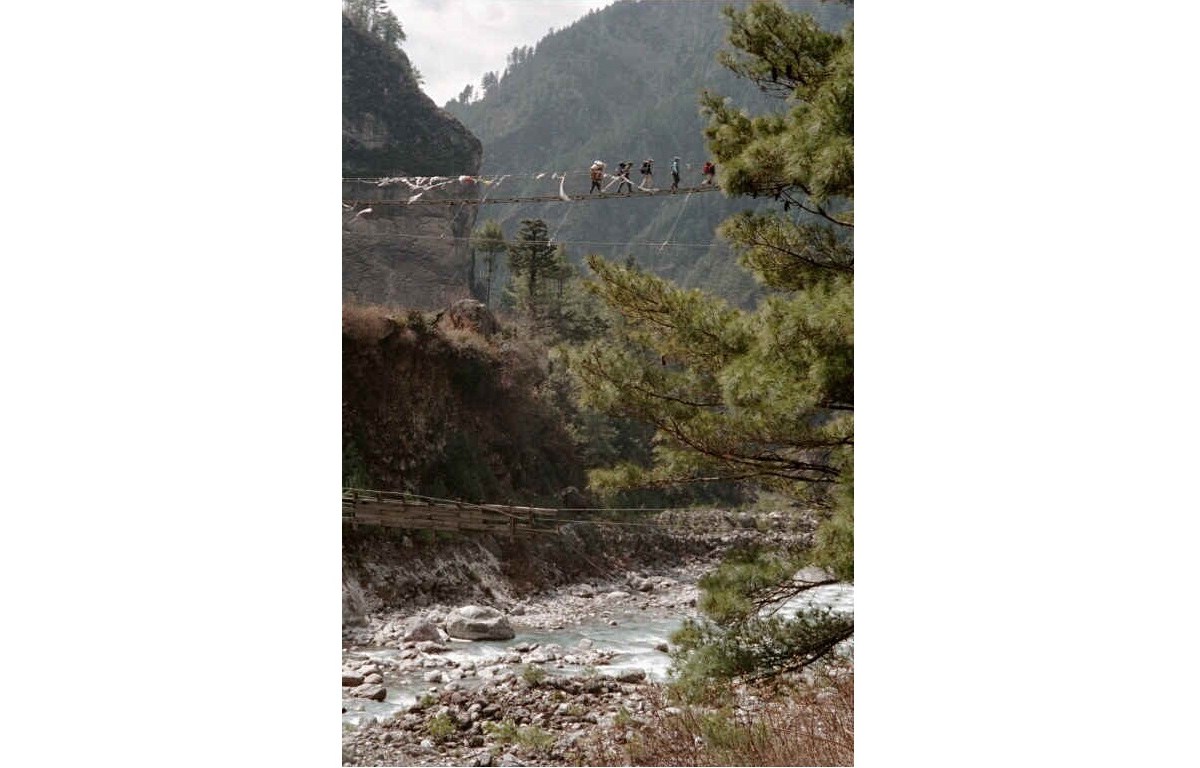
Cognitive and Computational Neurosience Professor Anil Seth related an experiment from about 50 years ago on a Ten Percent Happier podcast that caught my attention. In the study, participants, who were all male, had to either walk over a low, sturdy bridge or a high, rickety bridge over a raging torrent. On the other side of the bridge was a female researcher who asked them some questions and then gave them her phone number in case they had any follow-on questions. The outcome was that many more of the male participants who had walked over the rickety, precarious bridge phoned the researcher to ask for a date or talk to her after the fact.

Anil Seth summed it up as “The interpretation of this ethically very, very dubious experiment is that the creepy walk across the rickety bridge misinterpreted their physiological arousal caused by the scariness of the bridge as some kind of sexual chemistry with the female researcher.”

The point that Anil Seth was making is that our emotions, whether it is fear of a snake or chemistry with another person, often start in our body and then are interpreted by our brain instead of the other way around even though it appears that our brains are running the show. This matches the metaphor presented by psychologist Jonathan Haidt in his book The Happiness Hypothesis of the elephant and the rider. The rider is our conscious mind and the elephant is everything else – our sensations, subconscious motives, internal presuppositions. We think the rider is in charge but that’s only the case if the elephant agrees.

This reminds me of a recent conversation I had with a couple of friends about online dating. I tried online dating about 10 years ago after my divorce and before I decided to start a family on my own. I dutifully filled out the surveys that catalogued interests and personality preferences, wrote the essay and subsequently met a number of nice men. In fact, my friend Eric was someone who I met online and we became great friends after deciding that dating wasn’t right for us.

It seems to me that online dating asks us to essentially name what we want – and that we don’t know what we want. We can’t quantify the mystery or adrenaline or whatever else it is that causes us to feel attraction. Of course from there, a committed relationship is a decision as much or more than a feeling but for that initial emotion, it seems might come from the body as it did in the experiment that Anil Seth described.

Unfortunately, codes being what they are these days in Seattle, I can’t think of any rickety bridges either to cross or to stand on the other side of. 😊

What do you think of online dating? What about the idea that emotion starts in the body and is interpreted by the mind?

(featured photo was taken by me in Nepal on the trek to Everest base camp in 2001)

Both And

Well, you can’t make old friends.” – Zadie Smith

The other day, my mom asked my daughter how her best friend, the little girl that lives next door, was feeling about having to move 1200 miles away in a month. My daughter replied that her friend was excited. And then she added, “And that makes me feel sad.”

The conversation moved on so thankfully I didn’t have to follow-up on that one right away because I find that subject to be tricky. How to be happy for others even when it means a loss for ourselves.

Years ago when I had a corporate job, I hired a former colleague to come work for me. He worked for me for about a year and I had given him some great opportunities and he had done a fantastic job. Then he announced that he’d gotten a job at Microsoft and was quitting and I felt hurt and betrayed. I don’t think I could talk to him at length for a week. Down deep I was happy for him and eventually I got there so I was happier for him up top as well, but I definitely felt the challenge of summoning my best self.

Listening to a Ten Percent Happier podcast with cognitive scientist Maya Shankar gave me some insight on why it’s so hard. She said “We don’t like change because it almost definitionally involves a loss of identity and that’s very destabilizing. I think as humans we often attach ourselves to specific identities as we move through the world because it gives us a sense of security.”

When I use that lens to apply to my work situation with my colleague, I can spot the identity I was inhabiting easily. The man that I hired was also someone I had championed previously when he was switching into the field of technology from his career in the military. I had spent a lot of time and energy helping him adjust to the change of culture and expectations and hopefully imparted some technical knowledge as well. When he quit, it challenged my sense of being a mentor.

In return, he had done the job beautifully and when I got over myself, I could appreciate that. It required me to disconnect from that specific identity to a more general sense which is that I draw a lot of satisfaction from helping other people.

In a quiet moment at the end of the day my daughter made that comment about her friend, I asked her some more questions and we talked about how she could be both/and. That is to say both sad that her friend was leaving and hopeful that her friend has an exciting new adventure when she moves. And that neither takes away from the friendship they have today.

(featured photo from Pexels)

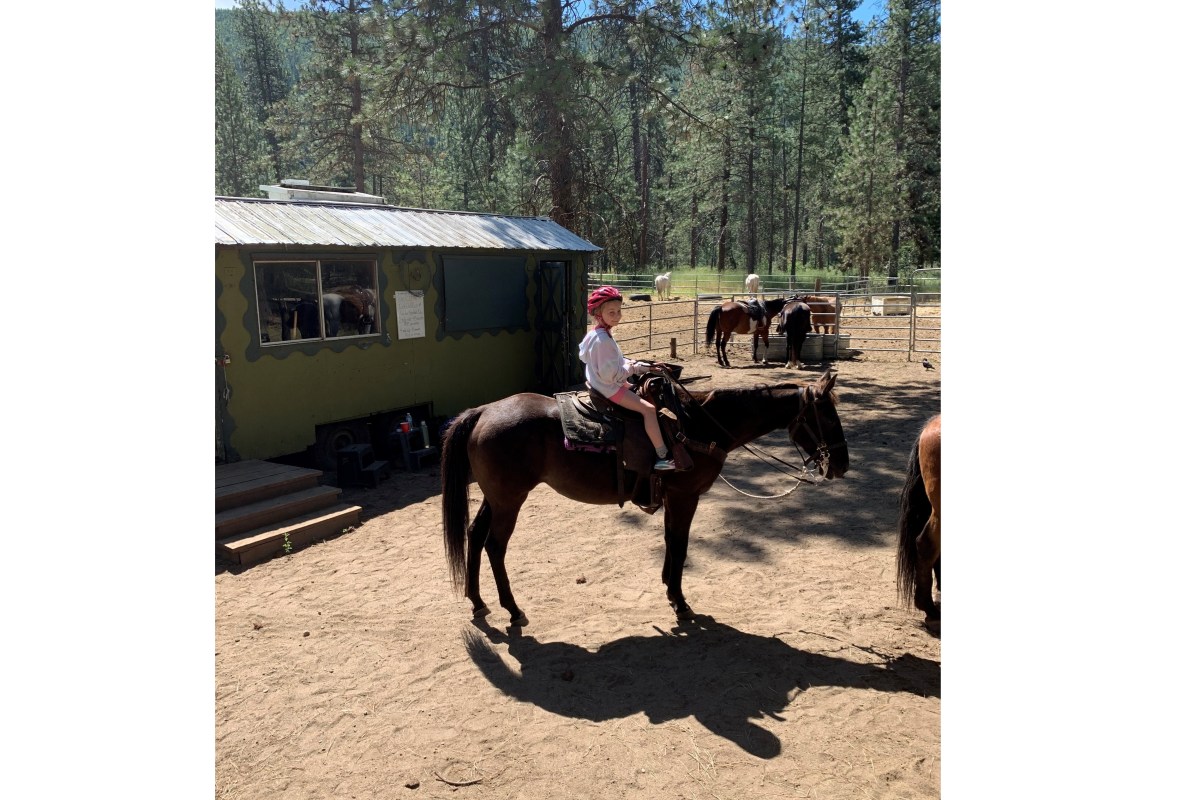
On Our High Horse

Life is like dreaming with your feet.” – unknown

My kids and I went to a wedding out of town this weekend. Staying in a room with side-by-side queen beds, we didn’t get much sleep and I caught a stomach bug but it was an adventure. In a post this spring, I wrote about lantern awareness, the idea from professor Alison Gopnik that kids’ brains have an awareness that is like a light held up high in the dark and illuminates everything around whereas adult brains tend to have spotlight awareness that focuses in on what we need to get done.

I found that traveling with my kids to someplace completely new to them is like being completely immersed in a treasure trove provided by their lantern awareness.

So we found a lot of treasures and I wrote about one for the Pointless Overthinking blog in a post called Cookie Cutter Faith.

Freedom and Responsibility

Freedom is not worth having if it does not include the freedom to make mistakes.” – Gandhi

A couple of days ago I converted Mr. D’s crib to a big boy bed by taking off one of the sides. I kept the crib thing going as long as I could because it’s so comforting to have a child stay where you put them but he’s been exercising his ability to push boundaries by climbing out so it was time.

The first night he got out of bed after I said “good-night” a couple of times, fell out of bed, and the next morning he got up 30 minutes early and woke his sister.

Of course I went through this with Miss O a few years ago but I’m reminded again of the lessons that freedom brings.

When we have freedom – to go anywhere we like or to use our time the way we wish or because we are the boss and no one tells us what to do – it is so exciting. Then we have to decide how to use it.

After the newness wears off, we have to learn to have self-control. We get to choose – within the limits of what is responsible and respectful of other people. We have to make decisions that don’t negatively impact our loved ones or people around us.

And when there’s more freedom, then everyone has to enforce their boundaries. In this case, Mr. D’s ability to pop out of bed is infringing on my ability to have morning kid-free sacred time and Miss O’s ability to sleep.

While kids who are almost 3-years-old are not the most reasonable people to talk and negotiate with, I find that having a strong relationship and consistent conversations about what does and does not work for everyone eventually gets through.

In the days that Miss O was learning how to manage her big bed freedom, I would turn on the Tibetan meditation chant music and say that if she got up early, the only option was to meditate with me. It didn’t take long for her to decide to stay in bed. I did the same with Mr D. except I notice that having another child there as a co-conspirator makes the conversation harder.

Yes, this is perhaps a strained analogy to the state of freedom in the US. But on this July 4th, may we remember that freedom comes with the responsibility to exercise self-control, be respectful of the others around us, the requirement to keep talking with each other and enforce our boundaries. Sometimes freedom works for us and sometimes the freedoms of others make us feel a little crazy and grumpy.  We have to keep working for the middle ground where freedom and respect are in balance. We made this bed and now we need to lie in it. 🙂

Happy 4th everyone!