Efficiency

“It’s not the heavy load that breaks you, it’s the way you carry it.” – Lena Horne

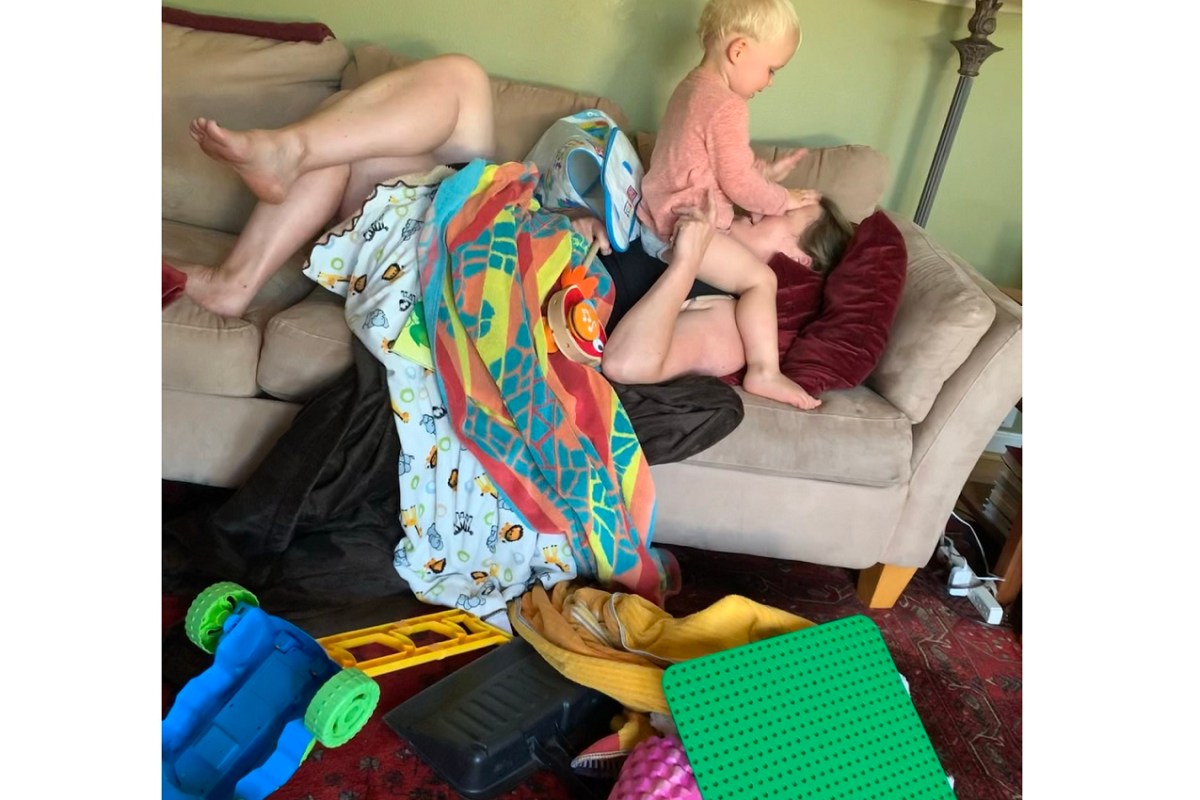
I needed to go downstairs to empty out the recycling bin. While I was down there, I thought I’d bring up some sodas from the store room. Then I remembered that my friend Eric was coming for dinner and I grabbed cans of the seltzer water he likes too. Before I even got to the door of the storage room, I dropped one of the cans. I picked it up, dropped it again and this time when I picked it up, it had been punctured. Nevertheless, I still continued to carry it upstairs, balancing 6 cans and a recycle bin dripping seltzer water the whole way.

<Sigh> The things I do for efficiency. 😊

This seems to be a lesson that I have to learn again and again. I think it’s a tangible reminder when I’m carrying too much.

When I slow down and do things well, I feel the simple joy of completing each task well. When I overload myself, all I feel is the sensation of juggling balance.

And then I drop one thing and instead of noticing it as a cue to empty my hands, I focus on just the thing I dropped.

Finally when I’ve persisted in bumbling my way through, I see the ridiculousness of it all and start to laugh. Humor makes sopping up seltzer water more bearable as I shake my head in wonder at my stubbornness.

I know it’s a human affliction to believe that we can contort ourselves in all sorts of shapes in order to juggle it all. And then we are reminded to put the load down, ask for help, or not do it all at once. If we listen, we are rewarded with the pleasure of doing one thing well. If we don’t, we get to laugh at our humanity while we clean up the mess.

(featured photo from Pexels)

Self-care

Sleep is the best meditation.” – Buddha

I had a moment this week when I felt unappreciated. In my exhaustion from the endless loads of laundry, the sudden need for spot cleaning and the excessive attentiveness that comes with potty training, I was running at 100% and no one seemed to notice. The way I remember it, my 6-year-old daughter asked me to get her something right after I sat down and my internal dialogue whined, “Can’t she see how hard I’ve been working?”

And then I had the inclination to be elusive, enigmatic and mysterious so that those around me would seek me out. Funny because I have never embodied mystery in my 52 years but somehow it seems viable as a strategy when I’m feeling tender. As if somehow retreating will make me feel more seen.

It’s a silly idea but thankfully I finally have come to have some sympathy for myself at this age. That I can recognize that as I sign that I need some self-care instead of calling it stupid or just powering through it is progress in my friendship with myself.

But the inclination to hide when I am exhausted and feeling unseen reminds me of something I heard in a podcast with Dr. Laurie Santos. She teaches the “Psychology of the Good Life” course at Yale which she described as:

“Evidence based strategies students can use to feel better. The problem is that it’s hard because our minds lie to us – like negative emotion, run away [from it]. Our minds lie to us about the kinds of things we are going to enjoy. When I’ve had an exhausting day, I just want to plop down and watch Netflix and never get off the couch. My mind doesn’t say, ‘Hey why don’t you go for a hard workout or why don’t you call a friend you haven’t talked to in a long time?’ The point is that we have intuitions about the kinds of things we need to do to promote our mental health and the kinds of things we need to do to live a happy life but often times those intuitions are wrong. They [the intuitions] are like – change your circumstances, get a lot of money, succeed, succeed, succeed at all costs. In practice those intuitions are leading us astray. We are putting in the work to become happier. But we are doing it wrong.”

And what are some of the right things that Dr. Santos has found that she has to remind the students in the course? To eat well and sleep.

And eating well and sleeping is what I’ve found cures my inner whine at least 98% of the time. I’m grateful that I can be friends with my mind. Even though I’ve learned not to listen to what it suggests, it often is telling me to take care of something and I appreciate that.

The Threshold to Love

The best way out is always through.” – Robert Frost

I’ve been divorced for 10 years and a single parent now for 6 and a half years. I’ve written about the reason I didn’t have kids when I was married and instead chose to do it on my own. Since I went into this phase of my life choosing to be single, I think it’s largely exceeded my expectations. Although there are tough moments, it’s been incredibly joyful for most of the time and I’m grateful for all the people around me that provide encouragement and support.

I’ve always thought that I would circle back around to dating at some point. This pandemic has shown me again and again that my optimism makes me a terrible prognosticator but I still believe I will end up with the love of my love.

The problem is that at a base level I don’t believe that adding a man to my life will improve it. Intellectually I know this to be a result of having a crappy husband the first time around. I don’t think his infidelities hang me up much. The fear is more based on the give/take of our relationship. As my gentle father put it when I finally got divorced, “he loved to BE loved.” Perhaps we were just mismatched but I could never make him feel loved or secure enough, and I exhausted myself trying.

So, I have this threshold between me and my future that I need to cross. It is returning to the belief that I held before I was married that romantic relationships can be life-giving and refreshing. That belief is one that I embody in all my other relationships but have taken a step back from when it comes to love. And as much time as I spend analyzing it, writing about it, knowing it, it is just dancing in front of the door without stepping a toe over.

It is one reason that my breath was taken away when I read this quote by Henri Nouwen’s, “The future depends on how you remember your past.” I know it isn’t just me that needs to do the work of genuine risk to face the thresholds installed by the pain of the past. As the Robert Frost quote at the top of this post says, the only way out is through.

So I take a deep breath in and thank my ex-husband for preparing me to love these two children. They at many times need as much care as he did but show great promise of growing out of it. And then I breathe out the fear of a relationship that only withdraws from me and never gives. When I do this over and over, I prepare myself to walk through that doorway into the possibility of love once again.

(featured photo from Pexels)

Seeing the Whole Mountain

If peace comes from seeing the whole, then misery stems from a loss of perspective.” – Mark Nepo

It’s probably not shocking to admit that the most beloved people in my lives, a.k.a my kids, can sometimes irritate me. The other day, my 6-year-old daughter walked by me as I was sitting at the table and used the back of my shirt as a napkin for her buttery popcorn hands. And the little one loves to get his hands on my dental floss – and pull and pull and pull until there’s a long trail behind him sufficient to find Hansel and Gretel.

But all it takes is one look at them earnestly trying to learn something, or one comment from someone else about how precious they are and my eyes leak as my heart overfills.

One of the best pieces of advice about love that I’ve heard about love is when feeling the grind of it, to back up and see the whole mountain. Maybe my love of mountains makes this resonate especially with me but it brings to mind some of the toughest spots I’ve faced in climbing.

One of my least favorites is called Cathedral Gap on Mt. Rainier. It’s right next to Cadaver Gap, which because it’s aptly named, is NOT the route we take. But Cathedral Gap, despite its lovely name is grueling. It’s right after you’ve left Camp Muir at 10,200 feet and the first time that rope teams and crampons are required. Often the route is quite pebbly in spots and the mud and muck get jammed between the points of the crampons designed to help grip in snow and ice. When that happens then with each step you have to bang your foot against your ice axe to clear the debris.

The combination of being roped up, coordinating the pace with those on the team all the while climbing, banging your foot with your axe and breathing undoes me. It isn’t that climbing the rest of the mountain is easy but that particular part of the route (approximately located where the yellow arrow is on the picture below) I find to be grating.

And yet, when I see Mt. Rainier as I do every sunny day in Seattle, it gives me such a thrill. Just a glimpse of The Mountain, as my dad called it, and I’m filled with a tingle of the timeless beauty, daunting majesty and feeling of home it gives me. I feel this overwhelming sense of hope that we can all know beauty and dignity and stand tall against the test of time.

And it’s the same with my kids. There is a particular expression they both have that show when they are feeling confident about something they’ve learned. One glimpse of their little faces and I’ve come home – to my love and my life.

A Trick of Time

How simple it is to see that we can only be happy now, and there will never be a time that is not now.” – Gerald Jampolsky

I wake up between 5 and 5:30am every morning. I don’t use an alarm but I have a clock that projects the time and the temperature onto the ceiling of my bedroom. So I open my eyes, look at the ceiling to orient myself and then roll out of bed.

This clock, that I’ve had for about 15 years, never needs to be set. It synchronizes with something out in the ether, that I have nicknamed the mother ship since I’m unclear what it is, and so with every time change or when it restarts after it has lost power, it is automatically updated.

Every once in a while, like 4-6 times a year, it does a funny thing. It gets out of sync and then is 40 minutes early. It might display 5:10 am but it’s really 4:30am. When this happens, I glance at the ceiling, get out of bed and it isn’t until I’m feeding the cat that I realize “I have an extra 40 minutes!”

<cue the oohs and aahs>

Forty extra minutes for doing yoga, reading, meditating, and writing my daily post. It doesn’t matter whether it’s a weekday or weekend, it feels luxurious. I hold my yoga poses a few beats longer, I read an extra meditation passage or two, I linger longer on the words I write.

But it doesn’t mean that I get anything more done. Whether I have an hour and a half or two hours before I get my kids up, doesn’t produce any measurable difference in productivity. Perhaps my closing sentence on my post is more thought-out but largely the difference is that I start the day with a sense of abundance.

Of course I could train my body to get up at 4:30am every day but then I’d expand my list of things I think I could get done. The trick seems to be in granting myself the permission to linger and not hurry through these things that matter most for my self-care and connection to the pulse of life and community. Because I have not yet mastered bestowing that gift upon myself, I rely on my clock to remind me of that lesson every now and again.

After I mentioned this clock behavior to my brother a while back, he looked at me as if I was crazy not to get rid of it. But why would I dispose of something that gives me the gift of time?  

(featured photo from Pexels)

Changing Your Mind

Your imagination is a preview of life’s coming attractions.” – Albert Einstein

My toddler told me the other day that he wanted Mac ‘n cheese for dinner. As I was boiling the water, he discovered that he liked the food I already had on the table. He turned to me and said, “I changed mine mind.”

I was amused, not expecting such introspection and courtesy from a two-year-old. But of course, kids are constantly changing their minds. They like playing with dolls until they don’t. It’s fine to carry a lovey with you everywhere – until it isn’t.

I recently heard a fascinating podcast from Ten Percent Happier with Dr. Alison Gopnik, a psychologist at UC Berkeley and expert on cognitive development. She explained why it is that babies can change their mind – because their neural pathways are much less grooved than those of adults. In an analogy she gave, she said kid’s neural pathways are a lot like the streets of old Paris, with winding, interconnected little streets. By contrast with adults, our brains look like wider, efficient boulevards that can hold much more traffic that can go faster. The result is as Dr. Gopnik said, “Young brains are also much more plastic and flexible – they change much more easily.”

She also introduced me to the idea of the local optimum, a concept from AI (artificial intelligence). It describes a situation where you can’t really tune it because any small change would make it worse, but a big change might make it better. In her words:

“One of the challenges for intelligence is how do we kick ourselves out of these local optima when we’ve become really practiced and good at doing one particular thing for example, it becomes very easy and natural to think that’s the thing to do. And just doing something that we’re not good at, doing something really different than the things we do every day can be the sort of thing that will kick you out of that local optimum and give you a sense of other alternatives.”

What We Can Learn about Happiness from Babies Podcast with Alison Gopnik

This makes me think of the example provided by the podcast host, Dan Harris. He was a journalist for ABC News for many years. After experiencing an on-air panic attack in 2004, Dan turned to meditation. After practicing for many years and continuing his day job as a weekend anchor for GMA, he wrote the book 10 Percent Happier, published in 2014.

Still working for ABC News, he started a mindfulness company and published podcast content about meditation and mindfulness. Finally in the fall of 2021, he negotiated out of his contract with ABC News to focus on his life passion: bringing meditation and mindfulness to anyone interested.

Dan Harris is a parent of a 7-year-old son. I assume that part of his slow transition is providing that solid base for his family life. But I’m so heartened to see a live example of how grown-ups can make big changes, even slowly, while raising a young family.

My son really meant it when he “changed mine mind” the other night. He no longer wanted mac ‘n cheese. Hanging around with kids, traveling, meditation are all examples provided by Dr. Gopnik of ways that grown-ups can change their minds. I can confirm that my kids help me come unstuck and imagine life from different angles every day and that, as Albert Einstein says in the quote above, widens my view of life ahead.

Friendship Brownies

A friend may well be reckoned the masterpiece of nature.” – Ralph Waldo Emerson

I was talking to my friend, Doug, the other day. He is planning a climb of Mt. Adams with his son this summer. It’s a 12,280 foot mountain in Washington State – tall enough to be a challenge but not technical enough to need a lot of equipment and training. The last time we summitted this mountain was with his daughter about 10 years ago when she was 14 years old.

Doug wanted to know if I remembered what packs we carried between our camp at about 9,000 feet and the summit. He is a meticulous packer and doesn’t carry anything more on his back than necessary.

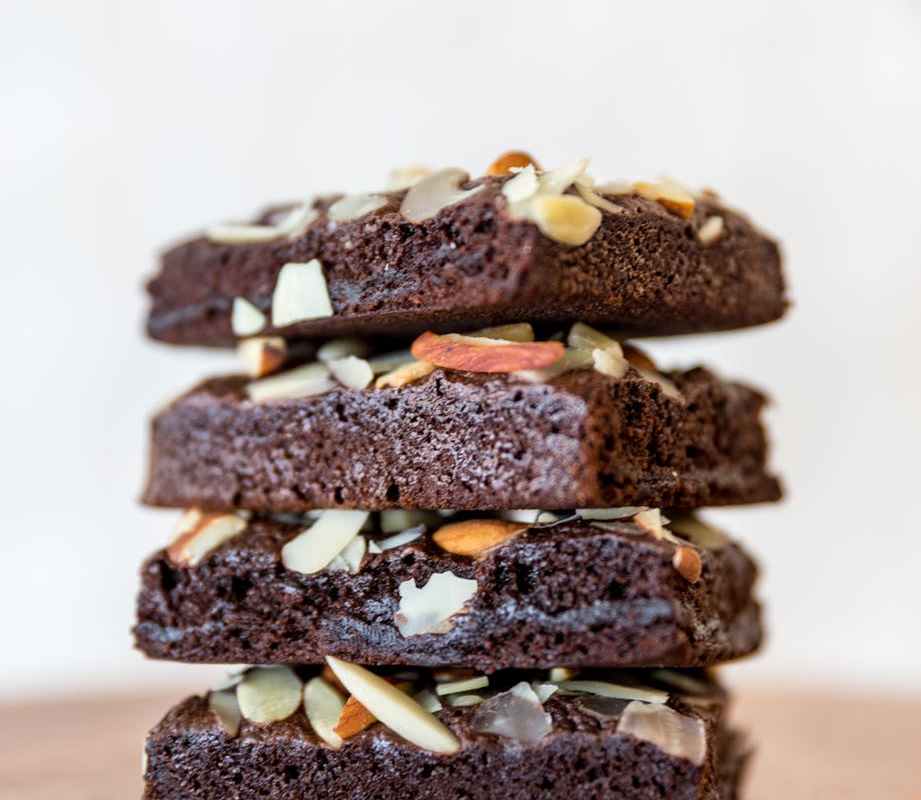
These questions reminded me of a time we were planning a climb on Mt. Rainier that would take place over Doug’s birthday. His wife asked me if I would carry some brownies up to celebrate Doug’s birthday. It was only after I happily agreed that she told me that Doug said he wouldn’t carry them because he didn’t want that unnecessary weight in his pack.

It is probably because of all this carrying of loads that makes one of my favorite meditations is one where I imagine I sit down, empty everything out of my pack, look carefully at each thing I’m carrying. When I’m done sorting through the worries, the presumptions, and fears as well as the love, the purpose, the nostalgia, the energy stored for digging deep, the vulnerability, I mentally load the pack again with only what I need. I always carry a lighter load after that meditation.

But in thinking about those brownies, I realize that friendship means we are willing to carry things for other people that they won’t carry for themselves.

We hold in our packs a version of our friends at their brightest and most creative that can be shown to them when they are in a slump. We carry memories of the times we laughed, did silly things, failed and succeeded. We store all the depth of the ways we have walked side by side on the path as well as the times we waited at an intersection while they took a detour and vice versa.

Then at just the right moment, we unpack the brownies we’ve carried so far and celebrate our friends. There are some things worth the extra weight and friendship is one of them.

(featured image from Pexels)

Learning Every Day

I am learning all the time. My tombstone will be my diploma.” – Eartha Kitt

I’d like to say that when I was growing up, it was a family tradition that we went around the table to say what we learned that day. I have a vague memory that we did in fact do that but as the third and youngest child, I think that maybe it fizzled out by the time it got to me.

Regardless, I’m happiest when I’m learning something every day. In fact I was happily driving alone in my car the other day to Costco, listening to a Brené Brown podcast and thinking in the back of my mind, my blog should be titled or subtitled “What I Learned Today.”

At possibly the very same moment, fellow blogger Rosaliene Bacchus of the Three Worlds, One Vision blog typed a comment, “Wynne, it’s a joy to witness, through your reflections, the way in which you learn from even the smallest experiences in your day-to-day life.”

My kids were 4 ½ years old and 7 months when this pandemic started. I find them fascinating to watch and interact with and I learn from them every day something about what it means to be human. But the isolation of this time and the slower pace of our schedule of activities meant I had to find sources of adult conversation, inspiration and meaning. What I’m listening to and reading has helped me not only learn how I can grow but also process the tidbits of what I see about how my kids grow.

Podcasts, which I can listen to in the car, when I’m cleaning or late at night when I’m getting exercise by repeatedly climbing the 47 stairs I have in my house, have brought so many experts and depth right to my doorstep: Krista Tippet’s quiet and spiritual On Being, Brené Brown’s insightful and research driven Unlocking Us, Dan Harris’ urbane and slightly sardonic mindfulness podcast Ten Percent Happier.

I read as much as I can – sometimes thrillers and spy novels that take me completely away from my life for an hour or two. But mostly I read as many blogs as I can and I’ve loved the books penned by fellow bloggers than I’ve read or am reading: The Twisted Circle by Rosaliene Bacchus, How to Heal Your Life by Tamara Kulish, Voices: Who’s In Charge of the Committee In My Head by Julia Preston and Be a Happier Parent or Laugh Trying by Betsy Kerekes.

It was on the Unlocking Us podcast (I think) that I heard neuroscientist David Eagleman talk about the research that we are powerfully influenced by the 5 people we spend the most time with. I’m delighted because I’ve been spending time with you all – you’ve inspired me, taught me, made me laugh and made me think. What a joy!

So, if you have a moment, please leave a comment about where you get your inspiration.

I’ll close with a quote from an On Being interview I heard with Thich Nhat Hang, “You have the right to make mistakes but you don’t have the right to continue making mistakes, you have to learn from your mistakes.

Here’s to always learning!

(featured photo by Pexels)

Swimming In the Deep

The inner life of any great thing will be incomprehensible to me until I develop and deepen an inner life of my own.” – Parker J. Palmer

This weekend my friend Eric told me a story about a course that he took in college. He went to one of the Claremont Colleges in the mid-1980’s and this sounds like something that might have only been possible in that place and time.

The course was called Mind, Culture and Sports and it was held at the professor’s house, usually with drinks served and the professor encouraged everyone to take it pass/fail. The course content varied greatly – one week it might be a study of how hard it was to hit a baseball and the next week it was about meditation.

One weekend their field trip for this class was to spend a night at a Buddhist monastery. With great interest I asked how that went and Eric replied that he was terrible at mediation. Apparently the monk kept coming by to (gently) correct his posture. But, Eric brightened considerably when he reported that he was great at “sweep the path,” the chore he was assigned at the monastery.

It made me reflect on what we get out of our experiences. I’d have probably missed the whole point of a meditation retreat when I was 19 years old as well. But in contrast, can I name what I get out of meditation now?

If I didn’t meditate, I’d spend the day operating from my to-do list and getting a great deal done but swimming on the surface of the lake where the conditions of the weather affect the choppiness of the water a great deal.

By meditating, it feels like I spend at least a few minutes submerged in the deep. It’s where the quiet allows me both to read about and hear the bigger forces at work – the thread of the Divine in my life, find the echo of Love and Beauty in what I’m doing and touch the feeling of Peace that pervades regardless of the surface conditions.

I was also in college and about 19 years old, the same age as Eric when he took his college course, when someone who was trying to recruit students for the Church of Scientology stopped me on University Avenue and asked me “What about your life do you not want anyone to know?” At age 19, I was still blissfully naïve, untroubled and pretty uncomplicated. Perplexed by the question, I replied, “Nothing?”

Now, 33 years later, I’d answer a lot more assuredly “Nothing. Because after all those years I spent thrashing about on the surface, I’m finally submerged in the deep.”

(featured photo by Pexels)

Rebranding Exercise

Sometimes it’s okay if the only thing you remembered to do today was breathe.” – Unknown

Somewhere in the middle of yesterday morning, I realized that, although I was in the middle of a scenario that I dreaded, I was doing fine, in fact better than fine. The scenario: quarantined alone with two kids for days on end, no other grown-ups allowed in for help or distraction, not able to go outside which is both my and my kids’ happy place, feeling sick and trying to work.

It made me wonder – how much energy is wasted imagining dreaded scenarios? They may or may not happen. And this one has taught me, that even when they happen, they don’t feel like I feared they would. In fact, I felt so emboldened by the fact I was facing this nightmare down that I skipped through the rest of the morning.

This sparked a tidbit that I learned many years ago from someone who was researching how we RSVP events that are 1 month or 6 months out. They found that our minds have an image of who we’ll be and how we’ll feel in the future that isn’t accurate. When we respond based on that image, we often don’t predict well whether we’ll want to go. The trick, the research said, was to RSVP as if the event was tomorrow or next weekend. Because we just don’t know how we are going to feel about an event until we are facing it.

Also in my dread, I couldn’t imagine the beautiful difference that how other people would react would make. My friends, neighbors and colleagues have been so supportive and offered to drop off groceries, dinners and things for the kids. And in my imagining, I couldn’t factor in the great community of grown-ups that I’ve found in blogging. Reading other people’s blogs and writing through this has kept me in touch with the big picture reality in such a delightful way (thank you so much!). And finally, my kids have done pretty darn well in this break from normality. They’ve bickered and gotten grumpy but also taken it in stride.

And finally, the fear of the unknown made the idea of the quarantine much scarier than it is. When I fear things, it adds a patina to the image that doesn’t appear in the reality. Dealing with and dreading are two different things. Of course, that is also thankfully because our cases are mild, it gets better and more known each day and now the end is in sight.

The more often I face something I dread, the more I learn to return from that feeling. I think we all leave the present for someone imagined scenario but like just like blinking, we have the chance to clear our vision and return. No need to spend any time in the future – because how I think I will feel when I have to have a tooth drilled, hold a child that is hurt or face disappointment is not how I will actually feel.

And building on the other things I’ve learned this week, I sat my kids down to do a meditation last night after dinner. It worked wonderfully to settle us all into a fun evening routine. They loved it and my 6-year-old especially thought it was great.

So I’m rebranding this quarantine as a meditation retreat.