Minding My Own Business

If what you believe does not impact how you behave than what you believe is not important.” – Shaykh Yassir Fazaga

This year I’m celebrating having my own business for 20 years. It’s hard to unpack all that means to me but my business was there before I got married and carried me through when I got divorced. It gave me the flexibility to trek to Everest Base Camp for 3 1/2 weeks when I was single and has given me the time and money to have kids as a single woman now. It’s held different structures like when I had business partners and employees and like now when I am a sole proprietor with subcontractors. There have been ups and downs that seemed so huge that they’d swallow me at the time but now in hindsight are now just good stories. While many of the things I’ve learned are specific to my company’s focus which is to provide consulting to businesses about how they can better implement computer collaboration like document sharing and approval processes, the three most key lessons are life lessons:

  • Always pay everyone else, including the government, before you pay yourself. I remember the first payment I got 20 years ago was for $5,000 and it seemed like so much money that I went out and bought a tile saw so I could tile the floor of my home office. But once I paid the state and city taxes, my start up costs and legal fees, my take home was about $1,200. I could still afford the tile saw but I learned not to look at any payment as my money. Instead I pay my expenses often before the client remits payment so that when I look at the bank account, I know how much I can pay myself.
  • Finish your projects and create relationships, and your reputation will take care of much of your marketing. After my business partner told me of my now ex-husband’s infidelities and it became clear we needed to all go our separate ways, I was left maintaining a small office building that we all still owned together. It was after the financial crisis of 2008 so the building was worth less than the mortgage and we couldn’t sell it. So I went to the local SBA office to talk with someone about how to restructure the loan. He gave me a series of things I had to do, accounting, legal and structural and told me if I did, we could restructure them. It took me five months of hard work and when I made an appointment with him and returned, he said, “Wow, you came back. Not many people do.” Which made me cry. And I also was able to reshape the loan to work until I could sell the building. That same tenacity in finishing projects and maintaining my reputation through all circumstances has worked to give me repeat business and referrals that have made the business easier to run over time.
  • Have faith. Every year at this time, my business slows down in late summer because people are on vacation. It doesn’t matter that it’s different customers on one year versus the next, it always happens. And I always worry. So the third lesson is have faith. I think of it like the story of Manna in the Bible. Enough manna would fall each day to feed the Israelites when they were in the desert. But they couldn’t store it from one day to the next. They had to have faith it would come again the next day.
    So I spend August doing my part – honing my skills and reaching out to people and sooner or later my pipeline fills and the business continues. Like with all problems, worrying only drains the energy out of what needs to be done so I’ve learned take a deep breath, focus on faith and keep working.

I’ve heard the phrase “it’s not personal, it’s business” many times. It seems often right before someone is unkind or unfair to someone else. I’m guessing whoever coined that phrase didn’t run a small business for 20 years because at some point it becomes indistinguishable. But when your values are infused in your business, it can be a beautiful thing.

An Act of Bravery

It always seems impossible until it is done.” – Nelson Mandela

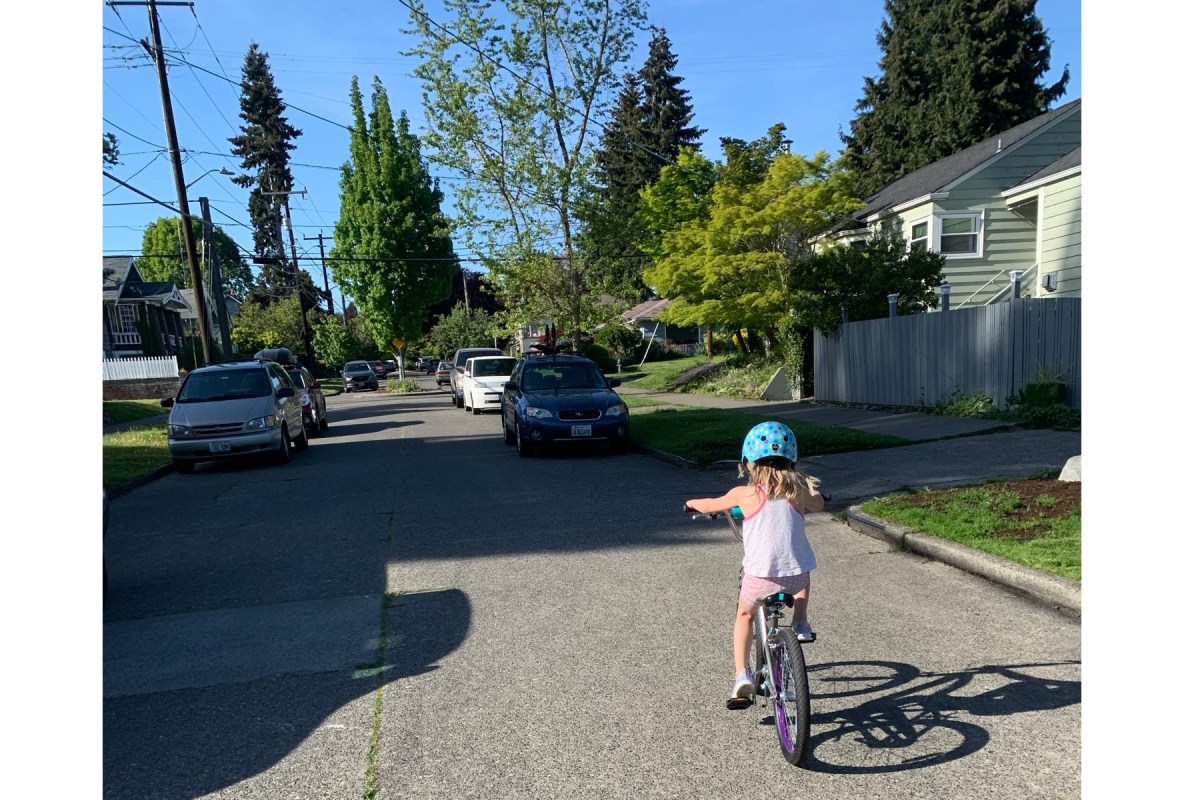
This week my almost 6-year-old daughter suggested that we ride bikes to pick up my son from daycare. So last night we did. It’s only about a mile by bike and she is pretty steady on hers. We left with me in the lead and she was following. The first part is slightly downhill in a bike lane on a busy road and we had only gone five blocks when all of a sudden I couldn’t see her behind me. The road curved so I could only see a half block back but she didn’t appear. Then a man in a truck said, “Are you looking for a little girl? She’s way back there.” My heart in my chest, I looped around to find my daughter a block back, up on the sidewalk silently crying. A car had come, maybe turning, it spooked her so she got herself up on the curb and resolved to wait for me.

The rest of the way we changed it so she led and I followed talking to her the whole way. When we got to the daycare, it’s a half a block of steep uphill so I told her we’d walk our bikes but she said, “I can do it, Mama!” and zoomed herself up the hill and right up to the door. On the way back, she started to relax into it so much that she was weaving between cones on a closed section of road.

The whole adventure reminded me how brave we are to live a day of this life. We get up, set our sights on something we are going to do, people we are going to meet or work we have to finish. Then we start on our way only to discover we are scared or confused and need a minute. Whether we continue or not probably depends on the voice we hear in our head. And for us adults, this all happens without us thinking about it. We have forgotten how brave it is to meet the day because we’ve done it so many times before. But it doesn’t make us any less brave.

Watching my daughter when we finally pulled back into the garage with my toddler, she stripped off her top and cheered. She did it! She transported her 45 pounds of bones, muscle and grit a mile and back on a two-wheeled vehicle and moved through time, space and her own doubts. By God, she did it. May we all remember to cheer our bravery as we tackle things today.

The Practice

One filled with joy preaches without preaching.” – Mother Teresa

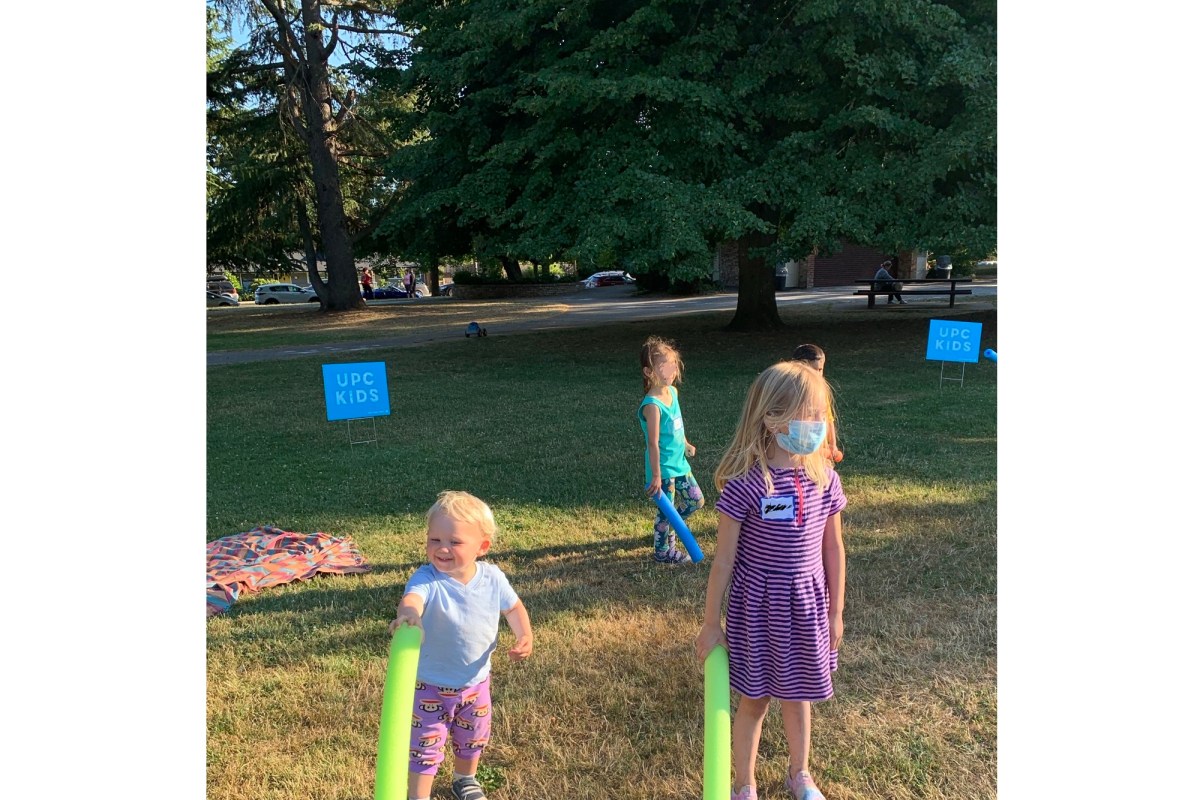
My mom’s church has been doing these Wednesday night park programs for kids. It’s a little like Sunday School where there’s singing, a short message, some games and then Otter Pops at the end. You come with your family and can picnic there and then all participate in this hour of fun. It’s been lovely and my kids have loved it – it’s a fun way to return to being together. One of the songs we’ve been singing has gotten stuck in my head:

I’m inright, outright, upright, downright
Happy all the time
I’m inright, outright, upright, downright
Happy all the time
Since Jesus Christ came in, and saved my soul from sin
I’m inright, outright, upright, downright
Happy all the time

So as it’s been running that circular loop, I’ve realized that as a Presbyterian minister’s kid, this was exactly the messaging I grew up with. Jesus Christ = happy. And there’s a lot more of those kid songs with a similar message (like When You’re Happy and You Know It). I’m a pretty naturally happy person so there was no inherent conflict there as I grew up. But now, as I’ve pondered why I can’t just be a traditional church-going person, I wonder if I just outgrew that message as life got more complex and had to find my own practice. For me that has become listening to the quiet within every day on a meditation cushion. I also love a great sermon in church or fun in the park finding community but it’s the personal practice I always come back to.

It reminds me of the dance of falling in love. We lead with the message that we think is going to make us most attractive – that we are happy, successful, strong or sexy. But any relationship that goes the distance exposes all the facets of who we are. In that same way, religion (in my experience) uses happy, fun songs to get kids to listen and then for it to take root, they need to incorporate the message into the depth of what they believe. In this way both love and faith are a practice, not just a belief.

This ear worm of a song is leading me to realize that I want to support my kids in the incorporation of what we believe. To practice seeing that in the beautiful mystery of life and time as humans, we get to celebrate being here every day. And that God, in whatever way we conceive of him, is in each part of this experience whether we label it as happy or not.

Five Pieces of Writing that Inspired Me: #5 Showing Up

“He is able who thinks he is able.” – Buddha

Sometimes the problems of the world seem overwhelming so that I feel anything that I could do wouldn’t matter in the slightest. Then I think of this story that Frederick Buechner told as part of a sermon he delivered and I remember that we just have to show up.

The Best She Could

In any case, it was this same George Shinn who in 1880, five years before being asked to start your church here in Chestnut Hill, was summoned once at midnight to the bedside of an old woman who lived by herself without much in the way of either money or friends and was dying. She managed to convey that she wanted some other woman to come stay with her for such time as she might have left, so George Shinn and the old woman’s doctor struck out in the darkness to try to dig up one for her. It sounds like a parable the way it is told, and I am inclined to believe that if someone were ever to tell the story of your lives and mine, they also would sound more like parables than we ordinarily suppose. They knocked at doors and threw pebbles at second story windows. One woman said she couldn’t come because she had children. Another said she simply wouldn’t know what to do, what to be, in a crisis like that. Another was suspicious of two men prowling around at that hour of night and wouldn’t even talk to them. But finally, as the memoir of Dr. Shinn puts it in the prose of another age, “The rapped at the humble door of an Irish woman, the mother of a brood of children. She put her head out of the window, ‘Who’s there?’ she said ‘and what can you want at this time of night?’ They tell her the situation. Her warm, Irish heart cannot resist. ‘Will you come’ ‘Sure and I’ll come, and I’ll do the best I can.’ “And she did come,” the accounts ends, “She did the best she could.”

Listening to Your Life – Frederick Buechner

Five Pieces of Writing that Inspired Me: #3 Prayer

Ask and it will be given to you; search, and you will find; knock and the door will be opened for you.” – Jesus

Prayer is so personal that I got to the middle of my life either reciting a memorized prayer or confusing it with the jumble of thoughts, aches and needs in my head. But when I read this description from Frederick Buechner about a conference he once went to led by a faith healer, I all at once saw the possibility of miracle and longing in prayer.

I saw Agnes Sandford first in the dingy front hall of the building where the talks were to take place, and after no more than a few minutes’ conversation with her, I felt as sure as you can ever be in such matters that if there was such a thing as the Real Article in her line of work [faith healing], then that was what she was. She was rather short and on the plump side with a breezy matter-of-factness about her which was the last thing I would have expected. She had far more the air of a college dean or a successful businesswoman than of a Mary Baker Eddy or Madame Blavatsky. She seemed completely without pretensions, yet just as completely confident that she knew what she was talking about. She had an earthy sense of humor.

The most vivid image she presented was of Jesus standing in church services all over Christendom with his hands tied behind his back and unable to do any mighty works there because the ministers who led the services either didn’t expect him to do them or didn’t dare ask him to do them for fear that he wouldn’t or couldn’t and that their own faith or the faith of their congregations would be threatened as the result. I recognized immediately my kinship with those ministers. A great deal of public prayer seemed to me a matter of giving God something that he neither needed nor, as far as I could imagine, much wanted. In private I prayed a good deal but for the most part it was a very blurred, haphazard kind of business – much of it blubbering, as Dr. Muilenburg had said his was, but never expecting much back by way of an answer, never believing very strongly that anyone was listening to me or even, at time, that there was anyone to listen at all.

That was the whole point, Agnes Sanford said. You had to expect. You had to believe. As in Jesus’ parables of the Importunate Friend and the Unjust Judge, you had to keep at it. It took work. It took practice, was in that sense not unlike the Buddhist Eightfold Path. More than anything else, it took faith. It was faith that unbound the hands of Jesus so that through your prayers his power could flow and miracles could happen, healing could happen, because where faith was, healing was too, she said, and there was no power on earth that could prevent it. Inside us all, she said, there was a voice of doubt and disbelief which sought to drown out our prayers even as we were praying them, but we were to pray down that voice for all we were worth because it was simply the product in us of old hurts, griefs, failures, of all that the world had done to try to destroy our faith. More even than our bodies, she said, it was these hurtful memories that needed healing. For God, all time is one, and we were to invite Jesus into our past as into a house that has been locked up for years – to open windows and doors for us so that light and life could enter as last, to sweep out the debris of decades and drive back the shadows. The healing of memories was like the forgiveness of sins, she said. Prayer was like a game, a little ridiculous the way she described it, but we were to play it anyway – praying for the healing both of ourselves and others – because Jesus told us to and because most of the other games we played were more ridiculous still and not half so useful.

We were to believe in spite of not believing. That was what faith was all about, she told us. “Lord, I believe; help thou mine unbelief,” said the father of the sick son (Mark 9:24), and though it wasn’t much, Jesus considered it enough. The boy was healed. Fairy-tale prayers, she called them. Why not? Jesus prayers. The language of the prayer didn’t matter, and her own language couldn’t have been plainer or her prayers more unliterary and down-to-earth. Only the faith mattered. All of this she spoke with nothing wild-eyed or dramatic about her, but clearly, wittily, less like a mystic than like the president of a rather impressive club. And you could also get too much praying, too much religion, she said and when that happened, the thing to do was just to put it aside for a while as she did and do something else. She herself read murder mysteries, she said. Or just collapsed.

Listening to Your Life by Frederick Buechner

Five Pieces of Writing that Inspired Me: #1 Faith

When you surrender to the wind, you can ride it.” – Toni Morrison

My toddler has become the master of two word sentences. “Mama lap” is one of his most frequent and it works to make me sit down, pull him onto my lap and read him a book.

I’ve been thinking a lot about words lately. How we string them together and hope they convey what we want and need and maybe if we are lucky, even reach another person where they live. So I’ve gone back through my most beloved meditations and books and picked out five of the most inspirational things I’ve read that have pulled me up, changed my perspective and touched my heart.

Learning How to Float

When we stop stuggling,
we float.

When first learning how to swim, I didn’t trust the deep. No matter how many assuring voices I heard from shore, I strained and flapped to keep my chin above the surface. It exhausted me, and only when exhausted did I relax enough to immerse myself to the point that I could feel the cradle of the deep keep me afloat.

I’ve come to understand that this is the struggle we all replay between doubt and faith. When thrust into any situation over our head, our reflex is to fight with all our might the terrible feeling that we are sinking. Yet the more we resist, the more we feel our own weight and wear ourselves out.

At times like this, I remember learning to float. Mysteriously, it required letting almost all of me rest below the surface before the deep would hold me up. It seems to me, almost forty years later, that the practice of finding our faith is very much like that – we need to rest enough of ourselves below the surface of things until we find ourselves upheld.

This is very hard to do. But the essence of trust is believing you will be held up if you let go. And though we can practice relaxing our fear and meeting the deep, there is no real way to prepare for letting go other than to just let go.

Once immersed, once below the surface, it is not by chance that things slow down, go clear, feel weightless. Perhaps faith is nothing more than taking the risk to rest below the surface.

The Book of Awakening by Mark Nepo

Climbing the Walls

For you created my inmost being; you knit me together in my mother’s womb. I praise you because I am fearfully and wonderfully made.” – Psalm 139:13-14

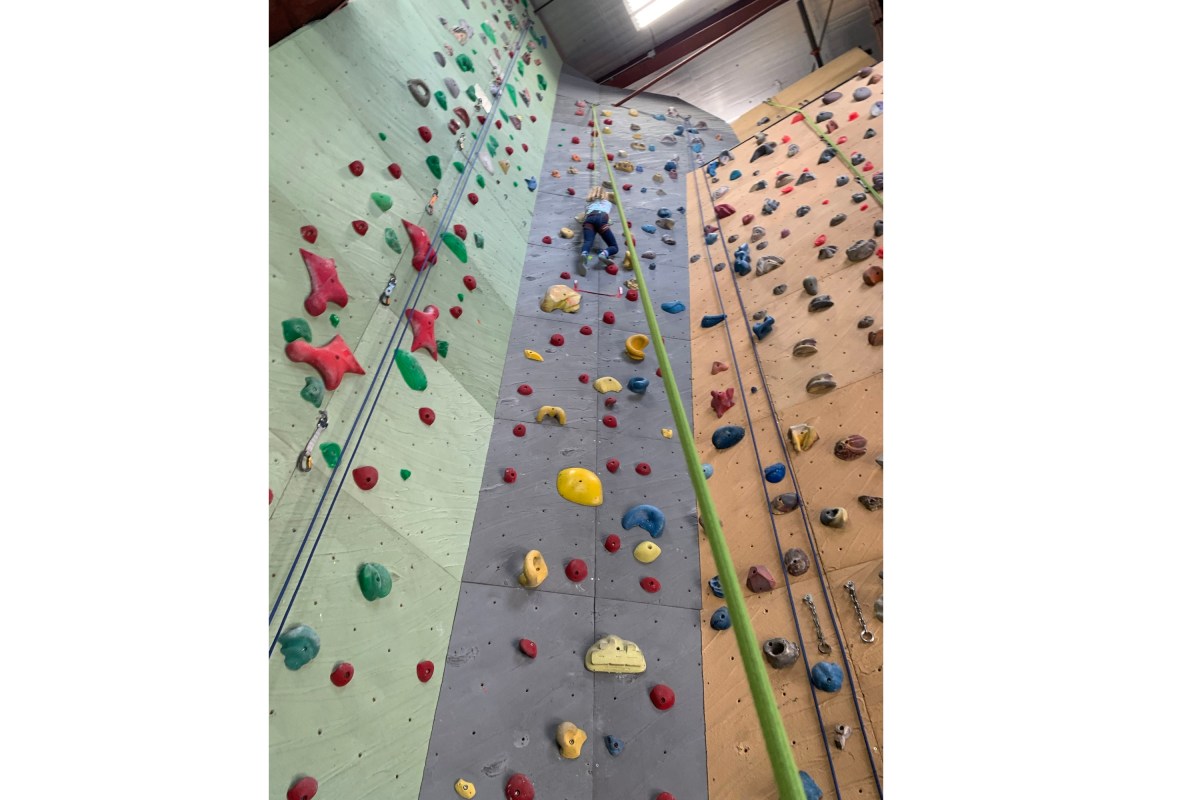
My daughter went to rock climbing camp this week. And absolutely loved it. The camp is at the gym I’ve climbed at for 20 years so I love being there, climbing there and just walking in there. [Aside: When we walked into the gym the other day, they were playing “I Melt With You” by Modern English and it gave me a moment of realizing how much I missed being places where music was playing in the background. ] I wonder about the unconscious effect that climbing had on her when she was in utero. I only did a bit of low bouldering when I was pregnant, nothing I could fall off or had to wear a harness for even though I was told it was perfectly safe. I stopped when I was about 6 months along and my center of gravity changed but we climbed “together” up until then.

I think of the story of Alison Hargreaves, a British mountain climber. She had an impressive mountain climbing career including summitting Everest on her own and without supplemental oxygen. She solo climbed six great north faces of the Alps including climbing the north face of the Eiger while she was six months pregnant with her first child, Tom. But she received a lot of criticism for climbing when she had young children at home. Much was made of the fact that male climbers aren’t subjected that kind of scrutiny if they are parents. Alison died when a bad storm came in while she was descending from the summit of K2 in 1995. She was 33 years old and her kids were 6 years old and 4 years old.

Her son, Tom Ballard went on to become an acclaimed climber in his own right. He died in bad weather conditions while climbing Nanga Parbat in Pakistan in 2019 at aged 30.

That story fills me with deep grief and also sends me running to do my work. I don’t presume to know anything about the Hargreaves/Ballards other than what I’ve read and I’m not adding judgment to their tragedy but I know things are passed down organically in families. In my family, that was a deep sense of faith and a complete avoidance of conflict. In utero I was hearing my mama’s prayers and daddy’s sermons from within and though it’s taken me a long time to find my own deep sense of faith, I am so grateful for that. The people pleasing/conflict avoidance part has been passed down to me as part of my work.

I love that my daughter loves rock climbing. I’m hoping that climbing together, all the hours I spent meditating and knowing she was a miracle continue to influence her from her time in utero. For all the things I don’t want to pass along, I’m grateful that I’m old enough to be aware of them and mindful enough to be working on them.

Deep Knowing

“The inner life of any great thing will be incomprehensible to me until I develop and deepen an inner life of my own.” – Parker J. Palmer

I was standing in the crowded reception hall after my father’s funeral service greeting people, feeling the comfort of the huge tide of love for my dear father carry me through the ache of missing him when one of his close friends came up and whispered in my ear. She said, “You were his favorite.” I wanted to turn and joke with her that she said that to all the kids but the truth of it choked off any chance of reply. It was something that I knew way down deep but never would have said, something that I wanted so badly to be true because I loved him so, and something I needed to hear to affirm that bond I felt with him.

On the morning of November 7th, 2014 my 79-year-old father spent an hour or two reading in the sunshine on the back patio of the home he and my mom owned in Tucson, Arizona. He had just accepted a position as president of the board of an organization serving people in the Middle East and was planning out the next meeting while my mom was out playing golf. He must have felt the need to get some exercise so he placed his open book face down on the chair, put on his helmet, hopped on his bike and started riding the route that they often took through their quiet community. He’d gone three blocks when he hit a car coming through an intersection, suffered blunt trauma to his neck and died within a minute.

A year-and-a-half before he died, I was out walking my dog on a bright Seattle spring morning and the song Circle of Life from the Lion King came into my head. My eyes filled with tears as I knew my beloved father was going to die. It wasn’t an urgent feeling but just a recognition of the eventuality and an insistence on talking with him and writing about his life and faith. It was absurd on the face of it. I was too new in my spiritual path to relate to his, I wasn’t a writer and I’d heard his stories all my life. But the voice was clear that I listen. So I did. Over the next 18 months, I sat down and recorded conversations with my father.

So when my dad died that Friday morning, I was in the best place possible, if that can be true about a death. I’d said “good-bye” to my parents the week before when we’d met for breakfast in Seattle before they drove down to Tucson. That morning, my dad looked at me and said, “You look great.” Which I’d understood had nothing to do with my outward appearance but everything to do with the twinkle that was back in my eye. I had survived divorce, found myself and God on a meditation mat and spent that precious time listening to him. We’d spent so much intentional time together that there was a special closeness we’d developed on top of our father-daughter bond. There wasn’t anything that was left unsaid between us. I loved him and he loved me and saying it 1,000 more times wouldn’t make losing him any easier, I’d always want more.

My dad’s death made me know, really know, that the insistent voice, the voice I think of as the God voice, is a trusted Guide. As a Presbyterian pastor for 40 years, I know my dad led many people in faith. But I’d like to think that my spiritual awakening was his most proud accomplishment. Actually, that’s false modesty because I know it was just as I know I was his favorite. He bore witness to a life well-lived because of the deep joy, rich meaning and complete reassurance of a strong faith. Faith that carries us through the tough moments, seasons and challenges. Faith that leads us to do what we need to do. And I heard him and that carries me through the tough moments of losing him which is exactly what he wanted for me, for all of us.

It makes me ache for my brother and sister that they didn’t get the chance to talk to him the way that I did. And it makes me wonder about how God could provide for me so well but not them. But I’ve come to understand that we all got exactly what we needed. My spiritual path led me to be able to have those substantive conversations about faith before he died. It didn’t matter that my dad saw God through the lens as a Presbyterian and I see God through my Buddhist-Christian-meditative lens, we talked about what was crucial to a meaningful life. My siblings have a different experience of faith, life and my father that I believe has left them with an open question that they have an opportunity to solve. Whether or not they do so is their path.

I haven’t told anyone the secret my dad’s friend shared with me at his funeral until this post. As the youngest child in the family, my siblings never listen to me so I think it’s safe to assume they won’t read this and the secret is still safe. Being my dad’s favorite means honoring him with my life and maybe one day my siblings or my children will come to me wanting to know what I learned. And I’ll pass it on.

So, dear reader, I ask you: Is there anything your voice is telling you that you haven’t listened to yet?

Looking and Finding

“People miss that all prayers are heard. But sometimes the answer is no.” – Pastor John Gray

The other day I was packing a lunch for my daughter and she was wandering around looking for her sunglasses. I wasn’t paying much attention to her search knowing that whether or not she found them, she wouldn’t likely wear them for more than a couple of minutes making the whole venture a little pointless. I asked a couple of mom questions like “where did you last see them?” and “have you packed everything else you need?” but mostly just listened to her narrative as she did a lot of talking and not much looking. Exasperated, she said in her most plaintive tone, “Why are you NOT helping me?”

It struck a chord in me. It is the tone that I hear inside my head when I want something specific and I think God isn’t helping me. Why are you NOT helping me? It’s funny the moments I have watching a scene with someone else that resonates with my own questions. It’s the lived experience coming full circle to help me find an answer to something I’ve pondered or struggled with.

In this case as I regarded my daughter’s question, I realized two things about when I whine to God. First of all, I’m probably asking or wanting something that God doesn’t think is important. I remember being about my daughter’s age when my beloved older brother would tease me by holding something in the air out of my reach. I’d jump and climb and claw and scratch to get up there but because he was six years older, he could always keep it from me. It worked as long as I continued to be fixated on whatever was held in the air when the reality was that all I really wanted was my brother’s attention. As in the case with me now, I struggle because I’m not getting something that I want and the struggle is the key part of the learning, not the getting.

The second thing that occurred to me in the “Why are you NOT helping me?” moment was the component of individual responsibility. My daughter’s quest to find her sunglasses wouldn’t even be a thing if she put them back where they belong. As it relates to me, I spin and get frustrated when I lose my center. The solution is always to quiet down and find that sacred still spot within myself. In the moment when I’m spinning out worrying about what next summer will be like because I won’t have the nanny I have now and imagining what that’ll feel like if I have to take the job as daily entertainment director on top of everything else…I just have to stop. Peace is only findable when I seek it, not the other things I’m trying to control.

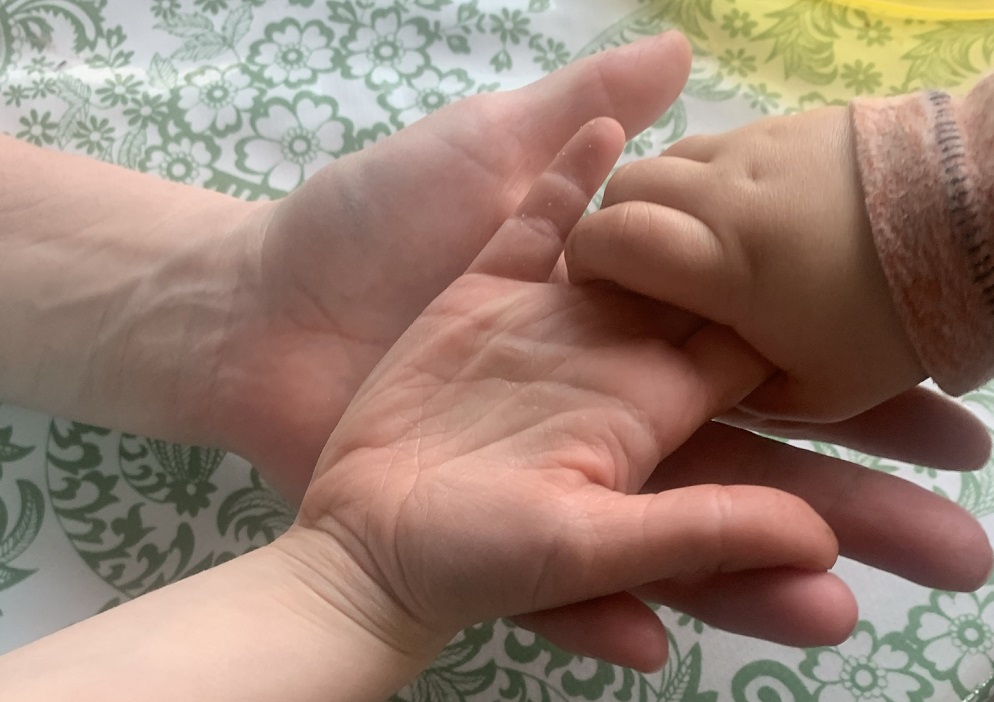
Seeing myself in my daughter’s whine, I felt so much empathy for her struggle. I put down what I was doing, took a hold of her hand so she’d know I was with her and helped her find a hat which could work instead of the sunglasses. And miracle of miracles, we found the sunglasses on a bench in the garage as we went to leave the house.

The Magic of Sleep

We are like someone in a very dark night over whom lightning flashes again and again.” – Maimonides

I overslept! Instead of waking two hours before my kids get up as I do almost every other day of the year, I woke up 30 minutes after. I had been awake in the middle of the night worrying about how to keep my kids entertained and cool in the heat wave that is enveloping the Pacific NW and then I went to back to sleep for hours.

There’s a Buddha quote – “sleep is the best meditation.” In this phase of life with young children, I understand that more than ever. I go to bed feeling all the grime of the day and awaken feeling all the possibility. I go to bed with worries and doubts and awaken with faith that I can tackle them. I go to bed struggling to understand what I’ve learned and awaken with one more page of my story written.

When I finally woke up this morning, no one was crying or upset and instead we were all rested. Maybe the best proof that there is God helping us through this life is experienced when my eyes are closed and my brain is quiet. I lose the certainty of it every day, only to discover it again each night.