Growth and Comfort

In any given moment, we have two choices: step forward into growth or step backward into safety.” – Abraham Maslow

“How’d the paddle boarding go?” my friend Rachel asked Miss O who responded, “Good.”

Unfortunately that wasn’t the case. I’d planned a special outing for me and my almost 7-year-old to rent paddleboards and go out on the small lake near our house one afternoon after camp last week. Both of us were so excited to have the time together and to get out on the lake. Miss O has paddleboarded in a little inlet by my brother’s boat and seemed to get the hang of handling the board and the paddle so it was going to be a great expedition to be able to go together. We’d talked about the fact that it would be a little choppier and windier where we were going and made a plan if either of us fell in. Miss O said she was prepared.

But when we got out there, the wind pushed her around and at her light weight, she had trouble controlling the board. She got frustrated and it seemed like every sentence that she said out there started with “I can’t…” I offered to tow her and she didn’t want to do that because she wanted to do it herself. We talked about setting our sights on somewhere she could paddle to but she said she couldn’t do anything but circles. I asked her what she thought she could do and the answer was nothing.

I was flummoxed. I know Miss O can step it up to a level of toughness with teachers, coaches and other family members. She has been going to a different camp every week of the summer and when she’s nervous she takes a deep breath and says, “I can’t skip this first day because if I do, then tomorrow just becomes the first day” and then she squares her shoulders and walks inside.

But when I’m around, and this has happened in many different scenarios, she doesn’t show the same resolve and instead tends towards tears and hugs. In the choice Maslow presents in the quote for this post, she chooses to step backwards into safety more often than not when I’m present.

I asked her about paddleboarding in the quiet, calm time before bed that night and, she said it’s because she doesn’t want to cry for anyone else but she can with me.

It strikes me that this might reveal that support and education are mutually exclusive for most of us. That is to say, we can’t be in our comfortable spot and grow. I think about all the times that I’ve done business projects with more experienced colleagues or climbed mountains when someone else was leading the group. I know in those cases I relaxed in a way that made it harder for me to access mental toughness.

That is a beautiful part of being part of a group or family or partnership. But I’m starting to see that when I’ve grown the most, it’s when I’ve moved outside my comfort zone and in many cases, done things alone.

Which brings me to the heart of her answer to my friend, Rachel. Miss O knew that paddle boarding hadn’t gone well but has reached the age where she wanted to cover it over with a “good.” But that makes me very grateful that she, at least for now and maybe forever, can cry with me.  She’ll have plenty of other opportunities to learn from other people and experiences but even when growing, we all need a comfortable spot to come home to rest.       
Home

Stay close to those who make you feel alive.” – unknown

In the recent parent-teacher conferences I’ve had for each of my kids, I’ve gotten a feel for how my kids behave when they aren’t with me. It seems they are “go along to get along” people. Generally speaking, they follow the rules, don’t make a fuss, they don’t cry and they don’t get in trouble. My 6-year-old might talk a little too much sometimes but she gets her work done.

That’s not a big revelation since that matches my general approach to life. Although I am surprised that my two-year-old can do it at such a young age, especially because he’s never been told to. But hearing this is reshaping how I think of what my home is.

I used to think home was where our best-selves would shine through because of the love and nurturing there. I still think that – except that I’m realizing our best-selves are NOT our best-behaved selves, they are our most authentic, intimate selves.

Home is where we can take off our armor and practice speaking our truth. It is a place where it’s okay to have a soft underbelly and to let it all hang out. It’s where we can cry, have fits and let it fly (respectfully) when at home. Because, I figure, it’s the only way to get salve onto the sore spots and to receive sympathy for all the growing pains. It’s our place for practicing being leaders and followers and doing neither very well and learning.

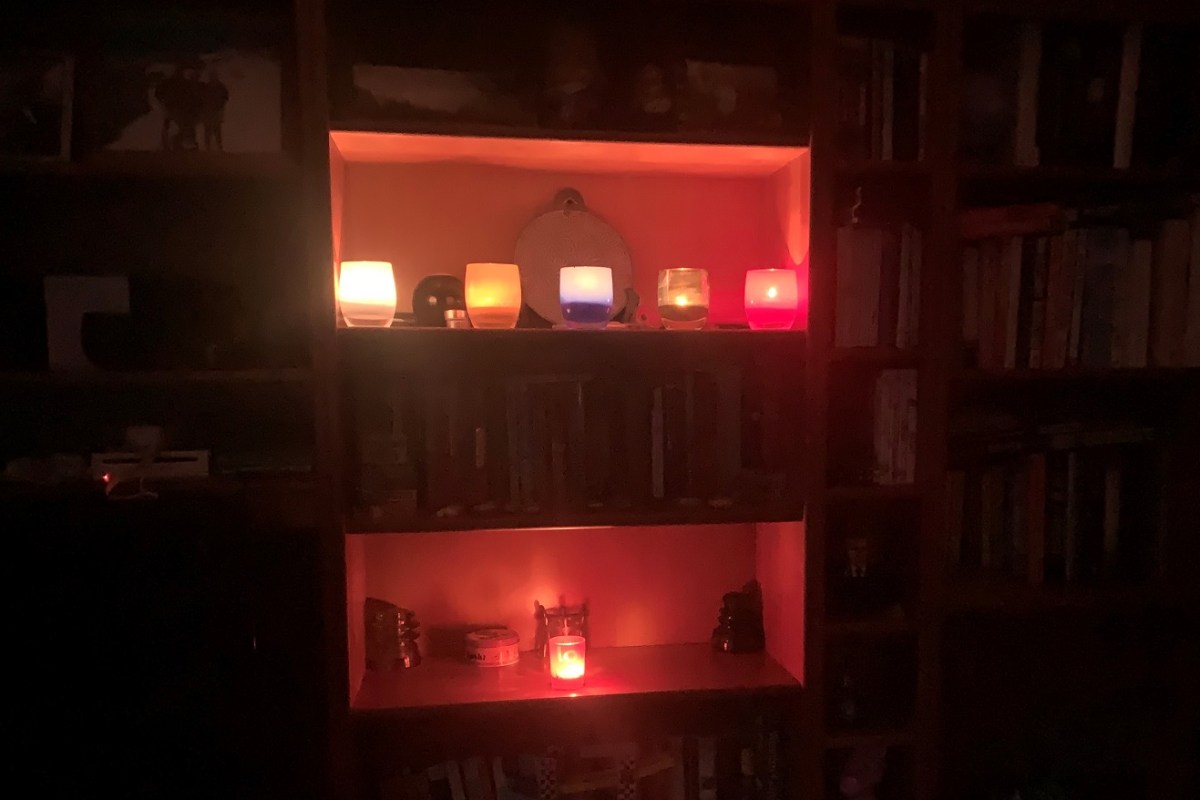
Home is where we learn grace. We can cry when it hurts, express disappointment, find out what truly refreshes us, practice imaginative play, be bored and unscripted. Home is where we light our candles, pray for peace and then figure out how to find that in ourselves. It is where we can be held through it all.

While it seems that I’m writing this for my kids, the truth is, I’m finding great comfort in defining this for myself. Somehow typing out a list of place of where and how we will be received and held is making my slippers feel a little more comfortable. In the years of the pandemic where home became where we do everything, it seems I got a little disoriented about my purpose in this structure.

So, I’m setting this down for all of us. Home is not just where the heart is – it is where the heart feels safest to be open, glow and grow in all directions.

Other People’s Writing: Dec 27th

I’m dedicating this dark and quiet week before the New Year begins to posting writing that has inspired me this year. To start, this meditation by Frederick Buechner who was a writer before he became an ordained Presbyterian pastor.

In addition to being an author and pastor, he has taught both religion and writing at a number of places including Exeter, a boarding school in New Hampshire. One of his students was John Irving, who included a quote of Frederick Buechner in A Prayer for Owen Meany. His meditations often strike me often as a writing lesson as much as spiritual guidance.

Silence of the Holy Place

What deadens us most to God’s presence within us, I think, is the inner dialogue that we are continuously engaged in with ourselves, the endless chatter of human thought. I suspect that there is nothing more crucial to true spiritual comfort, as the huge monk in cloth of gold put it, than being able from time to time to stop that chatter including the chatter of spoken prayer. If we choose to seek the silence of the holy place, or to open ourselves to its seeking, I think there is no surer way than by keeping silent.

God knows I am no good at it, but I keep trying, and once or twice I have been lucky, graced. I have been conscious but not conscious of anything, not even of myself. I have been surrounded by the whiteness of snow. I have heard a stillness that encloses all sounds stilled the way whiteness encloses all colors stilled, the way wordlessness encloses all words stilled. I have sensed the presence of a presence. I have felt a promise promised.

I like to believe that once or twice, at times like those, I have bumbled my way into at least the outermost suburbs of the Truth that can never be told but only come upon, that can never be proved by only lived for and loved.

Listening to Your Life by Frederick Buechner

(featured photo from Pexels)