To Sit or To Stand

Our bodies are our gardens – our wills are our gardeners.” – William Shakespeare

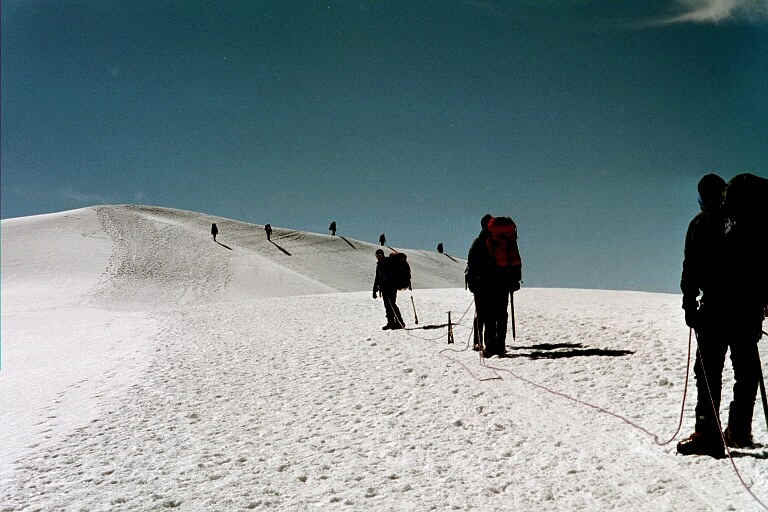
My friend Phil guided big mountains for more than 40 years. His adventures have included guiding Dick Bass when he dreamed up the Seven Summits goal to climb the tallest mountain in each continent, being the first American to climb the Chinese side of Mt. Everest, and after climbing all seven summits in his 30’s, he did them all again in his 50’s with his wife when she wanted to reach the goal. When I met him 20 years ago, he had just summitted Mt. Rainier for the 400th time and I’m not sure where the count stands today but somewhere around 500. All that is to say, he’s climbed and guided a lot. And the only person he lost in a mountaineering accident was his assistant guide on Mt. Denali. They had two rope teams coming back down from the summit when a client on the assistant’s rope team started having trouble with a crampon on his boot. The assistant guide unclipped from the rope to help and then fell to his death.

I think of this story when I realize I’ve extended myself too far to help someone. I have a very strong tendency to “dig deep” when I need to access that extra gear to pull through. I learned it from climbing – that extra push to get to the summit and that auxiliary well to draw from when the conditions change and getting to back to the parking lot is farther and tougher.

With parenting, I find myself digging deep a lot. When a child needs help with that last 1000 feet to the car and I put them on my shoulders. Or something falls through with child care and I need to take care of my kids in the day and work at night. Or another parent in our village has an emergency so I change my plans to pick up the slack and have to cancel my self-care time. Or COVID hits and everything is canceled…

All very worthy reasons that I’m more than happy to dig deep for. But when I climb into bed exhausted for the 300th night in a row and my hips and back ache because I spent another day “digging deep,” I wonder if this is the way to live. That is to say, am I destroying myself because I don’t know my limits when I should say stop and rest?

Then this delightful post from the MSW Blog reminded me of something else I learned from mountain guides. It was my very first climb when I learned this maxim from them: If you can stand, you can sit and if you can sit, you can lie down. And when I see Phil these days, he exudes that. He’s retired from guiding and looks as completely at ease sitting back in his leather chair as he did on the mountains. And he’s still full of mountain wisdom that tells us you can’t lead a team if you aren’t caring for yourself too.

Enjoying the Summer

We love because it’s the only true adventure.” – Nikki Giovanni

Summer is coming to an end. It’s the month of August, my nanny had to leave to continue with her work and education, school starts in three weeks and I’m feeling like I have to enjoy this last bit of summer, especially the long days I get to spend with my kids. But I have to work as well. So I feel this tear between should be enjoying and having to get it done. And if I really think about it, I realize that I feel that pull most of the time. I feel like I am supposed to be treasuring these days with my young kids. When I shared this feeling/fear with my friend, Emily, her reply was, “Having the pressure to enjoy everything in parenthood is not very helpful or realistic in my opinion.”

Right! Pressure to enjoy is definitely an oxymoron. Yet on the other side is the advice that I’ve been given so many times, “Enjoy this time, it goes so fast.” I’m old enough to be able to tick off entire decades of my life – my 20’s, 30’s and 40’s have all gone by and yet when I was a kid doesn’t seem all that long ago. Writing it down here I see that enjoying my kids while they are young can bleed into an effort to be the perfect mom. There is a fine line between mindfulness and perfectionism.

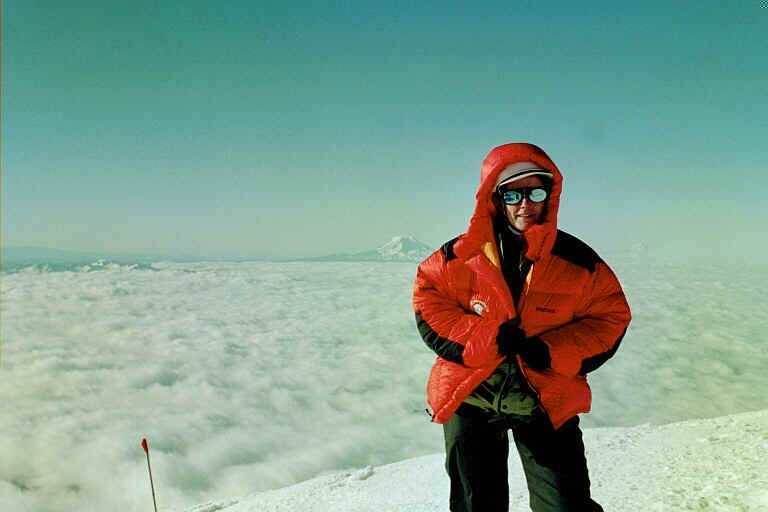
I think of every mountain I’ve climbed and what I remember of those trips. The first time I made it to the top of Mt. Rainier at 14,400 feet, I was so cold, I huddled in the lee of some snow and rocks with the other people that were on my rope who were also freezing. I managed to stand long enough to take a picture of a sea of clouds surrounding us and then we headed down. We’d spent 3 days getting to that one spot, spent 15 minutes on top and then carefully started back down. I remember some particulars about the route we took that day, especially the big scary parts but have forgotten most of my footsteps. But the feeling of trying, and of that step where I finally gained the summit, the comradery with teammates, the love of the outdoors, the presence of God in all of it travels with me wherever I go.

This gives me great comfort in my parenting because I think climbing and parenting share similar goals: to survive, to be present so as to take in as much of God’s creation as possible, and to participate in an adventure that changes you. It convinces me that I neither have to remember nor enjoy every moment, just the journey. I suspect that all my kids will remember from this young age is the feeling of it all. If I walk away from this stage of parenting remembering the feeling of trying, snapshots of the big milestones we reached, a deep relationship with my kids, a shared love of the outdoors, and the presence of God throughout it all, I’ll consider it a very successful adventure indeed.

Climbing the Walls

For you created my inmost being; you knit me together in my mother’s womb. I praise you because I am fearfully and wonderfully made.” – Psalm 139:13-14

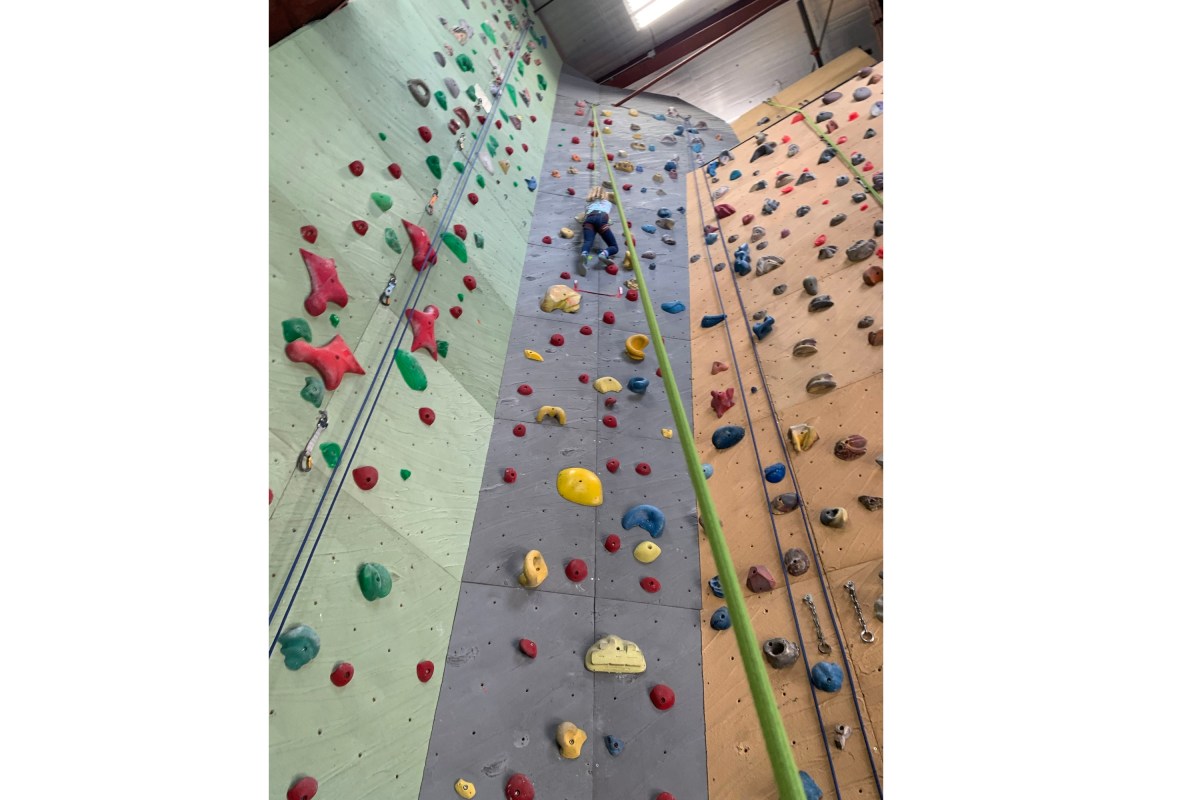
My daughter went to rock climbing camp this week. And absolutely loved it. The camp is at the gym I’ve climbed at for 20 years so I love being there, climbing there and just walking in there. [Aside: When we walked into the gym the other day, they were playing “I Melt With You” by Modern English and it gave me a moment of realizing how much I missed being places where music was playing in the background. ] I wonder about the unconscious effect that climbing had on her when she was in utero. I only did a bit of low bouldering when I was pregnant, nothing I could fall off or had to wear a harness for even though I was told it was perfectly safe. I stopped when I was about 6 months along and my center of gravity changed but we climbed “together” up until then.

I think of the story of Alison Hargreaves, a British mountain climber. She had an impressive mountain climbing career including summitting Everest on her own and without supplemental oxygen. She solo climbed six great north faces of the Alps including climbing the north face of the Eiger while she was six months pregnant with her first child, Tom. But she received a lot of criticism for climbing when she had young children at home. Much was made of the fact that male climbers aren’t subjected that kind of scrutiny if they are parents. Alison died when a bad storm came in while she was descending from the summit of K2 in 1995. She was 33 years old and her kids were 6 years old and 4 years old.

Her son, Tom Ballard went on to become an acclaimed climber in his own right. He died in bad weather conditions while climbing Nanga Parbat in Pakistan in 2019 at aged 30.

That story fills me with deep grief and also sends me running to do my work. I don’t presume to know anything about the Hargreaves/Ballards other than what I’ve read and I’m not adding judgment to their tragedy but I know things are passed down organically in families. In my family, that was a deep sense of faith and a complete avoidance of conflict. In utero I was hearing my mama’s prayers and daddy’s sermons from within and though it’s taken me a long time to find my own deep sense of faith, I am so grateful for that. The people pleasing/conflict avoidance part has been passed down to me as part of my work.

I love that my daughter loves rock climbing. I’m hoping that climbing together, all the hours I spent meditating and knowing she was a miracle continue to influence her from her time in utero. For all the things I don’t want to pass along, I’m grateful that I’m old enough to be aware of them and mindful enough to be working on them.

Getting a Boost

Hardships often prepare ordinary people for an extraordinary destiny.” – C.S. Lewis

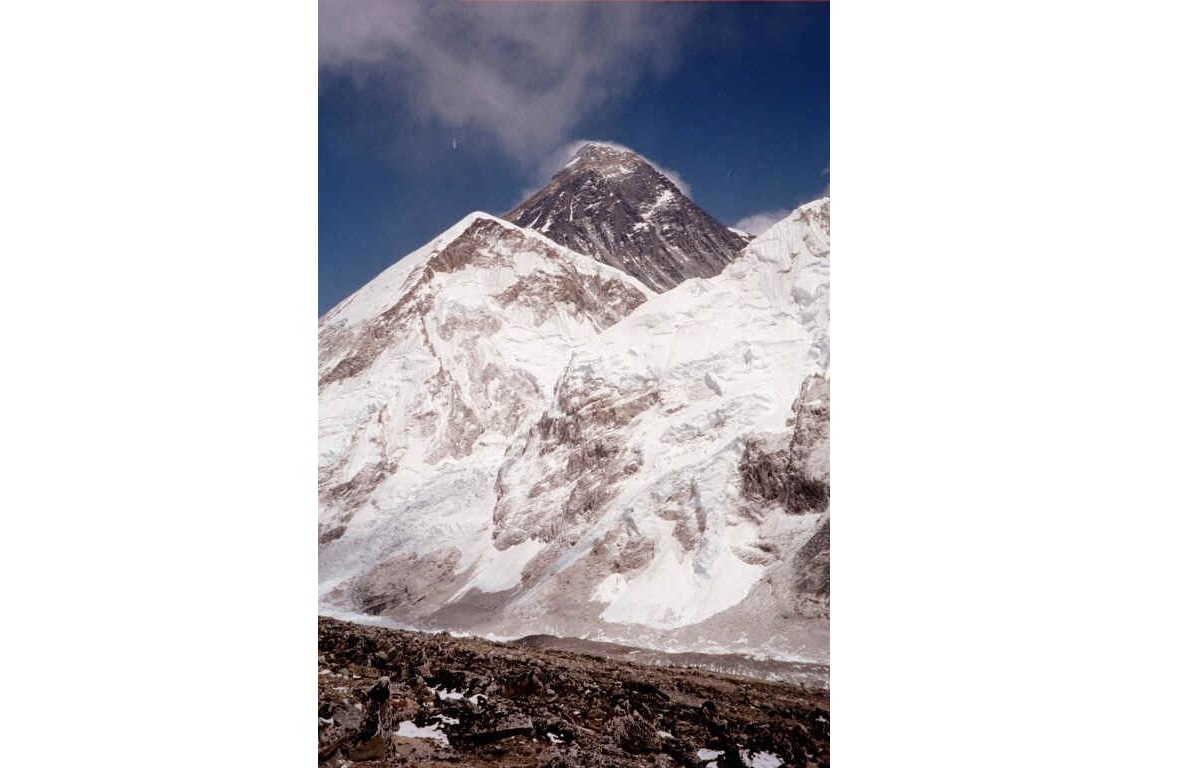
When I trekked to Everest Base Camp in 2001, I spent 15 days at or above 10,000 feet. In those days, my body produced more red blood cells to try to make up for the lack of the oxygen in the air. When I returned to sea level everything felt so much easier because of my body’s improved ability to deliver oxygen. Walking was like floating over the ground. Climbing a hill seemed like a mild little bump in my stride. My hardest workout felt like I could do it twice.

Two things happened this weekend that made me think we are going to experience a post-pandemic boost in the same way. First my mom’s retirement community has started allowed children to visit again. They have to be masked and go right up to my mom’s apartment but we can go spend time with her as a family again! The second thing is that our neighborhood community center is hosting food trucks in the parking lots on Friday nights so we have a little bit of community gathering outside again.

After the lockdown for 16 months, these things make life just feel easier. Although the pandemic has affected us all differently, I think it’s fair to say that we’ve all been impacted in one way or another. All the things we’ve done to cope have been challenging – we’ve adopted new technology, grieved the way life used to be, changed our patterns for shopping, eating out, going to school and work, lost jobs or found new ones, meditated, prayed and showed up differently. So I celebrate the moments when we all get that boost where life feels like it’s a piece of cake.

Of course getting to Everest base camp and gaining that acclimatization isn’t easy. On our trip, two women turned back on the second day and on the fifth day, Bill from Michigan got sick and had to stay at a local clinic until we picked him up on our way down. The day before we trekked into base camp, several of us were to feel well enough to climb Kala Patar, an 18,200 feet peak with great views of Mt. Everest but there were a couple of folks with headaches so thunderous they didn’t want to leave their tents. And so it is with the pandemic, I grieve for those that didn’t make it, thank the Universe that we are still here and enjoy the moments where everything feels easy!

Vacation

Another name for God is surprise,” – Brother David Steindl-Rast

Twenty years ago my friend Jill and I were looking for something to do for a vacation and considered going to a spa in Arizona but as lovely as the hiking, yoga and pilates schedule and menu sounded, we never could pull the trigger. We thought we’d get bored. Instead signed up for a trip to climb two Mexican volanoes, Mt. Ixtacchuatl (17,200 feet) and Pico de Orizaba (18,500 feet). While I already summitted Mt. Rainier (14,400 feet) once (as had Jill) on my second attempt, that was in my backyard since it was 60 miles southeast of Seattle where I live. This trip was the start of what I came to think of as vacations in my early adulthood. I’d sign up for a trip, usually with a friend or two to climb something as time and budget allowed. It was how I saw Russia, Nepal and Peru when I was single – usually dirty, tired and out of breath but so delighted for the change of perspective and chance to adventure.

Now I’m redefining what vacation means as a mom with two young kids. Our range is a lot closer to home and my budget is a lot tighter so we’ve tried a few things pretty close to home. The first trip we tried was six hours by car – that was too far as I can feel all you experienced parents inclining your heads in agreement. The second trip was eight hours by boat but a big boat that we could move around on. Better because the boat was an adventure in and of itself but we came home a little stunned from all the pounding through water. This weekend we went with a friend to a AirBnB cabin on Whidbey Island about an hour and half trip from our house. Better yet!

But regardless of how we have gotten to our destinations, I’m fascinated by how the kids take it in. They get to the new environment, and then regardless of what is outside, explore every nook and cranny of the temporary quarters.  In the first place we rented, they seemed to have a plethora of toilet cleaning brushes and my toddler discovered each one and wanted to carry each one around until I confiscated them. Nothing is familiar so it seems the kids spend a lot of energy mapping out their new world as I follow along making sure it’s safe.

Then come the new activities – beach combing, swimming in the pool, finding new playgrounds. Everything, even if it’s an activity that we’ve done at home, seems more adventurous. If it’s a beach like it was this weekend, it seems to come with cataloging it as a new entry of what a beach looks like – more sandy, less rocky, more sea life, less driftwood. My five-year-old daughter ran through every tide pool with her arms outstretched yesterday in a glorious expression of taking it in.

So eating and sleeping become huge issues. They seem to consume massive amounts of food to support all the novelty. Going out to eat is not only new because they are places we haven’t gone before but also because we haven’t done it much during COVID. There is a dichotomy of wanting to have the staples I’ve brought from home as one form of familiarity and willingness to try something new since everything else is new. Sleep, I’ve learned is much harder if we all try to do it in one room. WAY too exciting when it’s WAY too necessary.

I come to the end of each time away absolutely exhausted. This is where I have had to redefine what vacation means to me. It certainly isn’t less work. It’s definitely less predictable. But now I see that’s part of the joy – to find the Universal where we go. Somehow God makes it so that by switching everything up, we are renewed in our life together.

I’ve realized that I never liked vacation where I just sat around and thank goodness, because that doesn’t seems to be part of this new era. And I’ve found in another way, it’s like my mountain climbing vacations – I’m usually dirty, tired and out of breath but also delighted for the change of perspective and chance to adventure, this time seeing the world… through the eyes of my children.

Day of Rest

“We are not human beings having a spiritual experience, we are spiritual beings having a human experience.” – Pierre Teilhard de Chardin

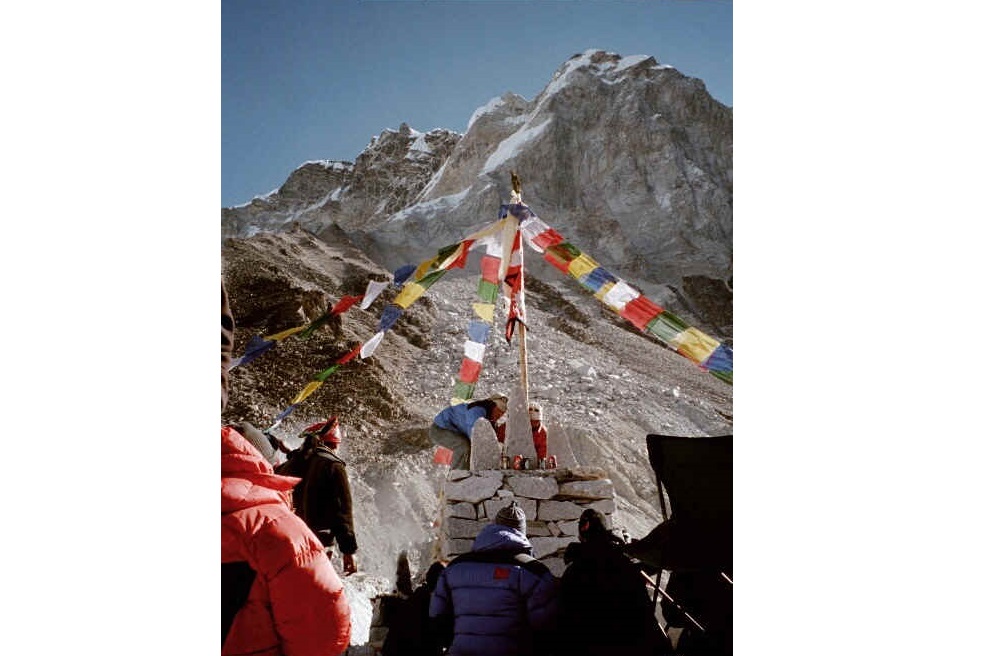
Twenty years ago at this time of year I trekked to Everest Base Camp with a couple of my friends who were attempting an Everest summit. It’s a thirty mile trek through beautiful country, crossing over raging rivers on precarious bridges, stopping at little Nepalese villages, staying near Buddhists monasteries with everything (trees, people, commerce) getting sparser and sparser the higher you go. Our rhythm would be to trek one day and rest the next because the climbers needed to let their bodies acclimatize to the thin air.

It was interesting to see what everyone chose to do on the rest day – lie in tents and listen to music or read, try to wash clothes or take a shower if you could find facilities, hike around the local area, go into a little village if one was nearby, play cards, or sit around a tea house table telling stories. It was a day that we weren’t on the move so there was no schedule. I usually would chose some alone time and then some time listening to stories. Amongst mountain guides, especially the ones I was with that trip, the ability to tell stories is nearly as good as their ability to climb.

Thinking back on that trek, I think of not only the amazing adventure and incredible views but the practice of the day of rest. Because we all need that day of rest to restore our spirits and bodies before we can climb again. But at home, the choices are too many and the pace too hectic that I often forget to celebrate the day of rest. So I’m inspired by my choices on that trip – spend a little time alone meditating and then swapping stories with others, even if this time it’s on a blog.

One day at about 15,000 feet of elevation we were trekking to our next camp site when we came across this football sized flat space where rock cairns had been created for people who had died on the mountain. I’m at a loss to explain the intensity of how sacred that place felt. It was, to say the least, an impressive reminder that we will all meet our ultimate resting place and until then, we would be well served to celebrate this sacred life with a day of rest from time to time.

Enjoy This Time

“Time has a wonderful way of showing us what matters.” – Margaret Peters

I recently ran into a neighbor whose kids are age 12 and 14 while out walking. As we chatted about the trials of pandemic parenting , the topic of the parenting advice that I’ve heard so often: “enjoy this time, it goes so fast” came up. She confessed that she had recently had said to her mom in tears, “Did I enjoy it enough?”

Of all the advice that I’ve been given throughout my parenting journey so far, that theme of enjoying kids while they are really young has been the most prevalent which makes me think its important. But it’s also the most puzzling because it’s often said so wistfully as if there is a little residual regret. Which makes me think it’s wisdom that’s hard to follow. That makes a lot of sense to me, because while I love being a parent, I’ve found difficult to enjoy this time of early childhood, if we are talking about the Oxford Dictionary definition of to luxuriate, revel or bask in.

At first it’s hard to enjoy because of the sleep deprivation that comes with an infant. And now that I’ve seemed to have gotten past that phase with both kids, I’d say it’s hard because it’s both incredibly busy and repetitive. There are big emotions that cannot yet be regulated and a lot of missed communication with little people just learning to talk. It’s a lot of work.

Of course, parenting is also incredibly rewarding. The amount of change to witness is stunning. These little people are growing and learning at a lightning speed. They want and need so much attention but it’s all absorbed and exhibited pretty quickly in their growth. Reading together, singing together, playing with the farm set out in the backyard, there is so much simple sweetness. The problems my kids have at age 1 ½ and 5 ½ are small and they are solvable.

Trying to understand this hard to follow wisdom, I think of my former hobby of mountain climbing. I don’t think I’ve ever enjoyed myself while on a mountain. It is a big and hard thing to take on. I’ve felt the same doubt with climbing that I think is being communicated with the parenting advice – did I take in enough of the experience while I was up there?

Here’s what I’ve realized. That climbing mountains and raising young kids have a lot in common. There is a lot of tough endurance involved.  It’s easier if you are in good health but it’s never easy. There are some moments where you are so tired that all the obstacles appear too great and you feel that you can’t keep going. And it all becomes worthwhile if about once an hour, you take a break and raise your head to look at the view.

My neighbor told me that her mom replied to her tearful query, “The fact that you’re crying shows that you did.” Which sounds so wise to me as well. We do our best as we go through it, enjoy it as much as we can and give ourselves some grace for the moments we didn’t.

The Art of Packing

“Great things happen when men and mountains meet.” – William Blake

My daughter was looking in my drawer of kitchen accessories and asked about an open-ended tube I had in there. I explained it was a tube for mountain climbing so that you could fill it with something like hummus or peanut butter and then crimp the end to seal it up. They way you don’t have to carry more than you need. She asked, “Why not take the whole container of hummus?” And that sparked the muscle memory I have of loading a backpack for a 2 or 3 day climb and paring it down to just the essentials.

It seems to for every trip I’ve made an equipment list, packed more than necessary with me for the travel to the mountain and then at the base, sorted through to pack only what I need to feed me, keep me safe and warm and also my share of group gear for the team. It’s an art that I learned from experienced mountain guides and it very much affects how well the climb is going to go. Pack too much and you will wear yourself out on the lower reaches of the mountain getting to the first camp. And if you pack too little you will likely be uncomfortable or even worse, unsafe, on the upper part of the mountain when you need that extra layer or extra battery for your headlamp. If you forget to put in the group gear, you might just be the goat that didn’t bring the tent poles and jeopardized the trip for everyone. Many things can go wrong when packing. On one trip climbing some volcanoes in Mexico, a guy on the trip couldn’t find his Payday bar at a rest break. Then we stopped again at 16,000 feet on the side of the mountain waiting for the lead team to try to get some ice screws attached so we could cross an exposed part of the route and he found it in his boot.

Since I haven’t climbed any mountains since I got had kids, it’s been a least six years since I’ve done the packing but I still hold on to it as such a great metaphor for the journey through life. At some point, it helps if we empty out all that we are carrying in our pack and make sure we are ONLY carrying what feeds us and keeps us safe. If we carry too much baggage, like memories of all the times we’ve failed, it hampers our ability to go far.  And if we carry too little, like not figuring out our patterns of picking unhealthy partners or friends, we expose ourselves to the same dangers again. If we don’t carry our share of the group gear, like concern for the health of the community and planet we live in/on, the whole enterprise could fail. And if we can’t find what we need, sometimes it helps to sit down, take off the pack and find out what is making our metaphorical boot so uncomfortable before we continue on.

I get a chill when I think of how edifying it is each time I try to explain something to my kids. Which is good because my daughter’s next question was, “Why do people climb mountains anyway?”

The Crux Move

“One climbs, one sees. One descends, one sees no longer, but one has seen. There is an art in conducting oneself in lower regions by memory of what one has seen higher up. When one can no longer see, one can at least still know.” – Rene Daumal

I can picture the hardest move from one of my favorite routes in the rock climbing gym. It’s after you have climbed halfway up the 50 foot wall and then the wall juts out over your head so that to get past it, you have to lean backwards, reach your hand up where you can’t see and throw your leg out awkwardly to the side to counter-balance. It’s the crux move. The one that takes such balance, confidence and hope to overcome but leads to a gently inclined section that is a breeze to climb to the top.

Even though it’s been five years since I have regularly climbed on that route at the gym, whenever I get to a tough place in life I think of that crux move. It’s how I relate to the hard spots in life like the one I’m facing one now. My brother’s wife, Lindsey, who has nannied for me for five years is quitting to take her dream job. She has been here for me and my kids 2-3 days/week and in the coronavirus era, 4 days week to take care of everything. She has been the closest thing I have to a co-parent.

I am genuinely happy for Lindsey as my friend and sister-in-law and the time feels right for a change. But I’m also facing uncertainty as I wait for the school district to finalize their plan for in-person school. I’m hanging in this space in between what has been and what will be all the while trying to hold the ship steady and work.

The hallmark of these crux moves is the feeling of being off-balance and in fear. Life is pushing a shift, a shift that makes us live more out in the open because we aren’t treading our well-worn path. That exposure creates a tenderness against which fear is so much more palpable. For me, I fear that Lindsey will be relieved to be away from us and if so, does it mean she doesn’t love us and this work of raising kids isn’t worthwhile? And if I imagine Lindsey’s end, she is probably afraid that we don’t need her and aren’t grateful for all the time she gave us.

This fear leaves me feeling so vulnerable. I want to stack up all the irritations and hurts I can find, even though they are relatively few in order to block feeling this way.  But that’s when I come back to the muscle memory of the crux move. Learning to climb them taught me they go better if I’m not tense. The more I cling to whatever hand holds I have, the faster my arms burn out. But if I breathe deeply and relax into it, I preserve my strength for where I’m going. Even when I can’t see the next hand hold yet, I can feel my way into the timing so that I have momentum to help move me up and over. There is great joy in moving through a crux move because it requires the body, mind and spirit to all come together. Applying it this way, I get a glimpse of how no experience in life is wasted because our “play” helps create pathways through “life.”

I read recently that good-bye came about as a short way of saying “God be with you.” Saying it that way reminds me that we are all on a journey and the best way to help others along is to wish them well. So I wish Lindsey, God be with you, and I trust that the next move I make will carry me and my family through our crux move to the next part of our journey.