Facing Our Fears Together

Be a lamp, a lifeboat or a ladder.” – Rumi

At bedtime last night my 6-year-old confessed to me that she runs ahead on the way to bed so that she can check under the bed for thieves. Not burglars, not robbers but thieves. But it was such an intimate moment that I didn’t ask about the word selection.

It struck me as I was listening what a privilege it is to hear someone else’s fears. Because what seems so real to us can feel childish to someone else. I remember confessing shortly after my daughter was born to a friend who doesn’t have kids that this was the hardest thing I’d ever done. My friend laughed, not unkindly but dismissively and I felt so exposed that I couldn’t say more.

Conversely I have friends to whom I can tell my biggest fears and know they won’t talk me out of them but instead will help me walk through them. In this way each monster we’ve faced together has been a bridge to closeness. It’s created the bond of facing things together.

When I’ve been the one entrusted with a friend’s hardship, I feel the honor of providing reassurance. Life has taught me we all fear different things but trust is built when we honor that they are real to the person who faces them.

So I told my daughter that it’s unlikely a thief would be patient enough to wait under the bed but I’d help her check. And I told her that when I was her age that I feared snakes under my bed. She thought that was weird until I told her that I had a prized set of four National Geographic books – puppies, kittens, frogs and snakes. I loved the puppies and kittens but I was fascinated by the snakes. So I could totally picture the hooded King Cobra ready to strike unless I cleared the bed by a good margin.

We talked about the probability that when her little brother is 6-years-old, he’ll probably have his own thing that he fears and she prepared her answer for how she’ll reassure him. Hand-in-hand we talked about facing our fears, looked under the bed and then had a great night’s sleep.

(featured photo by Pexels)

Fantasy Climbs

One climbs, one sees. One descends, one sees no longer, but one has seen. There is an art in conducting oneself in lower regions by memory of what one has seen higher up. When one can no longer see, one can at least still know.” – Rene Daumal

I felt my phone ping with a message while I was trying to get dinner on the table the other night. At that moment, one little person wanted raw carrots instead of the perfectly grilled carrots and needed more hummus. The other little person was tired and having a moment of personal crisis and didn’t want to eat at all. As I was shuttling between kitchen and table, I snuck a glance at the message. It was my friend inviting me on a mountain climb of Mt. Adams with him and his son this summer.

Oh, it was so easy to envision myself away from that disastrous dinner and instead picture eating instant noodles from a tin cup on the side of a mountain at our base camp at 9,750 feet. I felt like it would be a complete luxury to say “yes” to climbing and trade in the work of parenting for a couple of days of slogging up a mountain with only the sound of our breathing and our footsteps crunching in the snow.

Even though I could rationalize how safe a climb Mt. Adams is with no crevasses or avalanche danger and rest in the reassurance of climbing with a friend that I’ve summitted that mountain twice with, I knew I’d have to say “no.”

Because even a safe mountain climb means being on the side of a 12,281 foot mountain for a couple of days, exposed to weather and human frailty. And in the very slight case that anything happened and I got hurt or dead, I’d be so angry at myself for leaving behind two young kids. Even if I was dead – I’d be dead and angry!

It highlighted for me the wide chasm between who I am now and who I used to be before kids. First of all, I’m entirely flattered that my friend thinks I could make it up Mt. Adams.

Secondly, it was a moment of realization of how completely my priorities have changed thinking about how I use my time, not only for the climb but also the commitment it would take me to get in shape to climb again.

But most of all, it made me feel yet again the wonderful work of our friends as they hold space for us when we are otherwise occupied, off on our quests to find meaning or just not feeling ourselves. Those friends that we can journey through all the phases of life and still find something to talk about with are a sacred gift.

So I told my friend, with a huge heaping of gratitude, that I’d have to take a rain check until I get my kids in shape and we can all climb together. In lieu of me going, his son is going to borrow my backpack and ice axe so a little bit of me is going by proxy instead. Maybe I’ll get to send my tin cup also so it can have dinner on the mountain too!

(photo is mine – of sunset from base camp on Mt. Adams)

Why

He who has a why can endure any how.” – Nietzsche

The other day I was driving with Mr. D in the car and he saw a church steeple and asked what it was.

Me: That’s a church steeple.

D: Why?

Me: It’s that’s a traditional part of a that kind of church architecture.

D: Why?

Me: We have churches so that people can celebrate God.

D: Why?

Clearly, Mr. D is squarely in his why phase. To me it feels as if he’s figured out a way to carry on a conversation without having an extensive amount of words. But it’s fitting because I’ve been working on finding my “why.” My why – as in the core motivation and pervasive central theme of what I do.

As author Simon Sinek says in Find Your Why, “Each of us has only one WHY. It’s not a statement of who we aspire to be; it expresses who we are when we are at our natural best.”

There are different schools of thought of how to find your why. Social scientist and Harvard professor, Arthur Brooks (From Strength to Strength) suggests that we finding it by cultivating moments of stillness and meditating on it. Author Simon Sinek (Find Your Why) recommends a structured approach where we tell the formative stories of our youth (because he says our why is formed by our late teens) in order to form a statement that looks like:

To _<insert the contribution you make the lives of others>_ so that _<impact of your contribution>_.

Combining the two approaches, I have reflected on what stands out from my early years. I had a happy and stable childhood so I thought I didn’t have many stories but opening up the discovery uncovered this moment when I was about to start high school. My dad, a Presbyterian pastor, ask me to go for a walk when we were on vacation at a lake cabin. As we walked, he offered to change his job if it would make it easier for my teenage years.

While I responded honestly that his job didn’t bother me at all, I also noted that he was saying this because my older sister had pummeled him with rebellion and hurt during her journey through high school. I vowed to do it differently so he and my mom would know they were good parents. Which wasn’t hard because they were and I was a very different kid than my sister.

Distilling this and other memories down to what drives me now and why, I came up with this “Why” statement:

To encourage and cheer for others so that they feel supported and emboldened in the pursuit of life in the fullest on their individual paths.

Thinking back, I remember my mom warning that I shouldn’t be a caretaker. That certainly could be a pitfall to my “why.” I prefer to think that in telling my story in how I’ve done it differently – whether it be finding a different expression of faith than my parents or choosing to become a single parent, I can help others to know they can find their own paths too.

As Mr. D will tell you, knowing why is a great way to dig deeper into the meaning of things.

(featured photo from Pexels)

Foul

Forget injuries. Never forget kindnesses.” – Confucius

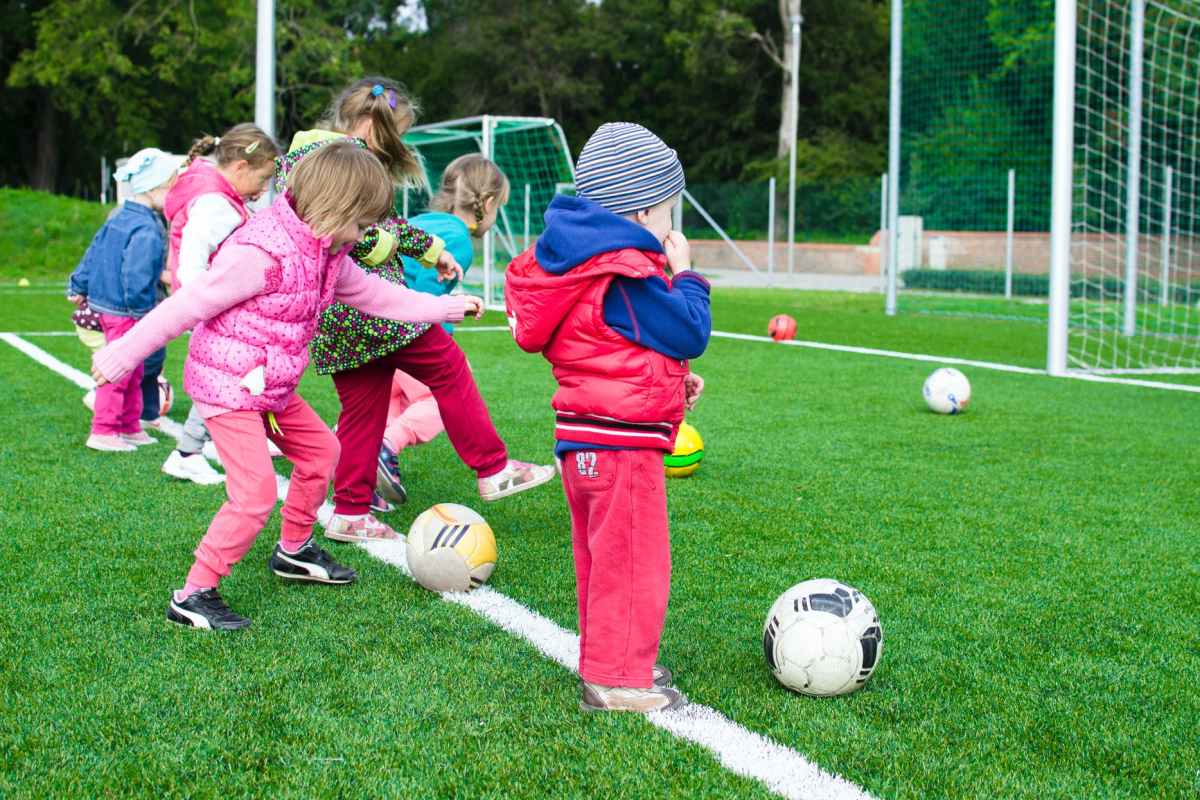
This week I got the opportunity to fill in as a lunchtime playground monitor at my daughter’s school. When the kindergartners were out, one of them ran up and said there was a boy that was hurt where they were playing soccer. He was surrounded by a group of interested and supportive onlookers and as I knelt to examine his sore side, I heard:

Boy #1: I don’t think that was a red card. [I assumed they were talking about the foul system in soccer.]

Boy #2: Might not have even been a yellow card.

Boy #3: I was just trying to kick the ball.

Our injured kindergartner was sore but nothing serious and the boys provided a very nice escort to the door so that he could go to the office for some ice. I think they all earned an award for good sportsmanship.

That’s what struck me overall about the kerfuffles I stepped in to help on. Noel thought Clara ignored her. Greyson thought Connor attacked him. David thought Julian yelled in his ear. Maybe it’s because I was thinking about apologies this week, but in all the cases when I got the parties together to talk, the kids weren’t defensive and it made it so easy to talk through. There are so many things kids do well – although maybe kicking the ball and only the ball isn’t one of them!

(featured photo from Pexels)

Not Love Actually

Don’t be afraid of the solitude that comes from raising your standards.” – Ebonee Davis

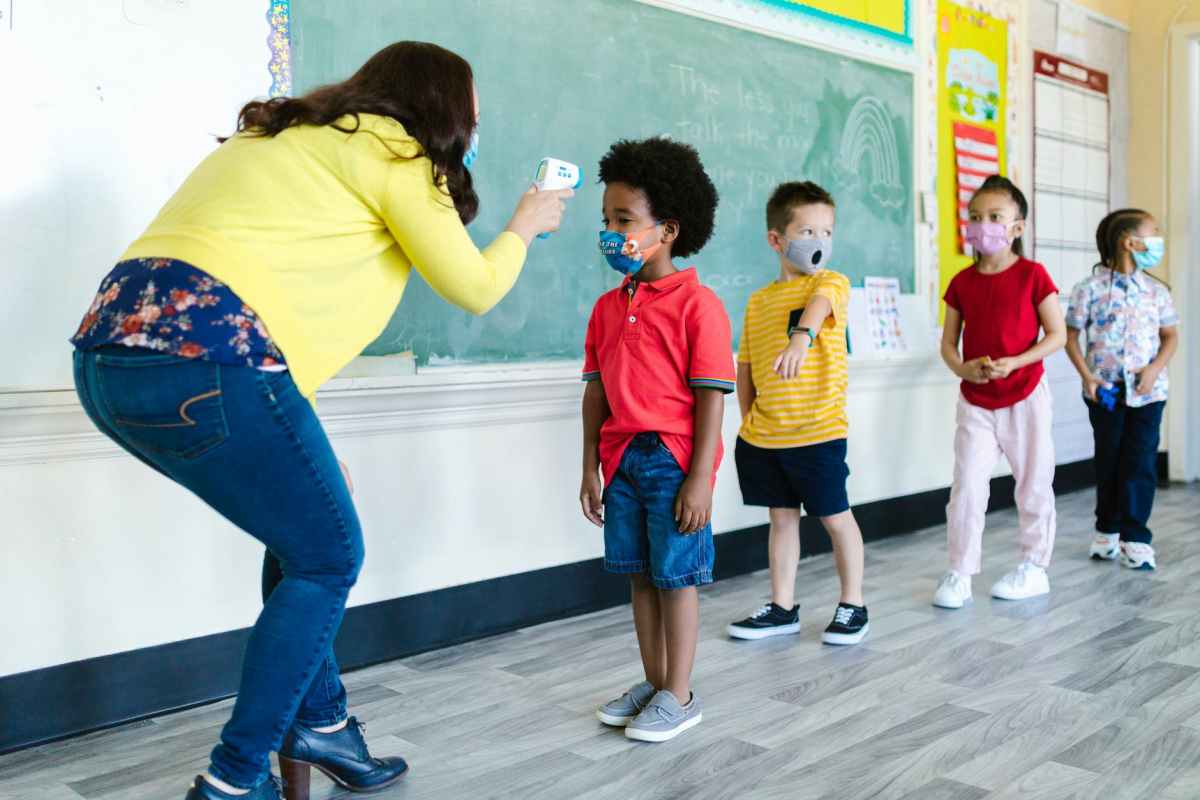
Driving in the car the other day with Miss O, I checked in with her on her playground crush. This was the young man, Will, that I wrote about in the COVID crush post, who lines up on an adjacent heart, 6-feet-apart on the playground to go into a different 1st grade classroom.

When he initially told her that he had a crush on her back in October, Miss O said she had one on him too. But when I checked back in the other day, she told me,  “the interest had gone away.”

I asked what happened. She explained he started hanging around another kid, a kid she thinks is a bully because he yells “SORRY” when he apologizes. And she changed her attitude because the playground supervisor, Mr. C, is handing out awards for being good in line and Will is always messing around.

She stopped finding him attractive because she doesn’t like his friends and he wasn’t a good influence?? My job as a parent is done…. 😊

(featured photo from Pexels)

Do We Have to Be Nice to Alexa?

Hem your blessings with thankfulness so that they don’t unravel.” – unknown

I was in the kitchen making dinner last night when I overheard my mom talking to the Amazon Echo device we have in the other room. It’s the device we have plugged in that is connected to the Internet so that the kids can request music for their endless dance parties (I know it does a lot more than that but that’s what we primarily use it for). Because the Echo doesn’t quite understand my son’s two-year-old voice yet, my mom was requesting a song for him, “Alexa, play Baby Shark, please.”

It made me think of manners and respect. I suspect that my 82-year-old mom’s manners are so engrained she doesn’t have to think whether or not she’ll say “please” any more, even when talking to a device. And I tend to say “please” as well when talking to Alexa because I appreciate anyone (or anything) that responds to my requests.

But is it an empty gesture when talking to an Artificial Intelligence device?

It reminds me of training a dog. To give commands, you have to be in control of yourself enough to be clear. In addition, the whole process teaches as much to the trainer as the trainee as you figure out what works and what doesn’t. And finally, there’s a loyalty built when you work together.

Besides, I think modeling respect for everything in our world for my kids builds a good foundation of choosing respect more often than not. Respect for the people that designed it, respect for the shared intelligence it delivers and respect for all the songs we can access through it. Given all that, I think Alexa deserves a please and a thank you!

(featured photo from Pexels)

Meet Tenderness with Tenderness

My hands never feel empty because you hold them with care and love.” – unknown

Yesterday, my two-and-a-half year old son and I were sitting in the car goofing around while parked outside Starbucks before I dropped him at school. It was an early Monday morning after a really fun weekend as a family together and he said a couple of times that he didn’t want to go to school. Then he said, “I miss you, Mama.” And I started to protest that I was right there and talk him out of it. But before I could put the words together he followed up, “I miss you Mama atta school.”

My heart was gulping like a fish out of water and tears sprang to my eyes. Before I left the moment to justify that I can’t be do everything or to troubleshoot how we could spend more time together, my thoughts snagged on an idea from poet and author Mark Nepo that tenderness is best met with tenderness.

Frequently, this reflex to solve, rescue and fix removes us from the tenderness at hand. For often, intimacy arises not from any attempt to take the pain away, but from a living through together; not from a work out, but from a being with. Trust and closeness deepen from holding and being held, both emotionally and physically.

The Book of Awakening by Mark Nepo

So I gave him a big hug and said, “I miss you too, Buddy.” Then we went on our way.

I found out from his teacher that when the kids at school miss their families, she gets out a picture of their people for them so they can look at it. It’s the daycare version of the pictures I keep on my desk that give me a little zing whenever they catch my eye.

I felt my son’s statement all through the day as I went about my business. When it sparked a feeling of guilt or responsibility I kept practicing the return to the beauty of having a relationship worth missing.

Happily Ever As-Is

How simple it is to see that we can only be happy now, and there will never be a time when it is not now.” – Gerald Jampolsky

This week with the COVID quarantine and life interruptions that come with it – I’ve decided that happier ever after doesn’t exist. I blame the optimist in me that snow-balled me so I didn’t realize this until age 52. The optimist is always sure that the minute, day and week are going to go as planned and the grass is going to be greener after every milestone.

To be clear, I love my life now as a mom of 2 young kids. It’s delightful – they are bright, shining examples of love, light and inspiration.

And yet… I’m also always waiting for them to change. As an example, my two-year-old son likes the home-field advantage when he poops. He’s worked out how to be at daycare all day long without a dirty diaper and not poop until he gets home. Lucky me.

And my 6-year-old daughter frequently loses it when introduced to a situation where she has to play with kids in an unstructured environment. The two years of pandemic have meant she’s missed out on a lot of practice of that negotiation of rules and expectations that come when kids are playing and no adult is leading the way.

I know that both of those things will change sooner or later. I will potty train my son and work with my daughter on role playing and she will eventually get some more practice and mature.

This leaves me in great tension. How do I love my life as it is now and also long for things to change? It’s a paradox of life. It’s also why I’ve come to believe that happily ever after doesn’t exist. Because there will always be something that isn’t ideal and I’m waiting to change. Or something that I love that will also change. Or a disruption, hurry or maybe even… a pandemic that adds extra curve balls.

The funny thing is that I’ve gotten pretty good at appreciating the surprises that come with life. I’ve come to trust the Divine hand that holds mine and reveals in change and disruption what I need to learn. It’s just taken me until now to realize that there will never be a time that doesn’t come with unexpected twists. So I’m leaning into practicing “happily ever as-is.” It has a lot fewer expectations and even more delight.

(featured photo from Pexels)

From Secret to Surprise

Knowledge increases by sharing, not saving.” – Lyrical

My 6-year-old daughter’s best friend, who is 8-years-old and lives next door, came over this past Sunday with a secret. Here’s how it played out:

Sunday mid-day: “Oh, we’re…. <groan> Never mind. Forget I said anything. It’s nothing bad but I can’t tell you for 3 days.”

Sunday 20 minutes later: I heard her telling my daughter that they are getting a new car and then adding “Well, my dad just said not to tell EVERYONE.”

Monday morning carpool to school: “So I haven’t told ALL the kids on the block.” Then my daughter piped in “Yeah, and my mom doesn’t know.”

Monday evening: My 2-year-old came into the kitchen after playing with his sister and her friend. He ran to me and exclaimed “We have secret!”

Tuesday morning carpool to school: “It’s not too big a deal whether people know or not.”

Wednesday morning carpool to school: “In the new car, we are going to put a towel under my little sister’s seat because you know how messy she is. It should be here today. Or maybe tomorrow.”

Thursday morning carpool to school: “The surprise is going to be here next week.” I asked why it was a surprise now instead of a secret and she replied, “Well, we know it’s coming but not everything about what it’s going to look like so it’s a surprise.”

This must be why we don’t burden our kids with secrets, especially the ones that are heavier to bear!

Dichotomies

Follow the grain in your own wood.” – Howard Thurman

On a recent morning when my 6-year-old was tired at the end of her first week back to school after winter break, she ordered me to get her headphones. I stood undecided for a split-second – should I respond with the humor my dad would have used or the polite correctness my mom would have used?

It’s one of the challenges I’ve found with single parenting – not having someone represent the opposite end of the spectrum. There is no good cop/bad cop, just me, the tired and confused cop. Since I choose to have kids as a single parent, I have never part of a dichotomy in parenting. I can only imagine that it is probably both comforting and frustrating depending on how well it’s working in the moment.

We all take positions in our relationships whether we do it consciously or not. In one past relationship, I was the more active one. I’ve also been: the more cautious one, the more whimsical one, the more decisive one, the more expressive one, the more stubborn one. Which goes to show that each relationship brings out something different. In my family, I’m the younger sibling which allows my brother to be the older one.

I remember one Christmas in college when I was so frustrated with the conversation at the dinner table with my older brother because it made me feel so little and inexperienced again when I thought of myself as all grown-up. Walking into my parents’ house for a meal forced that role in the dichotomy I longed to be free of.

Now thirty years later, I don’t give it as much thought but still sometimes shake my head at my desire for my brother’s approval. There’s comfort in a dichotomy though, having a spot that makes us feel as if we don’t have to represent the full spectrum of possibilities on an issue. But when we get stuck in dichotomies, refusing the budge from our positions, as I’ve experienced not only in relationships but in our world, it can make talking feel futile. Then it takes whatever outside perspective we can access like therapy, spirituality, curiosity, to shift the dynamic before it gets toxic.

I think back to all the times in life that I’ve been single, and I see they have always forced me to do the work of discovering what I truly like and who I truly want to be. As Walt Whitman said, I contain multitudes and relating to others often brings out a facet that is appropriate for that interaction. Being alone forces an integration of my opinions and interests into what I’ve come to know as me. Dichotomies only work when there’s an opposing position to push against.

Which brings me back to single parenting. Not being able to rest in a dichotomy between the authoritative one vs the permissive one or the educator vs the voice of acceptance, I’ve had to uncover a lot of flexibility within myself. I’ve had to find out what kind of parent I am. It’s healed a lot of my internal unwillingness to see the other side. I can’t know what my next relationship will be but I do know that this awareness will help bring some humor and appreciation to the roles I may play.

So I responded to my daughter with a mix of my mom and dad. Bowing comically I said, “Here are your headphones, my highness. The only condition of my servitude is a please and thank you.”

(featured photo from pexels)