
Mistaken identity

“Before fixing what you’re looking at, check what you’re looking through.” – Mark Nepo

The other day I participated in a conversation with my five-year-old daughter and her seven-year-old best friend and neighbor. She reported that her friend kept interrupting her. Then she asked the friend a question and when the friend started to answer, she said, “See?”

Ah, we see what we expect to see. A chronic condition of being human but I had no idea it started so young! But more than that, I think the two were bickering not because one was interrupting the other but because they were hungry and bored. Another chronic condition of human nature – mistaking one feeling for another. This one is rife with the young!! It seems that they can’t reliably name what being hungry, bored or tired is and everyone around gets an earful until we solve the root problem.

But I’m not sure I do much better. Last year after one of the last times I was able to go to meditation class in person before the pandemic, I went grocery shopping afterwards. I bought so much food without any regard for price or practicality and it wasn’t until I was walking out that I realized that I felt euphoric. A great feeling. Not so great for budgeting!

For me this is the work of mindfulness. Observing the ripples in the water caused by emotions so that I am aware that they are stirring me up and hopefully every so often get a glimpse of my depths when the water is clear. And it is the work of patience and parenting to help others name what is ailing them and hold them until they can become clear. I’m getting a lot of practice these days.

So I asked my daughter what interrupting means. Turns out her definition was something close to feeling irritated whenever you are in conversation. I paused to be sure I didn’t interrupt, offered them a snack and a job to rake up the hedge trimmings and solved both the named and unnamed sources of irritation!

This Sacred Journey

“We are not human beings having a spiritual experience, we are spiritual beings having a human experience.” – Pierre Teilhard de Chardin

I was struck by this line in Listening to Your Life, a meditation book by Frederick Buechner. He was describing his ordination as a minister:


“As I knelt there in the chancel with the hands of the assembled ministers and elders heavy on my skull, I had no doubts, if I ever had before, that it was a risky as well as a holy trade that I had chosen.”

It reminded me of the many things we take on in our lives – being a parent, caring for family as they age, becoming a friend/partner, adopting a pet, planting a garden. Wouldn’t it be great if we had a ceremony to help us be intentional and remind us of the holiness for all the caretaking roles we take on in life?

Airing the Wounds Out

“Courage is what it takes to stand up and speak; courage is also what it takes to sit down and listen.” – Winston Churchill

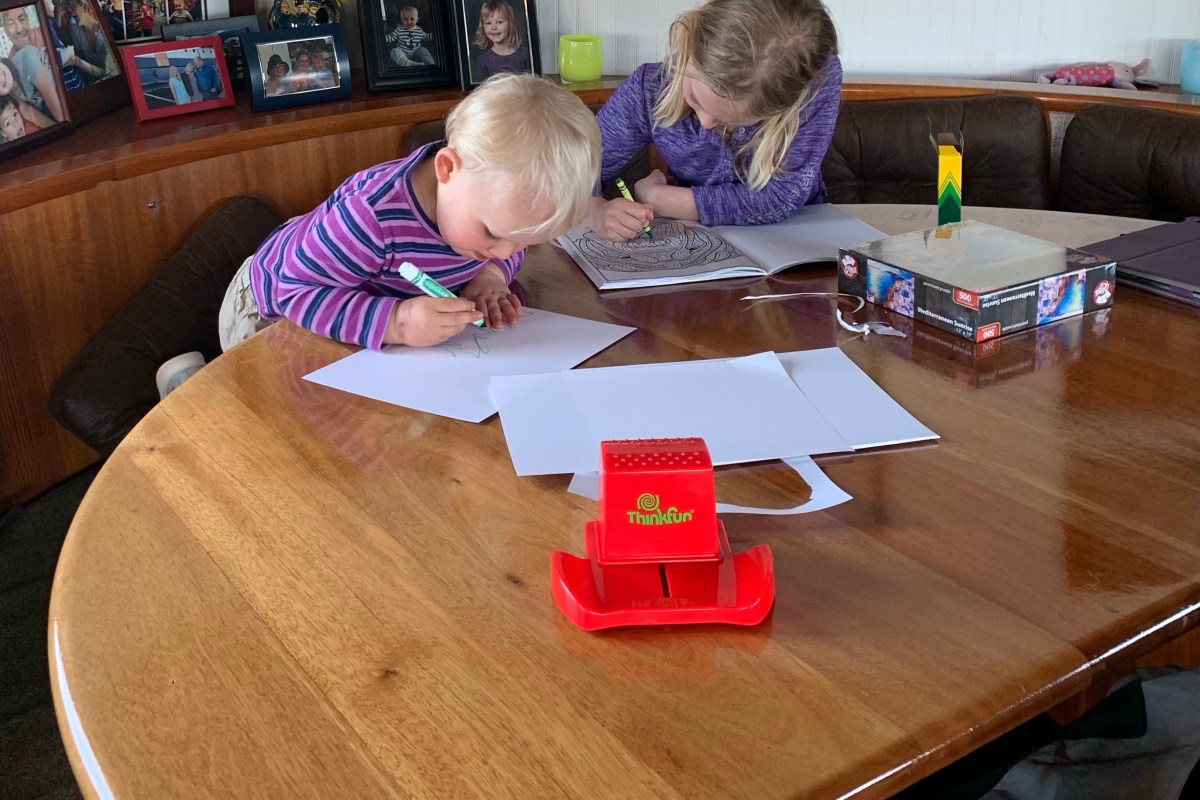
My kids and I spent the weekend with my brother and sister-in-law. Sitting around their semi-circular teak dining room table with a padded bench seat, I was reminded about a conversation we had there about a year ago.

“My mom said I should go find another mom,” My daughter said to my brother and sister-in-law. It was all I could do to not explain but because they are wise, they teased out the story from her. She was having a fit that seemed to be part of what came with being four because I wouldn’t let her do something. It had been going on for a while (it seemed like a fifteen minutes although it was probably five) and she said, “I’m going to find a new mommy, a nice one.” and I said, “Go!”

In the months after it happened she kept bringing it up and part of me died in shame whenever she did. She’d mentioned it a few times to just me and I’d apologized profusely. “I said something that I shouldn’t have because I was angry and frustrated, Sweetie” I said over and over again but then it came up again with two of her most trusted other adults. I sat there listening and they talked through it.

Listening quietly to that unfold was one of the hardest things I’ve ever had to do. But love did two things as I watched. It held me silent, knowing that unpacking the hurt for my daughter was far more important than defending myself. And I also felt held by the love of my brother and sister-in-law. I could trust that they know me well enough to know my strengths and weaknesses and all the care I put in between.

In the year since that conversation, my daughter has never brought up that comment again. My silence allowed my daughter to talk about her hurt without it being compounded by feeling ashamed to talk about it. In addition to eating great meals of delicious food, there are so many things we’ve done at that table in my brother’s living room – colored pictures, worked on crosswords, celebrated birthdays, had long conversations about life, reviewed the fun of the day. But now I add to that list – relaxed into our imperfections and healed mistakes.

Walking Boldly into Truth

“Everything you have ever wanted is on the other side of fear.” – George Adair

Last year a friend of mine realized that she was gay at 50 years of age. In the 6 months that followed her discovery, she came out to everyone significant in her life. She didn’t have a girlfriend or any other forcing function to do it, she just walked boldly into her Truth. I know that some of those conversations, especially with the older generation were hard but when I asked her about how she did it she told me she was ready to find love and hiding who she realized she was would only hinder her path.

As someone who is walking a less traditional path by having kids as a single person at age 46 and 50, I am so inspired and in awe of my friend. I remember being five months pregnant and feeling really glad I wasn’t showing because then I’d have to tell people what I was doing. (Yeah, that wasn’t going to stay hidden forever. 😊) I had told everyone close to me, but for strangers and acquaintances, I was sure they’d think I was some loser that couldn’t find a partner. Over the years it has gotten so much easier but I really had to work hard to be able to say it without fear.

I told a lifelong friend this the other day and she was surprised. “What?” she said “we just always assumed you were some super-empowered woman.” Ha, ha. If it were that easy, there wouldn’t be a whole genre of stories about heroes who spend the entirety of the middle act wandering around trying to do everything they could to pursue their path without being vulnerable. I can say with complete certainty that if the constriction around my heart hadn’t been so tight and getting tighter every time I thought of having a family and time hadn’t been running on out my ability to have or adopt children, I would still be wandering around trying to find the right husband with which to have children. Anything so as not to have to face the vulnerability of saying, “This is what I was certain I had to do even though the circumstances at that time of my life meant doing it alone. I didn’t want to rush finding the right man and in doing so, make a mess of it.”

In Harry Potter, the young witches and wizards learn to run into the brick wall between platforms 9 and 10 to get to the Hogwarts Express train leaving from platform 9 3/4. We reach thresholds in our lives and need to change something — a job, a place we live, a relationship, a way of thinking or being, or something we just have to do — and they feel a lot like that brick wall. It is terrifying to consider running into, always looks easier when someone else does it, and once across, it is the place that transports to the magic life beyond. It’s only a perception that we don’t want to stand out that keeps us from walking into our Truths. When we do, we break that constriction around our hearts and can feel the full power of the vital heartbeat of life.

The postscript here is that with one year of my friend coming out, she has found her person and they’ve bought a house together. She crossed her threshhold and is living in the fullness of her life and it’s a joy and inspiration to watch!

Projections

“Turn your wounds into wisdom.” -Oprah Winfrey

My five-year-old daughter was sitting at the kitchen table doing her remote Kindergarten class the other day. To do the work, she needed the packet the school had sent home plus scissors and glue. I found the packet for her and then she couldn’t find her scissors and glue because she hadn’t put them back where they belong. She said to me, “You are making me have the worst day.”

Psychology Today defines the term projection as the “process of displacing one’s feeling onto a different person, animal or object.” We project our feelings onto someone or something else as a defense mechanism. Instead of owning our own BS, we can turn the issue into something else in an effort to protect our own egos.

I think of the time I found out about my husband’s infidelities. One of his friends, who was also my business partner, invited me out to lunch which was odd since we had never had a meal without my husband there too. When I arrived the sense of foreboding was amplified enormously because the friend had chosen a table in a closed section and also ordered me a beer. It was almost a relief when he started telling me of the infidelities because the build-up was so intense. But then I had to go home and tell my husband that I knew. He wasn’t home so I called my brother and four of my closest friends and then went out to dinner with my two best girlfriends. I finally saw my husband and asked, “Have you ever been unfaithful to me?” He answered “no” but seeing that I knew something, he then asked, “Who told you?” Then the next question he asked was, “Who else knows?”

The next months were a master class in projection. That is the perfect word for it. There is a source that is running the show but whenever you try to look for it, you are redirected to the pictures showing on the big screen. Any time the infidelities came up, he expressed his rage that his friend betrayed him (and yes, I saw the irony). Any time he got uncomfortable, he blamed me for revealing his secret. It made it so that we never could talk about the real problems. The message communicated was not that he was sorry, but just that he was sorry that I found out. By flipping the conversation to who I told, it made me the person who had been hurtful.

In a truly honest discourse, we would have been able to discuss not only the root issues but also my shortcomings as well. But if he was going to deflect, there was no way I was going to step forward either. I’m so grateful that marriage ended so I never wonder whether it could have been saved – but I do wonder if we could have cleaned and bandaged the wounds a lot faster had we not lingered in the defensive woods for so long. As it was, it took me many more years of my own work, reading, listening to others, and primarily having to sit with myself in meditation for me to finally own my part in the destruction. Projection might work as a defense but it does not work to heal and grow.

So I find it fascinating when I see the little examples of where my daughter projects. She moves past it and back to her happy place so quickly that it’s just a flash but when it’s calm, I try to guide her back to where it’s safe so we can remove our defenses and own our feelings and mistakes. It’s the only way we can take down the screen and really see what kind of day it is.

Self Compassion

“You must transform and transcend your unconscious habit of pitying yourself and having feelings of inferiority if you want to grow and feel the experience of your mind reaching into infinity.” – Yogi Bhajan

This past Sunday I loaded up my stroller with all the things we’d need for a morning outing – picnic blanket, food, coats, masks, map for a scavenger hunt we were doing and took my kids down to a local wading pool that is empty this time of year and a great place for my daughter to practice with the new roller skates we’d gotten at a garage sale. We’d been there a few minutes when a dad arrived with three kids, his stroller similarly loaded and all of them riding bikes/trikes. I was idly watching him as he engaged with his kids – 6 yrs, 3 yrs and 18 months. At one point the 3 year old was upset and the dad got down on the ground right in front of the strider bike the kid was riding and talked it out with him. Then the dad turned to me and started talking about being exhausted. The story almost just tumbled out of him – his wife is considerably younger, in grad school and he doesn’t want to spend what could be the last decade of his life exhausted. Although he didn’t look that old to me, I appreciated his candor and his quest to find a way to enjoy this phase of life.

For anyone that is living this part of life with young children or remembers it, you know there is a lot of caretaking to happen. Bathing, toileting, eating, cleaning, reading, planning, communicating, entertaining, regulating emotion – none of these happen for my little people very proficiently quite yet. I had these kids late in life and so intentionally, that there are many days I don’t even question why I spend an 13 straight hours of a weekend day so focused on someone else’s care. I remember the time before I had children when I just had myself and my dog, Biscuit, to care for and I was so incredibly tired of just thinking about myself. I’m delighted to have these bright lights in my life and when it’s so clear that their needs outweigh my own, doesn’t it just make sense to focus on them?

But the balance has possibly tipped too far towards the kids, sometimes just simply as a practical matter. Why wear clean clothes when they will be dirty in 10 minutes? How can I brush my hair properly with one hand while I hold the baby with the other? Do I bother to prepare myself food that I is good for me if no one else will eat? And finally there’s the question of how to work out for my own benefit when I’m already exhausted from exercising my patience.

In my determination to make sure my children are taken care of, I’ve lost regard for myself. That is to say, I don’t even make the list as one of the key people to take care of. I think there is a price to be paid for losing your self-regard, even if it happens only as a practical matter. The consequence of never thinking I am worthy of care is that I start to believe it. In holding them up, I’ve let myself down.

Listening to this dad last weekend, I felt so much compassion for everything on his plate and it was in having his story laid out before me that allowed me to see that I need to extend the same compassion for myself. I’ve been falsely believing that it’s a dichotomy of my kids needs or my needs instead of expanding my pool of compassion to see that we all need care and that includes me.

As we talked and our kids played, a van from the city’s parks and recreation department pulled up with a bunch of toys for the kids to play with – pogo sticks, balls, noodles, the corn hole game and more. It was such a gift to have an hour free from being the entertainment director and a good start to relaxing into compassion for myself. Now I just need a clean shirt and some healthy food.

Time to Grow

“When you are finished changing, you are finished.” – Benjamin Franklin

I was recently given the opportunity to do some consulting (my day job) for the church for whom my dad was senior pastor when he retired. A chance to do meaningful work for an organization that does amazing job of outreach in the community, racial justice and creating a base for growth for families is right where I want to be. To make it work, I hired a new caregiver for my daughter to come for four hours on the day she has remote school and her brother is in daycare. Naturally, my daughter was nervous on the first day even though she’d met her several times before but she seemingly got past it pretty quickly. Until a couple hours in and I had to leave the house. She bumped her ear on a chair as she was reaching to give me a hug and the tears that came were much bigger than the owie, “You are going to leave?” she whispered tearily.

Ugh, it’s no wonder it feels so hard to consider personal growth and change. My kids are changing at an incredibly rapid pace, the world around us changes but I feel like I’m supposed to stand still in the middle of it all like a statue in order to be that predictable presence, sorta like home base in a game of tag.

I have to consider that I might be the biggest believer in the fact that I cannot change for the sake of my kids. In order to create the consistency that is the cornerstone of their lives and to not be the source of any ruffled feathers, I likely am the most fervent proponent of this belief.

But I know I’m not alone in this. There is a myth from the Trobriand Islands off of New Guinea. In that story, humans were immortal because they could shed their skins and stay young forever. One day a grandmother went to bathe in a river with her granddaughter and while bathing, shed her skin which snagged on a branch. When she returned, her granddaughter didn’t recognize her youthful appearance and was afraid. The grandmother went back to the river, found her old skin and restored her appearance but humans henceforth lost their ability to live forever.

After I reassured my daughter I would be back in two hours, I set her down and resolutely walked down to my car. Then I panicked as I recalculated whether I could do the work without making the change, carving out the additional hours in the evening after I put my kids to bed. I couldn’t and more than that, I shouldn’t because that’s how myths get perpetuated, we pass them on generation after generation. I am fully committed to showing up for my children and the other people in my life – being present, interested, vulnerable and real. When I try to be unchangeable, I feel like I start covering over who I am like a cup that tarnishes so that I diminish my ability to show up. You can’t polish without some rub so even as uncomfortable as it is for me, I’ve committed to some gentle friction as I try to keep growing and changing.

Hey, Listen

“Please remember, it is what you are that heals, not what you know.” – Carl Jung

My kids and I were driving in the car the other day. My toddler kept saying “Mama?” and I kept answering, “Yes?” and because he still has a limited vocabulary, the conversation would stop there until he said, “Mama?” again a moment later with the same call and response. And then my five-year-old said, “I think he likes it when you answer him. It makes him feel like you are listening to him.” Awww.

But this post isn’t a victory lap celebrating great listening because I can just as readily not listen well. One rainy weekend during a coronavirus era lockdown, it felt as if my five-year-old hadn’t stopped talking, singing or asking something for the entire day. I asked her if we could be silent for 10 minutes and she thought about it and asked, “Why?”

When I listen well, it’s listening from the heart. It feels like a catcher’s mitt that is worn, old and ready to receive. I can listen to hurts, opinions and worries from my kids or friends and gently accept them. In that mode, I can even accept what my inner voice is telling me without struggle.

And when I’m listening from the head, it feels more like a tennis racket. I bounce things back without holding them. When it’s an owie, physical or otherwise, it seems to make them last longer. As if the teller has to dig in to convince me of the wound by describing the size, shape and depth which in the telling makes it larger.

When my kids get hurt, I want to solve what they were doing that caused the injury so they don’t do it again. Or, I want to downplay what I saw as such a minor scrape that couldn’t hurt so much. Even worse, when my daughter apologizes, I tend to use it as an entrée to a lecture on why she shouldn’t have done whatever it is that she did instead of simply saying “thank you, I appreciate that.”

And it’s not just kids, I have the same patterns with friends. Someone apologizes and I jump to say, “It’s no problem.” Or if listening to a hurt, I can rush to put one of my one on the table to somehow try to validate them or maybe prove that I have the right to be there.

I also find it difficult to listen to myself, to listen to my inner voice, that small, insistent voice that tells me I need to get up an hour earlier to mediate, do yoga and write. Or tells me to extend myself to a friend when I’m in a rush. A voice that I’ve come to recognize as part of my Divine path because I will inevitably end up having to listen to it, I just get to choose to do it when it’s a gentle whisper or wait until it’s an insistent bellow.

So, I’ve tried hard to learn to listen with my heart. Sure, there are times I need to engage the head to engage in critical thinking when safety and sanity are at stake but when it comes to hurts, apologies and accomplishments, I find the heart does best. Because it’s great to feel heard and it’s even better to feel heard and held!

Shame Resilience

“If your compassion does not include yourself, it is incomplete.” – Buddha

Last week when my daughter and I were dropping my son at his daycare, Simon the teacher in the 2’s class was at the check-in table. I was talking to Simon as we did the sign-in and temperature check and then when I went to say good-bye to my son, I distractedly said, “I love you, Simon.” (No, it wasn’t a Freudian slip, I swear). My daughter started to giggle as did I, we waved at my son as he walked away and just slipped out the door laughing.

It was embarrassing to make a mistake in front of my kids. To be clear, I’ve made plenty of mistakes in front of and with my kids but usually privately or before my oldest was socially aware enough to pick up on it. I know from the work of sociologist and researcher Brene Brown how important modeling shame resilience is for kids so that they can see how you can name it, talk about it and survive it instead of keeping it inside where it can percolate for a long time. Just thinking about it and I recall shame that I’ve never given air like the time I was in the toy store with my daughter when she was still in diapers and I overheard one parent say to another, “Someone in here has a poopy diaper.” And it was my kid. <groan>  I still can remember that vividly more than three years later probably because I’ve never talked about it before this post.

Shame resilience was not something that was modeled for me when I was a kid. I had two great parents, my dad who was so likeable and well-intended that it was easy to believe he never suffered and my mom who is such a perfectionist that it’s easy to believe she never did anything wrong. But I remember when I sat my dad to tell his stories when he was in his late 70’s and he told of a story when he had to let go someone on his staff. He’d hired a married couple to play a role in the church my dad was senior pastor of and the husband was noticeably absent. My dad had to let him go and the wife was livid and felt her husband had been terribly mistreated. In the few years that followed she then suffered a miscarriage and her marriage broke up and though those things had no direct relationship to my father, he felt terrible until the end of his days despite the many different ways he tried to apologize over the years.

These were the things we never talked about as a family when we were young. Perhaps that’s too big of an issue to hear about as a kid but it’s the only example I have. So I’m trying to remember that with my kids and stay open to just say a sentence or two. As we left the daycare, I said to my daughter, “That was embarrassing.” She asked why and I said, “Well, I don’t know Simon well enough to love him AND I didn’t properly say good-bye to your brother so I messed up both things.” And then she asked, “What’s embarrassing mean?” It was a great entrée to a little conversation about life. What I said wasn’t wise or big but it was transparent and true which I hope will ventilate my shame and show her how she might endure hers when she feels it.

You Should Say “Thank You”

“Wear gratitude like a cloak and it will feed every corner of your life.” – Rumi

My 5-year-old got a new bike from her grandmother. We intentionally got it bigger because she’s growing so fast but it means she can’t touch the ground while sitting on the seat. So the way she was starting by pushing off with her feet and stopping while sitting on the seat wasn’t working. To help her practice, I was helping her start on the sidewalk out front of our house and then running about 200 feet to the corner and helping her stop. The standard parenting job for kids learning to ride bikes. We were doing it for about a half an hour, I was dripping with sweat when on one of our runs she says over her shoulder, “You should thank me.” And I huffed out the question as I ran, “For what?” She replies “For slowing down so you could catch up.”

If I could have belly laughed while running and out of breath, I would have. But it also rang an interior bell for me – how many times in life have I felt pretty smug for what I was doing and completely missed the big picture of what God was doing?

It reminds me of the time about a year and a half ago when I invited a family I didn’t know to live with me for three months. I wrote about it in my post Power Stance. I was feeling pretty gracious for being willing to open my house when I had a newborn and 4-year-old. But yesterday as I sat talking late into the night with the mom of that family who came this weekend for a quick visit, I realized that it was completely analogous to my daughter on the bike. While I was feeling so self-satisfied, God had been working to give me a lifelong deep friendship with a kind and thoughtful woman who affirms my spiritual nature. Now there’s something I should say “thank you” for!

I assume that it’s a little like riding a bike. Once we learn to balance on two wheels and get some momentum, we gain a whole lot of confidence and freedom. But every once in a while we skid on a patch of gravel and remember to say, “thank you!”