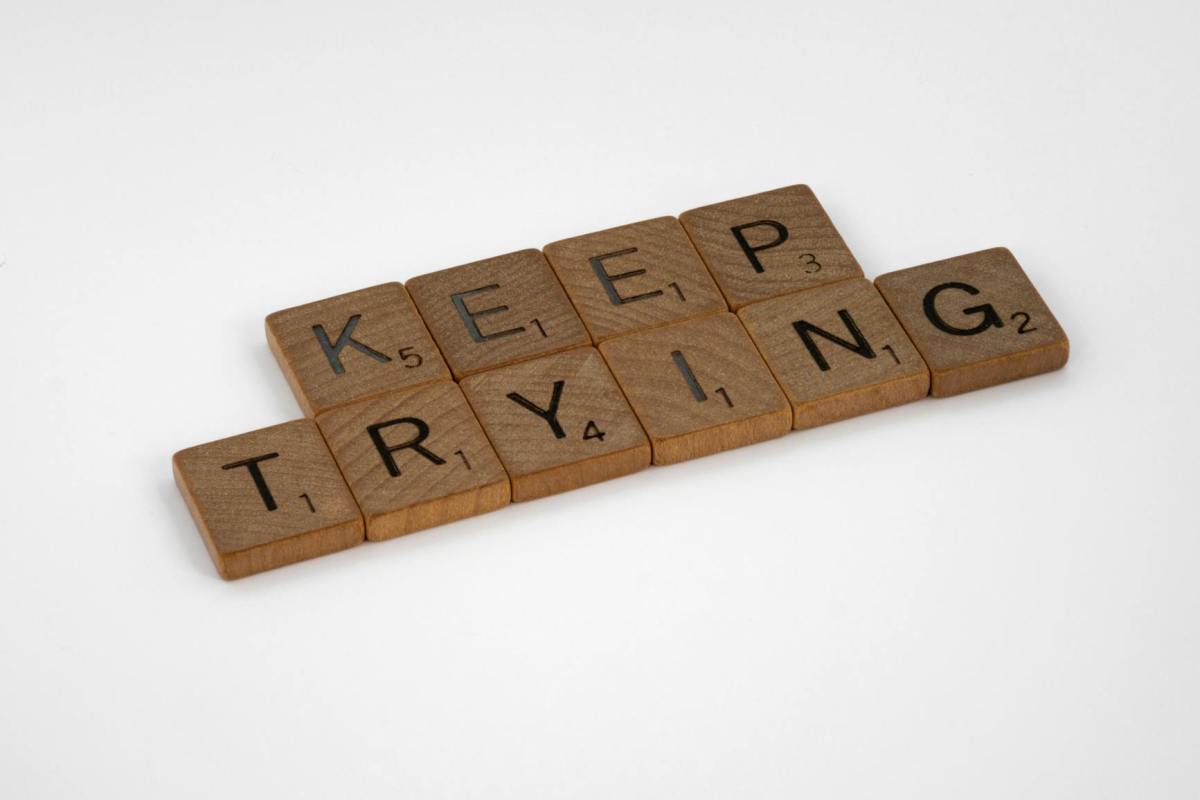
“You never fail until you stop trying.” – Albert Einstein
I have been watching a lot of Little League baseball this Spring. It’s a fascinating mix of young athleticism and skill development peppered with moments of bitter disappointment. In most every practice and game there is at least one example of someone who wants to sit on the ground and pout because things aren’t going as they expected.
But disappointment doesn’t just happen to six and seven-year-olds. It reminds me that expectations can inspire us to try—until they harden into a demand for a specific outcome.
In this episode of The Life of Try, I dig in to how unmet expectations fuel disappointment, why that disappointment can keep us from taking healthy risks, and what it looks like to stay hopeful without clinging.
From a childhood lesson I learned from my mom about “pressing for the answer” to Alexander Fleming’s accidental discovery of penicillin, I trace how openness, curiosity, and faith can turn apparent failures into forward motion.
Along the way, I draw from Brené Brown’s research on disappointment, Maya Shankar’s reframing of identity after loss, and spiritual wisdom about surrender and non‑attachment—so you can keep trying even when the path changes.
Takeaways:
- Recognize when expectations are motivating you—and when they’re setting you up for disappointment
- Practice openness and curiosity when a try doesn’t go as planned (and why that matters)
- Name and communicate your expectations to reduce “unspoken contracts”
- Reconnect with your deeper “why” when your “what” gets taken away
- Hold onto faith that trying will lead somewhere good—even if it’s not the destination you imagined.
Here’s the YouTube video of this episode:
Here are some other ways you can listen and watch this episode:
- The podcast player embedded below
- Click this link to watch in a browser: Letting Go of Outcomes: The Mindset That Keeps You Moving
- Subscribe to The Life of Try on Spotify, Amazon Music, or Apple Podcasts
- Subscribing to the YouTube channel: https://www.youtube.com/@thelifeoftry
The Art of Meaningful Conversations: Lessons from 200 podcast episodes – The Life of Try: Personal growth, one try at a time.
Links for this episode:
Letting Go of Outcomes: The Mindset That Keeps You Moving transcript
Sir Alexander Fleming – Biographical – NobelPrize.org
How to Regulate Your Emotions and Mental Chatter When Bad Things Happen | Maya Shankar
Penicillin Wasn’t Alexander Fleming’s First Major Discovery | Scientific American


This really hit home. I love how you showed the shift from “trying” to “needing a specific outcome”—I see myself in that more than I’d like to admit. The Little League example made it so real, too. Learning to stay open when things don’t go my way is something I’m actively working on, and your reminder about reconnecting with the “why” felt grounding. Also, the idea of naming expectations to avoid silent disappointment… so good. Thank you for this gentle, honest perspective.
LikeLiked by 4 people
Oh, what a lovely comment, Sajida! I’m so grateful to you for listening and letting me know what landed. Thank you!
LikeLiked by 1 person
I like Brené Brown’s mindset, and I’d like to read her book. This is an interesting episode, Wynne.
LikeLiked by 2 people
Brene’s book Atlas of the Heart is such an interesting exploration into emotion. Thank you so much for listening, Hazel!
LikeLiked by 1 person
I have an ebook copy of her book, Daring Greatly, but I didn’t prioritize to read it. I’m so sure it’s a great book, but I have plenty of reading materials now, including my old ebooks, gift physical books, plus blogs😁🤭 it’s a lot that I don’t know how I give time with🤩
My pleasure, Wynne
LikeLike
It is heartwarming to hear your story, Wynne, and how it benefits and consoles you. Your mom’s Bible verse is a complicated one, as I have witnessed in my therapy practice and among others who felt their pain and loss was hard to rationalize. I am glad you have found a way to find hope in it.
LikeLiked by 1 person
Your experience with the number of patients you saw in the course of your career is so impressive, Dr. Stein. Thanks for this great comment that envelops so much experience! I appreciate you tuning in!
LikeLiked by 1 person
Looking forward to tuning in! Thank you, Wynne! ❤️
LikeLiked by 2 people
Okay now…have you been listening in on chats I’ve had recently with the darling daughter Delaney? I listened to this week’s podcast in the car and laughed. Delaney’s accused me of working far too hard to control/manage outcomes (and she’s not wrong). I tried to defend myself by saying “I just like to map things out” and she called bullsh*t on me…as only our dear ones can. Giving up the targets, the destinations, the pursuit is pretty darn liberating but geez. Harder said that done. Thanks for the nudge, dear Wynne. ❤️😊❤️
LikeLiked by 2 people
Oh, I’m laughing, Vicki. So funny about our dear ones and the candor they bring!! But you’re right – harder said than done!! Thank you so much for listening! ❤ ❤ ❤
LikeLiked by 1 person
❤️😉❤️
LikeLike
So many things in your takeaway list I can relate to, can’t wait to listen!
LikeLiked by 1 person
I’m so glad that resonates! I appreciate your tuning in!!
LikeLiked by 1 person
Ohh, I love this phrasing: “I trace how openness, curiosity, and faith can turn apparent failures into forward motion.” I can’t wait to tune in!
LikeLiked by 1 person
Oh, I love hearing what landed for you, Erin. Thank you so much for listening!
LikeLiked by 1 person
Needed today Wynne.
Thank you !
I love Brene Brown
LikeLiked by 1 person
I’m so glad to hear it!! Thank you, Maggie — and happy travels!
LikeLiked by 1 person
Thank you too Wynne!
LikeLike
I’m so looking forward to listening.
LikeLiked by 1 person
Thank you, Elizabeth!
LikeLiked by 1 person
I like Brown’s theory about disappointment stemming from unmet expectations, and it’s a great insight about unnamed expectations being part of it too. They can really complicate things! And it makes all the sense in the world that in order to avoid disappointments, we don’t try. It’s safer. And what a brilliant story about Fleming and his “accident.” I’m glad he had the wisdom to hang on to the petri dish even if it didn’t meet expectations. A keen scientist (like him!) can sense “this means something.” I guess a breakthrough in anything is because a result is different. Thanks, Wynne. This was interesting!
LikeLiked by 2 people
Oh my goodness – I’m blown away by your insight that, “I guess a breakthrough in anything is because a result is different.” That totally makes sense. Right, because if it was as expected, we’d just be affirming what we already know. Sooo good! Thank you for all your listening and brilliance, dear Melanie!!
LikeLiked by 1 person
😊❤️ Thanks, Wynne.
LikeLike
That’s a difficult task for some of us, to hope without attachment, especially for big things like healing and other life-changing events…. Yet, I’m not one of these people – “there are too many people in the world today who decided to live disappointed rather than risk feeling disappointed.” I’m a ‘tryer’ no matter how many times my hopes get dashed. 😊 I’m definitely this type of girl – “Hold onto faith that trying will lead somewhere good—even if it’s not the destination you imagined.” Thanks Wynne for all your explanations and encouragement to keep on trying.
LikeLike
Oh my gosh Wynne, unmet expectations? I think we all have had a taste of that flavor! And girl, I love this…”how openness, curiosity, and faith can turn apparent failures into forward motion.” Priceless and beautifully delivered my friend. 😊
LikeLike
Unspoken or unmet expectations not only bring us disappointments, but they can severely undermine a relationship. Becoming honest and open with ourselves is a first step, and then extending the honesty to others is vital to have healthy relationships.
LikeLike
Although I need to stipulate, it is gentle honestly and not the brute telling that many seem to now enjoy in the name of speaking a truth. We cannot forget kindness, to ourselves and to others.
LikeLike
Disappointment. The fear of failure. Different words but you’re so right, they have such a huge impact on our willingness to play and change and simply try. I keep hearing a lot about both. God, fate, someone must be trying to tell me something. D’uh!!! Ha, ha.
LikeLiked by 1 person
I love this wonderful summary, Brian!! Right!
LikeLiked by 1 person
I love this, “Hold onto faith that trying will lead somewhere good—even if it’s not the destination you imagined.” I think that is what happens every time I sit down to write. Excellent post Wynne. Hugs, C
LikeLiked by 2 people
I love how you tie this to the writing journey! Right (and write) – it makes so much sense!! Thanks for tuning in, Cheryl!
LikeLiked by 1 person
Great topic, Wynne. I’m so glad you went into the named and unnamed expectations. I don’t know what others do, but I definitely carry both. In thinking about why we keep some of our expectations private, I hypothesize that perhaps we do this because we don’t want to get hurt by making them public if we fail to reach them, or maybe we’re afraid others will ridicule us about our goals with words like, “What are you thinking? That could never happen!” I’m very impressed by those who don’t let anyone rain on their parade and possess an inner belief that keeps them going.
LikeLiked by 2 people
I love your insight about why we keep them private. Isn’t it interesting? I think sometimes that I don’t want to know myself because I think I can ward off the disappointment. Never works though… Thanks for the great comment, Pete!
LikeLiked by 1 person
Greetings from the bus stop. Sunny morning. Light jacket weather. Birds chirping. 😊☀️
Love learning more about Fleming and his foundational contributions to the finding of penicillin. As with so many things wonderfully highlighted on Life of Try, the human and emotional journey is so compelling in each story of success and failure.
Being open and curious requires courage and vulnerability – to let go of expectations and the outcome – and focus on the immediate thing in front of us can lead to wonderful discoveries. I also love what you said about focusing on our Why, when the What is not apparent or present in our lives.
Great way to start my day. May today be open and curious to the possibilities!
LikeLiked by 2 people
Oh, this is such a great comment, Ab! It does require courage and vulnerability – that’s so well-spotted. I’m so grateful to you for listening and for all the insight you add with your incredible openness and wisdom! I appreciate you, my friend!
LikeLiked by 1 person
this was great, wynne. as an eternal optimist i am sometimes disappointed when things don’t turn out as i hoped/expected. over time, i’ve discovered that things have a way of working out if i leave them alone and set them aside for a bit, which is hard for me, but the end result is that it is often in away i never expected or hoped for. at times, i find out much later that it was a better outcome after all for many reasons. this has taught me that i can still be optimistic, but to let my expectations not be so limited, and i accept that for the most part and am getting better at it as an ongoing student of life. love the examples you gave –
LikeLiked by 2 people
Ah, Beth – as a fellow optimist, you have spoken to my heart. Yes – leaving them alone, setting them aside (and even setting aside the disappointment if I can) and then watching how they unfold. Thank you so much for listening and for this great comment!!
LikeLiked by 1 person
I just finished listening to the podcast and I love your line, “faith that trying will lead you somewhere.” What you said about your mom is kind of funny because I’m the same way. If I’m pressed to make an on-the-spot decision (that is not urgent) without enough information or time to look at an issue from all angles, my answer is probably going to be no. But if you give me a moment, I might give a better answer. Awesome, and Happy Mother’s Day, my friend.
LikeLiked by 2 people
Oh, I appreciate you listening, Edward and I love your takeaways. Yes, it’s hard when we’re pressed for an answer – I understand that so much better as a parent. But you’re right – given a moment, we might give a better answer. Well said, my friend!
LikeLiked by 1 person
My pleasure. Yes, being a parent is a humbling experience, and it’s amazing how much clearer things are now. I guess our kids will go through the same process.
LikeLiked by 1 person
Amen to that!
LikeLike
This reminds me of my son’s only season playing Little League baseball. His team lost every single game they played…and none of them were even close. Despite that, there was one game where the opposing team hit what would have been a home run—but it happened to land in Rusty’s glove instead. His teammates cheered him on and he was pretty nonchalant about the whole thing, but inside, he was beaming with pride. That one brief shining moment in the sun, when he was a hero for five minutes, made all the other losses bearable.
(I’m not sure Rusty would agree, but that’s how I felt anyway!)
LikeLiked by 3 people
I love this story, Mark!! I can see why that would make the losses bearable. So good!!
LikeLike
The takeaways are so good, I look forward to listening!
LikeLiked by 1 person
Thank you, Mary! I appreciate you tuning in!!
LikeLike
Wynne, the distinction you make here is one I keep turning over in my head. You think you’re being hopeful and open, but somewhere along the way it quietly hardens into “this has to work out THIS way or it doesn’t count.”
The Fleming example is so good for this. Very interesting episode.
LikeLiked by 1 person
Oh, I love how you’ve described it as a hardening. Yes, that’s it exactly! Thank you so much for listening and the insightful comment, Ritish!! Here’s to being hopeful and open!
LikeLiked by 1 person
Thanks….and Absolutely!
LikeLike