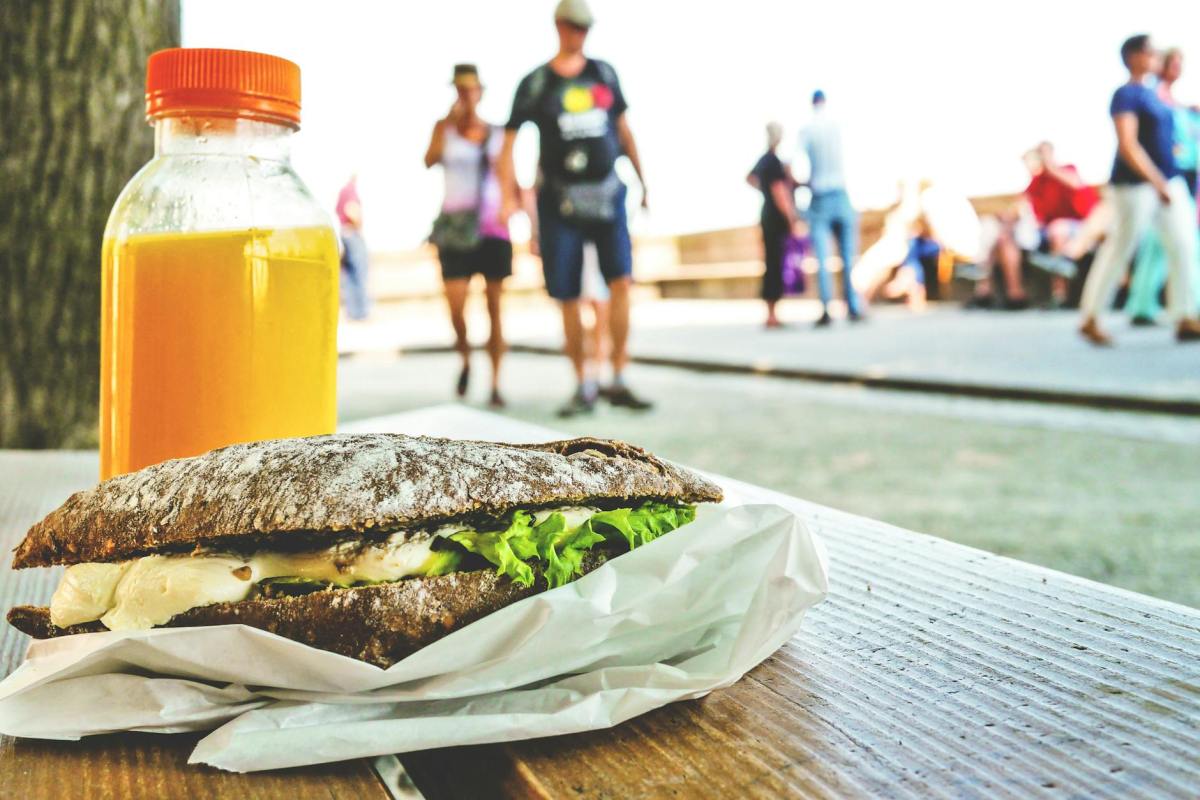
“When we do the best that we can, we never know what miracle is wrought in our life, or the life of another.” – Helen Keller
Karen Olson shares a statistic in her book Meant for More: Following Your Heart and Finding Your Purpose that one in thirty children in the United States experience homelessness annually.
That means that when I volunteered last week at my kids’ elementary school last week to walk the approximately 400 students at school down to have their photo taken for Picture Day, statistically speaking, 13 of them could have experienced homelessness in the last year. It’s overwhelming to even try to comprehend that.
So I love the conversation that Vicki Atkinson and I had with Karen Olson because she has done so much to help homeless families. Karen is the founder and CEO emeritus of Family Promise, an organization committed to ending family homelessness.
Karen shares the story of her encounter with Millie, a woman experiencing homelessness, and how that her decision to not only share a sandwich but also her time as she listened to Millie’s story changed her life forever (see clip below).
She tells us how her sons who were 10 and 12 at the time got involved. And she shares how the “no’s” she received help shape her mission into something even better – an organization that has involved a million volunteers and a nation-wide presence.
In her book, Meant for More, Karen tells not only her story but also some stories of the people Family Promise has helped – from those who experienced homelessness to the volunteers.
In this episode we talk about some of the reasons we hesitate to help people experiencing homelessness. Karen’s guidance is so helpful to help direct our efforts in ways that make a difference.
This is a great episode with a woman who was wired to help others. We know you’ll love it.
Takeaways from this episode:
- Karen Olson founded Family Promise to help homeless families.
- The organization mobilizes community resources to provide shelter and support.
- 80% of families in the program find housing within nine weeks.
- Personal acts of kindness can lead to significant change.
- Engaging with the homeless can break down barriers and stereotypes.
- Community service fulfills the needs of both the giver and receiver.
- Advocacy is essential for systemic change in homelessness.
- Many homeless families are hidden from public view.
- Compassion and kindness can inspire others to act.
- The journey of helping others can lead to personal healing.
Here’s Karen telling the story about the sandwich that started it all.
Here are some ways you can watch this heartwarming and inspiring episode:
- The podcast player embedded below
- Click this link to watch in a browser: How to Share a Sandwich with Karen Olson
- Subscribe to How To Share on Spotify, Amazon Music, or Apple Podcasts
- Subscribing to the YouTube channel: https://www.youtube.com/@howtosharepodcast
- Please listen, watch, provide feedback and subscribe.
How to Share a Sandwich transcript
Unleash Your Humanity: Courage, Resilience & Purpose with Yasmine Sherif – The Life of Try: Personal growth, one try at a time.
- Unleash Your Humanity: Courage, Resilience & Purpose with Yasmine Sherif
- Stop Hustling For Your Worth: A Better Way to Grow
- Way Will Open: How To Trust Life's Timing
- How to Stop Procrastinating and Start: The 10-Minute Rule for Taking Action
- The Art of Meaningful Conversations: Lessons from 200 podcast episodes
Links for this episode:
Karen’s book: Meant for More: Following Your Heart and Finding Purpose on Barnes & Noble , Bookshop.org and Amazon
Family Promise Organization
From the hosts:
Vicki’s book about resilience and love: Surviving Sue; Blog: https://victoriaponders.com/
My book about my beloved father: Finding My Father’s Faith;
(featured photo from Pexels)


God bless Karen Olson. MRI-based research has demonstrated that we tend to react to the homeless with the same brain activity as we do to furniture.
Each homeless person we encounter allows us the chance to do good in the world.
WWJD? I think we know the answer.
Thank you, Wynne and Vicki, for reminding us.
LikeLiked by 5 people
Great comment, Dr. Stein. So true!
LikeLike
Homelessness is a rampant problem and now we have many more people who are working but don’t have a proper roof over their heads.
Here in St. Louis, we have families whose homes were destroyed or partially destroyed in the May 2025 tornado, who are living in their garages or in tents on their own properties. In many cases insurance won’t cover the costs of repairs, so homeowners are stuck.
I keep a reusable shopping bag of brand new, top quality socks that I’ve rolled individually into sandwich bags, so I can hand out a couple to a oanhandler at a traffic light. I rarely have small bills to give out, and this is something I can keep handy in the car. It’s a small thing, but even getting clean socks is important for daily hygiene.
LikeLiked by 2 people
What a great idea to give away socks. My kids make up bags with snacks and juice boxes to give out in our neighborhood.
I’m so sorry to hear about the families recovering from tornado damage. So hard!
Thanks for the great comment!
LikeLiked by 1 person
Making little care packages to keep in the car to hand out is a great idea!
LikeLiked by 1 person
Such a pleasure it was to meet Karen and read her beautiful book. Thank you, Wynne, for all that you do to create these impactful conversations! ❤️
LikeLiked by 2 people
Thank you for all you do to bring out the heart in these podcasts, Vicki! Karen has such an amazing story, doesn’t she?
LikeLiked by 1 person
Oh my goodness…yes. Yes, she does! I love these conversations and I’m so happy to join you. Fills my heart! 💝😉💝
LikeLiked by 1 person
I loved this interview so very much!! I love this quote when Karen was talking about connecting different religions around helping the homeless. “I built a community and that’s just a beautiful thing.” When we were searching for our homeless loved one, we met homeless people who would give their very last bottle of water to help us. The kindness was overwhelming from people who had nothing, but were so willing to give what they had to help. I saw compassion in every shelter, in every church, and in the entire communities where we searched. 💜💜 And everywhere, everywhere people prayed over us. 🥹🙏🏼🙏🏼🥹
Thank-you Karen Olson for writing this book. 💜💞 It’s so important for people to learn every homeless person’s story is different and even the smallest kindness can change someone’s world.
“I wrote this book to speak to the profound personal healing that happens when we act on our innate kindness.”
…”even the smallest act of kindness can have a substantial positive effect.” 💞💞
LikeLiked by 3 people
What an incredible comment, Rose. You have highlighted so much of the goodness from Karen’s book and our conversation.
I love what you say about kindness and compassion you encountered in your search. That is so wonderful!!
Thank for tuning in – appreciate you so much, Rose!
LikeLiked by 1 person
Amazing that 80% of the families in the programme find accommodation within 9 weeks 🙌🏽
The link you shared made me think of The Samaritans in the UK, a voluntary organisation providing listening and counselling services to those in need of help and/or feeling suicidal. It was founded in 1953 by Chad Varah an English Anglican Priest who found the queues of people waiting to speak with him gradually lessened after they had spoken with the tea ladies and the cleaning ladies instead. They had been listened to and they had left feeling heard. No need to wait for the man himself! Hence, ‘The Samaritans’ became established! 👌
LikeLiked by 2 people
Isn’t that amazing? I agree, Margaret!
What a great story about the Samaritans. Someone feeling heard makes such a difference. Thanks for tuning in!
LikeLiked by 1 person
That’s a staggering and somber statistic. Excellent takeaways Wynne.
LikeLiked by 2 people
Thank you, Alegria!!
LikeLiked by 1 person
Thank you Karen for your compassion, commitment, and continued work to help the homeless and the systemic problems we have. I volunteer at a food bank and see how large the problem is here too.
LikeLiked by 2 people
Thank you for what you do, Brad! It makes a difference!
LikeLiked by 1 person
Thanks Wynne.
LikeLike
Wow, Karen and her work sound amazing! Thank you for sharing this, Wynne.
LikeLiked by 1 person
She truly has done some amazing work. Thank you, Dana!
LikeLiked by 1 person
What a story Wynne, it’s amazing. With the current global crisis I am afraid there’ll be more and more homeless, and people like Karen are more and more needed!
LikeLiked by 1 person
I’m afraid you are right, Cristiana. Thank goodness for people like Karen who step in to help and inspire us to do the same!
LikeLike
I’m in the East Bay with my children this week and see so much homelessness. If you don’t see it first hand, you don’t realize what an issue it is. I’m so impressed with how Karen Olson has made such a difference.
LikeLiked by 2 people
Such a good point that we need to see it to believe it, Elizabeth. Karen was awarded the Point of Light distinction by Pres George H.W. Bush and it’s easy to see why!
LikeLiked by 1 person
Congratulations to Karen!
LikeLike
An inspiring author. Thanks so much for this interesting interview!
LikeLiked by 1 person
She really is! Thank you, Rebecca!
LikeLiked by 1 person
I’m so touched by Karen’s reaching out across the invisible line she so well shares. What a big heart she and her sons have!
LikeLiked by 1 person
You are so right, Cindy! Huge heart!! ❤ ❤ ❤
LikeLiked by 1 person
💕💓💕
LikeLike
What an inspiring interview!
LikeLiked by 1 person
Thank you, Erin!
LikeLiked by 1 person
These types of stories are so critical because they can help people change their thinking about people experiencing homelessness and challenge the ignorant notion of labeling them as less than. What if they were one of our children or other family members, especially when issues like mental health are often related?
LikeLiked by 1 person
Perfectly said, Pete – they help change our thinking. And if we can personalize it to someone’s mother or child, you are right – it helps so much!
LikeLiked by 1 person
Oh my goodness! This is so beautiful and empowering, and it gives all of us clear perspective and guidance. We all can make a difference. And we all need to! Thank you so much for this Wynne and Vicki—- and of course to Karen. So important. Immensely good.
LikeLiked by 1 person
Love your note about clear guidance, Lori. That’s right – and it’s so helpful! Thank you so much for tuning in!
LikeLike
This was a touching conversation and one direction that I did not expect based on the title alone.
Homelessness is an even more pressing social issue and it’s hard not to notice how much more prevalent this issue is today when walking through our streets. It’s even more heartbreaking to think about the invisible homelessness we don’t notice, especially with young children and families.
I love how this work is anchored in supporting food security and making social connections. It doesn’t solve the entire problem but it makes a difference where it matters most.
I also appreciate the interfaith approach. I have many issues with religion but I generally agree that churches, mosques, synagogues and other religious institutions want to help those in greatest need.
LikeLiked by 1 person
The title might have been a little misleading – sorry! You are so right about the invisible homelessness – I think that’s more rampant than we know. Seattle does this thing where there’s a night where people fan out all over the city and try to count the homeless people It’s hard to do even with hundreds of volunteers!
I agree about the interfaith approach – how cool to see them all working together! Thanks for tuning in, my friend!
LikeLiked by 1 person
Very inspiring!
I’m convinced the world would be a better place if everyone shared their sandwiches.
LikeLiked by 1 person
Indeed!
LikeLike
Thanks for sharing, Wynne! I’ll watch it now and read her book soon. I volunteer with several nonprofits in our area that help homeless/unhoused communities. I can’t wait to learn more about her organization. Again, thanks for sharing!💕
LikeLiked by 1 person
God bless everything you do to lift others up, Shaun!
LikeLiked by 1 person
Thank you, Wynne!🙏🏽
LikeLike
Great takeaways. “Personal acts of kindness can lead to significant change,” I believe that 100%.
LikeLiked by 1 person
Oh yes – I believe it too, Edward! Right!
LikeLiked by 1 person
Sounds like an amazing episode. Homelessness has become so prevalent, it’s heartbreaking especially because so often homeless people are dehumanised.
LikeLiked by 1 person
You said it perfectly, Pooja! It is heartbreaking. Thank you!
LikeLiked by 1 person
I’m a big, big believer in this, “Community service fulfills the needs of both the giver and receiver. Great podcast, thanks for unpacking the stories we need to hear!
LikeLiked by 1 person
Thank you, Mary. I so appreciate you tuning in and hearing what you take away! Sending gratitude to you!
LikeLiked by 1 person
what an amazing person Karen is! she is an inspiration to all of us and proof that we each each can make a profound difference in someone’s life.
LikeLiked by 1 person
Profound difference – exactly. Well said, Beth!
LikeLiked by 1 person
Thank you Wynne!
LikeLiked by 1 person
❤
LikeLike
Sure to be a meaningful episode and book. I look forward to watching in a few days (traveling up to Portland soon). 😊 The statistics are overwhelming, yes. I thought the same when serving the role of homeless coordinator. Thank you for this share.
LikeLiked by 1 person
Thank you for this warm and meaningful comment! I appreciate you tuning in. Thanks, Michele!
LikeLiked by 1 person
What a wonderful story, Wynne. Any of us could find ourselves without a home if circumstances converged with a breakdown in our fragile support network. “There but for the grace of [Higher Power] go I,” I believe the saying goes. I have had to check myself and my assumptions about those without homes, and am grateful to people I’ve met as a teacher and as a volunteer for setting me straight. Kudos to Karen Olson.
LikeLiked by 1 person
You are so right on, Natalie. There but for the grace of God go I. Indeed! Thanks for the great comment!
LikeLike
Looking forward to this one- especially on the homelessness topic!
LikeLiked by 1 person
Thanks so much for tuning in. I appreciate you!
LikeLiked by 1 person
What an extremely great episode! Karen’s story is amazing and inspirational- and she had so many important things to say about how we treat the homeless. I would love to connect Karen with my friend Dave, who does amazing and innovative work with our areas homeless population. Thanks for sharing Karen’s story!
LikeLiked by 1 person
I love this comment, Todd. You have been such a great supporter of Dave that this episode is right up your alley. Such a good idea to connect Karen and Dave. For a number of logistical reasons I don’t have her direct email address but I’ll see what I can find out!
LikeLiked by 1 person
Thanks so much Wynne! I was hoping to at least contact her organization through their website.
LikeLike