“Fairy tales are more than true: not because they tell us that dragons exist, but because they tell us dragons can be beaten.” – Neil Gaiman
This was originally published on 7/5/2023. Heads up – you may have already read this!
My kids have been clamoring for me to tell them stories at bedtime. They don’t want made up stories, they want real stories.
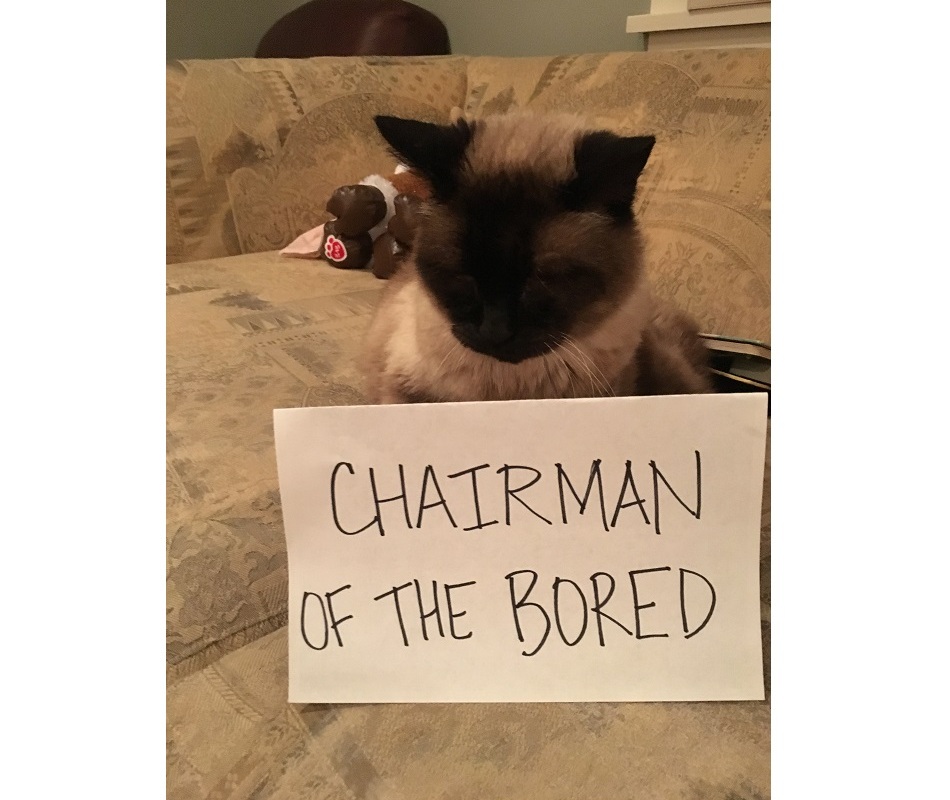
One of their favorite protagonists is Simon the Bad Cat. He was a character with a capital “C” – I adopted him from a neighbor when she moved. He proceeded to get into all sorts of trouble breaking into other people’s houses, picking on my dogs, and getting into cat fights. He lived a full life of 19 years and left behind a treasure trove of stories.
Telling these stories has made me think of the hypothesis that are a limited number of plot lines for our stories. I’ve heard this theory in several different ways from nine to twelve archetypal stories. But drawing from overview on Wikipedia of the work of Christopher Booker, The Seven Basic Plots: Why We Tell Stories here they are:
- Overcoming the monster
- Rags to riches
- The quest
- Voyage and return
- Comedy
- Tragedy
- Rebirth
Can I fit the Simon stories into these categories? Here are our favorite bad cat stories:
Rebirth: Simon the cat got a claw stuck in between his shoulder blades while fighting another cat. It abscessed and made him so sick that I had to take him to the vet so they can drain the wound. Simon died on the operating table and they had to use kitty CPR to bring him back. Did the hero return home transformed as a wiser cat? Well, he did mend his fighting ways so that we never had to drain an abscess again.
Comedy: Five doors down was a neighbor named Steve who hated Simon because he was always getting into his stuff and messing it up. But it was a love/hate relationship because he noticed how smart Simon was as well. One day when Steve was showing some new tenants around the shared laundry room, he told them they must never leave the outside door open because there’s a bad cat that would get in. They pointed to a shelf right about Steve’s shoulder and asked, “Like that cat there?” and Steve turned around to see Simon smugly listening to his speech.
Voyage and return: Simon the cat had a habit of breaking into houses and garages that he subsequently couldn’t get out of until someone opened a door. So I was used to him occasionally being gone for a night or two. But when he went missing for twelve days, I did all I could to find him: putting up posters, walking round the neighborhood calling for him, calling the pet shelter. Finally, I accepted that he was gone forever and gave away his food. On day 13, Simon nonchalantly walked up to the back door and demanded to be let in.
Overcoming the monster: I met Simon when I had a 150 pound dog, a gentle mastiff named Samantha. When we’d go out for a walk in the morning, Simon would hide in a bush, then jump out and smack Samantha on the rear. Then having “overcome the monster” (or at least scaring her half to death), he’d proceed to join us for our 12 block walk through the neighborhood.
Telling these stories to my children, I wonder if it is just a silly ritual. But I believe it helps them at a deeper level to make meaning out of their lives and days. Maybe one day when they are struggling with a monster or experiencing the rebirth and renewal that sometimes comes with life, there will be a niggling of a Simon story that reminds them they aren’t alone on their journey.
Perhaps it’ll even help them understand my story of the quest and how that led me to have them as a single parent. Even if it just creates a basis for loving stories, I believe it will help them to live fuller and more imaginative lives.
Don’t you still love a good story?


 Surprised By Joy