Keeping it Light

The human race has one really effective weapon, and that is laughter.” – Mark Twain

As I was walking through the kitchen during a break from work yesterday, I overheard this conversation between my nanny and my 5-year-old:

Nanny: “Would you like some carrots with your lunch?”

Kid: “Yuck”

Nanny: “I think you said that wrong. It’s pronounced ‘Yum’ as in short for scr-yum-deli-i-tious.”

All: <giggling>

She is a master of making my kids laugh – and getting them to do things. It’s such an effective tool but one I found hard to deploy at times. Like the other day when my 5-year-old daughter was screaming like crazy because she’d put popcorn up her nose. I managed to get her calm enough so that she could lie down on the floor, plug the other nostril and I blew into her mouth. It must have looked so fun because my toddler lay down next to her to wait his turn. I thought we were dealing with a kernel, turns out that it was a small popped piece of corn and whether it came out the nostril or worked its way into the throat, it’s still unclear but either way it was fine.

I was telling this story to my friend Katie later and we were crying we were laughing so hard. How long has it been since we were of the age that putting things up our nose seemed like a good idea? And how the scene must have looked – the kids lined up on the floor plugging their nostrils!

I think it takes practice to deploy humor in the moment. It’s one of the reason that I like the Parenting is Funny blog which is delightful – and inspirational! I also read a tip in a magazine the other day that suggested to smile when giving directions because it changes how you say things. Like you can’t say, “Oh good grief, I have asked you a 100 times to put your shoes away” with a smile on your face so it’s apt to come out more like “Oh, is the middle of the kitchen where we are keeping our shoes now? Let me add mine to the pile!”

I left the kitchen before I found out whether or not my daughter ate the carrots with her lunch. I wasn’t worried either way because I knew that the nanny was winning this war of sound bites!

Worth Waiting For

I’ve learned that I can totally remain humble, but I don’t have to cut off the wonderful things I deserve.” – Alicia Keys

I splurged and bought a new mascara the other day. The old one went on too slowly. Ironically, I’m willing to spend money on something to enhance my appearance but it has to be quick because I don’t want to be the person others have to wait for.  

But then I spend so much of my days waiting. I wait for kids to finish taking in a scene before they want to walk on or waiting for kids to finish eating each methodical bite. Or because my daughter is learning to roller skate and my son is learning to ride his balance bike, I wait for kids every step of the way as we go around the block because neither has learned the power of coasting and are slower than if they were walking. At work, I wait for files to be transferred and to get replies on emails. I wait for packages to arrive and in lines for lunch.

Yesterday I was sitting outside eating lunch on a bench and watching a guy with a Bernese Mountain Dog. They were coming towards me but the dog paused to sniff, consider and then pee on every tree and interesting thing on the sidewalk. The guy patiently stood through each interlude, his perfectly relaxed expression and the slack in the leash indicating he thought the dog was worth waiting for.

It made me think of my perennial urge to rush myself. Of all the times I’ve been on a mountain climb hustling to get my boots, coats and shoes on so no one has to wait for me. Or the focused scan of the menu I do at the coffee shop so I’m always ready when it’s my turn to order. Perhaps I need to take a page from that dog’s playbook, learn to take my time with my routine and start to believe that I am someone worth waiting for.

Kiss the Pain Goodbye

Have a heart that never hardens, a temper that never tires, and a touch that never hurts.” – Charles Dickens

We’ve had a seemingly unending string of clear, sunny days here in Seattle so I trundled my kids off to the park yesterday morning. My toddler was on his strider bike, my 1st grader on her bike and I was pushing the stroller in case of any breakdowns, mechanical or otherwise. Because my son is new at the strider bike it took us so long to make it to the park four blocks away that the first thing we did when we arrived is to have snacks. We found a perfectly shady bench on this perfectly sunny morning and I started to unzip the cooler bag. My daughter, wanting to be the first to crack open the bread sticks with cheese dip, pushed off to run around the bikes, slipped and fell, crying out as she hit the ground.

I wasn’t very sympathetic. The thoughts that crossed my mind were that she was being careless and greedy to have the first go at the snacks and this might have been the fourth fall already on a Monday morning, fortunately none of them serious enough to even warrant a mark. But I knew that adding hurt feelings to a hurt knee wasn’t going to help so I didn’t say anything and bundled her up and gave it a kiss.

That’s when the grace of the moment dropped in. I had a split second of understanding that the cry and the wanting to be first was not really from the fall but from holding it together as her brother celebrated his second birthday and got all the presents. And that my reaction was from being tired from hosting the second birthday party the night before so that my impatience and judgment were the side effects of pretending that I wasn’t.

I have no idea why humans are such complicated creatures so that what seems to be happening rarely is. But I suspect it is so that we are lured to look deeper. It brings to mind the Buddhist tonglen meditation where you breathe in the pain of those around you and breathe out relief. I find that even when I don’t yet know the true cry of the hurt, it still works. I’m starting to think that maybe that’s why mamas have kissed skinned knees for generations upon generations – so they have a moment to breathe out relief and keep their mouths shut. I found that it works because things are as rarely as perfectly sunny as they seem.

Life at the Lake

When the power of love overcomes the love of power, the world will know peace.” – Jimi Hendrix

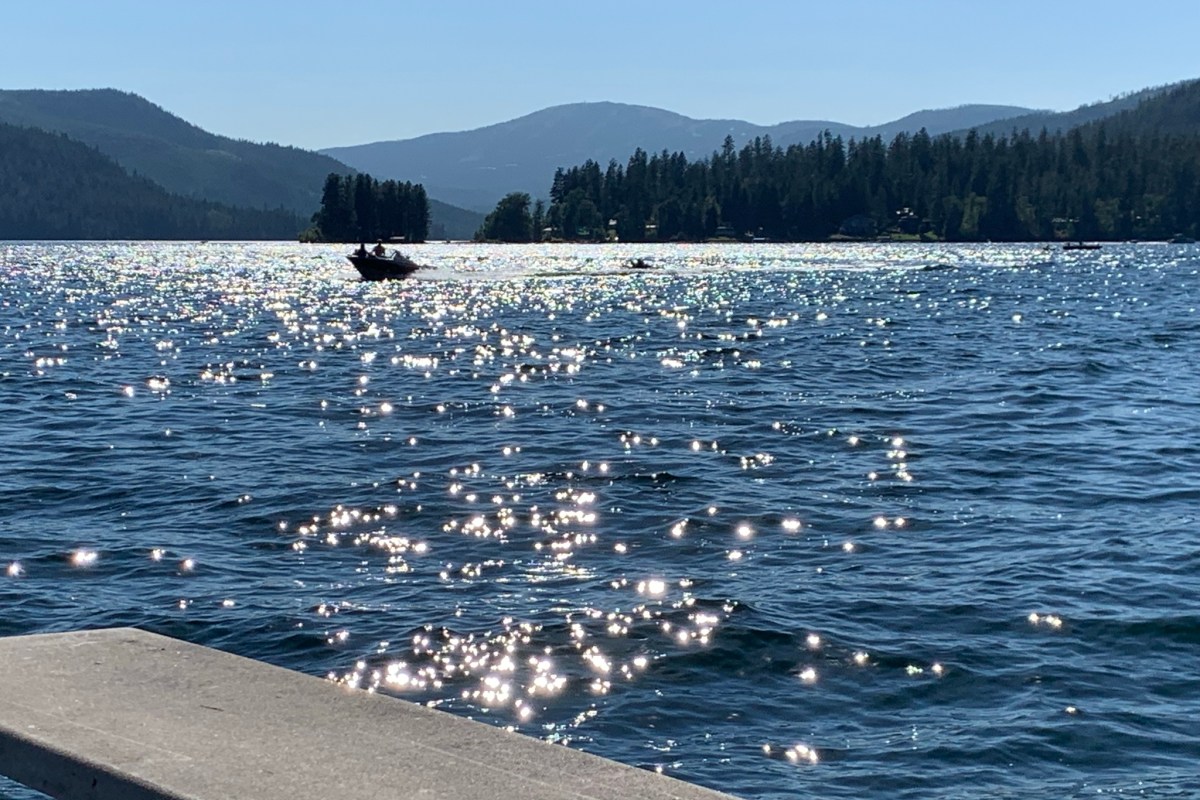
Going to the lake as a kid and going to the lake with your kids are two different things. I’ve been lucky enough to do both with a family I’ve known since I was 7 years-old. Their lake place has been for all these years the perfect place for kids to adventure, swim, inner tube, find treasure in its many forms until like my son did the other night, you can’t even keep your eyes open to read books and just want to dive into bed.

What is most remarkable to me was the way this family has made their lake place work. The parents bought it in 1973. They come back every summer as do their three daughters in my generation and their families for as much time as they can. I’m invited too as an honorary member of the family because I lived with them my senior year in high school when my dad took a sr. pastor job at a church on the other side of the state. They have created a compound where everyone can chip in according to their strengths and politely ignore each other’s weaknesses and all the members of the family have chosen to so because life at the lake is more fun together.

Every morning we were at the lake I got up early and went down to sit by the water. The scene holds so much more than just liquid. It’s all the dreams I had of what life would be when I came there as a kid. It’s all the hope that I have for my kids to grow up in a beautiful world. And it’s all the love of the family that owns this lake place – both in caring for it and for each other. It’s also a hub of connection for grandparents, parents, cousins, sisters and extended family like me. Just sitting by a body of water that holds so much filled me with the peace that comes with all that perspective and love.

I get so choked up thinking of the lifetime of friendship I have had with my dear friend and her family. And now her incredibly delightful and talented daughters have both nannied for my kids so the love spreads through the generations. Nothing better than going to the lake with my kids and discovering that it holds them as it did me, in complete awe of the way one place can hold delight for so many!

An Act of Bravery

It always seems impossible until it is done.” – Nelson Mandela

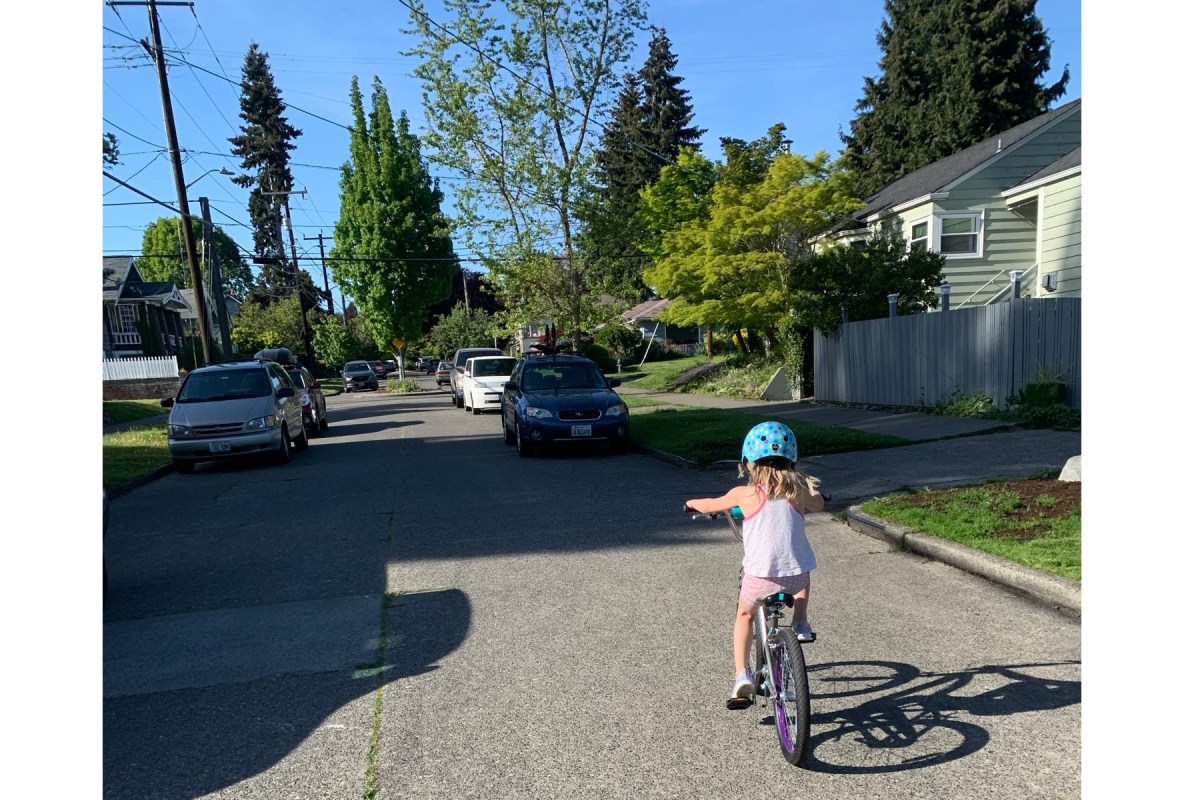
This week my almost 6-year-old daughter suggested that we ride bikes to pick up my son from daycare. So last night we did. It’s only about a mile by bike and she is pretty steady on hers. We left with me in the lead and she was following. The first part is slightly downhill in a bike lane on a busy road and we had only gone five blocks when all of a sudden I couldn’t see her behind me. The road curved so I could only see a half block back but she didn’t appear. Then a man in a truck said, “Are you looking for a little girl? She’s way back there.” My heart in my chest, I looped around to find my daughter a block back, up on the sidewalk silently crying. A car had come, maybe turning, it spooked her so she got herself up on the curb and resolved to wait for me.

The rest of the way we changed it so she led and I followed talking to her the whole way. When we got to the daycare, it’s a half a block of steep uphill so I told her we’d walk our bikes but she said, “I can do it, Mama!” and zoomed herself up the hill and right up to the door. On the way back, she started to relax into it so much that she was weaving between cones on a closed section of road.

The whole adventure reminded me how brave we are to live a day of this life. We get up, set our sights on something we are going to do, people we are going to meet or work we have to finish. Then we start on our way only to discover we are scared or confused and need a minute. Whether we continue or not probably depends on the voice we hear in our head. And for us adults, this all happens without us thinking about it. We have forgotten how brave it is to meet the day because we’ve done it so many times before. But it doesn’t make us any less brave.

Watching my daughter when we finally pulled back into the garage with my toddler, she stripped off her top and cheered. She did it! She transported her 45 pounds of bones, muscle and grit a mile and back on a two-wheeled vehicle and moved through time, space and her own doubts. By God, she did it. May we all remember to cheer our bravery as we tackle things today.

Five Pieces of Writing that Inspired Me: #5 Showing Up

“He is able who thinks he is able.” – Buddha

Sometimes the problems of the world seem overwhelming so that I feel anything that I could do wouldn’t matter in the slightest. Then I think of this story that Frederick Buechner told as part of a sermon he delivered and I remember that we just have to show up.

The Best She Could

In any case, it was this same George Shinn who in 1880, five years before being asked to start your church here in Chestnut Hill, was summoned once at midnight to the bedside of an old woman who lived by herself without much in the way of either money or friends and was dying. She managed to convey that she wanted some other woman to come stay with her for such time as she might have left, so George Shinn and the old woman’s doctor struck out in the darkness to try to dig up one for her. It sounds like a parable the way it is told, and I am inclined to believe that if someone were ever to tell the story of your lives and mine, they also would sound more like parables than we ordinarily suppose. They knocked at doors and threw pebbles at second story windows. One woman said she couldn’t come because she had children. Another said she simply wouldn’t know what to do, what to be, in a crisis like that. Another was suspicious of two men prowling around at that hour of night and wouldn’t even talk to them. But finally, as the memoir of Dr. Shinn puts it in the prose of another age, “The rapped at the humble door of an Irish woman, the mother of a brood of children. She put her head out of the window, ‘Who’s there?’ she said ‘and what can you want at this time of night?’ They tell her the situation. Her warm, Irish heart cannot resist. ‘Will you come’ ‘Sure and I’ll come, and I’ll do the best I can.’ “And she did come,” the accounts ends, “She did the best she could.”

Listening to Your Life – Frederick Buechner

Five Pieces of Writing that Inspired Me: #4 Leaving a Mark

“Be kind whenever possible. It is always possible.” – Dalai Lama

This meditation from Mark Nepo made me think about how we touch the people we are closest to all the time. Even if not physically, our presence and especially our words shape everyone around us. Whenever I think of how we rub off on each other with every encounter, this meditation is what I’ve come to see in my head.

The Work of Love

“Love courses through everything.” – Fakhruddin Iraqi

I recently learned that the first form of pencil was a ball of lead. Having discovered the lead, if scratched, would leave markings, people then wrestled with chunks of the stuff in an attempt to write. Through the work of many, the chunks were eventually shaped into a useable form that could fit the hand. The discovery became a tool.

I am humbled to confess after a lifetime of relationship that love is no different. Be it a lover or a friend or a family member, the discovery of closeness appears in our life like a ball of lead – something that if wrestled with, will leave markings by which we can understand each other.

But this is only the beginning. The work of love is to shape the stuff of relationship into a tool that fits our hands. With each hardship faced, with each illusion confronted, with each trespass looked at and owned, another piece of the chunk is whittled and love begins to become a sacred tool.

When truth is held in compassionate hands, the sharpness of love becomes clear and not hurtful.

The Book of Awakening by Mark Nepo

Five Pieces of Writing that Inspired Me: #3 Prayer

Ask and it will be given to you; search, and you will find; knock and the door will be opened for you.” – Jesus

Prayer is so personal that I got to the middle of my life either reciting a memorized prayer or confusing it with the jumble of thoughts, aches and needs in my head. But when I read this description from Frederick Buechner about a conference he once went to led by a faith healer, I all at once saw the possibility of miracle and longing in prayer.

I saw Agnes Sandford first in the dingy front hall of the building where the talks were to take place, and after no more than a few minutes’ conversation with her, I felt as sure as you can ever be in such matters that if there was such a thing as the Real Article in her line of work [faith healing], then that was what she was. She was rather short and on the plump side with a breezy matter-of-factness about her which was the last thing I would have expected. She had far more the air of a college dean or a successful businesswoman than of a Mary Baker Eddy or Madame Blavatsky. She seemed completely without pretensions, yet just as completely confident that she knew what she was talking about. She had an earthy sense of humor.

The most vivid image she presented was of Jesus standing in church services all over Christendom with his hands tied behind his back and unable to do any mighty works there because the ministers who led the services either didn’t expect him to do them or didn’t dare ask him to do them for fear that he wouldn’t or couldn’t and that their own faith or the faith of their congregations would be threatened as the result. I recognized immediately my kinship with those ministers. A great deal of public prayer seemed to me a matter of giving God something that he neither needed nor, as far as I could imagine, much wanted. In private I prayed a good deal but for the most part it was a very blurred, haphazard kind of business – much of it blubbering, as Dr. Muilenburg had said his was, but never expecting much back by way of an answer, never believing very strongly that anyone was listening to me or even, at time, that there was anyone to listen at all.

That was the whole point, Agnes Sanford said. You had to expect. You had to believe. As in Jesus’ parables of the Importunate Friend and the Unjust Judge, you had to keep at it. It took work. It took practice, was in that sense not unlike the Buddhist Eightfold Path. More than anything else, it took faith. It was faith that unbound the hands of Jesus so that through your prayers his power could flow and miracles could happen, healing could happen, because where faith was, healing was too, she said, and there was no power on earth that could prevent it. Inside us all, she said, there was a voice of doubt and disbelief which sought to drown out our prayers even as we were praying them, but we were to pray down that voice for all we were worth because it was simply the product in us of old hurts, griefs, failures, of all that the world had done to try to destroy our faith. More even than our bodies, she said, it was these hurtful memories that needed healing. For God, all time is one, and we were to invite Jesus into our past as into a house that has been locked up for years – to open windows and doors for us so that light and life could enter as last, to sweep out the debris of decades and drive back the shadows. The healing of memories was like the forgiveness of sins, she said. Prayer was like a game, a little ridiculous the way she described it, but we were to play it anyway – praying for the healing both of ourselves and others – because Jesus told us to and because most of the other games we played were more ridiculous still and not half so useful.

We were to believe in spite of not believing. That was what faith was all about, she told us. “Lord, I believe; help thou mine unbelief,” said the father of the sick son (Mark 9:24), and though it wasn’t much, Jesus considered it enough. The boy was healed. Fairy-tale prayers, she called them. Why not? Jesus prayers. The language of the prayer didn’t matter, and her own language couldn’t have been plainer or her prayers more unliterary and down-to-earth. Only the faith mattered. All of this she spoke with nothing wild-eyed or dramatic about her, but clearly, wittily, less like a mystic than like the president of a rather impressive club. And you could also get too much praying, too much religion, she said and when that happened, the thing to do was just to put it aside for a while as she did and do something else. She herself read murder mysteries, she said. Or just collapsed.

Listening to Your Life by Frederick Buechner

Five Pieces of Writing that Inspired Me: #1 Faith

When you surrender to the wind, you can ride it.” – Toni Morrison

My toddler has become the master of two word sentences. “Mama lap” is one of his most frequent and it works to make me sit down, pull him onto my lap and read him a book.

I’ve been thinking a lot about words lately. How we string them together and hope they convey what we want and need and maybe if we are lucky, even reach another person where they live. So I’ve gone back through my most beloved meditations and books and picked out five of the most inspirational things I’ve read that have pulled me up, changed my perspective and touched my heart.

Learning How to Float

When we stop stuggling,
we float.

When first learning how to swim, I didn’t trust the deep. No matter how many assuring voices I heard from shore, I strained and flapped to keep my chin above the surface. It exhausted me, and only when exhausted did I relax enough to immerse myself to the point that I could feel the cradle of the deep keep me afloat.

I’ve come to understand that this is the struggle we all replay between doubt and faith. When thrust into any situation over our head, our reflex is to fight with all our might the terrible feeling that we are sinking. Yet the more we resist, the more we feel our own weight and wear ourselves out.

At times like this, I remember learning to float. Mysteriously, it required letting almost all of me rest below the surface before the deep would hold me up. It seems to me, almost forty years later, that the practice of finding our faith is very much like that – we need to rest enough of ourselves below the surface of things until we find ourselves upheld.

This is very hard to do. But the essence of trust is believing you will be held up if you let go. And though we can practice relaxing our fear and meeting the deep, there is no real way to prepare for letting go other than to just let go.

Once immersed, once below the surface, it is not by chance that things slow down, go clear, feel weightless. Perhaps faith is nothing more than taking the risk to rest below the surface.

The Book of Awakening by Mark Nepo

Climbing the Walls

For you created my inmost being; you knit me together in my mother’s womb. I praise you because I am fearfully and wonderfully made.” – Psalm 139:13-14

My daughter went to rock climbing camp this week. And absolutely loved it. The camp is at the gym I’ve climbed at for 20 years so I love being there, climbing there and just walking in there. [Aside: When we walked into the gym the other day, they were playing “I Melt With You” by Modern English and it gave me a moment of realizing how much I missed being places where music was playing in the background. ] I wonder about the unconscious effect that climbing had on her when she was in utero. I only did a bit of low bouldering when I was pregnant, nothing I could fall off or had to wear a harness for even though I was told it was perfectly safe. I stopped when I was about 6 months along and my center of gravity changed but we climbed “together” up until then.

I think of the story of Alison Hargreaves, a British mountain climber. She had an impressive mountain climbing career including summitting Everest on her own and without supplemental oxygen. She solo climbed six great north faces of the Alps including climbing the north face of the Eiger while she was six months pregnant with her first child, Tom. But she received a lot of criticism for climbing when she had young children at home. Much was made of the fact that male climbers aren’t subjected that kind of scrutiny if they are parents. Alison died when a bad storm came in while she was descending from the summit of K2 in 1995. She was 33 years old and her kids were 6 years old and 4 years old.

Her son, Tom Ballard went on to become an acclaimed climber in his own right. He died in bad weather conditions while climbing Nanga Parbat in Pakistan in 2019 at aged 30.

That story fills me with deep grief and also sends me running to do my work. I don’t presume to know anything about the Hargreaves/Ballards other than what I’ve read and I’m not adding judgment to their tragedy but I know things are passed down organically in families. In my family, that was a deep sense of faith and a complete avoidance of conflict. In utero I was hearing my mama’s prayers and daddy’s sermons from within and though it’s taken me a long time to find my own deep sense of faith, I am so grateful for that. The people pleasing/conflict avoidance part has been passed down to me as part of my work.

I love that my daughter loves rock climbing. I’m hoping that climbing together, all the hours I spent meditating and knowing she was a miracle continue to influence her from her time in utero. For all the things I don’t want to pass along, I’m grateful that I’m old enough to be aware of them and mindful enough to be working on them.