Showing Up and Telling Stories

I do not understand the mystery of grace — only that it meets us where we are and does not leave us where it found us.” – Anne Lamott

One of the books I read in my morning meditation time is Listening to Your Life by author and pastor Frederick Buechner. My mom and I were talking about it a little while back. She mentioned that some find his writing to not be doctrinal enough. Funny because I read him and find at times that I think he’s too doctrinal.  

When I was trying to understand how my view of faith differed from that of my dad (and mom) as I was writing my book Finding My Father’s Faith, I read Dr. M. Scott Peck’s book Further Along the Road Less Traveled. In it he describes four stages of faith.

The first stage, chaotic/antisocial, he reserves for people with anti-social tendencies; his second stage is formal/institutional in which faith is governed by an outside body, typically the church.

Dr. Peck calls stage three people “skeptic/individual.” Often stage three people are children of stage two people who have been raised with the values of the church but fall away from the formality and governance of it.

He then describes these stage-three people as usually scientific, truth-seeking people who often begin to see patterns in the big picture that tie them back to the beliefs of their parents and when they do, they transition to stage four, mystical/communal, “people who have seen a kind of cohesion beneath the surface of things.”

Those stages rang true to me and I found comfort in the classification of it all. Regardless of the theory behind it, I suspect that whatever our ideologies are, it’s a narrow band trying to find others who are align exactly or even fairly closely.

But I think we transcend that when we tell our stories. For me, authentic storytelling skips the doctrinal distinctions in the head and goes right to the heart. Here’s one that recently struck me, Buechner tells the story of a friend showing up when Buechner’s daughter was sick. He’d come from 800 miles away without any advance notice and then spent a couple of nights hanging out.

Buechner said they didn’t do anything particularly religious – went for walks, smoked some pipes, took a drive. “I believe that for a little time we both of us touched the hem of Christ’s garment, were both of us, for a little time anyway, healed.

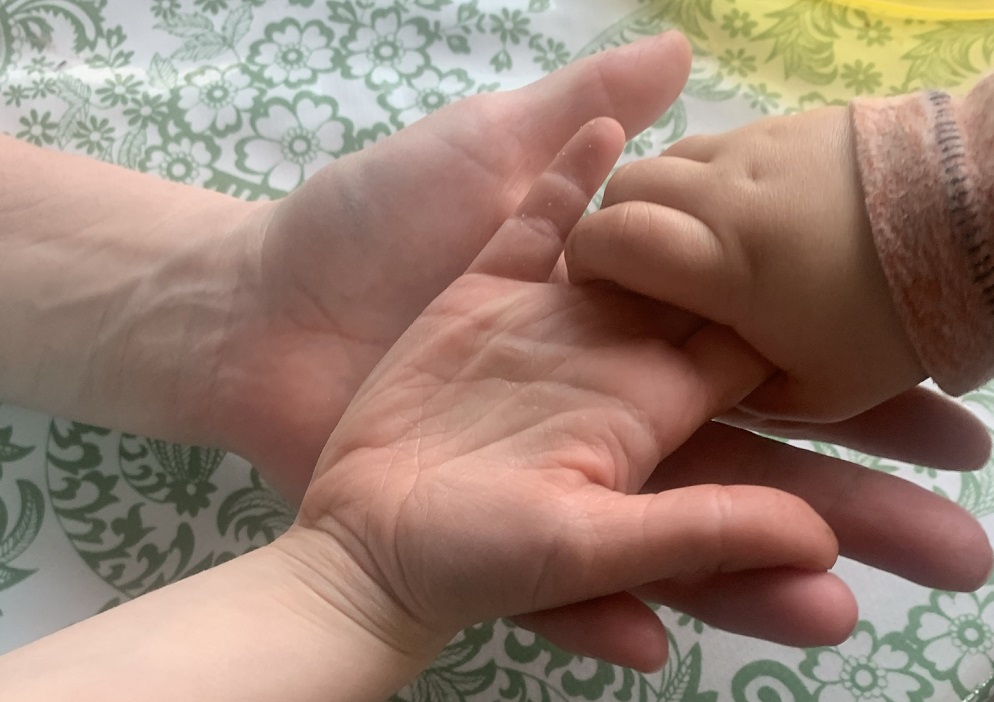
For me, it hits me right in what I believe is sacred: showing up, being present, holding space for one another to tell our stories.


Other People’s Writing: Dec 27th

I’m dedicating this dark and quiet week before the New Year begins to posting writing that has inspired me this year. To start, this meditation by Frederick Buechner who was a writer before he became an ordained Presbyterian pastor.

In addition to being an author and pastor, he has taught both religion and writing at a number of places including Exeter, a boarding school in New Hampshire. One of his students was John Irving, who included a quote of Frederick Buechner in A Prayer for Owen Meany. His meditations often strike me often as a writing lesson as much as spiritual guidance.

Silence of the Holy Place

What deadens us most to God’s presence within us, I think, is the inner dialogue that we are continuously engaged in with ourselves, the endless chatter of human thought. I suspect that there is nothing more crucial to true spiritual comfort, as the huge monk in cloth of gold put it, than being able from time to time to stop that chatter including the chatter of spoken prayer. If we choose to seek the silence of the holy place, or to open ourselves to its seeking, I think there is no surer way than by keeping silent.

God knows I am no good at it, but I keep trying, and once or twice I have been lucky, graced. I have been conscious but not conscious of anything, not even of myself. I have been surrounded by the whiteness of snow. I have heard a stillness that encloses all sounds stilled the way whiteness encloses all colors stilled, the way wordlessness encloses all words stilled. I have sensed the presence of a presence. I have felt a promise promised.

I like to believe that once or twice, at times like those, I have bumbled my way into at least the outermost suburbs of the Truth that can never be told but only come upon, that can never be proved by only lived for and loved.

Listening to Your Life by Frederick Buechner

(featured photo from Pexels)

Five Pieces of Writing that Inspired Me: #5 Showing Up

“He is able who thinks he is able.” – Buddha

Sometimes the problems of the world seem overwhelming so that I feel anything that I could do wouldn’t matter in the slightest. Then I think of this story that Frederick Buechner told as part of a sermon he delivered and I remember that we just have to show up.

The Best She Could

In any case, it was this same George Shinn who in 1880, five years before being asked to start your church here in Chestnut Hill, was summoned once at midnight to the bedside of an old woman who lived by herself without much in the way of either money or friends and was dying. She managed to convey that she wanted some other woman to come stay with her for such time as she might have left, so George Shinn and the old woman’s doctor struck out in the darkness to try to dig up one for her. It sounds like a parable the way it is told, and I am inclined to believe that if someone were ever to tell the story of your lives and mine, they also would sound more like parables than we ordinarily suppose. They knocked at doors and threw pebbles at second story windows. One woman said she couldn’t come because she had children. Another said she simply wouldn’t know what to do, what to be, in a crisis like that. Another was suspicious of two men prowling around at that hour of night and wouldn’t even talk to them. But finally, as the memoir of Dr. Shinn puts it in the prose of another age, “The rapped at the humble door of an Irish woman, the mother of a brood of children. She put her head out of the window, ‘Who’s there?’ she said ‘and what can you want at this time of night?’ They tell her the situation. Her warm, Irish heart cannot resist. ‘Will you come’ ‘Sure and I’ll come, and I’ll do the best I can.’ “And she did come,” the accounts ends, “She did the best she could.”

Listening to Your Life – Frederick Buechner

Five Pieces of Writing that Inspired Me: #3 Prayer

Ask and it will be given to you; search, and you will find; knock and the door will be opened for you.” – Jesus

Prayer is so personal that I got to the middle of my life either reciting a memorized prayer or confusing it with the jumble of thoughts, aches and needs in my head. But when I read this description from Frederick Buechner about a conference he once went to led by a faith healer, I all at once saw the possibility of miracle and longing in prayer.

I saw Agnes Sandford first in the dingy front hall of the building where the talks were to take place, and after no more than a few minutes’ conversation with her, I felt as sure as you can ever be in such matters that if there was such a thing as the Real Article in her line of work [faith healing], then that was what she was. She was rather short and on the plump side with a breezy matter-of-factness about her which was the last thing I would have expected. She had far more the air of a college dean or a successful businesswoman than of a Mary Baker Eddy or Madame Blavatsky. She seemed completely without pretensions, yet just as completely confident that she knew what she was talking about. She had an earthy sense of humor.

The most vivid image she presented was of Jesus standing in church services all over Christendom with his hands tied behind his back and unable to do any mighty works there because the ministers who led the services either didn’t expect him to do them or didn’t dare ask him to do them for fear that he wouldn’t or couldn’t and that their own faith or the faith of their congregations would be threatened as the result. I recognized immediately my kinship with those ministers. A great deal of public prayer seemed to me a matter of giving God something that he neither needed nor, as far as I could imagine, much wanted. In private I prayed a good deal but for the most part it was a very blurred, haphazard kind of business – much of it blubbering, as Dr. Muilenburg had said his was, but never expecting much back by way of an answer, never believing very strongly that anyone was listening to me or even, at time, that there was anyone to listen at all.

That was the whole point, Agnes Sanford said. You had to expect. You had to believe. As in Jesus’ parables of the Importunate Friend and the Unjust Judge, you had to keep at it. It took work. It took practice, was in that sense not unlike the Buddhist Eightfold Path. More than anything else, it took faith. It was faith that unbound the hands of Jesus so that through your prayers his power could flow and miracles could happen, healing could happen, because where faith was, healing was too, she said, and there was no power on earth that could prevent it. Inside us all, she said, there was a voice of doubt and disbelief which sought to drown out our prayers even as we were praying them, but we were to pray down that voice for all we were worth because it was simply the product in us of old hurts, griefs, failures, of all that the world had done to try to destroy our faith. More even than our bodies, she said, it was these hurtful memories that needed healing. For God, all time is one, and we were to invite Jesus into our past as into a house that has been locked up for years – to open windows and doors for us so that light and life could enter as last, to sweep out the debris of decades and drive back the shadows. The healing of memories was like the forgiveness of sins, she said. Prayer was like a game, a little ridiculous the way she described it, but we were to play it anyway – praying for the healing both of ourselves and others – because Jesus told us to and because most of the other games we played were more ridiculous still and not half so useful.

We were to believe in spite of not believing. That was what faith was all about, she told us. “Lord, I believe; help thou mine unbelief,” said the father of the sick son (Mark 9:24), and though it wasn’t much, Jesus considered it enough. The boy was healed. Fairy-tale prayers, she called them. Why not? Jesus prayers. The language of the prayer didn’t matter, and her own language couldn’t have been plainer or her prayers more unliterary and down-to-earth. Only the faith mattered. All of this she spoke with nothing wild-eyed or dramatic about her, but clearly, wittily, less like a mystic than like the president of a rather impressive club. And you could also get too much praying, too much religion, she said and when that happened, the thing to do was just to put it aside for a while as she did and do something else. She herself read murder mysteries, she said. Or just collapsed.

Listening to Your Life by Frederick Buechner