
How to Share Nutrition and Safety

Nutrition requires nuance—it’s personal.” – Meg Bowman

I’ve spent a good portion of my career helping people organize data in a way so that it is informative. For example, saving a file to a misnamed or wrong location makes the content practically useless. So much of passing on wisdom and goodness requires it to be in context to be helpful.

I’m thinking of context and the bigger picture because of the How to Share podcast episode this week. Vicki Atkinson and I were fortunate enough to talk with licensed nutritionist and author, Meg Bowman. Meg’s newly released book, This is Your Body on Trauma, is incredible because in it she maps out how nutrition is interconnected with our other systems. Meg explains why safety is the most important nutrient for our nervous systems.

She also explains why how you eat is as important as what you eat. She encourages us to understand that we need two strategies at play. One is the toolkit we build for when we are underwater and the second is for when we are feeling safe.

Meg tells us about how to meet our bodies with more care and less judgment. We talk about how this extends to others, especially in the food season we are in with the holidays ahead.

This is a fantastic conversation about a topic that affects us all. As Meg says, when we are well-nourished, it lessens our experience of stress at any age. This is an episode that will leave you feeling satisfied. We know you’ll love it!

Takeaways

  • Safety is the most important nutrient for the nervous system.
  • How you eat is as important as what you eat.
  • Understanding your nervous system state can influence food choices.
  • Food is often a reflection of deeper needs for safety and stability.
  • Nutrition requires a personal and nuanced approach.
  • Creating a safe eating environment can enhance well-being.
  • The FIGS protocol helps assess individual nutritional needs.
  • Storytelling and emotional state impact our relationship with food.
  • Removing shame from food choices is crucial for healing.
  • Self-care should focus on centering individual needs.

Here’s Meg’s compelling elevator pitch for This Is Your Body on Trauma:

Here are some ways you can watch this fascinating and informative episode:

Links for this episode:

How to Share Nutrition and Safety transcript

This Is Your Body on Trauma — Meg Bowman

This Is Your Body on Trauma | Book by Meg Bowman | Official Publisher Page | Simon & Schuster

This Is Your Body on Trauma on Barnes & Noble and Amazon

Nutrition Hive

From the Hosts:

Vicki’s book about resilience and love: Surviving Sue; Blog: https://victoriaponders.com/

My book about my beloved father: Finding My Father’s Faith

(featured photo from Pexels)
The Unified Theory of Breathing

Sometimes it’s okay if the only thing you remembered to do today was breathe.” – unknown

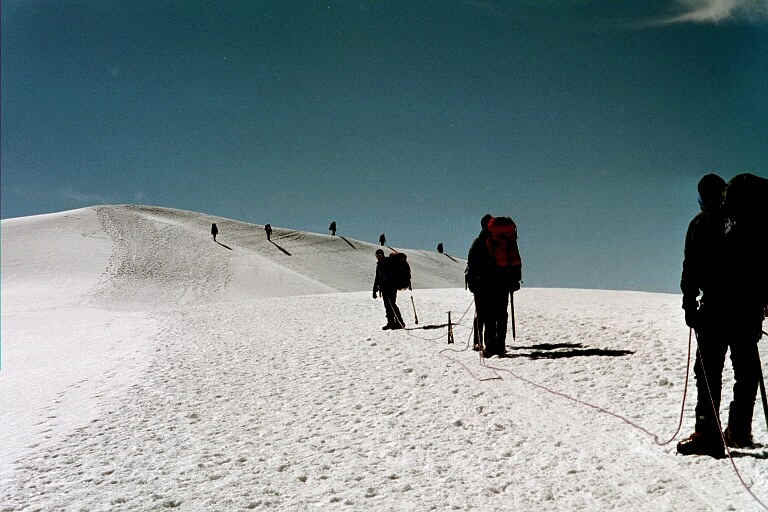
Long before I learned to meditate, I learned a breath practice while climbing mountains. Guides call it the “pressure breath” and it involves intentionally breathing out all the air in our lungs so we can take a full inhale. They explained the reason for the pressure breath because we often don’t exhale all the air in the lungs. Without consciously thinking about it, our bodies can short cut a full exhalation. But at altitude, the air is thinner so we need a full inhale.

If you climb to Camp Muir on at 10,000 feet on Mt. Rainier where I learned the practice, you will be taking in only 2/3 the amount of oxygen that you would at sea-level. For every 1,000 feet you climb, it decreases by about 3% so at 18,200 feet (my personal high point), it is about 45% of the oxygen at sea-level.

So the pressure breath helps to counter the effect of thinner air by forcing a breath that takes in more air and therefore more oxygen. (For anyone who is interested, the reason there’s less oxygen is that there’s less pressure at altitude so that there are fewer oxygen molecules in the same volume of air).

Twenty years after I learned to pressure breathe on a mountain, I’ve stumbled on the science of other reasons to fully exhale. It feels like a moment of a unified theory – understanding why something I learned in one context is so healthy for many other reasons.

The book Breath: The New Science of a Lost Art by James Nestor inspires me to try to reform everything about my breathing. It is so well-written, researched and told through personal anecdotes and other living examples. In his chapter, Exhale, he cites two studies that set out to measure lung capacity as it related to longevity. They both found “that the greatest indicator of life span wasn’t genetics, diet, or the amount of daily exercise, as many had suspected. It was lung capacity.”

And the way to bigger lung capacity? James Nestor provides a couple of different examples but they involve extending the range of the diaphragm (the typical adult only uses about 10% of the range) by practicing exhaling fully. In short, Nestor said we need to take as few breaths as we can to sustain our metabolic rate. Take fewer breaths and get more oxygen and then the diaphragm moves up and down and helps with circulation and moving lymph fluid. The perfect breath is 5-6 breaths/minute. Cite the Ava Maria or Om Mani Padme Om or the Sa Ta Ma Na (Kundalini Chant) – they all take about the same amount of time of 5.5 seconds.

Adding to this science, I also recently heard Ten Percent Happier podcast with therapist and author, Deb Dana. In it she explained poly-vagal theory and the three states for our nervous system:  ventral state which is calm and regulated, sympathetic which the fight or flight response and dorsal which is when the nervous system has been so overstimulated that it shuts down. And while all three states work to help us navigate particular circumstances of life. But when we need to get back to a ventral or calm and regulated space, there are breathing practices that help us do so. A longer exhale is one of them.

So there it is – the unified theory of the full exhale. I thought living at sea-level made pressure breathing unnecessary for me. Until I realized that I’ve been doing it in different ways all this time – the exasperated sigh, the mindful breath practices and everything in-between that continues to teach me that the things we learn in one context continue to be effective everywhere else, helping me climb all sorts of metaphorical mountains one step at a time.

(featured photo is mine of a team of climbers leaving the summit of Mt. Ixtacchuatl, 17,600 feet)