Upward Spiral

Your ability to understand and empathize with others depends mightily on having a steady diet of positivity resonance, as do your potentials for wisdom, spirituality, and health.” – Barbara Frederickson

On Monday Mr D and I went to the grocery store between dropping Miss O at school and dropping him at daycare. While its our special time together, I also love to get some things done and he gets to ride in an elevator so it works all around.

As we were going down a narrow aisle, two boys from the nearby middle school or high school passed us and I thought to myself about the one with the blue hair, “What a nice kid!” I can’t put my finger on exactly what he did – maybe it was the way he looked me in the eye or moved his body to the side to give us extra space, but it was a noticeably pleasant passing.

Two mornings later, we were in the same store, doing the same thing when we came upon the blue haired boy in the self-checkout section. He was asking the attendant to cancel his purchase because he didn’t have enough money. But before they could do that, I stepped across and put my credit card in to pay for the $5.46 purchase. I suspect the boy had $5 and hadn’t counted on the extra cost.

He thanked me, no big deal, and went on his way with his friend. It was a beautiful full circle moment.

It feels like several things I’ve read and listened to lately have had a similar theme – the science of how much our bodies respond to the people around us, even strangers at the grocery store. That our nervous systems are wired to pick up signals from others. The more that we focus our minds on what our bodies already know which is that even our small connections to other people matter, we create an upward spiral of positive resonance.

With the mask mandate lifted in my state so that I see more faces, it feels like I’ve been noticing so many delightful moments of connections with strangers. It’s amazing how wonderful they feel when I make an effort to notice them, recount them to others or remember them and feel the little zing again.

So I pass this one on to you and the upward spiral of positive resonances continues!

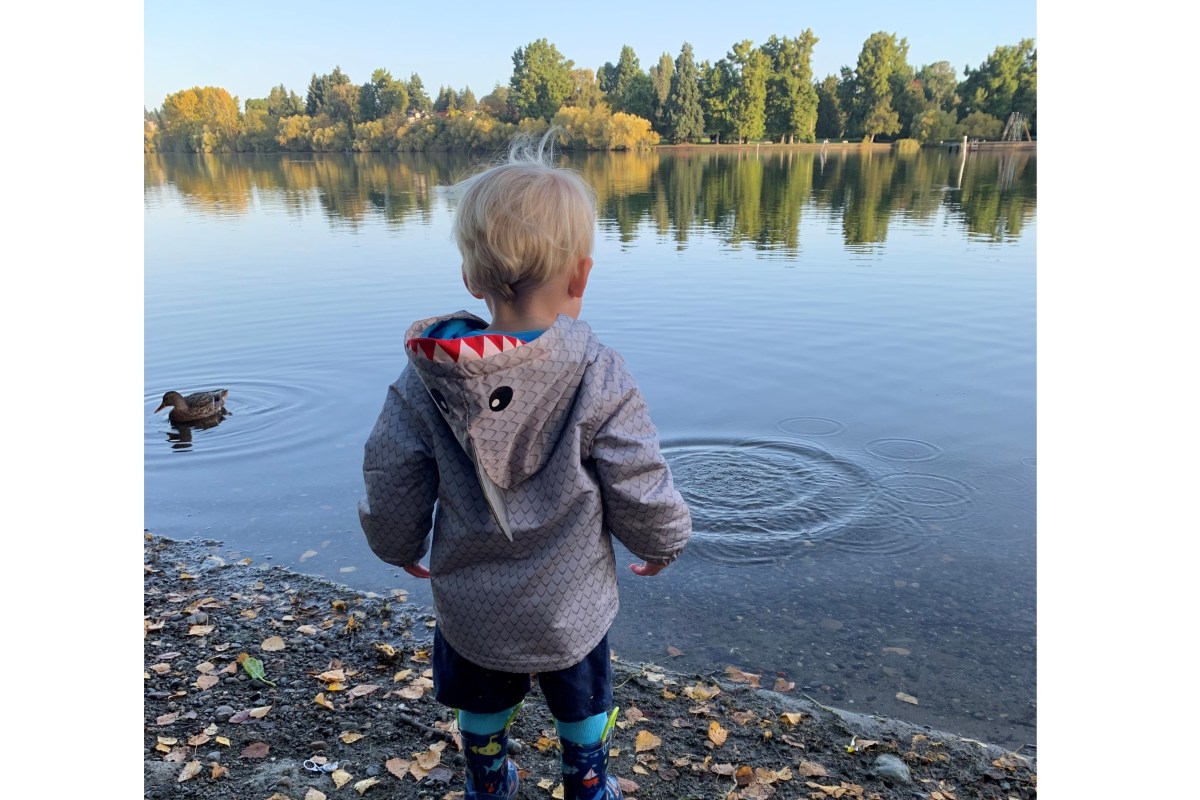
(featured photo is of Mr D in a grocery store at a younger age)
Gifts

The two most important days in your life are the day you are born and the day you find out why.” – Mark Twain

I saw the results of a new survey that found that kids will watch a favorite movie on average 244 times. It certainly feels like we are well on our way to that number of viewings of Encanto, one of the more recent releases from Disney.

Which isn’t an entirely bad thing. In addition to some great songs written by Lin Manuel Miranda, it’s a really compelling story about a family of gifted individuals. It’s centered around the story told by the grandmother that they were granted a miracle which has manifested through a candle that always burns, a magical house where they all live and gifts that they are bestowed at a certain age.

One makes food that heals other people, another controls the weather, one sister is incredibly strong while the other sister is beautiful and graceful. But the character at the center of the movie didn’t get a gift when it was her turn.

My 6-year-old daughter and I have had great conversations about the premise of the movie. About what it would feel like to be the one person in a family of talented people who didn’t get her gift. And also does everyone in this world get a gift? Finally, a lot of discussion of that fact that most gifts are given over time, not at a ceremony at age 7, 8 or 9 but through a lot of hard work and practice.

But it certainly has made me think of my own gifts – whether I can recognize them or even value them. I grew up with a natural talent for mathematics. I never thought you had to take notes in a math class because it always just made sense to me and that carried all the way through all the upper level math I took in college.

However I’m not all that crazy about that gift now. 😊 What’s the practical application of that? In fact, it wasn’t until Swinged Cat admitted that he sees in rhyme that I remembered my gift. Sure it was the foundation of my computer consulting career that now supports my family but it isn’t all that warm and sexy.

But I have some traits that I’ve worked hard to develop. I’m a good and empathetic listener. Hiking, mountain climbing and parenting have helped me build a lot of endurance. Meditation has given me the gift of patience and calm. Do any of those things I cultivated count?

Here’s where I came down on this when talking to my daughter:

Some gifts are natural and others you will have to work harder for.

We will only see the gifts we’ve been given if we have the confidence to look and the commitment to grow them.

Whatever they are, when we use those gifts on behalf of other people it makes them matter the most.

When we can combine our gifts with the direction of the Divine, it magnifies their usefulness many times over.

My mathematical brain tells me we have about 111 more times watching Encanto to go. There are many more thought-provoking themes like being authentic, family pressure and being more than your gift so for anyone who hasn’t seen it, I’d say it’s worth watching at least once.

How about you? What are your gifts?

(featured photo from Pexels)

Feeling Things All the Way Through

What is not expressed is depressed.” – Mark Nepo

The other day our honorary grandfather said to my two-year-old son who was fussing over a circumstance in his life, “Boys don’t cry.” While it was said totally genially and as a way to humor a child out of a mood, there was no doubt that he believed that mantra.

Which brought to mind the quote included at the top of this post by author Mark Nepo, “What is not expressed is depressed.” The longer that I live, the more that I have come to understand that emotions wreak havoc if not allowed to be felt all the way through. It brought to mind a comment I heard from emotions researcher Barbara Frederickson that all emotions have utility – sadness and depression when experienced in the typical course of life often tell us to stop doing what we are doing.

It’s when we refuse letting them tell us things that we shut down our own ability to listen to our inner source of knowledge. I spent years doing that when I was married because numbing my emotions was easier than taking the steps to acknowledge that under the surface of my positivity that I was miserable.

I haven’t gotten much better at vocalizing my less enthusiastic emotions since then but I have gotten better at recognizing them. The other day I was really resistant to working on a particular client project and internally thought, “Wow, I can’t stand this project.” And that strong note which often doesn’t arise in me made me realize that the way this particular project is structured doesn’t work for me. Observing that, I could acknowledge I won’t do it this way again.

Watching my son with his honorary grandfather reminded me of a passage I read in Listening to Your Life by Frederick Buechner. In it he points out the similarities between old age and childhood – the body does not support everything you want to do so you learn to play, you aren’t at an age where you have to prove yourself and:

Very young children and very old children also seem to be in touch with something that the rest of the pack has lost track of. There is something bright and still about them at their best, like the sun before breakfast. Both the old and the young get scared sometimes about what lies ahead of them, and with good reason, but you can’t help feeling that whatever inner goldenness they’re in touch with will see them through in the end.

Listening to Your Life by Frederick Buechner

The great thing about toddlers is that there seems to be very little artifice to the emotions they share. In the course of learning to regulate them, they express what strikes them at the moment. Boys do cry as do girls, and then they move on. It’s like watching master class on authentic expression and I can’t help but be impressed and learn a little bit more every day.

Today

When you realize how perfect everything is, you will tilt your head back and laugh at the sky.” – Buddha

Potty training is really getting my goat. A month in and we mostly have successes but the failures are memorable! It’s unpredictable, impossible for me to control (which seems to be most of the battle) and creates a lot of laundry.

I catch myself thinking, “Pretty soon we are going to be through this and then life will be great.”

Which I think will be true. Especially if I remember how to savor today.

Because I think is how we wish our lives away and as a parent, how I could wish my kids’ childhood away. Waiting for the thing we don’t like to stop and THEN we’ll be good. Or waiting to lose 10 pounds, reach a milestone or be better at meditating – anything I reflexively put between myself and my experience.

Returning to today – we still laugh and learn every day, and I still love my kids to pieces every day. Yep, every time I leave, I just need to come back from my visit to the future and love today. And also I need to buy more laundry detergent.

Woof

You are never too old to set another goal or to dream a new dream.” C.S. Lewis

A couple of 82-year-olds that I know just got a puppy. Why is that so surprising?

Before I continue, let me dispense with the practicalities here. This couple has been married for 60 years, and are two of the most responsible and grounded people I know. They are the type of people who not only have a backup-plan but a backup-plan for the backup-plan. Also, they are surrounded by family that love them and will take the dog if the need arises.

With that said – why it surprising? As I know from training the puppies I’ve had in my life, a puppy is an investment. I think of my beloved golden retriever who passed away 5 years ago at almost 14-years old and I remember him as the amazing companion he was to me through my divorce and the start of my little family. But training him to be that companion took a lot of initial energy.

I think that we have a story that tells us that when we get to age X, we are supposed to stop investing. It might not be a conscious story but one that affects our choices nonetheless. We may or may not have adjusted that age upward based on the increasing longevity of humans but regardless, there is a time limit on when we are supposed to stop doing new things.

But, if we can be assured of the practicalities, why not get a puppy? At a time in life when one has a lot of free time, wouldn’t it be wonderful to have some young energy to keep you moving? And when your friends may be losing their hearing, isn’t there an upside to a companion that will listen to every word?

More than that, shouldn’t we be willing to keep trying as long as we are on this side of death’s door? It seems that we should at least consider whether the only thing stopping us is a story in our head that tells us there is an age where we shouldn’t love something new, try something different or take on a project just in case we won’t finish.

The couple that got the puppy are the parents of my very dear friend. When I was a senior in high school, my dad took a job in a church across the state and gave me a choice whether to move or not. This family took me in so I could finish out high school where I started. From me, their one-time wayward puppy to this new puppy, all I have to say is, “You’ve got a good home, Lady!”

(featured photo is my beloved dog, Biscuit)

Crossing the Chasm

Beautiful days do not come to you, you must walk towards them.” – Rumi

Yesterday was the first day that my daughter could be in school without a mask on. I found it to be a trepidatious experience. As a single, working parent, one of my biggest concerns is for school to be able to continue in-person. If I had to send my child in a full haz-mat suit, I would happily comply.

But broader than that, now that our state mask mandate has ended, is the question of whether I would continue to wear a mask when going into a store or resume activities like an in-person meditation class now that we seem to be transitioning to endemic mode from pandemic mode.

I’m not an epidemiologist so I don’t have an authoritative answer on mask wearing so I’m happy to follow their advice. But some of this return to normalcy feels like taking a big step to cross over the chasm.

Crossing over the chasm makes me think of some of the scariest things I’ve had to jump over or traverse when I was climbing mountains – like crevasses on Mt. Rainier. In most cases, I was lucky enough to have traversed them the first time going up the mountain in the dark. That way I couldn’t see the pit we were walking over on horizontal ladders with some plywood on them while wearing crampons our on boots which made the balance on top of metal spikes feel even more precarious. (See featured photo of my friend preparing to do this).

When I saw the full scale of what we had to do to cross back over in the light of day, that ladder was between me and the parking lot. That I had something to get back to was big motivation to conquer the fear and discomfort of crossing over.

Looking for the lure to other side of going back to pre-COVID practices and it reminds me of a Ten Percent Happier podcast that I heard with Professor Barbara Frederickson about positivity resonance. Our bodies and minds benefit greatly every time we experience a positive emotion in concert with another human. It could be as simple as a smile exchanged at the grocery store or being interested in the same topic with another person.

The more of these positive resonance interactions we have, the more we are buoyed by them and the benefits extend to our creativity, openness, willingness to get out of bed in the morning and on and on. Her two caveats for these to be possible – we have to feel safe and we have to be face-to-face. (She did say we can get somewhat of a boost on screen or over the phone but it’s harder).

There is a boy in my daughter’s class that she is particularly fond of. In Kindergarten, he was one of the two and a half boyfriends she’d told everyone about. (The half boyfriend talked too much to be a full one). Miss O was so excited yesterday to go to school to see his face which she has only really seen fully at his birthday party without a mask on. That in and of itself helped me get over my fear of this new phase of our public school lives.

May we all reap the benefits of more positive resonance.

Lantern Awareness

Above all, watch with glittering eyes the whole world around you because the greatest secrets are always hidden in the most unlikely places. Those who don’t believe in magic will never find it.” – Roald Dahl

This weekend I did something that I had never done before with my kids. Seattle has been pretty late to the game of mass transit for a big city. But in the last 5 years, we’ve built a pretty good light rail system that goes north-south in the city. From my neighborhood I can go to downtown Seattle and the airport. Which are places I rarely go these days so I’ve never ridden it.

My kids and I had a free Saturday morning so we got on the light rail system and rode it without any destination. We ended up getting off by the baseball stadium but without any game going on, there wasn’t much open around there so we hopped back on and rode one stop north to the international district. Then we wandered until we found a cute little independent coffee shop in which to have a donut and go to the bathroom.

Walking back to the light rail, we came across a motorcycle policeman who was putting out traffic signs for the soccer game later in the day. He offered to let my kids sit on his motorcycle which Miss O was delighted to do, and she got to turn on the flashing lights and honk the horn (it’s really loud).

It was like we were tourists in our own town. It was so fun and it illustrated something that Dr. Alison Gopnik, a cognitive psychologist from UC Berkley talks about. Spotlight awareness vs lantern awareness. If you imagine spotlight awareness, it’s a focused beam on whatever we are aiming to do. It’s the type of attention grown-ups use most of the time.

And lantern awareness is like a light held high in the dark that illuminates everything in a radius. It’s the child’s way of looking at the world and what makes them so darn hard to get out of the door in the morning – because they are looking at everything that might be interesting and not just their shoes and socks.

Mr. D is at a perfect stage for lantern awareness. He constantly asks, “What’s that?” because he’s heard a noise that he can’t identify. And I can’t hear it at all because there are so many noises around that I’ve filtered out because they aren’t important to what I’m doing.

But spending the morning wandering with no agenda, I was able to experience a couple of hours of lantern awareness. And it struck me that this is why traveling can be so good for us. When we get dropped into a new environment and pay attention to everything around, it refreshes all our senses. Or walking in the woods, floating in a sensory tank, or just following around a two-year-old.

For me, doing something I hadn’t ever done before with two kids in tow felt like an adventure. I didn’t know how the ticketing system work and though I had a general knowledge of where the light rail system went, I didn’t know exactly. It’s amazing how refreshing some uncertainty felt.

My two-year-old was totally delighted to have us join him in his element. As soon as we got back to where we started he said, “Do it again?”

The Flow of Life

Travel light, live light, spread the light, be the light.” – Yogi Bhajan

In 2014, I had worked up the nerve to have a child on my own. I’d chosen a fertility clinic, gone through all the screening and work-up process so by November 6th, I was sitting at my desk signing the last document I needed to begin the invitro fertilization process. I clearly remember that moment at my desk with my beloved dog at my feet thinking wondrously, “Life is about to change.”

Then the next day I got a call from my mom that my dad had died in a bicycling accident in Tucson. Sh!t! That wasn’t how life was supposed to change.

Seven years later I think through all the changes, big and small:

I have a beautiful baby girl.

My gorgeous dog dies.

My mom moves to be only 1.5 miles from me.

I miscarry a baby.

I get pregnant again and have a beautiful baby boy.

The pandemic happens.

My daughter turns 5 and goes to Kindergarten.

Kindergarten is virtual.

My son learns to walk.

And it goes on and on. Perhaps it’s because my kids change so quickly that’s making me learn to just enjoy the flow. One minute they have a habit that’s irritating me – like playing with water at the kitchen sink and getting it all over the floor and the next they’ve moved on and can now zip their own coats.

Yesterday I got a delightful message from someone I went to high school with offering me and my family free accommodations in Colorado for 4 nights in April. Yay – what a fun surprise. And it was also my dad’s birthday so he was close to my thoughts and I missed him.

The longer I go on, the more I realize that this is the flow of life – we go up and over some things and under others. It’s when I try to grab on to some branch to cling on and stay in one place that I suffer most. The more I work at my spiritual depth and faith, the easier it becomes to stay centered in the flow and live it all with openness and curiosity.

What a ride!

(featured photo from Pexels)

The Ripple Effect

I’ve learned that people will forget what you said, people will forget what you did, but people will never forget how you made them feel.” – Maya Angelou

My dad once made a comment that when he focused on a topic for a sermon, there was a noticeable effect on his life. If he was preaching about parenthood, he’d be a better parent for that week. Likewise about being a better husband, friend or citizen as he focused on those topics.

As I was writing my post for Pointless Overthinking this week, The Art of Apology, I found the same ripple effect in my life. Reading through Dr. Harriet Lerner’s book Why Won’t You Apologize gave me so many great talking points for how to sincerely apologize and it also reminded me of the practice of accepting apologies, especially from kids.

Two points that really resonated with me. The first was not to brush off an apology with a “it’s no problem” when someone, especially a child, has worked up the courage to offer one.

And the second was not to use an apology as a springboard to a lecture. Responding to an apology with something like “Well, I’m glad to hear you apologize for hitting your brother because we don’t do that in this family” is the best way to make kids regret ever offering one.

When we apologize, we help heal the wound however slight for someone else. When we accept an apology, we affirm the courage of someone else to voice their mistakes.

As Dr. Lerner says “We take turns at being the offender and the offended until our very last breath. It’s reassuring to know that we have the possibility to set things, right, or at least know that we have brought our best selves to the task at hand, however the other person responds.”

The other day my 6-year-old daughter was making sticker art for people in her life. One mermaid that she made lost an itty-bitty piece of her tail and my daughter said, “I’m going to give this one to Nana. Because even though I lost the sticker, she’s a great forgiver.”

Isn’t that a great way to be known?

Asset-Framing

A small degree of hope is sufficient to cause the birth of love.” – Stendal

My mom came over yesterday with a newspaper for me because she had an extra copy. It’s been a long time since I’ve beheld an entire printed newspaper. As much as I like the news, skimming the headlines about Ukranian refugees, discord in the state legislature, the approach of 6 million deaths worldwide from COVID reminded me of something I’d heard researcher Brené Brown say. She said her therapist once told her something like, “Brené, in the time we have together each week I can’t undo the damage you do to yourself listening to the news.”

It also reminded me of an On Being podcast I heard recently where Krista Tippett interviewed CEO and Visionary Trabien Shorters. Trabien has identified our need to redefine the way we look at the world. Instead of continuing our habit of seeing problems and defining people in need in terms of their problems, a worldview he calls deficit-framing, he calls us to practice asset-framing. As Krista said in the podcast, “it works with both cutting-edge understandings of the brain and an age-old understanding of the real-world power of the words we use, the stories we tell, the way we name things and people. “

And in Trabian’s own words, he says asset-framing is “It is defining people by their aspirations and contributions, before you get to their challenges. So whatever is going on in someone’s life, you don’t ignore it, but you don’t define them by the worst moment or the worst experience or the worst potential; none of that. You have to look past their faults, to see who they really are. 

And specific to the news, Trabian and Krista talked us through an example of how the news leads us to deficit frame, to see things and particularly marginalized communities by the problems. In the original lede of the story, there isn’t anything very hopeful:

“The Latinx community in the United States has always been, for the most part, on the bottom half on income, in the American society. The struggle to have access to health and mental care is part of the history; however, the COVID-19 pandemic has come to intensify the problems.”

But the revised lede that Trabian and his team helped write started like this:

“Since 2014, Latinx people have constituted the largest ethnic group in the nation’s largest state. They now represent 39 percent of the California population.” And then it goes on to talk about “in recent years Latinx residents have made advances in economic well-being measured by metrics like reduced poverty rates, growth in business ownership.” And then after a couple of sentences like that, people elected to school boards, local offices. “Despite this impressive social and economic progress, Latinx residents have lagged behind other Californians in achieving important goals like home ownership and income growth, and we can now add to that list the disproportionate harm visited on the community by the COVID-19 pandemic.”

Listening to that example, I realize how much how the news is presented matters to our perception. It also makes me appreciate this Word Press Community even more because as the war in Ukraine has ramped up, I’ve seen so many posts that highlight the hope of how to get through it like Jane Fritz did with her post on Robby Robin’s journey yesterday.

A couple of weeks ago my 6-year-old daughter look at the news on the tv and said, “The Queen is dead.” And I had her read the banner again which said, “The Queen has tested positive for Covid-19.” The news is important, but a lot of it is how we read it!

(featured photo from Pexels)