The Power of Friends

Friendship helps our souls grow.” Michel de Montaigne

I worked for a small, local computer consulting firm right after I graduated from college in the early 90’s. Nestled in the suburb right next to Microsoft, it was growing fast – doubling every year. Most of the new employees were my age and it was a fun working environment in which it was easy to make new friends.

So when I recently heard a Ten Percent Happier podcast with psychologist and professor at the University of Maryland, Dr. Marisa G. Franco who has recently written a book called Platonic quote the statistic that we typically have the most friends at age 25 when we are establishing our identity, it matched with my experience.

Dr. Franco had a lot of interesting stats about friendships these days like four times as many people report having no friends as compared to the early 90’s and 2012, the year of the introduction of the smart phone, correlates with a rise in loneliness. One of the interesting things she added about smart phones and social media is that when we use them to connect with people (aka comment and message) and not just lurk, they can be useful tools in supporting friendships.

She also talked about how friends help us grow. Alone, we have an instinct to be on the lookout for danger that can be calmed when we cultivate good connections:

“Healthy and quality connections and it can ground us and center us more, our souls grow because it gives us the space to figure out who we are because we’re not in that active state of threat anymore. Friendship, good quality friendship, good quality connection it regulates us, it helps us feel less activated all the time, less reactive all the time.”

Dr. Marisa G. Franco

I feel so blessed to be part of this blogging community where it has felt easy to create quality connections with other delightful, thoughtful, and interesting people. Establishing friendships with other parents in this phase of life of having young kids has felt much harder by contrast. Dr. Franco’s research on how attachment theory applies to friendships and making new friends is the topic of my Wise & Shine post for today: The Art and Science of Making New Friends

(featured photo from Pexels)

What To Do When We Stink

We are all human. Let’s start to prove it.” – unknown

There’s a famous set of mountain climbing twins from Seattle – Jim and Lou Whittaker. They are 94 years old now but back in the day, Jim founded the gear and outdoor company, REI (Recreational Equipment Inc.), and Lou founded RMI (Rainier Mountaineering Inc.), the guiding company that for many years was the only way you could do a guided climb on Mt. Rainier.

Jim and Lou both had sons who are also climbers. There’s a notable story about one of the sons – maybe Peter Whittaker. Could be Win Whittaker. Regardless, one of the sons was climbing on Everest and was with his climbing buddies up above the Khumbu icefall when he had to go to the bathroom.

Several minutes later, he still wasn’t back and his buddies started to worry and wonder. Finally he reappeared but looking a little soiled and worse for the wear. He was wearing the down suit most climbers wear above base camp – one piece, puffy and hooded – and when he pooped, it had, unbeknownst to him, landed in the hood. When he zipped himself up and flipped the hood back up. Well, ewww!

I was thinking of this story because my post on The Heart of the Matter today, Marketing, Mountaineering, and Making Meaning, is about telling stories – and making meaning of the stories we tell.

And the meaning of this one? Well, there are a lot of ways this can go so I’ll just say this. When you are trying to do something hard, it’s best to surround yourself with people with whom you can laugh at your s…

(featured photo from Pexels)
Our Capacity for Connection

Be a lamp or a lifeboat or a ladder.” – Rumi

Nicholas Christakis, sociologist from Yale, has this really hopeful view of humans based on our ability to interact and cooperate with others. He concedes that we can be violent, selfish, and tribal but in the long view of human history, which is what he studies, we have developed this beautiful social suite of capabilities. Here’s how he described this on the On Being podcast with Krista Tippett:

“And these capacities include, for instance, the fact that we love the people we’re having sex with. We form sentimental attachments to them. We are technically monogamous. We befriend each other. We form long-term, non-reproductive unions with other members of our species. This is exceedingly rare in the animal kingdom. We do it, certain other primates do it, elephants do it, certain cetacean species do it — we form friendships with unrelated people. It’s universal in human groups. We cooperate with each other, altruistically. We’re kind to strangers — again, to unrelated individuals. This is different than many other types of cooperation, which are also seen in other animal species, but often that cooperation is between genetically related individuals. We do it with genetically unrelated individuals. We teach each other things. People take this for granted, but it’s actually unbelievable.”

Nicholas Christakis on the On Being Podcast

When I get too focused on the news, and all the destructive and unkind things that make up those segments, I find it comforting to be reminded of Nicholas Christakis’ long view. It reminds me of the way that I can work in any given moment to make a difference.

(featured photo from Pexels)
The Give and Take Problem

Alone we go faster, together we go further.” – African Proverb

For my birthday six months ago, my brother and sister-in-law gave me a voucher for taking care of the kids for two nights. I haven’t used it yet because I’m saving it up. I’m not sure for what but it’ll be big. For example, if some great opportunity to spend the weekend with the love of my life (not yet found or looked for), I want to have that voucher in my pocket to use.

This uncovers what I think is a flaw in my default mode. I tend to think of relying on others as “using chits.” For a project a couple of years ago when I was replacing the tension coil on my garage door, my mom suggested that maybe I should get my brother to do it. And it was a good idea but I thought I’d give it a try first so I could use my “chits” for something that I couldn’t fix.

In this way, I’ve learned to be very self-reliant. And I value that. But I’ve also become increasingly hardened against needing others. I’ve forgotten that needing others isn’t a bad thing.

This is probably no surprise to anyone reading this. After all, this might be exactly how I came to choose to have children on my own. While on the practical level it was because I hadn’t found the right partner and time was running out, it’s probably healthy to admit that I have some work to do on being inter-dependent on others.

I’m thinking about this because of the gift giving that goes on this season. We have to be as good at receiving as giving. It reminds me of a great post that Todd Fulginiti wrote: Helping Others: Can You Dish It Out But Not Take It? He made the point that receiving with gratitude feels good. It doesn’t make us needy, it makes the other person feels like they’ve given something of value.

I know when I find the love of my life, I’ll need to drop that independent shield to be vulnerable. And I bet my brother and sister-in-law will be so thrilled that they’d happily take the kids whether or not I have a voucher.

(featured photo from Pexels)

(The quote for this post came from a post by my lovely Wise & Shine colleague Cristiana Branchini on her blog Appreciating the Differences)

Do You Think I’m Stupid?

A friend accepts us as we are yet helps us be what we should.” – unknown

My best friend in college and I used to debate whether or not it meant that someone thought we were stupid if they lied to us. In those days of black and white, I definitely thought it to be a sign they thought I was stupid. Of course, the thing I feared most was being thought of as a dumb blonde so I probably was inclined to the position.

Now in these days of seeing the shades of gray in everything (and not just my hair) 🙂 I tend not to take umbrage if someone isn’t truthful. It’s the topic of my Wise & Shine post this week: Telling the Truth

(featured photo from Pexels)

Thanksgiving Prep

Everyone is my teacher. Some I seek. Some I subconsciously attract. Often, I learn simply by observing others. Some may be completely unaware that I am learning from them, yet I bow deeply in gratitude.” – Eric Allen

In this week leading up to Thanksgiving, Miss O has taken on the extra job of cleaning all the art supplies and projects off the dining room table before our seven guests show up tomorrow. As I help her, it makes me think of all the Thanksgivings we’ve celebrated there – the years when my kids were tiny babies and we passed them around the table from person to person, the years that my nieces were young and we ended up doing exercise contests before and after dinner. Then there’s the year where it was the first holiday after my dad died and we felt his absence so powerfully.

But one of the most infamous Thanksgivings in this house was the one right after my husband and I separated and I invited him to dinner anyway. It’s the subject of my Wise & Shine post this week: Guess Who’s Coming to Dinner?

I hope you read it. But more than that, I hope if you are celebrating Thanksgiving this week, you feel my gratitude for you as part of this wonderful WordPress and blogging community. I’m grateful for you. Just to be clear, I hope you feel that gratitude even if you don’t celebrate Thanksgiving.

High Expectations

Things are always in transition. Nothing ever sums itself up the way we dream about.” – Pema Chodron

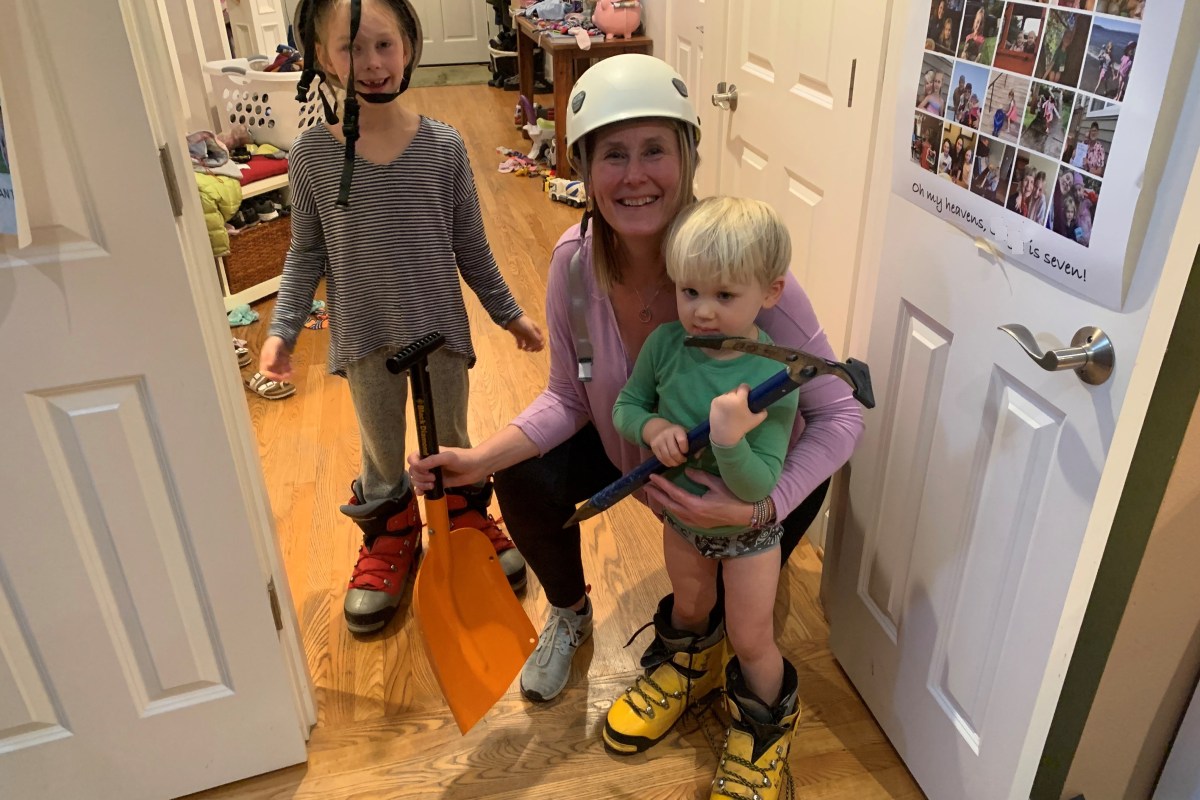
Yesterday I delivered a presentation on mountain climbing to Miss O’s class at school. My friend, Doug, who I’ve done a lot of my climbing adventures with, joined me and we had a talk filled with pictures, a lot of equipment, and stories. We also had the most enthusiastic audience of second graders (Natalie, Chaya, Belle and all the other teachers out there, hats off to you for years of being teachers to these young and energetic minds).

Miss O had been so excited all week. She’d told me and her teacher that she’d written “best week ever” over her mood meter assignment. And then when Doug came to stay the night before the presentation and we started packing our climbing gear, she extended that to this was going to make 2nd grade the best grade ever!

So it surprised me when Miss O had to step out of the room to collect herself in the middle of the presentation. Through teary eyes, she told me that she felt that Doug was bypassing her when he handed out all the equipment. Which might have been true to some degree since she’d handled all the stuff the night before.

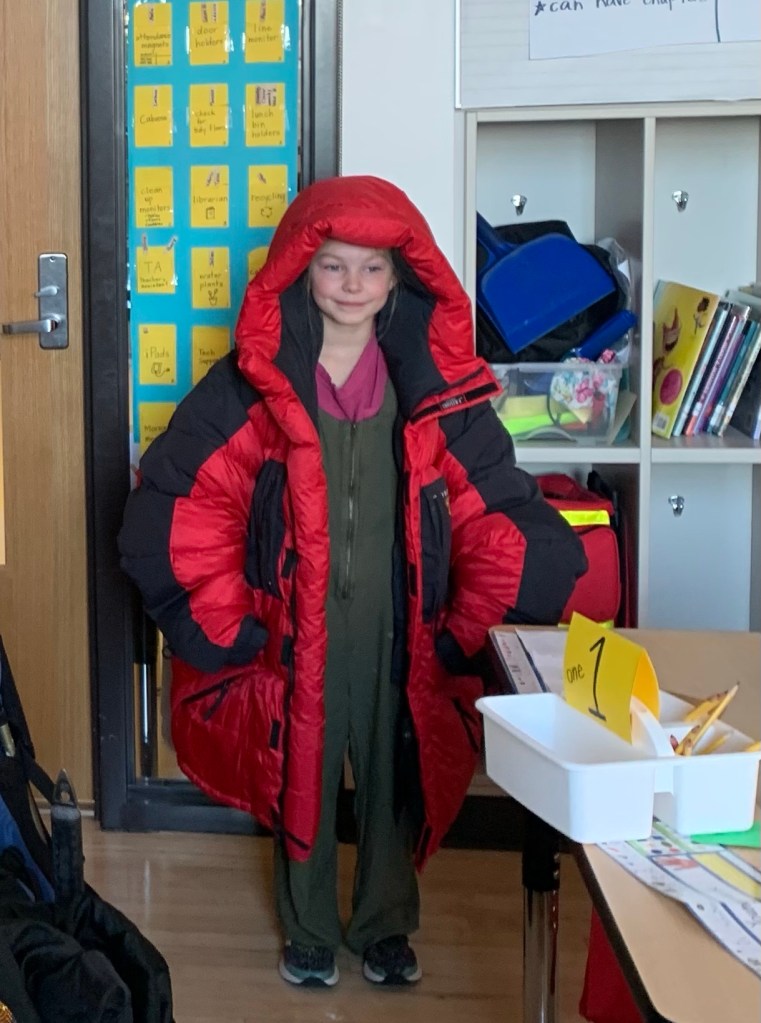
But I think it was more that her expectations were SO high. And I think she had a picture for a part that she’d play in the presentation or how it would reflect on her that didn’t quite match to reality. She modeled my climbing parka but mostly she was a participant.

This reminded me of every big occasion in my life – parties, birthdays, holidays, presentations – I’ve always felt a let down when they passed and I was still the same person afterwards. All that looking forward to something and then I’m still me with my same life when its done.

I’m projecting here because these aren’t the words Miss O used when we talked about it later but I think it’s a fairly common experience after we look forward to something. As Pema Chodron says in the quote for this post, “Nothing ever sums itself up the way we dream about.” There’s a mismatch between how we imagine in and how we experience it, and more than that, there’s an exhale after its done and before we find the next thing to look forward to.

At the end of the presentation, I told the story of friendship brownies. It was the climb that Doug and I were doing and we were climbing on Doug’s birthday. His wife asked him to carry some brownies to celebrate and he said “no” because he’s vigilant about only carrying what’s necessary. So she asked me and I said, “Sure” because we sometimes carry weight for our friends when they can’t or won’t do it themselves.

Miss O passed out the friendship brownies to the class and so it all ended well. Then she asked me to tell the story of the guy who was dancing with his toilet paper and I think those 2nd graders might have liked that one the most! Hard to tell whether ending with potty stories meant we ended on a high note or low one but the audience, including my delightful daughter, was pleased.

Lying or Telling the Truth?

We are here to live out loud.” – Balzac

I remember reading a parenting book that stated that by age 4, kids lied on average about once every 2 hours and by age 6, every 90 minutes. I’ve never seen a statistic about how much grown-ups lie, it’s probably not even measurable.

But I generally believe most things people, including my children, tell me. I think what is truly dangerous aren’t lies but instead when we forget to tell our truth. It’s the subject of my latest post on Pointless Overthinking: Conditions of Truth.

(featured photo from Pexels)

The Window

Friendship is unnecessary, like philosophy, like art…It has no survival value; rather it is one of those things that give value to survival.” – C.S. Lewis

The moving truck has come and gone and with one last sleepover, it’s official that my daughter’s first best friend and our neighbor has moved away. We ticked through the 90 days since the announcement, some went quickly, others with a happy unawareness and then finally the days when it hung over our choice of activities like a dark cloud. And then the time arrived.

This is the first friendship that I’ve seen through my kid’s eyes. It started when my daughter was 3-years-old, I’d put her on my shoulders so she could see across the fence to talk to the little girl next door. If they were really lucky, Miss O would be up on my shoulders and Miss Z who was then 4-years-old would be up on her daddy’s shoulders and they could talk face to face.

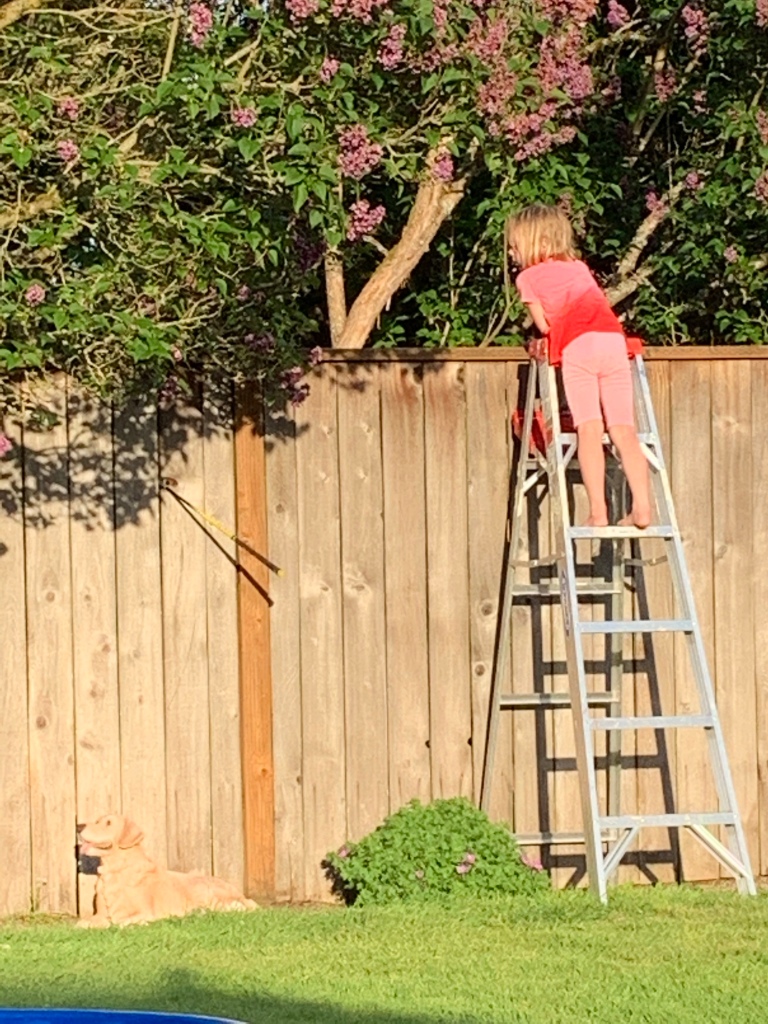
As Miss O got bigger and I got closer to my due date with her brother, I searched for a new solution as the shoulder carry got uncomfortable. Putting my 6 foot ladder next to the fence, Miss O would climb up to the highest step we agreed upon, Miss Z would climb her tree and they’d talk.

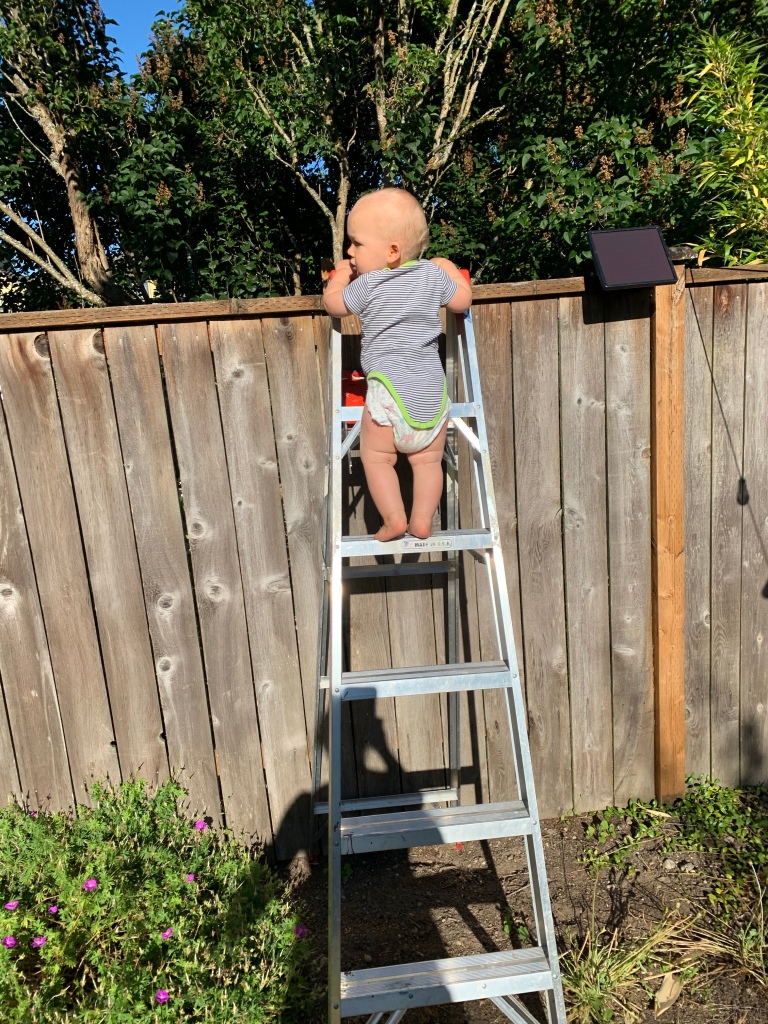
The ladder stayed next to the fence even as they became more and more comfortable with play dates and visiting each other’s yards. Then one day I found my 1-year-old son who’d just learned to walk atop the ladder looking as comfortable as can be.

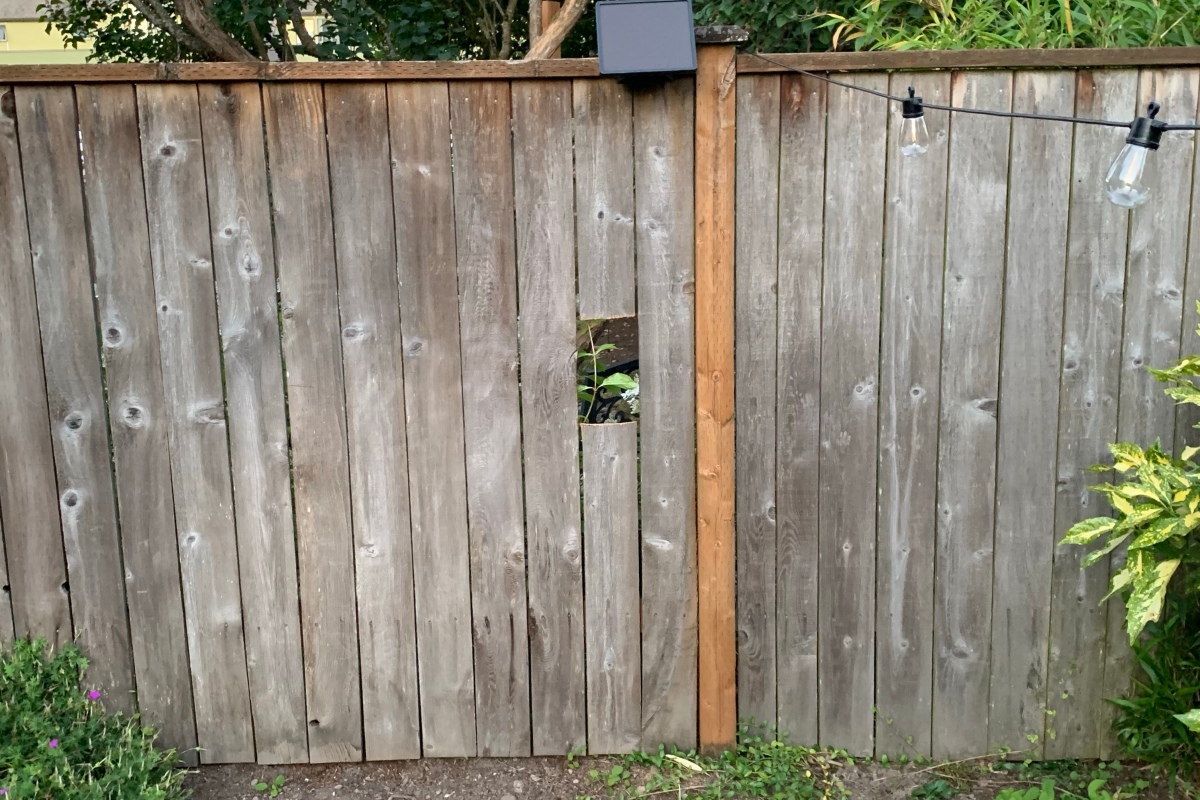
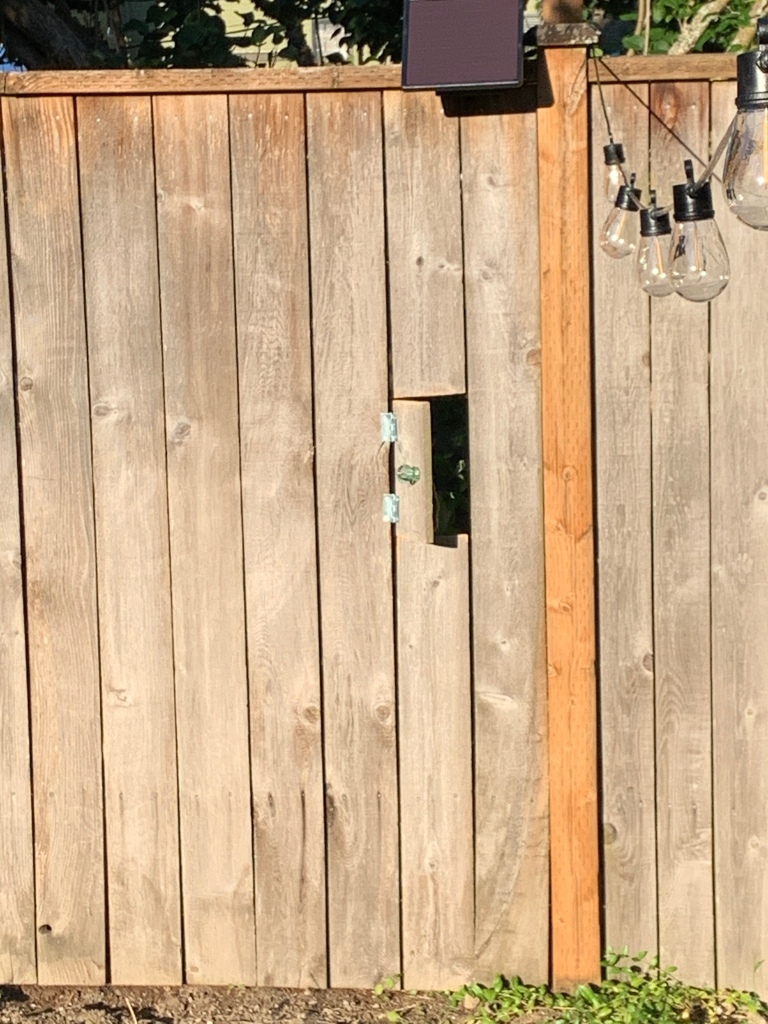
Of course I snapped a picture of it as I ran across the yard to get him down. That night after I got the kids in bed, with agreement from Miss Z’s family, I got out my dad’s Sawzall and cut a hole in the fence. After I attached two little hinges and a doorknob for each side, it become Miss O’s portal into the yard next door.

At the beginning of the pandemic, each girl would put a table on her side of the fence and they’d “eat together” talking through the window. They’ve passed markers, stuffies and shared deserts through the window in the fence. They’ve argued and then put apology notes through the portal. When we’ve accidentally stomped a rocket all the way into their yard, sometimes it comes back through the window in the fence.

This window has given me an insight about friendship. About the little windows in which we are visible to each other. The doorknobs we pull tight when the vulnerability is too much. The transparency with which we are willing to regard our own and other’s lives.

Now the window is closed. Sure, they’ll stay friends and figure out how to talk but this open-window era has ended. If fences make good neighbors, then little windows in them make good friends.

Both And

Well, you can’t make old friends.” – Zadie Smith

The other day, my mom asked my daughter how her best friend, the little girl that lives next door, was feeling about having to move 1200 miles away in a month. My daughter replied that her friend was excited. And then she added, “And that makes me feel sad.”

The conversation moved on so thankfully I didn’t have to follow-up on that one right away because I find that subject to be tricky. How to be happy for others even when it means a loss for ourselves.

Years ago when I had a corporate job, I hired a former colleague to come work for me. He worked for me for about a year and I had given him some great opportunities and he had done a fantastic job. Then he announced that he’d gotten a job at Microsoft and was quitting and I felt hurt and betrayed. I don’t think I could talk to him at length for a week. Down deep I was happy for him and eventually I got there so I was happier for him up top as well, but I definitely felt the challenge of summoning my best self.

Listening to a Ten Percent Happier podcast with cognitive scientist Maya Shankar gave me some insight on why it’s so hard. She said “We don’t like change because it almost definitionally involves a loss of identity and that’s very destabilizing. I think as humans we often attach ourselves to specific identities as we move through the world because it gives us a sense of security.”

When I use that lens to apply to my work situation with my colleague, I can spot the identity I was inhabiting easily. The man that I hired was also someone I had championed previously when he was switching into the field of technology from his career in the military. I had spent a lot of time and energy helping him adjust to the change of culture and expectations and hopefully imparted some technical knowledge as well. When he quit, it challenged my sense of being a mentor.

In return, he had done the job beautifully and when I got over myself, I could appreciate that. It required me to disconnect from that specific identity to a more general sense which is that I draw a lot of satisfaction from helping other people.

In a quiet moment at the end of the day my daughter made that comment about her friend, I asked her some more questions and we talked about how she could be both/and. That is to say both sad that her friend was leaving and hopeful that her friend has an exciting new adventure when she moves. And that neither takes away from the friendship they have today.

(featured photo from Pexels)