Finding What Hurts

I can bear any pain as long as it has meaning.” – Haruki Murakami

Last week, 3-year-old Mr. D had a lot of objections as we were getting into the car to go to preschool. “I don’t like those boots.” And “I don’t want to watch that on my tablet.” And “This isn’t the arm I put into the seat belt.” And “It’s too sunny.”

As I responded to each of the objections, I finally got the a-ha – it wasn’t any of these things that was really wrong. It was that he didn’t want to go to school. He’d been having fun with his sister at home and didn’t want to stop.

It adds to my long list of how confusing it is to be human. First, it’s hard to pinpoint exactly what is going on with us. In Atlas of the Heart, Brené Brown cites a survey that she gave out in workshops asking people to list the emotions that they could name as they were having them. “Over the course of five years, we collected these surveys from more than seven thousand people. The average number of emotions named across the surveys was three. The emotions were happy, sad and angry.” Which is stunning that out of our nuanced ranged of emotions, we have trouble identifying many of them at the time we are having them. But I can affirm that it’s almost always on reflection after the fact that I have any emotional literacy.

Secondly, as friends, parents, partners, we try to respond to what our loved ones tell us that is wrong. And as I found with Mr. D, it’s an exercise in frustration as we solve problems that aren’t the problem. It’s like putting a band-aid on the knee that isn’t scraped – a little waste of resources that don’t stop the bleeding.

And finally, because accurately describing the wound is the key to healing, we have to keep unpacking the distractions and figure out what’s wrong. Only then can we hold ourselves and each other for what really hurts and matters. Only then can we find the meaning behind what is happening and as the quote for this post from writer Haruki Murakami suggests, it helps us to bear the pain.

So I left the boots off, turned off the tablet, got him settled in his car seat and we just talked on the way to school. About how sometimes we don’t feel like doing what we have to do and sometimes we just have to look forward to the next thing and it’ll carry us through. He wasn’t convinced but he wasn’t fussing. Then we were able to move forward into the day.

Pass the Sniff Test

When people show you who they are, believe them.” – Maya Angelou

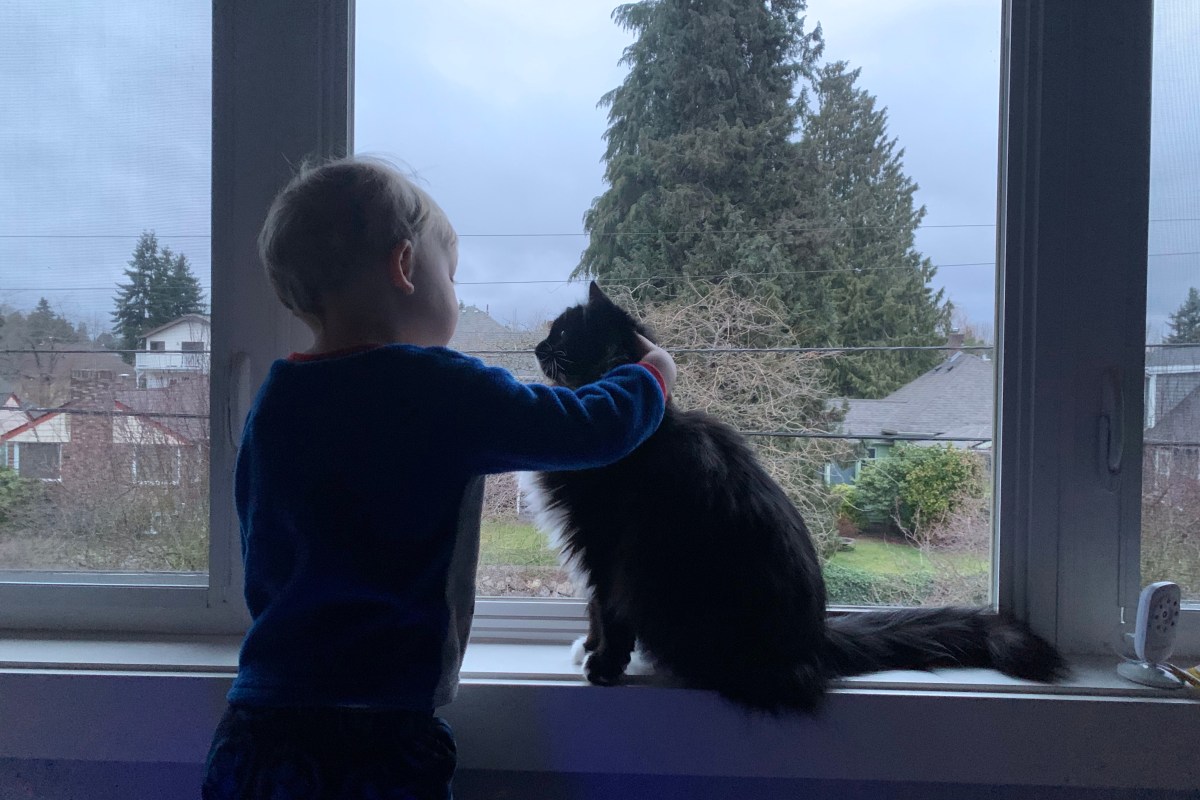
I started this morning by apologizing at 5:15am. The cat was wending her way around my ankles as I fed her and I accidentally stepped on her little soft paw. It caused her to yowl and me to let loose with a stream of apologies.

It brought back a memory of a guy that I went on a handful of dates with after I got divorced. One time we went snowshoeing but had to drive farther than planned to find snow. When we returned a couple of hours later than expected, I knelt at the front door, ruffled my beloved dog’s fur and apologized to him.

The date, standing behind me said, “Never apologize to an animal.” I turned thinking he must be joking but he wasn’t that funny – and he wasn’t joking.

If we can’t apologize to our animals that depend on us for their well-being, never lecture in return and love us anyway, who can we apologize too?

So I didn’t go out with the guy again. No apology necessary. 😊

Anyone else have an example of a sniff test?

(featured image is mine)

The Verdict

Integrity is the ability to listen to a place inside oneself that doesn’t change, even though the life that carries it may change.” – Rabbi Jonathan Omer-Man

Elizabeth Holmes, the tech entrepreneur and founder of Theranos whose trial has fascinated me for the last 4 months, was found guilty on 4 counts of fraud and conspiracy for lying to investors and not guilty on 4 counts. The jury was hung on 3 counts.

As I’ve written about this, I realized that it’s triggered my past experiences with money in tech and the question of how to develop character when people are throwing money at you. Listening to the jury’s decision, I don’t disagree with their findings but I’m flooded with empathy for her.

That’s probably because I can relate in a very small way to her experiences. The specific incident I’m thinking of was in 2007 when my two business partners (one of whom was my husband) and I were buying a small office building for our little company of 19 people to use as an office.

On the Friday before the closing, the bank realized that we all had one more paper to sign – a personal guarantee of the bank loan. It had to be received by Monday and my husband and the other business partner were traveling to a client’s wine tasting weekend. My husband wanted me to forge our other business partner’s signature on the document. The other business partner wanted me to forge his signature on the document. Neither of them wanted to be bothered to find a FedEx office from which to overnight the document in question.

I felt immense pressure to do it. The two of them, my husband and our other partner had made many business and personnel decisions that I didn’t agree with and I thought I could insulate myself by just focusing on my part of the business. But this was over the top. I held my ground after repeated phone calls and texts and refused to do it. There was no way I was going to forge a signature on a personal guarantee for a bank loan.

Two years later after the market crashed in 2008 and real estate prices dropped significantly so that the valuation of the building was under water, the bank put the loan into a special assets group. We had never missed a payment (and thankfully never did) but they felt the loan deserved additional scrutiny. Fortunately, my business partners had eventually figured out how to FedEx the personal guarantee document so it was on file.

By this time both the business partnership and my marriage had fallen apart so I was the one handling all the details. To say I was so relieved I didn’t forge that signature is an understatement. I shepherded the building through those tough years until we could sell it for what we bought it for and gratefully walked away.

But all this happened when I was almost 40-years-old and had almost 20 years of business experience both working for others and for myself. I doubted myself. I felt the huge pressure. I thought it would have been so much easier to not have the values I was raised with. I’m not so sure I would have been able to hold out to what these guys said was “business as usual” had I been in my 20’s like Elizabeth Holmes.

We don’t often get to see what we are able to avoid when we don’t do something risky. In this case I did and now with the trial of Elizabeth Holmes, I’m reminded of it again. If it doesn’t feel like the right thing to do, don’t do it. It doesn’t matter if someone tells you it’s how it’s done or makes it seem like how sophisticated and experienced people act. Thanks for raising me with these values, Mom and Dad!

(featured photo by Pexels)

Building Character

There are no shortcuts to any place worth going.” – Helen Keller

I’ve been listening to the Dropout podcast about the Elizabeth Holmes trial this fall. She is charged with 12 counts of felony fraud in regards to how she handled investor money and advertised to patients. As I said in a previous post, High-Tech Drama I’m fascinated because in my career, I’ve been privy to all the money in high-tech, mostly at Microsoft and how it influences innovation and character.

Elizabeth Holmes was 19-years-old when she dropped out of Stanford and started Theranos in 2003. She positioned the company as a start-up that would revolutionize the blood testing industry by being able to test for a wide array of factors on a portable testing device that only required a small volume of blood.

It never worked – or at least not reliably. For the short time that the devices were rolled out at Walgreens, they provided bad test results like telling a man he had indications of a prostate problem when he didn’t, another that he was HIV+ when he wasn’t, and an excited mother-to-be that she’d miscarried when in fact she hadn’t. Clearly, there were major problems with big consequences for people that received inaccurate results.

I think this trial could be titled “What happens when you give a 19-year-old college dropout 750 million dollars.” (To be fair, Elizabeth Holmes raised most of the 750 million dollars when she was in her 20’s.)  I don’t assume that you have to go to college to be a success but I would think that some training or apprenticeship on how to be a leader, manage finances and run a company, whether it be institutional learning or otherwise would be helpful.

It’s left me wondering if it’s possible to develop character when you are 19 years old and people are throwing money at you. It’s been intimated that she shows narcistic tendencies but I would think it would be more surprising if she didn’t, given that trajectory.

Elizabeth Holmes, who is now 37 years old, testified at the trial. I cannot begin to do justice to all of her testimony but she seem to do a beautiful job of representing herself. She said there’s many things she wished she did differently – like when she put logos from other companies on documents to make it seem like a 3rd party endorsement. But there’s a lot that she can’t remember, even when emails and texts are read to refresh her memory. Her defense has pointed the finger at a lot of other people: the investors should have done better due diligence, the lab director should have spoken up more loudly, her boyfriend and COO was controlling her and so on.

The thing that I heard Elizabeth say that resonated a great deal with me was something like “The investors weren’t interested in the details of what we could do today, they wanted the big vision of what we could do in five years.” Whatever her intent was in making false statements, that matches much of what I’ve seen in high-tech. People want the hear the magic of what might work one day and are willing to entertain a lot of smoke and mirrors in the process of trying to make something real.

If Elizabeth is found guilty (the jury is currently deliberating), there must be hundreds of CEO’s currently doing exactly the same thing. In no way am I justifying lying and deceitful practices but I’m affirming that venture capitalists of Silicon Valley aren’t usually trying to create truth-tellers and reinforce good values.

All I can say is that I’m really glad that no one handed me three-quarters of a billion dollars at age 19, or at any age. I’ve gained so much character by having to earn one dollar at a time.

(featured photo by Pexels)

Naming and Owning

“The limits of my language mean the limits of my world.” – Ludwig Wittgenstein

I was driving in the car with my kids talking about envy. It oftens happens in our house when one of my kids discovers a toy long hidden and invents a new game for it and the other wants to grab it from their hand. Or, as I heard a child quoted in a sermon once, “Why do I always want what’s in my brother hands?”

In response my 6-year-old daughter asked me, “How do you know so much about feelings?”

The voice in my head, a little exasperated, wanted to reply, “Because you two have so many of them! And guiding you through this minefield of growing up emotionally intelligent has required me to come to terms with my own emotions when I’d prefer just to always to say I’m happy and call it good!”

Dr. Brené Brown, research professor and author, lays the groundwork for mapping human emotions in her book Atlas of the Heart by describing a survey she used in workshops for five years. It asked people to list all the emotions that they could recognize and name as they were experiencing them. The average number named was three: happy, sad and angry.

Many of the parenting books I’ve read about raising resilient children have advised to help children move through situations that we have to help them name their emotions.

 In trying to help my kids identify what it is they are experiencing, I’ve found that I’ve had to name and face my own emotions. In this way I have learned so much nuance about my own interior, sometimes grudgingly, but always resulting in better color and effect in my own life.

So instead of voicing the snappy retort in my head, I responded from that place in my heart that holds love, warmth and awe for the lessons I continue to learn, “Because I love you two so very much that I want to help you grow up so healthy, inside and out.”

I Like It!

“It is not easy to find happiness in ourselves, and it is not possible to find it elsewhere.” – Agnes Repplier

When I first started actively blogging, I was pleasantly surprised by the email that WordPress sends out. “Person X liked your post. They thought A Randon Post Title was pretty awesome.” But then those “likes” get pretty addictive, don’t they? So I recently I started thinking about “likes.”

If you hit “like” on this post, is it because you like me and generally think I’m a good person or is it because what I’ve written means something to you? And if you don’t hit “like” is it because what I’ve written doesn’t resonate or because we don’t have a relationship?

I know it isn’t such a cut-and-dried thing but if I break it down that way, I think about feedback and what I give away. After all, “likes” are free for me to give, so why not like everything? If I do, do those likes count for much anymore?

I read a beautiful metaphor that Mark Nepo included in The Book of Awakening. He was talking about someone who was interviewing for a job and she said she wanted to jump and down and yell “pick me.” In this way he said we are all like puppies at the pound, dying for someone to pick us and take us home.

But when I perform for “likes,” it can cost me my authenticity. Not always – sometimes it pushes me to do a better job writing and communicating. But I have also found myself at times changing my voice based on who I think is reading. The former is great, the latter is destructive.

I want you to like me. But as I discover again and again, whether it’s blogging, parenting or being a friend – more than important than that is whether I like me. From there, I’m okay with how many likes I get or don’t get as long as I’m telling my truth.

(photo by Pexels)