“Your ability to understand and empathize with others depends mightily on having a steady diet of positivity resonance, as do your potentials for wisdom, spirituality, and health.” – Barbara Frederickson
This was originally published on 4/5/2023. Heads up – you may have already read this.
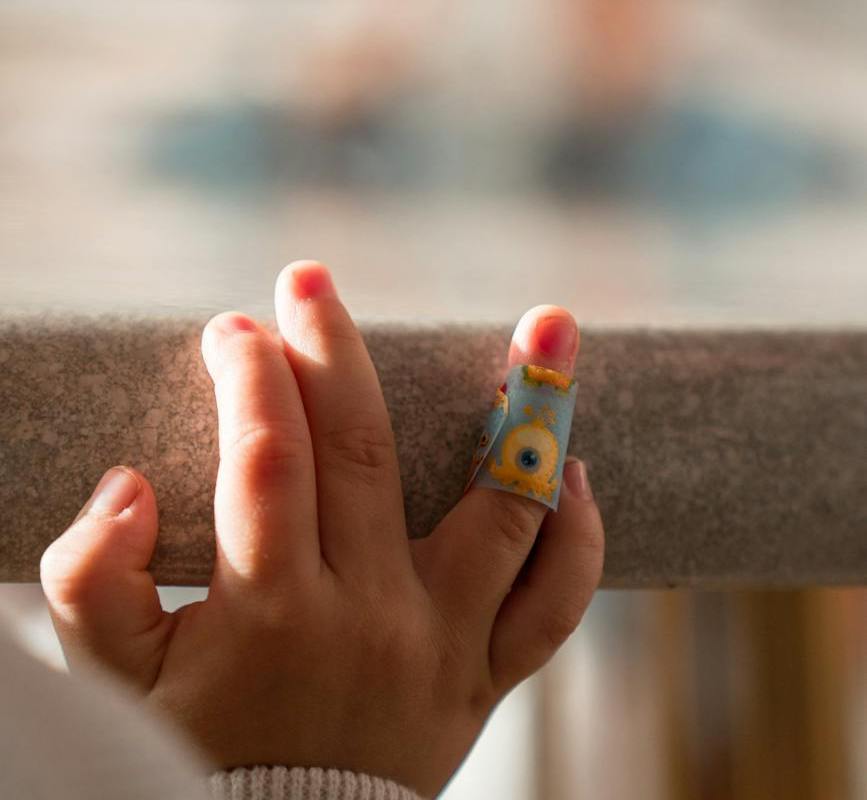
My 7-year-old daughter, Miss O, bumped her 3-year-old brother with her backpack when they were getting into the car yesterday morning. As he started to cry, she offered an uncharacteristically flippant, “Sorry, Dude.”
I gathered him in my arms to check on the little pinky finger that got jammed and added something like, “I’m sure your sister wants to offer some sympathy but can’t find the words right now.”
As we got underway, Miss O said, “I thought sympathy was a bad thing?” The curiosity about learning about emotions moved her away from her defensiveness and we talked about the continuum of responses in the face of pain: denying it, indifference, sympathy and empathy. Off the cuff, I said that empathy was something like leaning in to relate to someone else’s pain.
Miss O asked, “Why would we want to feel their pain?”
It seems I’ve spent the better part of my 53-years trying to understand the answer to that question. I suspect that it was becoming a parent that truly changed my willingness to really sit with the distress of others.
I’ve found that unacknowledged wounds weep the most. Jack Canfora’s post, There’s Nothing Wrong With Everything Being Wrong, spoke to me about the cleansing act of being honest. When we pretend everything is okay either with ourselves or others that are hurting, we add a layer of BS that hardens over time.
But when we talk about hard things and are able to lean in to the sorrow and pain of others, we are blessed by getting to know someone deeply. I imagine we are all a little like icebergs, carrying the pain of life as the big unseen part beneath the water. And when we empathize with each other, we get to see all of us, and even witness the growth that comes with healing after things fall apart.
Which isn’t to say that I’ve found it to be easy to embrace the discomfort of others. I find myself stumbling for words, unsure how to ask, or if to ask, and it becomes worse if I fear I’ve had a part in causing pain. But when I avoid it, it only becomes bigger, sometimes big enough to sink the Titanic.
I remember my dad, who was a Presbyterian pastor for 40 years, describing the first time he had to do a funeral and a wedding on the same day. He said the sheer emotion of going through those extreme emotions almost buckled him at the knees.
I’ve found that the times I have the most access to empathy are when I’ve done my own work to manage my emotions, to understand that I don’t have to carry other people’s loads, and to clean my own wounds. Then I have a much bigger capacity to sit in the dark with others. I can’t go deep when I’m swimming in the shallow end of my self-care and grace pool. For me, that work is in the form of meditation, writing, and creating but I know we all have different tool kits.
So I circled back to my daughter and said, “Sometimes we start trying to empathize because we think it’s the right thing to do or because our mom told us we should. But sooner or later we learn that pain is a lot like the dark – only scary because we don’t look. We lean in to feel other’s pain so that it goes away and it doesn’t become a monster in the closet, threatening to pop out when we least expect it.
We lean in because we all take turns hurting and healing and then have to do the work of repair.”
I’ve also published today on the Wise & Shine blog: Just Start
(featured photo from Pexels)
 Surprised By Joy
I remember reading this one. I’m continually amazed at the lesson your children teach you, Wynne (and all of us here, really). Beautiful!
LikeLiked by 2 people
Isn’t it amazing what they have to teach? Thanks for being willing to come along, Erin!
LikeLiked by 1 person
I love everything you wrote here, and deeply love the lessons you are teaching your kids. These are relevatory lessons that few of us get to learn!
Plus this bonus lesson: “I can’t go deep when I’m swimming in the shallow end of my self-care and grace pool.”
Thank you for sharing this!
LikeLiked by 2 people
I love the tidbit that you highlight, Tamara. I remember discovering that at the beginning of the pandemic. Thank you for your kind comment!
LikeLiked by 1 person
It’s a great tidbit! Jumped right out at me.
LikeLiked by 1 person
❤ ❤ ❤
LikeLiked by 1 person
Oh Wynne, I read this before, but the second reading brings such a greater sense of clarity about this challenging subject. I’ve been struggling to s’lain this to others who are clueless, but without much success. You have given me much food for thought, and a way to share with those who resist the unseen part of the iceberg. Perhaps it might help to melt a few frozen hearts. I sincerely hope so, because in my world, melting the iceberg is the only the only truly thing worth living for! Thank you for adding a new tool to my ice-breaker toolkit! Kisses and hugs to all parts and pieces—both now, in the past, and the future—to all who are in need! Love you!
LikeLiked by 2 people
Oh, melt a few frozen hearts. That’s so good, Julia. I think you are right the melting the iceberg is worth living for. And with your warmth, I think you have a good shot at it. Sending lots of love to you!! ❤ ❤ ❤
LikeLiked by 1 person
I agree with Tamara and Julia…I love this post…the reminder to lean in. Isn’t that always the starting place? xo! 🥰
LikeLiked by 1 person
Whoops…and Erin! 🥰
LikeLiked by 1 person
❤
LikeLiked by 1 person
To lean in — what a great way to put it!
LikeLiked by 1 person
I absolutely loved this sentence: “We lean in because we all take turns hurting and healing and then have to do the work of repair.” We all take turns hurting and healing… 💔❤️🩹❤️
LikeLiked by 1 person
Thank you, Rose. That sentence just feels true to me. Thank you for reading and bringing it forward.
LikeLike
A complicated endeavor, for sure. Therapists must keep some distance. I sometimes had a tear, but I could not help if I broke down and took the full weight of the other’s pain and we both needed someone to offer consolation. The therapeutic distance still seems useful.
LikeLiked by 2 people
Ah, you make a good point about the necessary distance. I imagine you were a trusted guide to help others put the load into perspective and carry it better.
LikeLiked by 1 person
I am an empath raised by people who depended on me to recognize their feelings. As an adult I work to be a less empathetic person with others.
LikeLiked by 1 person
Oh wow, Rebecca, I can feel the complexity of your description of being in that position, especially as a child. As Dr. Stein points out about, some therapeutic distance is useful.
LikeLiked by 1 person
I love the questions that kids ask – teaches us so much
LikeLiked by 1 person
Teaches us so much – yes! Thanks, VJ!
LikeLiked by 1 person
😘
LikeLiked by 1 person
Thanks for sharing this idea. Anita
LikeLiked by 1 person
Thank you for reading and commenting, Anita!
LikeLiked by 1 person
Wow. I’m so impressed with your answer to your daughter’s question. Your post also made me realize how much pain we all carry.
LikeLiked by 1 person
Thanks, Elizabeth. I’m sure my verbal answers had a lot more um’s and er’s than when I wrote it out. And then your comment really resonated with me. I think we do carry a lot more pain that we realize.
LikeLiked by 1 person
😊
LikeLike
This was a beautiful post to read for a second time. Ms O asks such thoughtful questions and it’s endearing to watch someone develop their sense of self through your supportive guidance.
Empathy is one of those traits best learned through hands on experience and it sounds like she’s getting good opportunities to do so.
That phrase “untended wounds weep the most” really resonates with me and we want to avoid that for sure.
LikeLiked by 1 person
Oh, thank you for this beautiful comment, Ab. I think you’re right about hands-on experience with empathy. And a little maturity needs to be part of the formula too, right?
LikeLiked by 1 person
Absolutely!
LikeLiked by 1 person
Love the way you brought home your point in the last two paragraphs, Wynne!
LikeLiked by 1 person
Thank you, Mitch!
LikeLiked by 1 person
I’ve read studies that claim teaching a child empathy is the most important lesson they will ever learn because it’s also the number one indicator of a successful life, meaning you’ll be able to have deep and abiding relationships that feed and sustain you, that you have the ability to understand both sides of a conflict, and can appreciate or maybe understand the mechanics of cause and effect. You’ll be prone to writing run-on sentences but it doesn’t matter because you understand why. Hugs, C
LikeLiked by 1 person
How is it that you manage so well to be funny and wise in the same sentence? A true gift – one of your many. And how interesting the primacy of the lesson of empathy. I can see how it underscores all of our relationships and have experienced how destructive it is when not present. Yes!
LikeLike
I do remember this post Wynne. And still love it. What an insightful and honorable way to raise your children. You’re quite the role model mama. 💕
LikeLiked by 1 person
Ah, what a generous comment, my friend. I’m also good at modeling being human by apologizing for the moments I don’t do my best. Thank you for reading and commenting!
LikeLiked by 1 person
Empathy and sympathy do not happen among siblings 😊. Your kids make me remember me and my brother, four years apart. We still fight as we fought decades ago! You have to observe your girl when she is with other kids 😊!
LikeLiked by 1 person
Ah, what an interesting comment, Ganga! Yes, family dynamics always add a twist.
LikeLiked by 1 person
A though provoking post, Wynne.
I think when children are taught to empathize from a young age, they grow into caring, giving, and responsible adults who know how to respond sensibly (rather than emotionally) to others’ needs.
Love to you, Ms. O and Mr. D.
LikeLiked by 1 person
What an insightful comment about adults who know how to sensibly respond to others’ needs, Chaya. So good to see you again. Thanks for reading and commenting!
LikeLiked by 1 person
Nice to be back with my lovely friends, Wynne. I had taken a few weeks off blogging to spend quality time with my beloved Mum and sisters.
LikeLiked by 1 person
“I imagine we are all a little like icebergs, carrying the pain of life as the big unseen part beneath the water.” Isn’t that the truth, Wynne? Pain is part of our shared human experience, yet we’re so cautious about sharing it with others. Perhaps it’s because we see it as a sign of weakness. Thanks for this thought-provoking post, Wynne.
LikeLiked by 1 person
What an astute comment that we don’t share because we see it as a weakness. Maybe it’s a cycle – we don’t share and then others don’t know how to respond and then when we do share, the response is awkward? Thank you for the thought-provoking reply, Michelle!
LikeLiked by 1 person
What a beautiful lesson you taught Miss O, Wynne. The world would be such a better place if we were all monster slayers in that way. 💞💞💞
LikeLiked by 1 person
Monster slayers – what a great way to put it, Dawn! Thank you!
LikeLiked by 1 person
This post needs to be in your upcoming parenting book – great again!😊
LikeLiked by 1 person
Oh, Mary, you are wonderful! Thank you!
LikeLike
Love this post, so beautifully written.
LikeLiked by 1 person
Thank you!
LikeLike
Beautifully written!
LikeLiked by 1 person
Means a lot coming from you, Belladonna! Thank you!
LikeLiked by 1 person
You are so sweet!
LikeLike
Nice
LikeLiked by 1 person
Thank you for reading and commenting!
LikeLike
This is so beautiful♥️
I’ve saved it so that I can read it again.
LikeLiked by 1 person
Wow – thank you for that lovely comment. I appreciate you reading and commenting.
LikeLike
We lean in because we take turns hurting and healing. Wow. Yes.
LikeLiked by 2 people
Don’t we? Thanks, dear Betsy!
LikeLiked by 1 person
We sure do. That seems to be the way life works. Sometimes it may seem lopsided, but we just have to roll with it.
LikeLiked by 1 person
When we pretend everything is okay either with ourselves or others that are hurting, we add a layer of BS that hardens over time.
This part! For real!
LikeLiked by 1 person