
How to Share Passwords

Rarely is anyone thanked for the work they did to prevent the disaster that didn’t happen” – Mikko Hypponen

A few weeks ago I was carpooling with another family to the kids’ camp for the week. I was responsible for dropping the kids off in the morning. When I got all four kids there on the first day, the counselors asked me for a password that would need to be given at pickup time.

I set the password and then immediately communicated it to the other family so they could successfully pickup all the kids. It reminded me that we think of passwords as secret, when in fact they are private – we just want only trusted individuals to know at the right time.

So in this episode of the How to Share podcast, I talk with banker, adventurer and my friend, Jill Jones, about the complexities of password sharing. We emphasize the importance of trusted access and the evolving methods of password management. We explore personal experiences, the impact of technology on security practices, and provide practical tips for navigating password storage and sharing in both personal and professional contexts.

Note: Passwords are a small piece of the overall planning that needs to happen in a crisis. The amazingly thoughtful and prepared Edward Ortiz of the Thoughts about Leadership, history, and more blog has a great post about What if The Unthinkable Happens at Home to help plan for household crisis.

Takeaways

  • Passwords are often thought of as secrets, but they are actually private.
  • It’s essential to have trusted individuals who can access passwords when needed.
  • Old methods of password storage, like writing them down, are becoming obsolete.
  • Digital vaults can provide a secure way to store important documents and passwords.
  • Two-factor authentication adds an extra layer of security but can complicate access.
  • Banking experiences offer valuable lessons in password security and fraud prevention.
  • Regularly changing passwords can lead to reliance on easily guessable information.
  • Technology is changing how we manage and share passwords.
  • Planning for unexpected events, like sudden death, is crucial for password access.
  • Having a system in place for sharing passwords is necessary for security.

Here’s a preview of some of the pros and cons of common password practices:

Here are some ways you can listen and watch this informative episode:

Please listen, watch, provide feedback and subscribe.

How to Share Our Luck with Gil Gillenwater How To Share

In this enlightening conversation, Gil Gillenwater is with host Wynne Leon and shares his experiences and insights from over 35 years of philanthropic work along the US-Mexico border. He discusses his book, 'Hope on the Border,' which highlights the transformative power of education and community service. Gil emphasizes the importance of enlightened self-interest over traditional charity, advocating for a model that empowers individuals and fosters dignity. He explores the duality of poverty, the need for sustainable opportunities, and the joy found in serving others, ultimately presenting a vision for a more connected and compassionate world.TakeawaysEducation is the key to breaking the cycle of poverty.Enlightened self-interest can lead to personal and communal growth.Charity should not be viewed as a sacrifice but as a mutual benefit.Volunteering provides a sense of purpose and fulfillment.Welfare can disempower individuals and communities.Community service fosters connections and shared humanity.The disparity in wealth is a significant issue that needs addressing.Experiencing poverty firsthand can change perspectives.Creating opportunities in one's home country can reduce migration.The joy of service is a pathway to personal happiness.Links for this episode:How to Share homeHope on the Border at AmazonGil's organization: Rancho FelizGil Gillenwater on FacebookWynne’s book about her beloved father: Finding My Father’s Faith; Blog: https://wynneleon.com/; Substack: https://wynneleon930758.substack.com/
  1. How to Share Our Luck with Gil Gillenwater
  2. How to Share 1970's Chicago with Doug. E. Jones
  3. How to Share Feedback with Dr. Vicki Atkinson
  4. How to Share the Next Generation with Mari Sarkisian Wyatt
  5. How to Share Impactfully with Social Media Friends with Amy Weinland Daughters

Links for this Episode:

Jill Jones on LinkedIn

How to Share Passwords transcript

(featured photo from Pexels)

(Quote comes from Rarely Is Anyone Thanked – TheEnlightenedMind622 )
Sacred Spaces for Stories

Our actual job as writers is to make the world a little more clear. A little less cluttered. A little less ugly.” – Ann Handley

In my favorite coffee shop, there are three cushy chairs by the window, organized around a low coffee table. I’m usually early enough to get my seat, the one where I can put my tea on the windowsill and plug in my laptop, and then the other chairs eventually fill up. Usually it’s two people by themselves like me but sometimes it’ll be two people together and then since they are facing me, we’re all in it together.

A while back I heard two 50-something women sitting in the chairs together catching up after a while. One was talking about her process for measuring progress on her diet, lamenting the fact that any weight gain or loss she experiences happens three days after she eats (or doesn’t), making the intervening days till the scale registers seem interminable.

She sighed and said she had a friend who was overweight and very happy. “Somedays I think I should just give it up and follow her example. She’s not sweating over everything she eats.”

Her friend replied, “No! For goodness sakes, stay the course.

And then the first woman smiled and said, “Thank you, that’s what friends are for.

As far as blog fodder goes, this seems like totally safe territory. I don’t know these women and will likely never see them again to report on whether the first, who I couldn’t pick out of a lineup, stayed with her eating regimen.

It reminds me of right after I found out about my husband’s (now ex) infidelities and told my friend, Bill, about the drama over dinner in a tiny Japanese restaurant with tables barely a foot apart.

I started the story with my business partner inviting me out to lunch even though we’d never socialized just the two of us. Then I showed up and he’d asked to be seated in a booth in a section of the restaurant that wasn’t open. At this point, I was on pins and needles and felt like I was going to throw up, so that when he finally started down the list of my ex’s infidelities, it was pretty awful but almost a relief from the anticipation.

Then my business partner cooked up a scheme that he’d send me an “anonymous” email with the information so that I didn’t have to tell my ex how I’d found out.

By that evening, the email hadn’t arrived and I had gone out to dinner with my dear friends, Jill and Sue, as planned before the whole drama unfolded. The business partner called to ask if I had gotten the email and I said I hadn’t. He said he was okay if I told my ex I found out from him.

At 5am the next morning when I finally opened the conversation with my ex, “Have you ever been unfaithful to me?” and he answered, “no,” the ball was rolling. His primary question was “how did you find out?

When I couldn’t keep it secret any longer, I revealed the business partner’s role. My ex packed a bag of clothes to check into a hotel and then told me he was going to the business partner’s house. “He betrayed me!” he shouted, completely missing the irony of the comment that we were talking about his infidelity.

As I launched into the part of the story about calling my business partner on 8am that morning (which happened to be New Year’s Eve) telling my ex was heading his way to confront him, I noticed that all the tables around us in that small Japanese restaurant were silent. I didn’t mind. It seemed they all deserved to find out that my ex barged in to the business partner’s house without knocking but didn’t hit him or inflict any other physical damage. He didn’t ever forgive him though.

So maybe I ended up as blog fodder for someone else. Fair enough – I don’t mind on many levels, the most obvious one being that I shared it in a public space.

Of course, this becomes a trickier balance when we blog, talk, preach, about people we know. Talking with a fellow blogger last week, I know I’m not the only one that wrestles with how to make sure that people in my life know that I honor a sacred space for their shared stories.

I take my cue on how to navigate this from my father. Growing up as a pastor’s kid, there was a definite likelihood that you could end up in a sermon. My dad would share stories or funny things we said – but didn’t share secrets or embarrassing moments, and he had a way of making the point about what he learned, instead of ever making us the butt of the joke.

Of course, I could not write about the characters in my life at all but they are a great deal of my inspiration – for learning, laughing and, loving. So I walk the line of asking for permission and (hopefully) being gently respectful because in these post-Covid days, I don’t often hear conversations in coffee shops.

For more about creativity, please check out my Heart of the Matter post this morning, The Creative Rhythm and subscribe to that blog as well! The theme for the month is creativity so there will be great inspiration to be found!

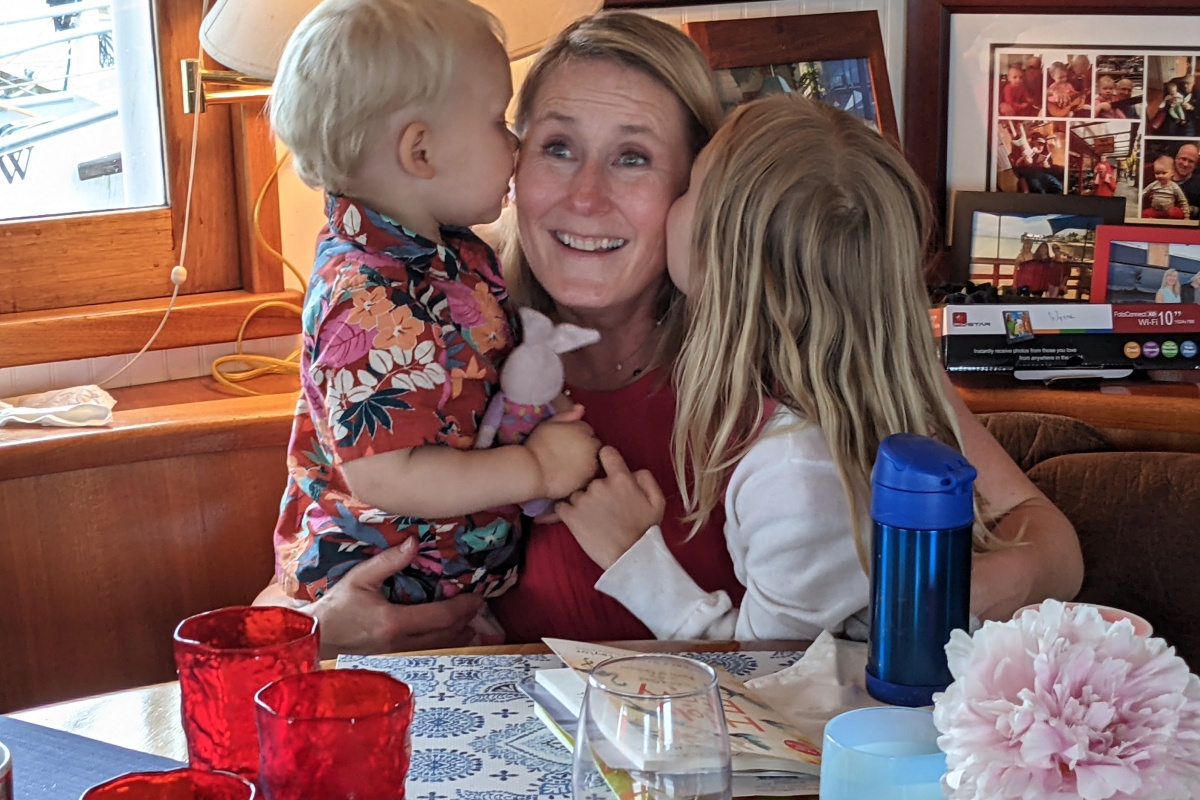
(featured photo is of my kids telling me secrets)