To Sit or To Stand

Our bodies are our gardens – our wills are our gardeners.” – William Shakespeare

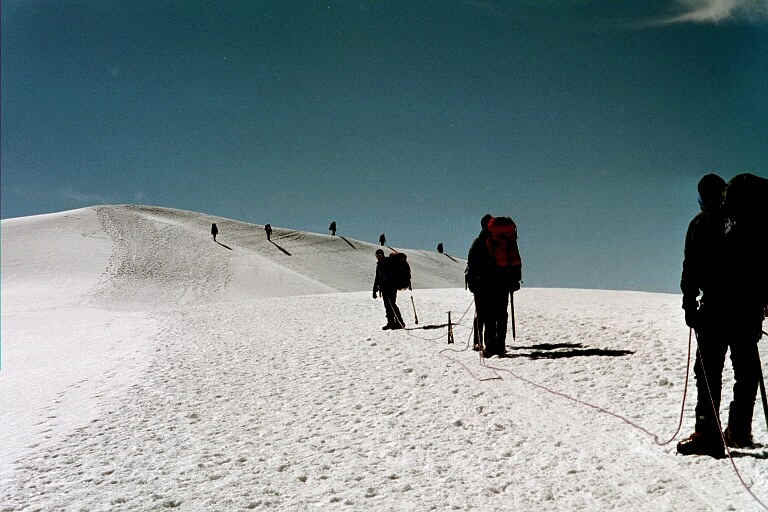
My friend Phil guided big mountains for more than 40 years. His adventures have included guiding Dick Bass when he dreamed up the Seven Summits goal to climb the tallest mountain in each continent, being the first American to climb the Chinese side of Mt. Everest, and after climbing all seven summits in his 30’s, he did them all again in his 50’s with his wife when she wanted to reach the goal. When I met him 20 years ago, he had just summitted Mt. Rainier for the 400th time and I’m not sure where the count stands today but somewhere around 500. All that is to say, he’s climbed and guided a lot. And the only person he lost in a mountaineering accident was his assistant guide on Mt. Denali. They had two rope teams coming back down from the summit when a client on the assistant’s rope team started having trouble with a crampon on his boot. The assistant guide unclipped from the rope to help and then fell to his death.

I think of this story when I realize I’ve extended myself too far to help someone. I have a very strong tendency to “dig deep” when I need to access that extra gear to pull through. I learned it from climbing – that extra push to get to the summit and that auxiliary well to draw from when the conditions change and getting to back to the parking lot is farther and tougher.

With parenting, I find myself digging deep a lot. When a child needs help with that last 1000 feet to the car and I put them on my shoulders. Or something falls through with child care and I need to take care of my kids in the day and work at night. Or another parent in our village has an emergency so I change my plans to pick up the slack and have to cancel my self-care time. Or COVID hits and everything is canceled…

All very worthy reasons that I’m more than happy to dig deep for. But when I climb into bed exhausted for the 300th night in a row and my hips and back ache because I spent another day “digging deep,” I wonder if this is the way to live. That is to say, am I destroying myself because I don’t know my limits when I should say stop and rest?

Then this delightful post from the MSW Blog reminded me of something else I learned from mountain guides. It was my very first climb when I learned this maxim from them: If you can stand, you can sit and if you can sit, you can lie down. And when I see Phil these days, he exudes that. He’s retired from guiding and looks as completely at ease sitting back in his leather chair as he did on the mountains. And he’s still full of mountain wisdom that tells us you can’t lead a team if you aren’t caring for yourself too.

Cultivating Play and Rest

Not everything that can be counted counts, and not everything that counts can be counted.” – Albert Einstein

Yesterday my sister-in-law took my daughter for the day and my son was in daycare, I had an entire day to myself. This is so rare, especially since COVID came and we have all been packed into the house on most days. I’ve had a few hours here and there but a whole day?? Of course I needed to work, the house was a mess and I had a to-do list as long as my arm so I was far from bored but the real question was, did I know what refills my cup?

Brené Brown has been doing this podcast series on The Gifts of Imperfection as it’s the 10 year anniversary of that book. And there is a particular guidepost in it “Cultivating Play and Rest – letting go of exhaustion as a status symbol and productivity as self-worth.” It was a reference that Brené made in a podcast to this guidepost and the work of Dr. Stuart Brown, psychiatrist, clinical researcher and founder of the National Institute for Play, that got me interested to read the Gifts of Imperfection in the first place. That to be whole-hearted, that is to say, fully awake and involved in life, we need to play.

My first thought when hearing about cultivating play was that I am a mother of young children, I should be all about play. My second thought was I have no idea what play is for me anymore. When I got my first night off from parenting when my daughter was about two years-old, I went out to drink wine with a friend. It was fine but I ended up feeling like I wasted that precious time. The second time I had an overnight break from parenting was when my daughter was three years-old and I went on a meditation retreat. It was so lovely to eat organic food, do yoga, meditate and cut out pictures for my vision journal. It really worked to refill my cup but isn’t very practical to do very often. The same goes for hiking which is my all-time go-to for refilling my cup but often takes too much time driving to do on these rare days off.

Here’s what I’m slowly realizing about cultivating play and rest for me. I know I’m still learning because I’m trying to be the most productive at rest. 🙂 But with that said, rest for me always involves some combination of reading, writing and exercise. Being quiet including turning off extraneous noise like the tv in the background is important. I never clean my house when my kids are gone unless it’s part of tackling a project that is fun for me. I try to reach out to at least one person that is key to my health and sanity. And when I’m very lucky, I go to a rarely visited neighborhood and find a place to eat lunch with a book.

Last night when my kids were returned to me, I listened to their reports from the day and we galivanted around the neighborhood and talked with neighbors, I felt like a new (renewed?) person. Someone who had a refilled cup to share with everyone else.

Life at the Lake

When the power of love overcomes the love of power, the world will know peace.” – Jimi Hendrix

Going to the lake as a kid and going to the lake with your kids are two different things. I’ve been lucky enough to do both with a family I’ve known since I was 7 years-old. Their lake place has been for all these years the perfect place for kids to adventure, swim, inner tube, find treasure in its many forms until like my son did the other night, you can’t even keep your eyes open to read books and just want to dive into bed.

What is most remarkable to me was the way this family has made their lake place work. The parents bought it in 1973. They come back every summer as do their three daughters in my generation and their families for as much time as they can. I’m invited too as an honorary member of the family because I lived with them my senior year in high school when my dad took a sr. pastor job at a church on the other side of the state. They have created a compound where everyone can chip in according to their strengths and politely ignore each other’s weaknesses and all the members of the family have chosen to so because life at the lake is more fun together.

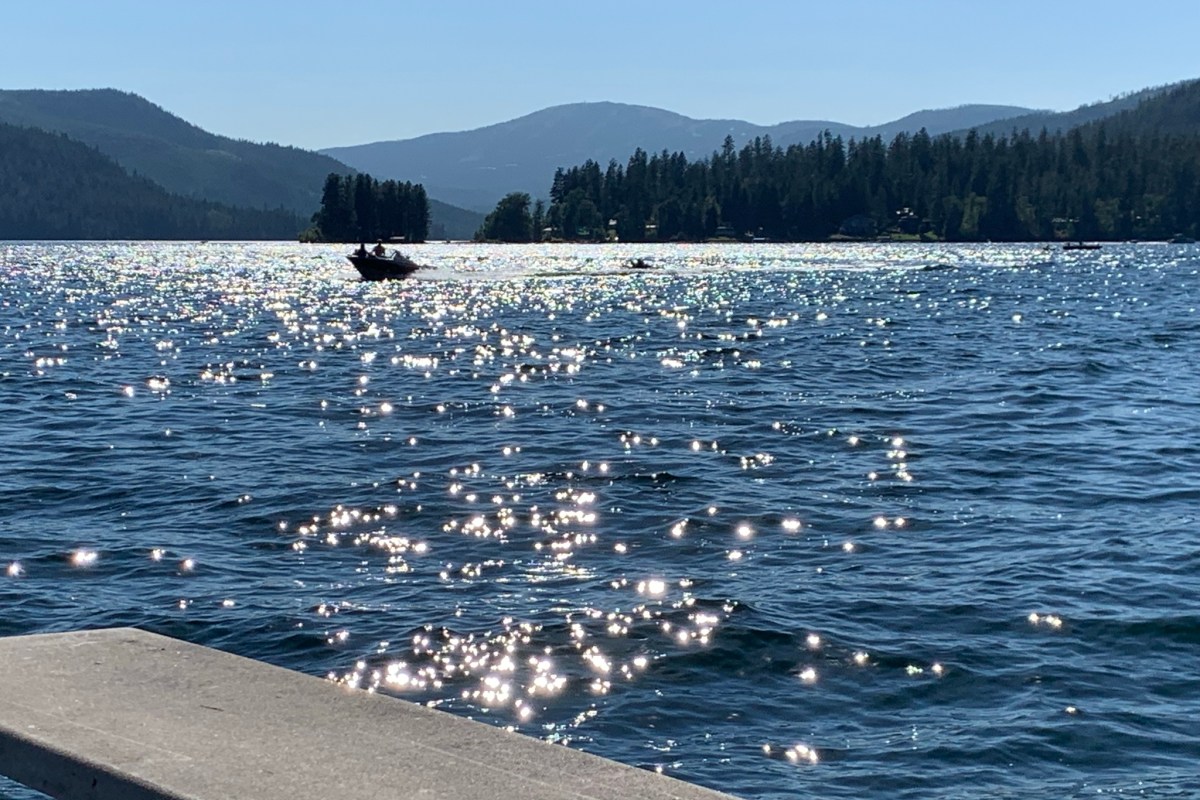
Every morning we were at the lake I got up early and went down to sit by the water. The scene holds so much more than just liquid. It’s all the dreams I had of what life would be when I came there as a kid. It’s all the hope that I have for my kids to grow up in a beautiful world. And it’s all the love of the family that owns this lake place – both in caring for it and for each other. It’s also a hub of connection for grandparents, parents, cousins, sisters and extended family like me. Just sitting by a body of water that holds so much filled me with the peace that comes with all that perspective and love.

I get so choked up thinking of the lifetime of friendship I have had with my dear friend and her family. And now her incredibly delightful and talented daughters have both nannied for my kids so the love spreads through the generations. Nothing better than going to the lake with my kids and discovering that it holds them as it did me, in complete awe of the way one place can hold delight for so many!

Five Pieces of Writing that Inspired Me: #1 Faith

When you surrender to the wind, you can ride it.” – Toni Morrison

My toddler has become the master of two word sentences. “Mama lap” is one of his most frequent and it works to make me sit down, pull him onto my lap and read him a book.

I’ve been thinking a lot about words lately. How we string them together and hope they convey what we want and need and maybe if we are lucky, even reach another person where they live. So I’ve gone back through my most beloved meditations and books and picked out five of the most inspirational things I’ve read that have pulled me up, changed my perspective and touched my heart.

Learning How to Float

When we stop stuggling,
we float.

When first learning how to swim, I didn’t trust the deep. No matter how many assuring voices I heard from shore, I strained and flapped to keep my chin above the surface. It exhausted me, and only when exhausted did I relax enough to immerse myself to the point that I could feel the cradle of the deep keep me afloat.

I’ve come to understand that this is the struggle we all replay between doubt and faith. When thrust into any situation over our head, our reflex is to fight with all our might the terrible feeling that we are sinking. Yet the more we resist, the more we feel our own weight and wear ourselves out.

At times like this, I remember learning to float. Mysteriously, it required letting almost all of me rest below the surface before the deep would hold me up. It seems to me, almost forty years later, that the practice of finding our faith is very much like that – we need to rest enough of ourselves below the surface of things until we find ourselves upheld.

This is very hard to do. But the essence of trust is believing you will be held up if you let go. And though we can practice relaxing our fear and meeting the deep, there is no real way to prepare for letting go other than to just let go.

Once immersed, once below the surface, it is not by chance that things slow down, go clear, feel weightless. Perhaps faith is nothing more than taking the risk to rest below the surface.

The Book of Awakening by Mark Nepo

Day of Rest

“We are not human beings having a spiritual experience, we are spiritual beings having a human experience.” – Pierre Teilhard de Chardin

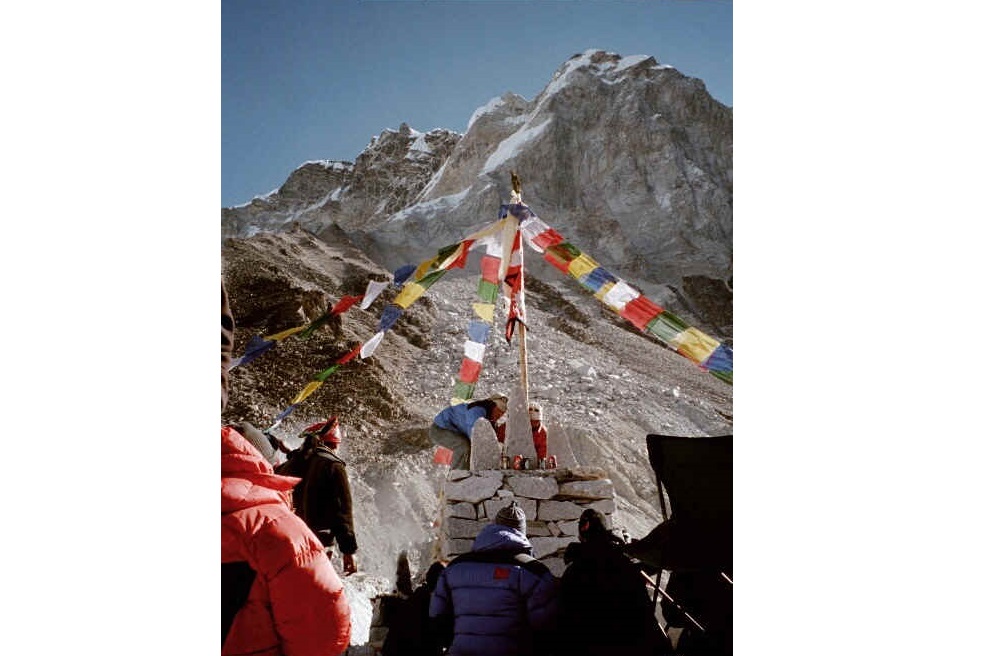
Twenty years ago at this time of year I trekked to Everest Base Camp with a couple of my friends who were attempting an Everest summit. It’s a thirty mile trek through beautiful country, crossing over raging rivers on precarious bridges, stopping at little Nepalese villages, staying near Buddhists monasteries with everything (trees, people, commerce) getting sparser and sparser the higher you go. Our rhythm would be to trek one day and rest the next because the climbers needed to let their bodies acclimatize to the thin air.

It was interesting to see what everyone chose to do on the rest day – lie in tents and listen to music or read, try to wash clothes or take a shower if you could find facilities, hike around the local area, go into a little village if one was nearby, play cards, or sit around a tea house table telling stories. It was a day that we weren’t on the move so there was no schedule. I usually would chose some alone time and then some time listening to stories. Amongst mountain guides, especially the ones I was with that trip, the ability to tell stories is nearly as good as their ability to climb.

Thinking back on that trek, I think of not only the amazing adventure and incredible views but the practice of the day of rest. Because we all need that day of rest to restore our spirits and bodies before we can climb again. But at home, the choices are too many and the pace too hectic that I often forget to celebrate the day of rest. So I’m inspired by my choices on that trip – spend a little time alone meditating and then swapping stories with others, even if this time it’s on a blog.

One day at about 15,000 feet of elevation we were trekking to our next camp site when we came across this football sized flat space where rock cairns had been created for people who had died on the mountain. I’m at a loss to explain the intensity of how sacred that place felt. It was, to say the least, an impressive reminder that we will all meet our ultimate resting place and until then, we would be well served to celebrate this sacred life with a day of rest from time to time.