Universal Timing

Many of us have been running for all our lives. Practice stopping.” – Thich Nhat Hanh

When I returned from my business trip three weeks ago, my nanny had left the extra garage door opener on the counter. I saw it and somewhere in the mix of putting things back where they belonged, I misplaced it.

Normally I’d spend hours looking for it. Because my default in life is doing. I’d much rather be driving action than just waiting for things to appear. I’m not good at being. Or unsolved mysteries.

But I don’t really need that extra remote. Sure, it helps when we go biking. However I think the practice of just being is worth the hassle.

It seems silly to make an object lesson out of the extra garage door remote but for me it’s all about the feeling underneath the drive to push. I have a million examples of things I want to steamroll with action instead of finding the flow of when the time is right: responses about the new work project, for my friend to return from her trip so we can talk, for fall to come before I put away the outdoor rug, to know what’s worth writing about instead of just what’s top of mind and on and on.

I spend a lot of time working and willing to happen. This will not be one of them. The more that I can put things in that category, the better I get at feeling the Universal timing. With more experience, I start to appreciate The Flow of Life.

So I resolved not to look for the garage door remote. Yesterday as I was preparing my kids to go a playground, I had a feeling I was going to find it. Sure enough, it was in the backpack of playground supplies – sitting right on the top. I laughed in appreciation and understood it was waiting for me to swallow my lesson to learn to go with the flow and stop forcing action.

Do you have a preference between doing or being? Do you practice the other?

Patience To Stay Open

Fear wants us to act too soon. But patience, hard as it is, helps us outlast our preconceptions. This is how tired soldiers, all out of ammo, can discover through their inescapable waiting that they have no reason to hurt each other. In is the same with tired lovers and with hurtful and tiresome friends. Given enough time, most of our enemies cease to be enemies, because waiting allows us to see ourselves in them.” – Mark Nepo

I have a friendship that is in trouble. When I ask my friend questions about herself, she doesn’t answer but instead redirects the question. This is change in our 10+ year friendship. I’m not sure the cause but I’ve supported my friend and her husband through some difficult issues so my suspicion is that it’s more important to her to have a seemingly friendly relationship where I remain “on her side” rather than an authentic one where she has to tell me what’s bothering her or what I’ve done.

Just writing about this makes me a little light-headed. Because it touches on the divide between barely living and living barely. That is to say, I spent too many years barely living when I pretended that life was great and I buried all suffering deep down. Then I discovered that living barely, trying to keep the thinnest possible covering between my heart and the world actually lets more things in and more importantly, more things out.

But just because I want to try to live without pretense doesn’t mean my friend can right now. And what I understand from my tentative attempts to open a space between us to speak is that she isn’t ready to talk.

So I’m trying not to break things in my impatience. To declare the friendship over because I can’t stand the uncertainty or to insert a defensiveness because I don’t understand. Or to assume or imagine anything.

My dad told me of a group of olive farmers he met who owned a prime piece of land in a contested part of the world. Even though they had a deed of property they were regularly hassled by local soldiers. They developed a motto, “We refuse to become enemies.

That phrase has stuck with me of a reminder that no matter what the other side is doing, we can keep open the channel of our hearts. The motto tells me that we can be in conflict without stirring up that fear within.

When something reminds me of my friend, I’ve found that instead of ruminating on the problem with all the dark alleyways of anxiety I can say a quick loving-kindness chant: “May I be happy, may you be happy; May I be at peace, may you be at peace; May I be loved, may you be loved.” It helps keep me from closing down.

What do you do when things aren’t going well with a friend?

(featured photo from Pexels)

Sorry Your Head Hurts, Do You Want Something to Eat?

I am becoming water; I let everything rinse its grief in me and reflect as much light as I can.” – Mark Nepo

Last night we were having dinner on my brother’s World War II era tugboat. He has lovingly renovated it over more than 20 years so that it’s very comfortable for him and my sister-in-law to live on, but it still has a lot of steel edges to bump into. Which is what happened – my 2-year-old son was looking out a port hole, stood up quickly and bonked his head. My sister-in-law was standing there with me, saw him do it and as I picked him up, showered him with sympathy.

But 30 seconds later (maybe longer but not much), my sister-in-law said to my son, “What’s the matter, Buddy? Are you hungry?”

It struck me as a common thing we do as humans. It’s hard to witness someone else’s pain. So we express sympathy and then we are ready to move on. Three things strike me about this.

First, we often move to trying to solve the problem. I find this impulse, especially as a parent, to be so alluring.

Second, if things last longer than we expect, we try to conflate the pain with something else as my sister-in-law did. Is it not surprising that we grow up confused about what our feelings are if the grown-ups around us think that what is wrong is that we are hungry when really our head hurts?

Third, we compound the original pain with our discomfort at sitting with someone in pain. So that they often are moved to pretend the pain has stopped so that they don’t have to contend with both their own pain and the pain of the people who are witnessing it.

It’s hard but sometimes the best thing to do when someone is in pain, is just sit with them. As a mom, I want to reach for the ice pack, the bandage or the song but I’m working on just letting the tears fall onto my arms as I hold them. We have to clean our wounds before we bandage them and, in a way, letting the injured party cry for as long as necessary is the best first step.

The Learning Curve

It always seems impossible until it’s done.” – Nelson Mandela

We worked hard on potty training this weekend. I found it to be a fascinating window into the nature of learning. And that’s not just me putting a positive spin on it.

Day 1: Chaos. The first morning was hit and miss (or more miss than hit). By naptime we were both exhausted. My son because of the huge change that comes learning how to use his body and me because infinite patience takes a lot of energy! So the first lesson came after we’d both napped. Rest helped consolidate the learning so that he was a better student and I was a better coach.

Then after an afternoon and evening of more efforts and celebrations, my son was never happier to have the feel of a nighttime diaper, jammies and to snuggle up and read books. And it underscored for me the need to have comforting rituals to soothe ourselves when in the midst of big change.

Day 2 was characterized by a lot of resistance and efforts to control everything else around. It reminded me of a Brené Brown podcast I heard years ago that whenever she has led or attended a three-day conference, day 2 was always marked by the doldrums. Brené likened it to the middle part of the hero’s journey as described by Joseph Campbell. The hero does everything in their power to pursue all options except for the one that they are called to that leaves them feeling vulnerable.

Day 3: We needed expert help. Which is uncomfortable for me not have it dialed but the amazing teachers at my son’s daycare have said repeatedly that they are more than willing and able to help with this journey. For which I am so thankful. I left him on Monday with a “Good luck” and “God bless you” and I couldn’t have meant both more!

This learning curve at times has felt impossible, exhausting, vulnerable, and not worth it. Somehow it reminds me of learning to snowboard – and also mastering a new technology, figuring out to give my dog allergy shots, starting to blog, and learning how to do mosaic tiling.

Each new venture has roughly followed the same pattern of chaos, resistance and then leaning in and asking for assistance if needed. And it’s not just me. I have a dear friend who didn’t learn how to swim until she was 60 years old. And my 82-year-old mom has been figuring out how to do piano performances online for her retirement community.

Watching my son, I am reminded how hard learning something new is – until it isn’t. And while grown-ups might not be taking on changes as transformative as potty training, we still need to give ourselves the rest and rituals to support our learning, grace to survive the resistance and the courage to lean in to expert help when we need it.

Because as Nelson Mandela says, “It always seems impossible until it’s done.”

(featured photo from Pexels)

Worth Waiting For

I’ve learned that I can totally remain humble, but I don’t have to cut off the wonderful things I deserve.” – Alicia Keys

I splurged and bought a new mascara the other day. The old one went on too slowly. Ironically, I’m willing to spend money on something to enhance my appearance but it has to be quick because I don’t want to be the person others have to wait for.  

But then I spend so much of my days waiting. I wait for kids to finish taking in a scene before they want to walk on or waiting for kids to finish eating each methodical bite. Or because my daughter is learning to roller skate and my son is learning to ride his balance bike, I wait for kids every step of the way as we go around the block because neither has learned the power of coasting and are slower than if they were walking. At work, I wait for files to be transferred and to get replies on emails. I wait for packages to arrive and in lines for lunch.

Yesterday I was sitting outside eating lunch on a bench and watching a guy with a Bernese Mountain Dog. They were coming towards me but the dog paused to sniff, consider and then pee on every tree and interesting thing on the sidewalk. The guy patiently stood through each interlude, his perfectly relaxed expression and the slack in the leash indicating he thought the dog was worth waiting for.

It made me think of my perennial urge to rush myself. Of all the times I’ve been on a mountain climb hustling to get my boots, coats and shoes on so no one has to wait for me. Or the focused scan of the menu I do at the coffee shop so I’m always ready when it’s my turn to order. Perhaps I need to take a page from that dog’s playbook, learn to take my time with my routine and start to believe that I am someone worth waiting for.

Waiting

Everything will be alright in the end, and if it is not alright, it is not the end.” – Best Exotic Marigold Hotel

Monday is my son’s favorite day because it’s garbage day. In our neighborhood, that means three different trucks: garbage, yard waste and recycling. And even better, they go up the street to service the cans on the north side and then they come back to get the cans on the south side which makes for six possible garbage truck sightings so Monday’s come with a great sense of expectation.  They make me think about waiting.

My paternal grandfather, Doug, died of ALS (Lou Gehrig’s disease) in 1973 so I didn’t know him. But my grandmother lived for almost 30 years after he died. When she told the story of his passing she said that when he was diagnosed three years before his death the doctor took her aside and told her every milestone of disease progression that would occur. My grandmother was a very positive and loving person so it was always a surprise that she called this doctor the cruelest man ever because she had the knowledge for what would happen next and was always watching and waiting for it.

It reminds me of when I pregnant with my second child and my obstetrician told me, “Your first child will become a nightmare for six weeks. It happens to all kids but they will come out of it.” I really liked my obstetrician and trusted her. But I wished she hadn’t told me that because I couldn’t imagine it happening to my sweet little girl and the anticipation of it possibly happening was a little too suspenseful. But my obstetrician was right – those first weeks were hard and then I was glad to know that it would only last for six weeks and she was right about that too.

But those are two examples of difficulty and sadness to come. But they make me wonder, do we ever want to know the future? Let’s say I knew that in six months that the right man was going to come into my life would it change my behavior? Would I spend more intentional time with my kids and my friends now because I’ll have less time once the mystery man appears? Would I be looking at every guy and wondering if he was going to turn out to be the one?

My thinking often strays into the future. I think that’s probably a necessary part of planning, to imagine what life is going to be like when school is out in two weeks and then arrange for the summer schedule accordingly. But when I spend too much time in the future, I find it impacting my sense of “now” because it overlays a sense of anticipation or dread onto today. I am slowly learning to differentiate between intention and waiting. I can intend to stretch my muscles every day so that I can become a more flexible person and that is quite different than waiting until I’m flexible before I sign up for a class.

When I was going through my divorce, my meditation teacher once quoted the line from the Best Exotic Marigold Hotel, “Everything will be alright in the end, and if it is not alright, it is not the end.” It turned out to be the best mantra for getting me through. It had a sense of the future without promising anything specific. And that turned out to be all that I needed to know. Then I could set my intention to do the best and trust that somehow, it’ll be alright.  Anything more than that and I start waiting on pins and needles.

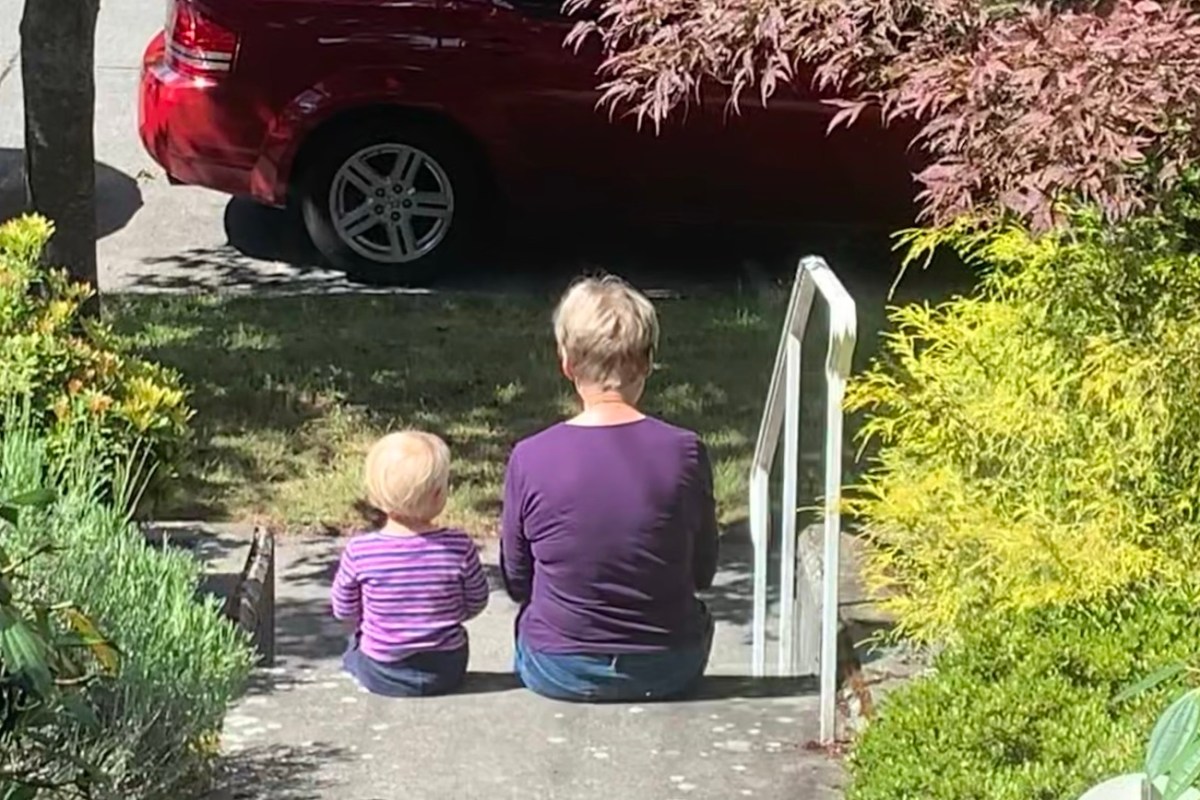
Yesterday, I l happened to look out my office window to see my mom and my son sitting perfectly still and poised waiting for the garbage truck. Watching them, I realized how much faith is involved in waiting patiently. We only sit still when we trust that what we are looking for is going to come our way. For me that is how it should be – let God know the future and all I have to do is simply trust that it’ll be alright in the end.  

Mistaken identity

“Before fixing what you’re looking at, check what you’re looking through.” – Mark Nepo

The other day I participated in a conversation with my five-year-old daughter and her seven-year-old best friend and neighbor. She reported that her friend kept interrupting her. Then she asked the friend a question and when the friend started to answer, she said, “See?”

Ah, we see what we expect to see. A chronic condition of being human but I had no idea it started so young! But more than that, I think the two were bickering not because one was interrupting the other but because they were hungry and bored. Another chronic condition of human nature – mistaking one feeling for another. This one is rife with the young!! It seems that they can’t reliably name what being hungry, bored or tired is and everyone around gets an earful until we solve the root problem.

But I’m not sure I do much better. Last year after one of the last times I was able to go to meditation class in person before the pandemic, I went grocery shopping afterwards. I bought so much food without any regard for price or practicality and it wasn’t until I was walking out that I realized that I felt euphoric. A great feeling. Not so great for budgeting!

For me this is the work of mindfulness. Observing the ripples in the water caused by emotions so that I am aware that they are stirring me up and hopefully every so often get a glimpse of my depths when the water is clear. And it is the work of patience and parenting to help others name what is ailing them and hold them until they can become clear. I’m getting a lot of practice these days.

So I asked my daughter what interrupting means. Turns out her definition was something close to feeling irritated whenever you are in conversation. I paused to be sure I didn’t interrupt, offered them a snack and a job to rake up the hedge trimmings and solved both the named and unnamed sources of irritation!