“But where was I to start? The world is so vast, I shall start with the country I know best, my own. But my country is so very large. I had better start with my town. But my town too, is large. I had best start with my street. No: my home. No: my family. Never mind, I shall start with myself.” – Elie Wiesel
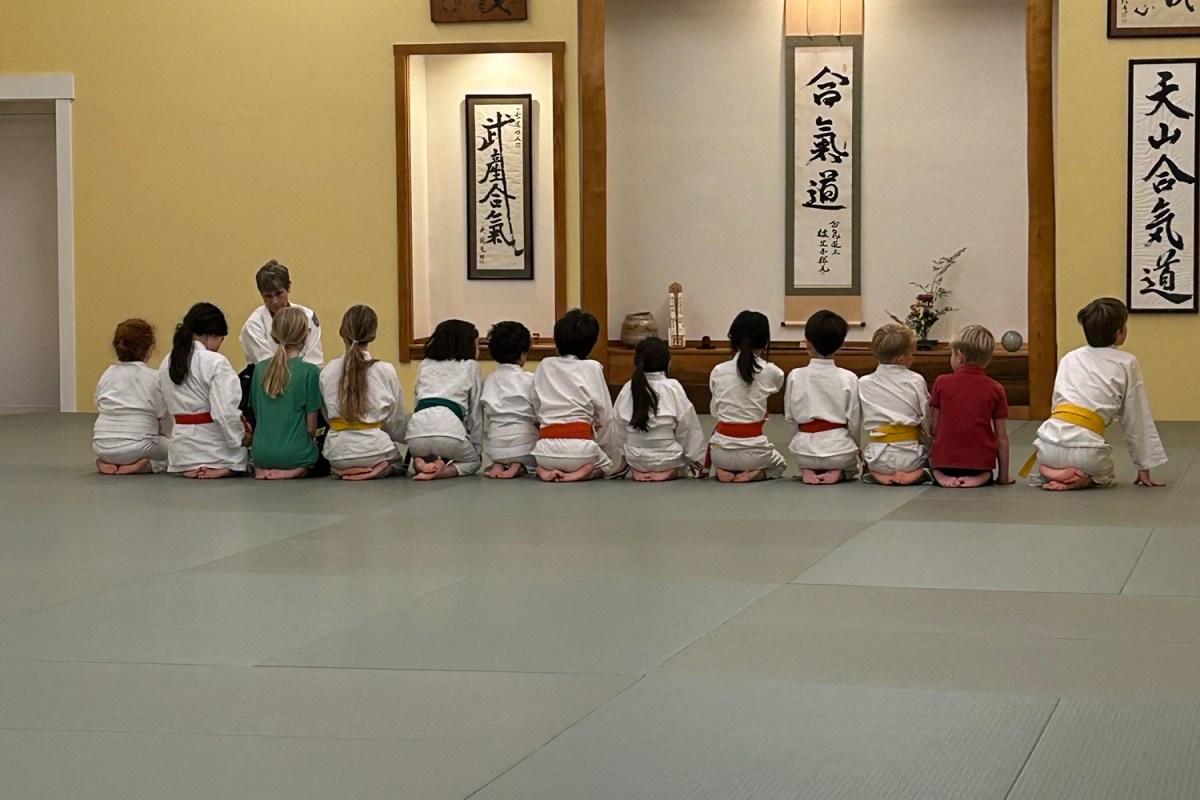
Our Aikido dojo recently had open house day. We recruited my brother, sister-in-law, and a dear young friend and all headed off to give it a try.
Let me tell you. It’s a lot easier to watch kids get up and down from the mat 30 times (or more) in an hour than to do it. Yeah, that’s not news to anyone reading this.
But I was captivated by the philosophy behind this martial art. It’s a way of redirecting energy. Or, as Wikipedia puts it, defending oneself while protecting the attacker from injury.
Aikido, the way of unifying energy, is a way of helping attackers calm down according to our Sensei. Watching my kids practice, I can see how the moves are intended to help the energy move past. It isn’t meeting a blow with a blow but instead stepping out of the way and using the attacker’s energy to pin them.
It seems like there are so many practical ways to employ this. It’s like not resisting our emotions, but instead leaning in to see what we can learn. It’s not telling others that they shouldn’t upset, but instead actively listening to understand the experience. It’s not fighting fire-with-fire but instead poking a hole in the roof so that the dangerous smoke can dissipate.
I imagine all the ways practicing Aikido, the way of unifying energy, the way of defending oneself while protecting the attacker from injury, could make a difference in this world. Our national politics come to mind. But I’m only a white belt so I’ll start by practicing on myself. That’s a head up to my inner critic.
(featured photo is one of mine of our dojo)

 Surprised By Joy