Owning This Emotional Ride

Diaper backward spells repaid.” – Marshall McLuhan

I read Brain Rules for Baby by John Medina when I was pregnant with Miss O. It had these great categories for nature versus nurture (which the author re-branded as seed and soil) and what we can do as parents and caregivers to influence and understand both.

It said that as our little ones’ brains developed, it was helpful to help them identify the emotions that they were feeling. And it advised that to do that, we need to own our own emotions.

I remember laughing and thinking there was no way I was doing that. I was going to be the one parent that could help their child be emotionally mature without doing it myself. Ha, ha, ha!

So, add one more thing to the list of things I thought I’d never do that parenting has taught me how to do. Identifying some of my negative emotions is the topic of my Wise & Shine post today: Emotional Literacy

Where Does The Spark Come From?

At the center of the being you have the answer; you know who you are and you know what you want.” – Lao Tzu

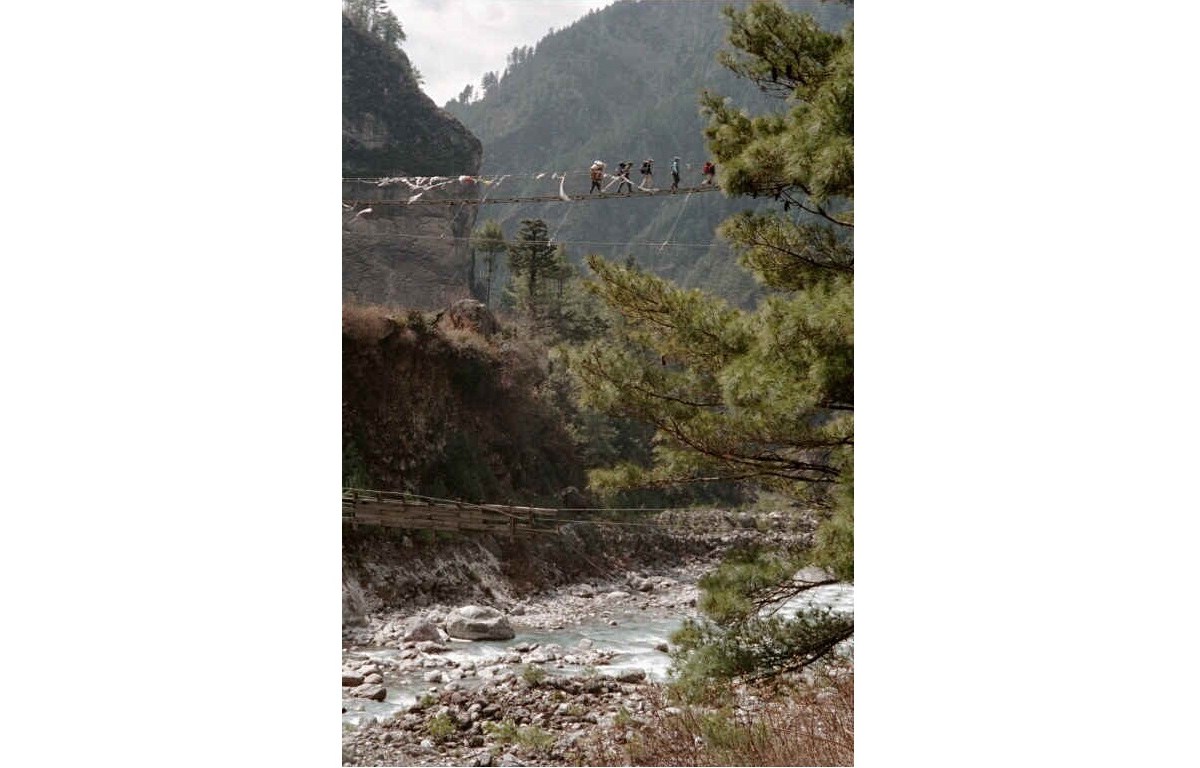
Cognitive and Computational Neurosience Professor Anil Seth related an experiment from about 50 years ago on a Ten Percent Happier podcast that caught my attention. In the study, participants, who were all male, had to either walk over a low, sturdy bridge or a high, rickety bridge over a raging torrent. On the other side of the bridge was a female researcher who asked them some questions and then gave them her phone number in case they had any follow-on questions. The outcome was that many more of the male participants who had walked over the rickety, precarious bridge phoned the researcher to ask for a date or talk to her after the fact.

Anil Seth summed it up as “The interpretation of this ethically very, very dubious experiment is that the creepy walk across the rickety bridge misinterpreted their physiological arousal caused by the scariness of the bridge as some kind of sexual chemistry with the female researcher.”

The point that Anil Seth was making is that our emotions, whether it is fear of a snake or chemistry with another person, often start in our body and then are interpreted by our brain instead of the other way around even though it appears that our brains are running the show. This matches the metaphor presented by psychologist Jonathan Haidt in his book The Happiness Hypothesis of the elephant and the rider. The rider is our conscious mind and the elephant is everything else – our sensations, subconscious motives, internal presuppositions. We think the rider is in charge but that’s only the case if the elephant agrees.

This reminds me of a recent conversation I had with a couple of friends about online dating. I tried online dating about 10 years ago after my divorce and before I decided to start a family on my own. I dutifully filled out the surveys that catalogued interests and personality preferences, wrote the essay and subsequently met a number of nice men. In fact, my friend Eric was someone who I met online and we became great friends after deciding that dating wasn’t right for us.

It seems to me that online dating asks us to essentially name what we want – and that we don’t know what we want. We can’t quantify the mystery or adrenaline or whatever else it is that causes us to feel attraction. Of course from there, a committed relationship is a decision as much or more than a feeling but for that initial emotion, it seems might come from the body as it did in the experiment that Anil Seth described.

Unfortunately, codes being what they are these days in Seattle, I can’t think of any rickety bridges either to cross or to stand on the other side of. 😊

What do you think of online dating? What about the idea that emotion starts in the body and is interpreted by the mind?

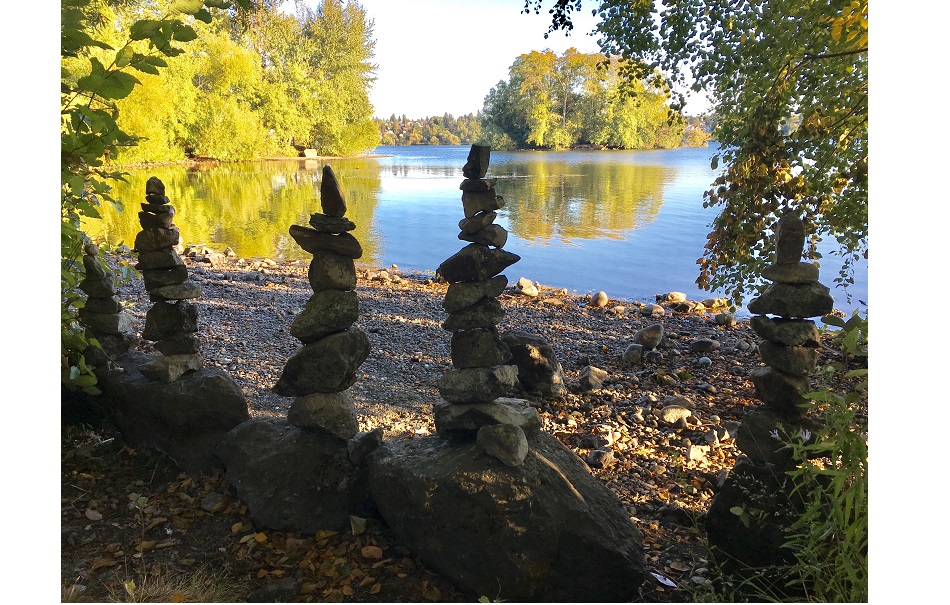
(featured photo was taken by me in Nepal on the trek to Everest base camp in 2001)

Feeling Things All the Way Through

What is not expressed is depressed.” – Mark Nepo

The other day our honorary grandfather said to my two-year-old son who was fussing over a circumstance in his life, “Boys don’t cry.” While it was said totally genially and as a way to humor a child out of a mood, there was no doubt that he believed that mantra.

Which brought to mind the quote included at the top of this post by author Mark Nepo, “What is not expressed is depressed.” The longer that I live, the more that I have come to understand that emotions wreak havoc if not allowed to be felt all the way through. It brought to mind a comment I heard from emotions researcher Barbara Frederickson that all emotions have utility – sadness and depression when experienced in the typical course of life often tell us to stop doing what we are doing.

It’s when we refuse letting them tell us things that we shut down our own ability to listen to our inner source of knowledge. I spent years doing that when I was married because numbing my emotions was easier than taking the steps to acknowledge that under the surface of my positivity that I was miserable.

I haven’t gotten much better at vocalizing my less enthusiastic emotions since then but I have gotten better at recognizing them. The other day I was really resistant to working on a particular client project and internally thought, “Wow, I can’t stand this project.” And that strong note which often doesn’t arise in me made me realize that the way this particular project is structured doesn’t work for me. Observing that, I could acknowledge I won’t do it this way again.

Watching my son with his honorary grandfather reminded me of a passage I read in Listening to Your Life by Frederick Buechner. In it he points out the similarities between old age and childhood – the body does not support everything you want to do so you learn to play, you aren’t at an age where you have to prove yourself and:

Very young children and very old children also seem to be in touch with something that the rest of the pack has lost track of. There is something bright and still about them at their best, like the sun before breakfast. Both the old and the young get scared sometimes about what lies ahead of them, and with good reason, but you can’t help feeling that whatever inner goldenness they’re in touch with will see them through in the end.

Listening to Your Life by Frederick Buechner

The great thing about toddlers is that there seems to be very little artifice to the emotions they share. In the course of learning to regulate them, they express what strikes them at the moment. Boys do cry as do girls, and then they move on. It’s like watching master class on authentic expression and I can’t help but be impressed and learn a little bit more every day.

Emotions about Emotions

A gem cannot be polished without friction, nor a man perfected without trials.” – Chinese Proverb

The other day I was in my car driving my toddler out of a park. We’d met some friends, played a while but had to leave because it was his naptime. His older sister was able to stay because our friends were bringing her home.

He was crying “go back” and “no, no, La-la (his name for his sister).” I totally sympathized with why he’d be frustrated, disappointed and feel it was unfair. I was glad he felt free to express himself. But after a couple minutes of this, I felt miserable listening to him.

I continued to feel so uncomfortable listening to him continue to cry for the entire winding road up and out of the park, probably five minutes. I kept thinking, “ I am so done with this emotion. I can’t wait until you grow up and can deal with disappointment quietly.”

I want my kids/friends/family to express themselves. I also feel miserable sometimes having to witness these messy emotions. How can both things be true?

I asked my meditation teacher. We talked through a history we both share of childhoods where “suck it up, buttercup” was the rule of the house. And we talked through the feeling of wanting to shut down and run away when someone wants to emote. I’d like to problem solve, move past, read it in a letter, whatever it takes not to just have to sit and bear witness for as long as they’d like to go on.

My teacher pointed out that this IS the practice of meditation. Observing what arises, not attaching, not resisting, not judging. Not piling on with feelings about feelings.

Damn, it’s hard.

I remember when my sister spent a month staying with my mom just after my dad died. She texted me something about my mom along the lines of “I can’t tell if she’s crying because she misses him or she feels sorry for herself.” It seemed so unfair to me to read that about my strong mother who is so put together and also allowed to grieve. But I’ve come to believe my sister was feeling that same need to escape someone else’s emotion.

The other day, I never mastered my emotion driving out of the park but did manage to sit in silence as my son worked it out. Once we drove through the park gates, he quieted down and shifted to observing trucks, pumpkins and being his usual affable self. Thank goodness. But next time, I aspire to not adding my emotions about other people’s emotions to create more misery.
Mistaken identity

“Before fixing what you’re looking at, check what you’re looking through.” – Mark Nepo

The other day I participated in a conversation with my five-year-old daughter and her seven-year-old best friend and neighbor. She reported that her friend kept interrupting her. Then she asked the friend a question and when the friend started to answer, she said, “See?”

Ah, we see what we expect to see. A chronic condition of being human but I had no idea it started so young! But more than that, I think the two were bickering not because one was interrupting the other but because they were hungry and bored. Another chronic condition of human nature – mistaking one feeling for another. This one is rife with the young!! It seems that they can’t reliably name what being hungry, bored or tired is and everyone around gets an earful until we solve the root problem.

But I’m not sure I do much better. Last year after one of the last times I was able to go to meditation class in person before the pandemic, I went grocery shopping afterwards. I bought so much food without any regard for price or practicality and it wasn’t until I was walking out that I realized that I felt euphoric. A great feeling. Not so great for budgeting!

For me this is the work of mindfulness. Observing the ripples in the water caused by emotions so that I am aware that they are stirring me up and hopefully every so often get a glimpse of my depths when the water is clear. And it is the work of patience and parenting to help others name what is ailing them and hold them until they can become clear. I’m getting a lot of practice these days.

So I asked my daughter what interrupting means. Turns out her definition was something close to feeling irritated whenever you are in conversation. I paused to be sure I didn’t interrupt, offered them a snack and a job to rake up the hedge trimmings and solved both the named and unnamed sources of irritation!

A Comedy of Errors

“We are here to live out loud.” – Balzac

Yesterday as I was loading the car for a special Palm Sunday drive-in show for kids at our church, I accidentally knocked my toddler down the two steps leading to the crawl space. We were going to the event with my mom and her friend, both over 80-years-old so I had gone in the crawl space to get camp chairs for them. I didn’t realize that my toddler had followed me up the little step stool and was just outside the door so that when I opened it to come out, it knocked him down. My five-year-old daughter went screaming into the house because she was sure he was dead, somehow the bike next to him also fell over (but I don’t think that was any significant source of pain) and fortunately when I went and gathered him in my arms, there was no obvious injury and he only cried for about 30 seconds.

But I still needed to get some pillows out of the crawl space so to make sure we didn’t repeat the same thing, I let the kids play in the car so that he wouldn’t follow me. After I got the pillows I got in the car with them, my daughter in the driver’s seat, son in passenger seat, me in the back. My son locked the doors and then pulled the door handle which set off the security alarm. I didn’t have my keys on me so I couldn’t turn it off and every time we tried to unlock the doors, it would automatically relock them. The horn was honking, the lights were blinking, the kids were crying – it was a fiasco! But I managed to get a door open, get them out of there and the horn stopped blaring.

It’s no wonder that I’m exhausted at the end of the day. I’m so busy taking care of everyone else’s moods that I don’t care of my own. Until after they go to bed and then I watch TV I don’t even care about, drink a glass of wine or spend too much time surfing the Internet. Those feelings – the horror that I knocked my child over, the frustration that I can’t do something as simple as getting things out of my crawl space without unleashing a whole chain reaction of undesired events, the relief that no one was hurt – they just sit in my gut and bubble all day long. Instead of being able to exercise, go for a walk or meditate, I just put them aside where they sap energy. And I know that I’m not alone. Everyone sitting at work with their boss and co-workers watching can’t exercise their emotions when they are frustrated. Any care giver or health care worker can’t show their emotions as they carry out their jobs. No one with any celebrity can make a parenting mistake without someone catching it on camera for everyone else to comment on.

But as someone who no one is watching, I wonder: Am I doing this right if I can’t take a moment to feel things through once I’ve taken care of making sure the kids are okay? Should I be parenting differently so that they see me take care of my mental and physical health? Because actually the most important audience of two is watching me after all.

I have a long history of being a caretaker, working very hard to be prepared so that things go smoothly and finding my inner sunshine and optimism. Which is to say that change will not come easily but I’m hoping awareness goes a long way to help get me started. Because I’m not sure that I knew how much I wasn’t expressing on the day before yesterday that wasn’t nearly as dramatic. That is the miracle of living out loud for me – that naming things has real power to shine light on doubt, wounds and habits and to start them healing. No doubt I will make plenty of other mistakes and the process will have to repeat but I hope to at least share the story along the way.

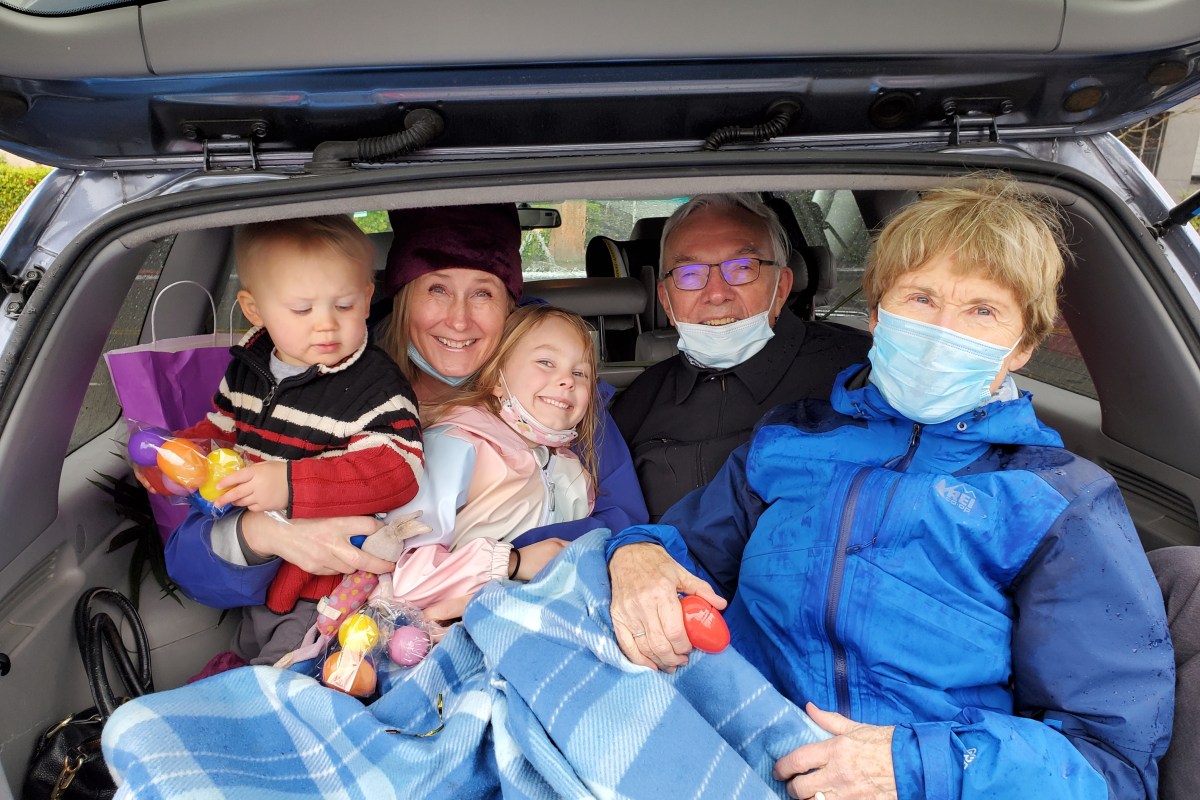
Postscript: We finally made it to the Palm Sunday event yesterday – it was cold and rainy. My daughter and my mom got out and danced while the rest of us huddled in the back of the car, enjoying both the warmth of being close and opportunity to be in a crowd, albeit a small, socially distanced, drive-in crowd. The chairs were not necessary because it was too cold and rainy to be sitting out in the open. But I had them just in case.