A Little Cookbook About Serving Others

“Where there is love, there is life.” – Aristotle

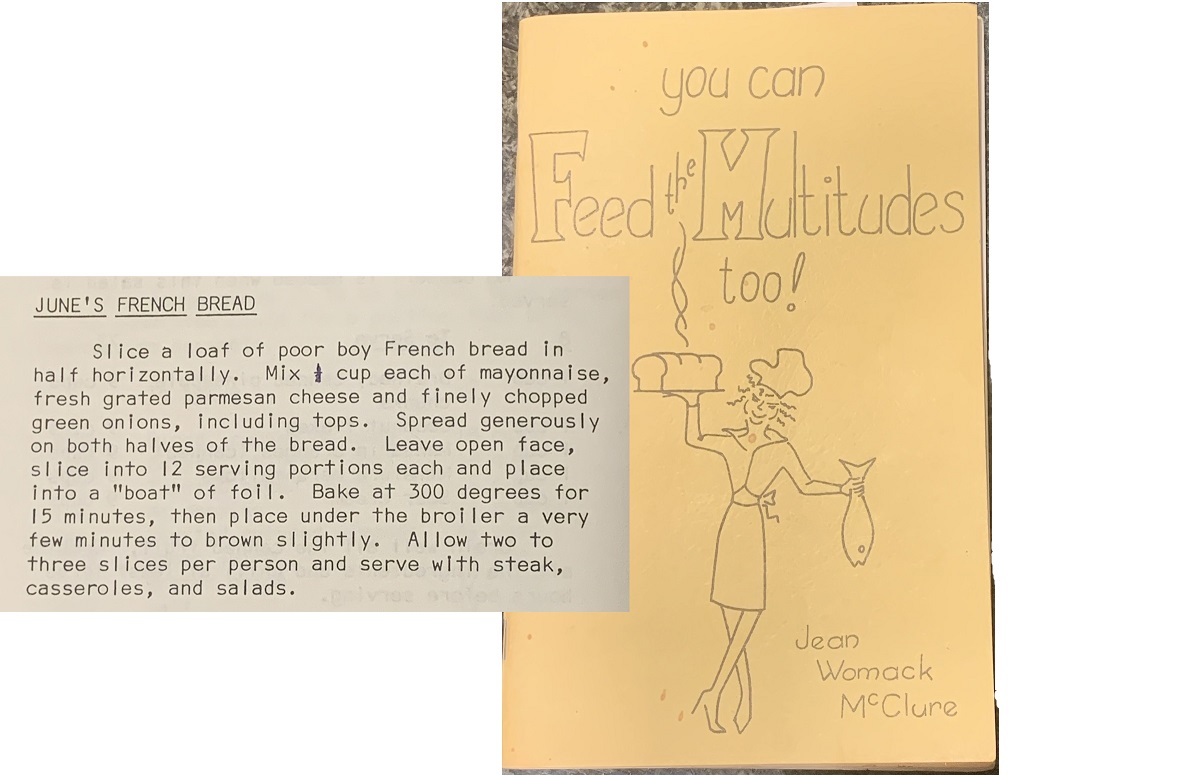
The other day I opened a little cookbook a 93-year-old friend gave me with the note “The French Bread recipe at the end is the best! Try it sometime.” What I found inside was this beautifully well-written story about how her junior high aged daughter came home from church youth group and said “If I have to eat any more of that food, I’m not going back.” She realized that the balance of the youth pastor’s program to gather junior high aged kids hung on the meals they fed them and took on organizing weekly meals for about 70 kids for 50 cents each (later 75 cents).

It’s the recipes she used but it’s also the story of creating community through food both for the kids and the parents that helped. She included tidbits about the practical jokes they learned from like not putting the Styrofoam cups for milk out early because pranksters would puncture them with forks so they became sieves when the milked was poured. And fed in morsels about the community of watchfulness they provided for some kids who told their parents they would be at the church but in fact were going elsewhere. She printed this cookbook in 1975, it seems like it has both romantic vestiges of a bygone era but also has great meaning of how to build a program to serve and feed each other.

This little cookbook reminded me of how hungry I am – for other people’s stories and for the time when we can come together to eat again.

The Risks You Have to Take

A friend said to me the other day, “I don’t know how you do it.” In this case, “it” was putting my two young kids to bed every night by myself. Of all the tricky parts that come with being a single parent, kids bedtime is definitely high on the list. The answer is that I’ve found a secret power that helps in the tough moments.

Of course, I’m not alone in discovering this – there are many stories about this secret. In Indiana Jones and the Last Crusade, Indiana is searching for the Holy Grail so that he can heal his father who has been wounded. He’s followed the clues and reaches a chasm that seems uncrossable. He’s scared because of the urgency of his need but he trusts that there is a way across and as he steps into that void, a stone bridge reveals itself. Or Joseph Campbell’s work on the journey of the hero that lays out how the pattern unfolds. The hero spends a great deal of time trying to every way to get to his calling without being vulnerable and then finally, with nothing left to lose, plucks up his courage, steps into vulnerability and only then is able to overcome all the obstacles. Or an interview that I recently heard with Melinda French Gates on Brene Brown’s Unlocking Us podcast, she describes how at one point in her career she didn’t like who she was becoming in the early culture of Microsoft that was very dog-eat-dog and before she quit, she decided to just try being herself and as a result, she found her success. Her comment was “no one talks about how much courage it takes.”

I believe we all reach that point where there is something we are called to do and it doesn’t make any sense. It’s a risk. I, for one, spent a lot of time in that “act two” that Joseph Campbell describes trying to find a way to having a family that didn’t require the vulnerability I felt when I voiced “I’m going to choose to do this on my own.” Which is why I had my kids when I was age 46 and 50. But I can affirm that there is a force that greets us on the other side of taking the risks we are called to take. It feels like less friction because our bodies, minds and souls know they are just where they are supposed to be. It feels like faith, joy and delight all bundled together.

There is an opposite force when we are walking a path not our own. I remember this well from the years I spent married, not wanting kids, not wanting to be there and yet not brave enough to own that truth. It was like packing my soul in bubble wrap and asking it not to participate. My favorite poet and author, Mark Nepo describes what happens when we don’t take the risks we are called to, “Despite the seeming rewards of compliance, our souls grow weary by engaging in activities that are inherently against their nature.”

I don’t tell this to my friend when she makes the comment because she doesn’t need the secret right now. She has a great husband and they parent beautifully together. But when she or anyone else in my life meets the next challenge that asks them to be vulnerable in order to walk their path, I will be right next to their side telling them, “Go ahead. There is help once you step onto that path. I promise! But you have to step first.”

The Serenity Prayer for Parents

The other day I was chatting online with a bunch of parents about how to get kids to eat well. One woman said seeing pictures people post of the interesting and nutritious foods they were serving their kids made her feel depressed. Another said she fixes three different dinners every night – one for the grown-ups and a different selection for each of her two kids. I admitted that I get so tired of wasting food that I often forget to try. There were a lot of good suggestions and strategies in our chat but also a lot of frustration and self-flagellation from parents who are trying their best. It reminded me that parents need a serenity prayer to remind us not to beat ourselves up.

God grant me the serenity to accept the things I cannot change. The courage to change the things I can, and the wisdom to know the difference.

The serenity prayer is of course most known as a cornerstone of Alcoholics Anonymous (AA). I asked a friend who goes to AA, how that meshes with a wide variance of belief systems that go along with such a group. He told me, “when a newby is having a problem with the term higher power, or a ‘God of your understanding’….the old timer would say, ‘for now, just believe there is a God, and it isn’t you, go sit down and listen.’ “

So for whatever Higher Power means to you, it is a relief to acknowledge that there are forces beyond our parenting that influence our little people. We want them to eat well for many great reasons that including our own needs because this is a work in progress and we are itching for solid proof that they’ll be fine and because it is our job and we want evidence that we are doing it well. They will grow up – with our help and in spite of our help. I have a friend with older kids who had a son who would only eat bagels when he went off to college. Truly, that is not an exaggeration. He was a great kid – athletic, smart and kind and she was a fantastic parent. He turned out fine.

These years when my kids are young are the ones where I get to practice that finding that wisdom between accepting what I cannot change and having courage to show up for my kids on the things that I can. It starts with the battles over peas and broccoli but these are just stand-ins for our ability to know when to push, improve our ability to listen and not judge ourselves too harshly when we get it wrong. God grant me the serenity…help me find that place to listen…please make cauliflower too pricey as a sign I don’t need to serve it anymore…let me know that my kids will be fine. Amen.

Oh, I’m Wounded

“A child can ask questions that a wise man cannot answer.” – unknown

“Mama, why don’t grown-ups cry?” my daughter asked when she was three. There are a lot of possible answers to that question – we do but it’s more often that they leak out of us unexpectedly, or that not as much shocks us because we have experienced more, or that we have more ways to communicate our feelings than young children. But it wasn’t until I was reading something last week that I found my answer.

The passage was a simple meditation on giving air to our wounds. And even though I’d read it before, somehow the light of life hit it just right this time so that when I read it again, I heard it as it related to me for the first time. “Oh, I’m wounded” I thought in surprise.

Twelve years again when my business partner sat me down to lunch to tell me of my husband’s infidelities, it was a clear enough owie. But as the years passed and we divorced, I reshaped my life and my work and then went on to have kids as a single parent, I could easily tell you that is far in the past in a manner and tone that is believable. And in many ways it is. I’ve owned my own part in the failure of our marriage, forgiven him for his and my two darling kids are proof that things worked out the way they were supposed to.

But the wound, I discovered, is in how I see myself. My ex-husband thought I was too independent. At first couldn’t even fathom that could be a deficit. From an early age as the youngest of three children in a family of big achievers, being independent meant I could keep up, being independent was a greatly praised trait and being independent became one of the pillars of who I was proud to be. Then came along my marriage and my ex who could pronounce the word with a particular emphasis and bite that hurt. In-de-PEN-dent.

But what struck me last week as I read that meditation was that I’ve allowed his criticism of a personal characteristic of which I am so proud to undercut my belief that I’m lovable as a partner. My ex-husband’s fear that he was unlovable created a belief in me that I was unlovable and I have never healed that wound. And saying that is hard so I imagine it’s taken me all these years to discover that because I wasn’t ready to air the wound. So here’s my new answer to my daughter’s question: grown-ups don’t cry because we don’t know we are hurt. Grown-ups bury things deep so that they can keep being productive, optimistic and claim some measure of success. Grown-ups need to listen to the advice they give kids when they get hurt: “Be brave and let us see the wound.” Because when we are vulnerable about the way we are wounded and have wounded others, we have a chance to heal it and inspire others to do the same.

The Gift of Perspective

“If you light a lamp for somebody, it will also brighten your path.” – Buddha

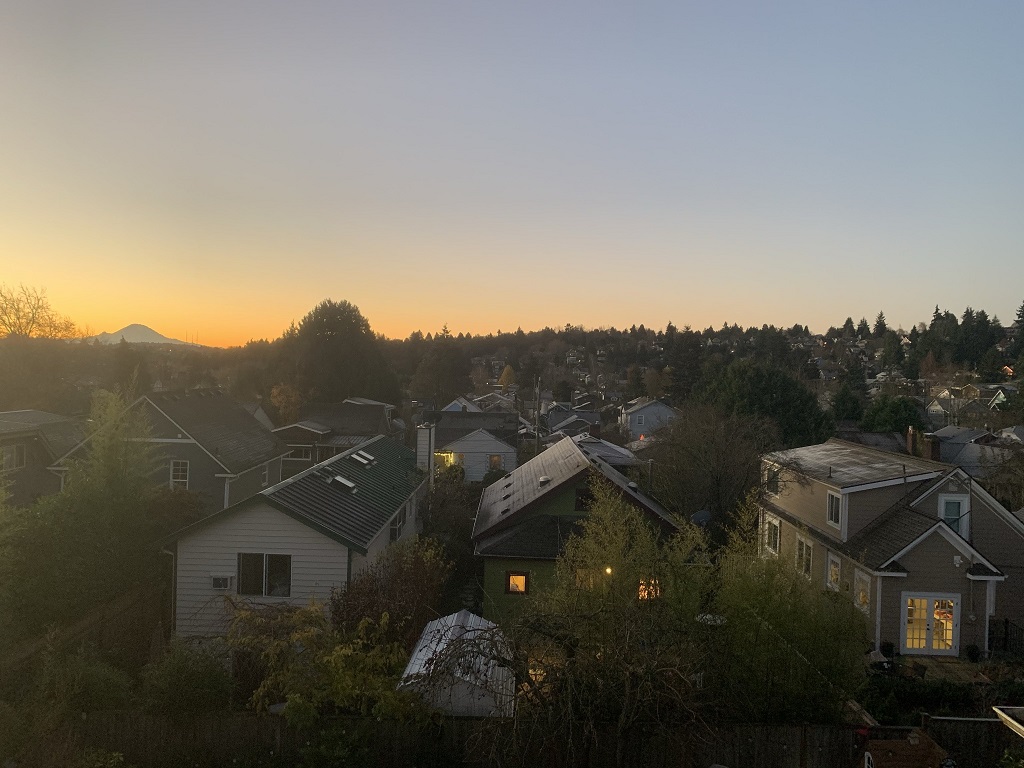
I thought I had a great way to teach perspective to my kids. I asked my daughter how many houses she could see when she looked out the ground floor window of our house, it was about three. Then I took her up to the floor above and ask her how many she could see and it was about seven. Finally we went out onto the little deck on our rooftop and I asked her how many she could see and it was more than she had numbers for. “Olivia” I said “this is the perspective that you get when you are older, you know that everything fits into a larger picture and you are able to see more of it.” Brilliant, right? The problem was she was only three. 🙂

I find myself pondering the little crumbs of wisdom other parents have given me since I became a parent until they finally click. Someone said when my oldest was a baby in a bucket car seat, “At this age, parenting is physical but after that it becomes psychological.” And when my daughter got to the age of choices, power struggles and motivation to do chores, that line made sense. Another said when my son was born, “The great thing about having two kids is while you love them both, you like at least one of them at any given time.” And when I realized that the Universe is kind enough to make it so only one of their phases really pushes my growth at a time, I got that one. Most recently someone said to me, “It gets easier. It gets less busy.” And I can’t wait to discover when that becomes true.

It strikes me that this is the gift we give to other when we share our experience. We mark the path of how they can go forward like rock cairns on a hiking trail. They are tokens of kindness and wisdom for others to follow so that they know they are going the right way and they are not alone.

Parenting in a Pandemic

“I am always doing that which I cannot do, in order that I may learn how to do it.” – Pablo Picasso

On this 263rd day of coronavirus shutdown, my five-year-old daughter asked me “What are we doing today?” as she has for most every day. It made me realize that parenting and parenting in a pandemic has made me a leader. Which probably makes me a little slow to get it, especially if you go with University of Houston researcher Brene Brown’s definition of a leader as “anyone who holds him or herself accountable for finding potential in people or processes.”

I don’t think of myself as a leader. Instead I think of myself as independent and that is how I choose to become a parent as a single person. I also think of myself as a nurturer and that has fostered my relationship with my healthy kids. But naming that I’m called to be a leader of my little family has some usefulness – it makes the work more intentional and it makes exploration, play and boredom seem like essential tools of the job. It also amplifies my gratitude that I can say on many days, “I don’t know, your aunt or nana will be here soon!” Because parenting in a pandemic is hard and even leaders need a break!

The Practice of Gratitude

“Wear gratitude like a cloak and it will feed every corner of your life.” – Rumi

I read this excerpt from Lynne Twist’s book The Soul of Money and instantly identified with it:
For me, and for many of us, our first waking thought of the day is ‘I didn’t get enough sleep.’ The next one is ‘I don’t have enough time.’ Whether true or not, that thought of not enough occurs to us automatically before we even think to question or examine it. We spend most of the hours and the days of our lives hearing, explaining, complaining, or worrying about what we don’t have enough of…. We don’t have enough exercise. We don’t have enough work. We don’t have enough profits. We don’t have enough power. We don’t have enough wilderness. We don’t have enough weekends. Of course, we don’t have enough money – ever. We’re not thin enough, we’re not smart enough, we’re not pretty enough or fit enough or educated or successful enough, or rich enough – ever.

Before we even sit up in bed, before our feet touch the floor, we’re already inadequate, already behind, already losing, already lacking something. And by the time we go to bed at night, our minds race with a litany of what we didn’t get, or didn’t get done, that day. We go to sleep burdened by those thought and wake up to the reverie of lack… What begins as a simple expression of the hurried life, or even the challenged life, grows into the great justifications for an unfulfilled life.

The one component that feels so scarce right now is me-time, time when I want to do what I want to do. Between having 2 young kids, working and trying to keep some order in the house that gets ripped into pieces every day as we are all stuck in here during the pandemic, I think it’s probably factually correct to say that my discretionary free-time is at an all-time low. BUT as I read the passage above, I realized that I don’t have to grieve that fact every day.

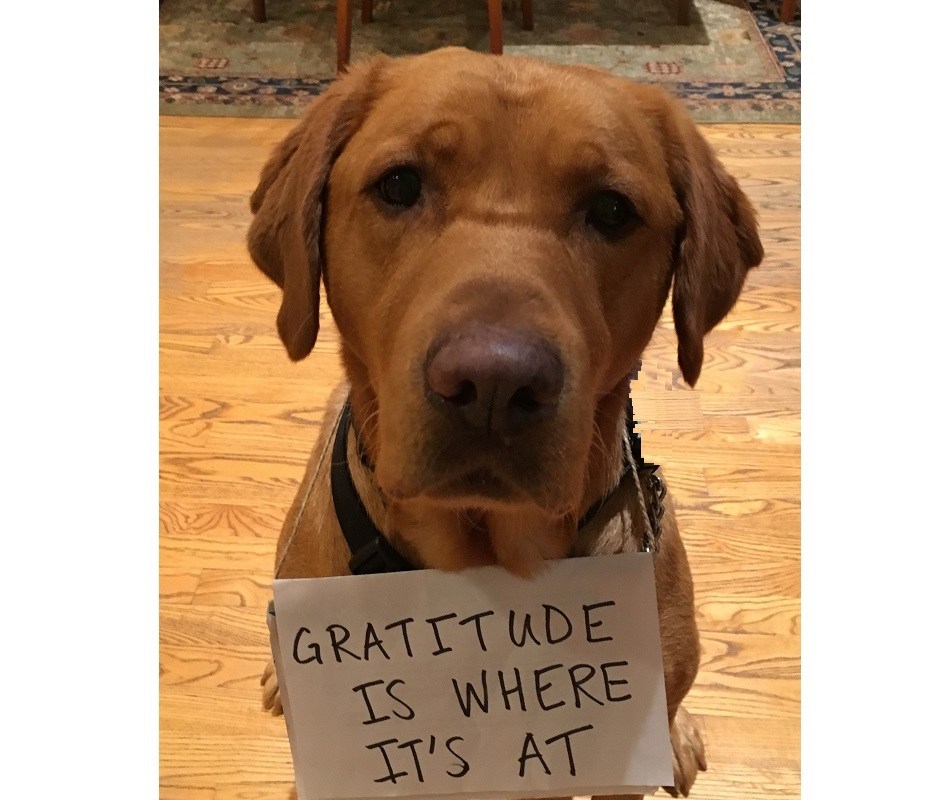
Lynne Twist, the author of the passage above, suggests we can believe that we are enough. Brene Brown, the University of Houston researcher who excerpted the passage above in her book The Gifts of Imperfection finds that her research shows practicing gratitude is what creates joy in our lives, no matter the circumstances. And she suggests that gratitude isn’t a passive thing that you espouse but something that truly needs to be practiced – like the piano.

It’s funny how easy it is to see in my own life once someone points it out to me. And I can see that my attitude of gratitude or belief that I’m enough can affect the lives of my children intimately. Because I have these years when they are young and still at home with me, even if it’s a little longer because of the pandemic, to set the tone by which they receive the world. In this week of Thanksgiving, it is such a perfect time to start some lasting traditions of naming the things we are grateful for every day.

Carrying Only What Is Necessary

“Travel light, live light, spread the light, be the light.” – Yogi Bhajan

I have a long history with backpacks – picking them out, carrying them, feeling relieved to take them off. At one point when I was in my thirties and planning a lot of climbing trips, I got one that was almost 6000 cubic inches. I can’t even describe how large that is but suffice it to say that when you have a backpack that big, your friends start believing you have room to carry their stuff. 😊

Then when I starting going to meditation class, my meditation teacher had this great meditation about closing our eyes, imagining take off our metaphorical backpacks, emptying them of all the stuff we carry with us like our responsibilities, worries, wit to keep others at arms reach, our history of being hurt and then at the end of our 75 minute session she had us load up our backpacks with only what was truly necessary. I’ve never looked at a backpack in the same way since.

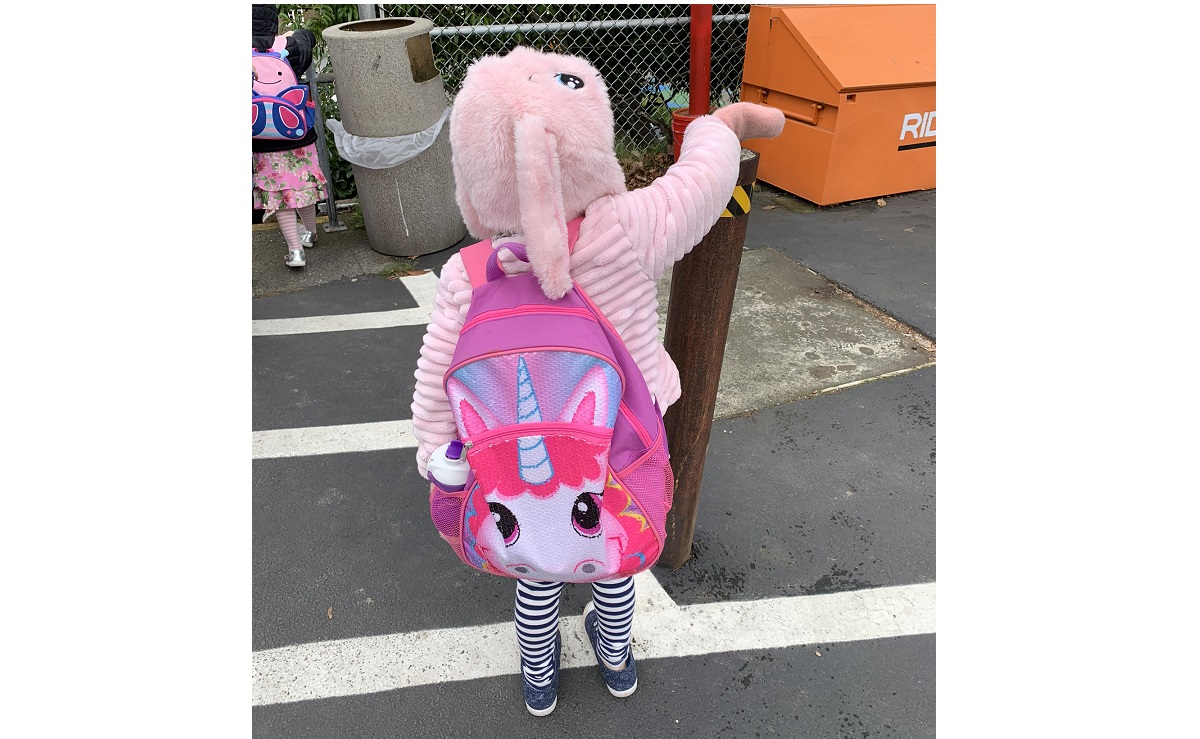
When my daughter started carrying her own backpack in Pre-K class she began her own history with shouldering a load — having to be responsible for getting everything back into it, remembering to go to it to find what she might need and discovering that filling it with all your treasures makes it quite heavy. I found myself getting a little choked up watching her and her fellow 4 yr-olds shoulder their loads. It seemed like such an act of bravery to watch a little one try to organize their essentials into a small space, use all their skills with zippers, pockets and straps and then wrestle it on.

So here’s to carrying only what is truly necessary on our backs!!