“Enough is abundance to the wise.” – Euripides
Fair to say that Cooper the dog steals something in our house nearly every day. I think most of my photos of the week posts capture him with some contraband. It’s easy to do the math and figure out that he must be doing that a lot in order for me to have that many photographs.
I learned of some research this week that was a huge a-ha for me. It shed light not only on Cooper’s habits but also some of my own. On the Ten Percent Happier podcast, journalist and author Michael Easter (his most recent book is Scarcity Brain) was talking about how our ancient brain mechanisms loop us in to always wanting more.
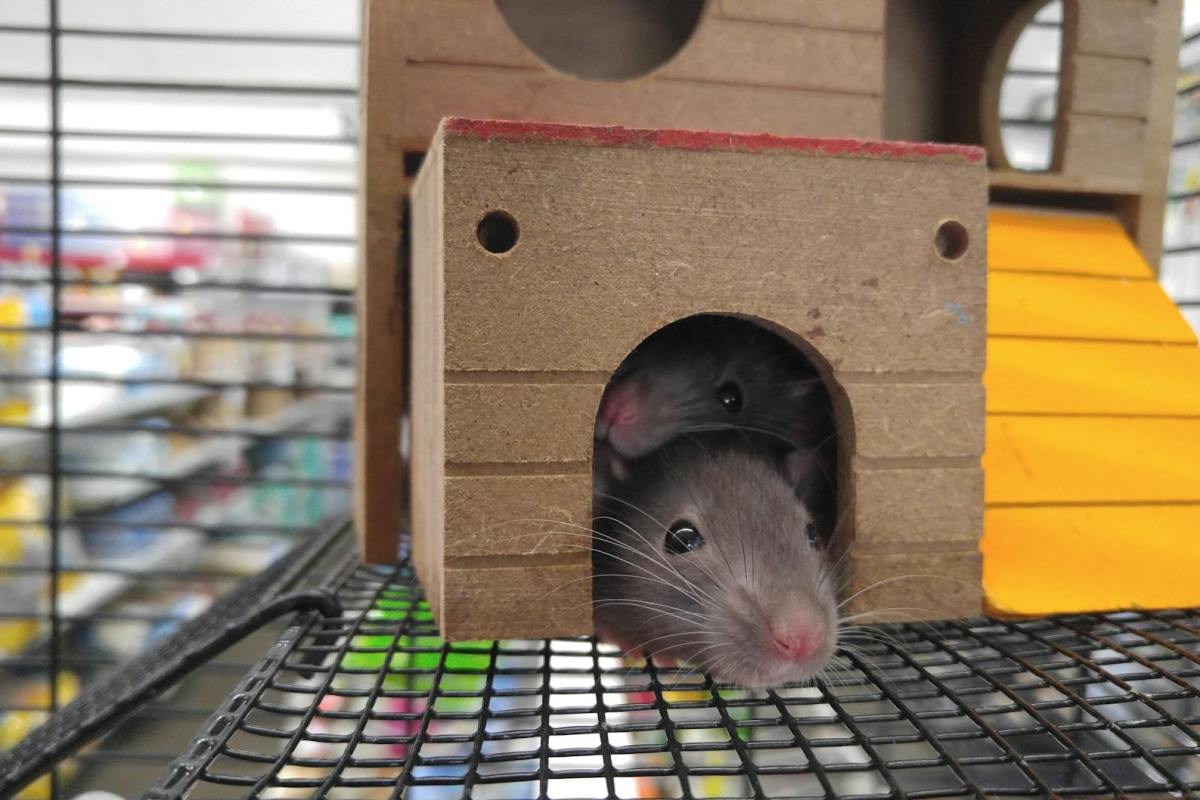
He described a research project in which rats were given a choice. The first choice was one reward system that gave them food every other time they pushed a button. The other choice was a reward system that didn’t have predictable cadence but gave them slightly more food when it did pay off (like an average of every 5th time).
The rats were choosing the second choice withe the unpredictable payoff which was surprising to the researchers. Usually they will choose what gets them the most food. The payoff of the first choice, the predictable every other time system was much higher.
The rats were living in small, plain cages. Then they changed the rats’ environment so they were living amongst plants in an environment that mimicked a natural habitat for rats. Once they changed the habitat, the rats switched to picking the every other time reward system.
The conclusion was that when we don’t have enough stimuli, we’ll make odd choices in order to spice things up. Like doomscrolling through social media, thinking we’re hungry when we aren’t, or in Cooper’s case, stealing the Christmas gnome.
And Michael Easter’s take away on that research and other studies about what one of the best ways to get more stimuli? Getting out of our climate controlled houses to spend time in nature.
It’s funny but when I took Cooper out for a hike last week, he didn’t steal anything after we got home. Not even a dirty, sweaty sock that smelled of the trail. And for that matter – neither did I.
(featured photo from Pexels)
You can find me on LinkedIn: https://www.linkedin.com/in/wynneleon/ and Instagram @wynneleon
I host the How to Share podcast, a podcast celebrates the art of teaching, learning, giving, and growing.
I also co-host the Sharing the Heart of the Matter podcast with the amazing Vicki Atkinson.
 Surprised By Joy
That study is fascinating. I do believe the science behind getting out and enjoying nature—even if it’s just for a few minutes a day. There’s something about seeing the natural world that rewires our brain and makes us realize we can be content without all the material things the world constantly tells us we need.
I will definitely check out that podcast because I’m planning a blog post on my retirement coaching site on the topic of scarcity and abundance and having enough.
Have a wonderful week, Wynne!
LikeLiked by 3 people
I love how you put it in the context of material things, Michelle! It’s a good podcast — I think you’ll find some great content there. Can’t wait to see you post!
Happy Monday!
LikeLiked by 1 person
Rats do teach us so much with this microcosms an social experiments. It’s so fascinating to think of us living creatures acting out due to a lack of stimuli. I guess this is why kids get taken out for recess and why coffee breaks are so important for us adults too. I’ll have to observe T now for a week more closely and see how this plays out at home too!
LikeLiked by 3 people
Recess and coffee breaks – exactly! We absolutely need it and I can’t wait to see what your observations are with T! Hope you have a great week, my dear friend!
LikeLiked by 1 person
Fascinating! The correlation between rats in a cage and our human existence has a loud ring of truth! If one can’t get out in nature, I recommend having a few hobbies to cycle between, that way the boredom factor doesn’t creep in!
LikeLiked by 2 people
The loud ring of truth — that’s what I thought too, Tamara! Good suggestion about hobbies! Thanks for adding that to the conversation!
LikeLiked by 1 person
Always a pleasure! 😄
LikeLike
Thanks for this insightful ‘rodent reminder’ Wynne that often, ‘Less is More’. So humanly counterintuitive and restricting … So divinely fulfilling and freeing in Nature.
Keep Looking Up ^ … His Best is Yet to Come!
LikeLiked by 1 person
Humanly counterintuitive — well said, Fred!! Thank you!
LikeLike
PS – Both your and Daryl’s post on Poems of the Soul today are in sync today Wynne … a testimony that “Great minds think alike” 😊
LikeLiked by 1 person
Oh, I love this pointer, Fred. I’m going to go find Daryl’s post!
LikeLike
Fun backstory.
LikeLiked by 1 person
Isn’t it? Thanks, Brad!
LikeLiked by 1 person
I was astounded by the first result that a rat could be aware of the specific volume of food it receives when opting for Door Number Two. That’s fascinating that it stopped when different stimuli was introduced. I’m with Cooper. I’m all for getting out and seeing things, feeling things like the wind on my face. Now I’ll be able to resist stealing my neighbor’s Christmas gnome. 😊 Interesting stuff, Wynne!
LikeLiked by 1 person
Oh, you have me laughing, Melanie. Yes, leave your neighbor’s gnome alone! (that could be a great title!).
Yes, isn’t it fascinating? So much to think about and I love hearing little tidbits about things like this! Hope you have a great week, my friend!
LikeLiked by 1 person
Yes! It totally could be a title…😂😂
LikeLiked by 1 person
amazing, and that makes total sense! as a human, when I’m restless, I start rooting around for snacks to eat, even when I’m not hungry )
LikeLiked by 1 person
That’s exactly what I do too, Beth!! Right!! It makes total sense!
LikeLiked by 1 person
Great information. Another reason to try new things and take on new challenges. Cooper is such a good teacher.
LikeLiked by 1 person
I’m telling Cooper he’s a good teacher right now, Gwen. He stopped snoring long enough to give your comment a nod! Thank you, my friend!
LikeLiked by 1 person
Interesting, Wynne! Another great example of the healing power of nature.
LikeLiked by 1 person
I totally agree, Dana! Just in case we needed another reason to get outside! Thank you!
LikeLiked by 1 person
Right?!
LikeLike
What an interesting post Wynne.
Thank you.
We should nevee be afraid to try new things.
LikeLiked by 1 person
I couldn’t agree more, Maggie! Thank you!
LikeLiked by 1 person
Wynne 🤗
Have a good week my friend.
LikeLike
I see that others have used the word “fascinating” about study, and I have to agree! I’m trying to think how it might apply in my life and what kind of challenges I need.
LikeLiked by 1 person
That’s what I think too, Belinda!! Thanks for chiming in!
LikeLiked by 1 person
Interesting. A couple of things. First, the research was on rats. We cannot assume that humans act the same way unless there is comparable research to support it. Second, again, unless there is data to support it, it is conceivable that one can create abundant stimulii within a house or, alternatively, by going to other indoor places. A gym comes to mind.
I am not familiar with the research you refer to, so I might be wrong, but researchers are usually pretty careful about following up with the kind of studies I am referring to. Still, thanks for the interesting information, Wynne.
LikeLiked by 1 person
Excellent points, Dr. Stein. Any mistakes in describing the research are mine – he had several sources and my shorthand doesn’t do them justice. With that said, I agree we can make indoor stimulation as well — and that certainly was the case with the mice.
LikeLiked by 1 person
“The conclusion was that when we don’t have enough stimuli, we’ll make odd choices in order to spice things up. Like doomscrolling through social media, thinking we’re hungry when we aren’t, or in Cooper’s case, stealing the Christmas gnome. ”
Well that sums up our lives 😅
Interesting post. I learned something new here 😊
LikeLiked by 1 person
I love your summary – yep, it says a lot, doesn’t it? I’m so glad you learned something – thanks for visiting and the comment!
LikeLiked by 1 person
That’s so interesting. It sounds like Cooper needs daily walks, or maybe walks a couple times a day. I know I do! Or fun times chasing balls in the backyard. We used to take our dog Natasha out in the desert to chase our Suzuki Samurai for several miles. She loved to try and catch the back bumper. She was known to destroy things like shoes, sofas, sprinkler systems….but after we did the desert routine, she was good!
LikeLiked by 1 person
What an interesting idea to have her chase the car. I love that you found something that wore her out. I walk Cooper twice a day but it just isn’t enough. Probably not for either of us.
LikeLiked by 1 person
It really worked. We were out in an empty lot in the desert and drove around and around.
LikeLiked by 1 person
I love it!
LikeLike
Love this thoughtful post, Wynne. Tons of takeaways about how to live better, do better, be more aware. Xo! 🥰
LikeLiked by 1 person
Thank you, dear Vicki!! Lots of takeaways for sure! ❤ ❤ ❤
LikeLiked by 1 person
Xo! 🥰
LikeLike
Michael Easter obviously doesn’t live in Wisconsin in December. I’ll take that lack of stimuli if it means I get to stay warm.
LikeLiked by 1 person
Funny you say that because Michael Easter lives in Vegas. And you guys are always doing something so I don’t think you ever lack for stimulus!
LikeLiked by 1 person
I was just telling my younger brother how it always seems like we couldn’t possibly survive with less, but when life throws us curve balls, we somehow survive with less.
It being part of the instinct from ancient survival makes a lot of sense.
LikeLiked by 1 person
You’ve summed it up so well, Rose! We are adaptable, that’s for sure! Thanks for the comment!
LikeLiked by 1 person
Wynne, I know it must sound so simplistic to some, but just going outside helps me reset my mood and attitude. Being in the house, using our phone…we can get into a bubble of sorts where the world “shrinks down.” Going outside reminds us all we’re a very small piece of a much bigger puzzle to explore. And of course, at this time of year in certain places going outside in the cold brings that realization home that much sooner lol. I do think the stimulus of relocating outdoors can help our decision-making in the moment.
LikeLiked by 1 person
Love this comment, Bruce. I’m laughing about going outside in the cold. Yes, that really works, doesn’t it? 🙂 But I think you nailed it with the bigger perspective. For me too!
LikeLiked by 1 person
There is ‘something’ awesome about nature and how it affects our spirits and changes our perspectives. Which is part of the reason, we’ve been on our park adventures. It gets us out there, we get to see beautiful views, and replace those stress lines of worry, with smiles and curiosity.
LikeLiked by 1 person
Oh, “replace those stress lines of worry, with smiles and curiosity.” – that’s so good, Rose!! Yes, I love your park adventures – so much to see, enjoy and be curious about! You said it perfectly!
LikeLiked by 1 person
The title of the book, Scarcity Brain, sounds intriguing. I hope we have contented brains, but it’s hard.🤩
LikeLiked by 1 person
Ah, you said it perfectly, Hazel. It’s hard to have contented brains. Right!
LikeLiked by 1 person
I’m going to check out Michael Easter’s book! Nature always speaks to my soul!
LikeLiked by 1 person
I hope you find it interesting, Mary! I agree with you about nature – it just fills me up! Thank you for the comment!
LikeLiked by 1 person
WOW, what an interesting perspective Wynne. But Cooper stealing the Christmas gnome is too doggone funny! Oh, what we do when we are stimulated in various situations! Thanks so much for sharing this interview of intrigue my friend. 😍💞🎄
LikeLiked by 1 person
I’m laughing again now too, Kym! Thank you so much for stopping by and your spot on comment! Happy Holidays, my friend!
LikeLike
Wonderful post, Wynne, and it proves that nature heals and benefits in more ways than one. ❤️
LikeLiked by 1 person
Isn’t nature amazing, Lauren? Thanks for the comment!
LikeLiked by 1 person
My pleasure, Wynne! ❤️🎄
LikeLike
🤣 Your last part was hilarious. I guess you both were tired. I still believe that the cat, or someone else, is trying to frame Cooper. He doesn’t come across as a dog that steals things. 😂 Fascinating study and a great demonstration of the ability to adapt under different circumstances.
LikeLiked by 1 person
I’m laughing, Edward. Someday you are going to meet Cooper and you’ll be shocked when he steals your socks or car keys! 🙂
LikeLiked by 1 person
😂 That’s going to be hilarious. Looking forward to that.
LikeLike
Anything to add spice. So a very tired golden finally stops retrieving! 😉
LikeLiked by 1 person
Right, Rebecca – spice it up!! 🙂
LikeLiked by 1 person
hahaha; wise and witty; I had such a good time reading this; go out and take a stroll { great idea 🙂
LikeLiked by 1 person
Always a good idea, right, John? 🙂
LikeLike
except not on a 40 degree day like here ; whew 😦
LikeLike
What an interesting study! And although I haven’t conducted any official studies on this topic, I 100% believe in the critical importance of spending time outside in the elements every day.
LikeLiked by 1 person
Critical importance – I couldn’t agree more, Todd!
LikeLiked by 1 person
very interesting study Wynne, and amazing behavior of Cooper confirming it 😀
LikeLike