“Everyone has a talent. What’s rare is to follow it to the dark places where it leads.” – Erica Jong
Do you have a solid idea of what you know? Not what your jobs have been or what roles you have played but the overarching talent, wisdom, and perspective that is uniquely you?
I ask because I’ve spent the last five months trying to figure out what I know. Believe me, I understand that seems like a long time to try to answer what is a seemingly straightforward question. But I found it to be harder than I expected.
Here’s why. I’m bound by a non-compete so that I can’t fall back to the technical expertise that I’ve cultivated for my career, at least not for a few more months. But that has been an incredible opportunity for me to figure out the bigger picture. Instead of just treading the same path I’ve been walking with Microsoft SharePoint, Teams, OneDrive, and the other technologies, I’ve had to examine what mountain I’ve been climbing the whole time.
Here’s what I discovered. In the 25 years I’ve been helping people with their collaboration software, I’ve learned a whole lot about how to share.
Not just what buttons to push to share a file, a photo or a calendar, but what makes groups do it well – and also do it poorly.
One of the more stark examples was a team that was so good at sharing not only files but also ideas, contacts, and worries about what could go wrong, they seemed to be able to nimbly handle challenges.
And then the leadership changed to someone who criticized that they talked too much, wanted people to focus on their own tasks instead of helping others, and berated team members for anything shared before it was polished. The leader thought they were “whipping the team into shape” but one of the side effects was that they were squelching vulnerability and sharing.
A couple of months into the new leadership, the team lost a key client. In the debriefing, it became clear that team members had picked up some little warning signs. If they’d shared them, it would have helped put together the big picture that the client was at risk.
While this example is in a professional context, it happens again and again in writing groups, schools, between friends, and more.
We have to share and it’s vulnerable. So we are continually evaluating who the audience is, what are the right permissions and how to identify the right time. That applies to files as well as personal stories, social media, wisdom, and more.
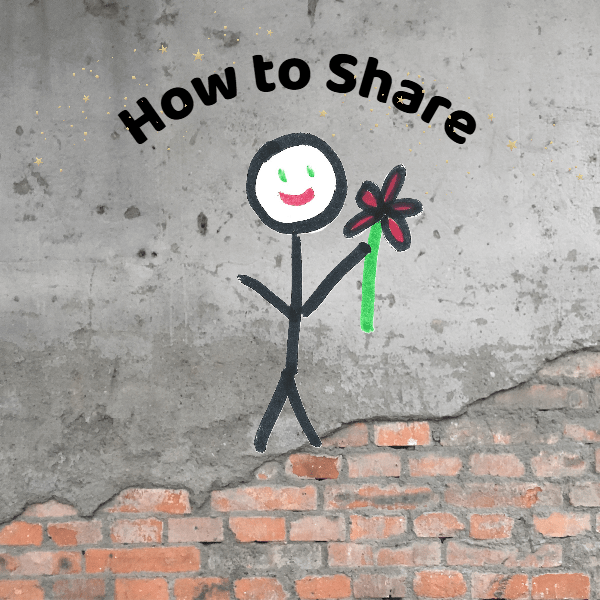
This period of introspection about what I know has pushed me to launch a new podcast, How to Share. It draws not only from my interest and experience but also applicable research and wisdom. My incredible and insightful first season guests will lend their expertise on how to share things such as credit and feedback, passwords, corporate communications, as well as how to receive when others share.
Here’s a short clip from the first episode, Why We Share:
Based on recent technology changes, we learned that embedding the full YouTube video reduces listens and views. Here are some ways you can listen and watch:
- The podcast player embedded below
- Click this link to watch in a browser: Why We Share
- Subscribe to How To Share on Spotify, Amazon Music, or Apple Podcasts
- Subscribing to the YouTube channel: https://www.youtube.com/@howtosharepodcast
I’d be honored if you’d listen, watch, provide feedback and subscribe.
On the Sharing the Heart of the Matter podcast, Vicki and I also had a fascinating podcast conversation with author Mark Wukas about his incredible debut novel The Kiss of The Night. Please check out this fantastic author and hear how he cultivated his dream to write a book and this plot for almost 40 years!
 Surprised By Joy
thanks for sharing and I think you’re on to something
LikeLiked by 1 person
Thank you, Beth! I appreciate your encouragement because starting new things is hard!
LikeLiked by 1 person
it always is, but always worth trying
LikeLiked by 1 person
Thanks, my friend!
LikeLike
I’m definitely intrigued.
LikeLiked by 1 person
I appreciate hearing that so much, David! Thank you, my friend!
LikeLiked by 1 person
“We have to share and it’s vulnerable. So we are continually evaluating who the audience is, what are the right permissions and how to identify the right time. That applies to files as well as personal stories, social media, wisdom, and more.” Very timely and relatable, Wynne. Congratulations on your new podcast!
LikeLiked by 1 person
Thank you, Natalie! It means a lot to me to hear that you think it’s timely and relatable!
LikeLike
We have to consider that information and knowledge mean power and people are more and more reluctant to share
LikeLiked by 3 people
Oh, this is such an insightful comment. Yes! Thanks for the great comment, Cristiana!
LikeLike
Excited for you! 🥰
LikeLiked by 1 person
Thank you, my dear friend!
LikeLiked by 1 person
🥰❤️🥰
LikeLike
How exciting Wynne! All the best on this new path 🙂
LikeLiked by 1 person
New paths are interesting and intimidating, aren’t they, Deb? 🙂 Thank you, my friend! ❤
LikeLiked by 1 person
What an interesting yet not too surprising story you tell about how the culture of that business affected clients! Congratulations on the new podcast – I’ll definitely check it out. Rock on Wynne! 🤘
LikeLiked by 1 person
Oh, you are such a good encourager, Todd. Thank you so much — I really appreciate it because starting new things is hard!! ❤
LikeLiked by 1 person
You seem to have gotten pretty good at it though! 💪😎
LikeLiked by 1 person
I love how you took a negative leadership experience and converted it into something new, to share. Brilliant Wynne. Wishing you much success with your new podcast.
LikeLiked by 1 person
Thank you so much, Alegria! I think you’ve seen so much of the same and share great wisdom because of it! I appreciate you!
LikeLiked by 1 person
Thank you Wynne! Have a fantastic weekend. 💕
LikeLiked by 1 person
You too, Alegria! ❤
LikeLike
Sounds like you’re onto something timely with this topic. Congrats on the new podcast.
LikeLiked by 1 person
Thank you, Ally! I really appreciate it!
LikeLiked by 1 person
Sharing and vulnerability …. They’re roommates. You don’t get one without the other. To use a folksy saying, they’re peas in a pod! Love this topic Wynne.
LikeLiked by 1 person
Oooh, that’s so good, Brian! Roommates for sure! Thank you so much for your support, my friend! ❤
LikeLiked by 1 person
My best wishes to you, Wynne on your newest journey! It’s a a pleasure to join you. 😊
LikeLiked by 1 person
Melanie — that truly means so much. Thank you, my friend! ❤
LikeLiked by 1 person
I totally agree with and applaud your premise/observation that leadership that includes as many voices as possible makes a big difference, both in results and also how people feel about their work and workplace. Too bad that so many people in leadership roles are all about control. Good luck with your new venture, Wynne.
LikeLiked by 1 person
Oh, you said it so well, Jane. I can’t count the number of times that I’ve heard headers say that collaboration is good for their organization — but they aren’t going to do it. I secretly believe it’s because they don’t know how… 🙂
LikeLiked by 1 person
LOL. Now there’s an interesting theory! Sad to contemplate.
LikeLiked by 1 person
Great job, Wynne, can’t wait to hear more!
LikeLiked by 1 person
Thank you, Dana!
LikeLiked by 1 person
Good luck with the new podcast, Wynne
LikeLiked by 1 person
So good to see you, Brenda! Thank you!
LikeLiked by 1 person
Wow, a second podcast?! I admire your work ethic and passion for sharing, my friend! I’ve been accused of oversharing personally.
Honestly? Guilty as charged.
LikeLiked by 1 person
Thank you, my friend! Funny, I was just researching the line between sharing and oversharing. Professor Marisa Franco says it’s all in the motivation. If we are doing it out of fear (like out of fear someone won’t like us), it’s oversharing. If it’s done in the spirit of trust and safety, then it’s likely to be vulnerability. I thought that was an interesting distinction!
LikeLiked by 2 people
Oh, interesting. I never gave it much thought before!
LikeLiked by 1 person
Way to go, Wynne! You are a human dynamo iif you can manage two podcasts. I admire anyone who keeps trying new things. I think that reveals a lot about a person’s character.
Your comment about your experience with leadership made me think of effective and not so effective bosses I’ve worked for. The “whip them into shape” style is so ineffective. Ruling by intimidation or fear seldom works.
I’ve got a busy week ahead, but I’ll try to make time to watch or listen to the podcast soon.
LikeLiked by 1 person
Thank you for your kind words and support, Pete. I need and appreciate your encouragement so much! Enjoy the weekend and happy Mother’s day to all the mothers in your life!
LikeLiked by 1 person
This is an excellent idea, Wynne. While reading your post, two words came to mind: knowledge management. Finding a way to codify what we know and how to share it is at the heart of KM, and it sounds to me like you’ll be great at it. Well, I know what podcast I’ll be listening to tomorrow.
LikeLiked by 1 person
Oh, you said it perfectly, Edward. “Finding a way to codify what we know and how to share it is at the heart of KM” – exactly!! Thank you for your enthusiasm and support, my friend!
LikeLiked by 1 person
You’re very welcome, my friend.
LikeLike
Hey, I listened to the podcast and it was great. I tried leaving a review, but for some reason, it didn’t allow me to, except for selecting the rating. Here’s what I was planning to write:
“Great first episode! I think the podcaster is onto something with this subject. Sharing is extremely important in the context of the corporate world, but it’s more than that. Learning how to share in life, in community, and even across different points of view is essential. I believe this podcast has the potential to fill a knowledge gap in this area.”
LikeLiked by 1 person
Oh, Edward – thank you so much for the comment! I’ll check the podcast channels to make sure they are open for comments but I am so glad for this much needed feedback! I appreciate you!
LikeLike
The most impactful sharing comes from the heart, not the head, because then it embraces your humanity and the humanity of the listener. It is easier to accept guidance, or knowledge, from one who walks beside you and shares their struggles with you, than someone who stands apart and keeps their failures to themselves.
LikeLike
Insightful post, Wynne, and Congrats on your second podcast. I don’t know how you do it all, but I’m pressed! I enjoyed the clip, and at first, I rooted for the chimpanzees, but then I love the idea of “a global exchange of ideas.” Happy Mother’s Day! 💕
LikeLiked by 1 person
Oh, thank you so much for listening, Lauren! I really, really appreciate your support!
LikeLike
Congrats Wynne on the start of your new podcast. What a wonderful idea and so fitting that you ended with a story about climbing.
I’m fascinated and inspired by how you turned your career and experience in supporting others use collaborative tools into a big metaphor about life and sharing itself.
Hariri is right, we can do more together and why we have evolved in greater ways than the chimps!
Look forward to tuning into your new show!
LikeLiked by 1 person
We can do more together!! Exactly right. Thank you for your incredible encouragement and support — I really appreciate it, my friend!
LikeLiked by 1 person
Such good advice, Wynne. Vulnerability is the glue holding us together (in order to catch the big fish!)
LikeLiked by 1 person
Well said, Rebecca! Thank you!
LikeLiked by 1 person
You are so talented
LikeLiked by 2 people
Thank you!
LikeLike