“These pains you feel are messengers. Listen to them.” – Rumi
I originally published this on 9/21/2022. Heads up – you may have already read this.
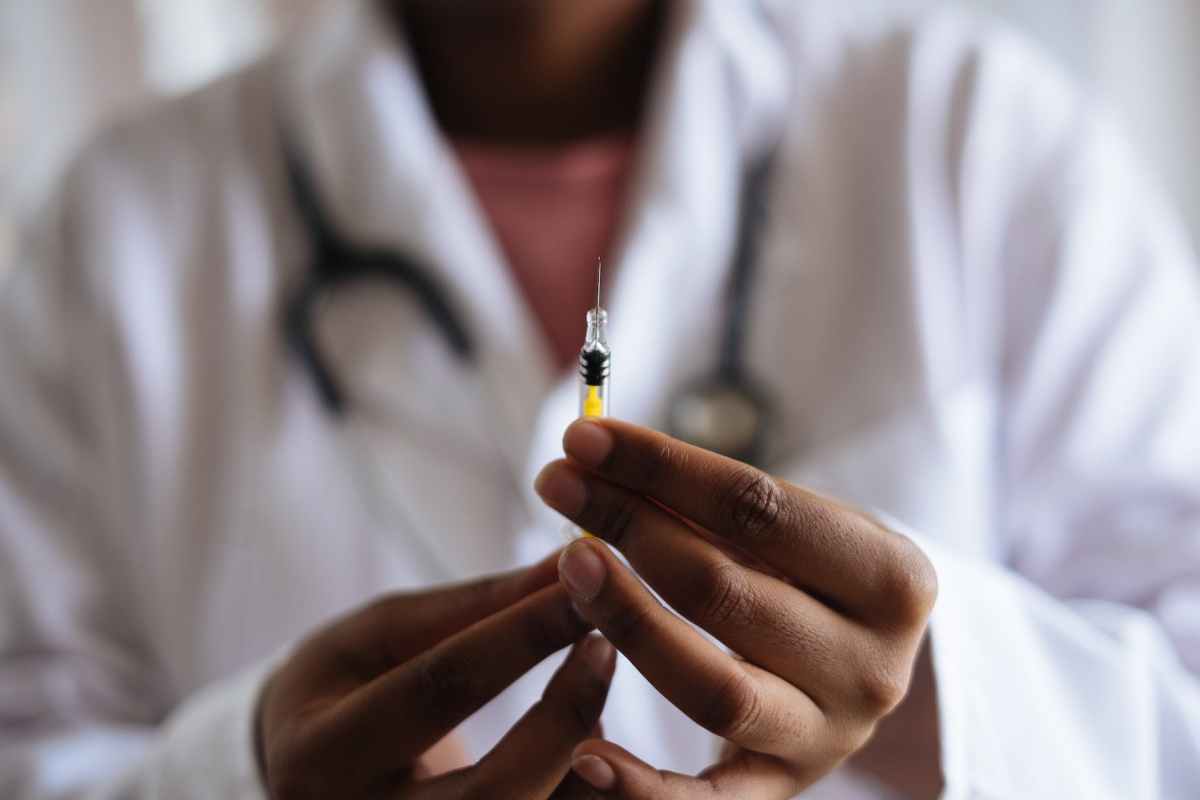
A couple of weeks ago, I took both my kids to the doctor’s office. When it came time for the flu shots, the tech asked me to pick which child should go first. I picked my 3-year-old son. He reacted with an “ouch” and then was on to the next thing.
My 7-year-old daughter went next and probably because her brother didn’t cry out, she didn’t scream or cry when she got the shot but spent the next 20 minutes telling us how much it hurt. Then she saw her grandmother and started in on the spiel all over again.
My kids have completely unique reactions to pain. That’s even with taking into account gender and birth order differences that may exist despite my best efforts to treat them the same. It makes me think – we all express our pain differently.
This brings to mind some observations I read from animal behaviorist Temple Grandin about how animals mask their pain. In her book, Animals in Translation she talks about how sheep are the ultimate stoics – she’s witnessed a sheep that’s undergone an excruciating bone procedure return to the herd and blend totally in. Because of course for prey, that’s the point to make sure you aren’t distinguishable to predators based on weakness.
And another example she told was the story of a bull being castrated, who when left alone was writhing on the ground in utter agony. And yet when a researcher walked up, he jumped up and pretended nothing was wrong.
We all mask our pain, physical and psychological, whether its nature or nurture. As Plato said, “Be kind, for everyone you meet is fighting a hard battle.” It just might not be observable.
And perhaps pain is most dangerous when we mask it so much that we forget to listen to it. I have a spot behind my left shoulder blade that is incredibly knotted and tense from too much time spent in front a computer. I’ve had it for so long that for the most part I just tune it out which seems like an effective strategy until it hurts so badly that I have to get a massage. At which point my massage therapist, who has been my massage therapist for 25 years and is ultra-patient, asks “Are you ever stretching?” Duh – if I tended to it, perhaps it wouldn’t be so bad!
And I won’t even get started on my examples of psychological discomfort because we’d be here all day. I’m just saying, pain is instructive. It tells us what not to do and it also shows us where we need to heal. When we listen to our pain, we can create a relationship with it and maybe even start a dialogue – something different than just ignoring it.
“Our bodies often give us messages we fail to pay attention to. Ironically, we are all so aware of pain, can hardly ignore it, but we rarely hear what it has to say. It is true that we may need to withstand great pain, great heartache, great disappointment and loss in order to unfold into the rest of our lives. But our pain may also be showing us exactly where we need to change.”
The Book of Awakening by Mark Nepo
That day in the doctor’s office, I picked the order of the shots for my kids knowing that my son would have the smaller reaction. I didn’t want him to learn from his sister all the demonstrativeness. More than that, I didn’t want to endure the pain of having two kids crying.
But I think now I was wrong – I would much rather bear witness to their short-term outburst than to long-term suppressed agony. It’s one of the hardest things that I have to do to lead by example, to unmask my own pain and make it both visible and instructive. But I’m hoping that by working on it, it helps both of my kids know that exhibiting pain will gain one comfort, at least from your mom.
I’ve written a related post on Wise & Shine: Loving and Learning
(featured photo from Pexels)
 Surprised By Joy
This brings to mind the question: Why? What is the purpose of masking pain? For me, it’s sometimes denial. If I deny or ignore it, maybe it will go away. Is it physical or emotional? Does it serve any purpose by acknowledging it out loud? Am I helping or hurting myself (or others) by masking pain? Oh—so many questions! 🤔
LikeLiked by 1 person
I love that Dr. Stein answers the question about masking below. But denial – yes – hoping it will go away. And there are very few times that’s actually worked… 🙂 Love that you are part of this conversation, Julia!
LikeLiked by 1 person
Thanks for a great post, Wynne. I was a pain masker for many, many years. As just a physical example, your shoulder example is something I would do in past (too). I treated my body like a machine. Not any more. 🙂
LikeLiked by 1 person
Treated your body like a machine – that is such a great way to put it, Susan! Yes, there comes a time where it’s no longer wise to ignore the messages.
LikeLiked by 1 person
Your excellent essay provokes a few thoughts, Wynne. To Julia’s question, perhaps pain increased the chances of early man’s survival and his ability to contribute to the small group of which he was a member. It would also have made him more attractive as a potential mate, someone who would protect both his partner and their children.
Finally, men of our day are still prone to masking pain in order to keep their place in male groups such as team sports. As the old saying goes, “Rub some dirt on it (the wound) and get back into the game.”
LikeLiked by 5 people
Ah, I’m so glad you answered the question about why we mask pain. That makes sense. I know I do it when my kids need something because I figure their needs are more important than a little pain. It’s hard to take a time out from the game!
LikeLiked by 1 person
I’m fascinated by the uniqueness of how we respond to pain. It’s fascinating too how we respond to differing pains. I messed up my back as a young man and it will bother me and I’ll rarely say anything about it. The pain could be excruciating and I rarely will say anything. However, put me in front of a needle or God forbid as my wife likes to describe it “Manflu” and I’m the king of whiners. Ha, ha, in any event, your kids are troopers if you ask me. Yes, I know you wrote this last year. I think they deserve ice cream tonight for dinner just to make sure the memory of those shots is long gone. Yes, I’m being an instigator. 🙂 🙂 🙂
LikeLiked by 2 people
Ice cream on Brian tonight – okay! We’ll need to conference you in to thank you! ❤
Such a good point about the different kinds of pain. Maybe we are used to our old aches and pains but when we get sick, it kind of surprises us?
LikeLiked by 1 person
Oh I’m definitely Team Kiddos! Definitely need some ice cream to help deal with any lingering pains from 11 months ago! Ha ha. You’ve heard about shot symptoms a year later, right!!! Ha ha ha.
LikeLike
This: “When we listen to our pain, we can create a relationship with it and maybe even start a dialogue – something different than just ignoring it.” It can be such a continuum for me. Giving pain its due – recognizing it but not allowing myself to be overwhelmed/succumb to it. I love your point about awareness and beginning a dialogue. What’s going on…what am I feeling (physically) while also – as you pointed out – factoring in the emotional aspects as we process pain. I so appreciate the comments below – factors related to survival, denial, pushing forward. Complexity galore. 💕
LikeLiked by 3 people
I love, “recognizing it but not allowing myself to be overwhelmed/succumb to it.” Right – the dialogue in my head is that my willpower is slipping if I listen to it. But that keeps me from tuning in to a very wise system. Thank you for your great comment, dear Vicki! ❤ ❤ ❤
LikeLiked by 1 person
🥰thanks for your post🥰
LikeLiked by 1 person
This resonates so deep with me right now, my having spent the last couple years learning to hear–and respond to–pain and my other feelings. I spent so long ignoring and hiding all non-gratitude feelings, there has been a LOT to learn.
But as I reflect on practicing feeling and showing it, as you do with your kids, I’m taken to a beautiful come-so-far moment in words someone told me just yesterday: “You asked for help, and that is AMAZING–you’re doing great work!” The words didn’t really sink in then, but they just did in light of your post.
A couple years ago, I didn’t even know if/when I needed help. Now, I’m sometimes able to hear need-for-help/action in those body-signals … and then find the relief that can only come from actually acting on what those signals are trying to tell me.
Such beautiful soul-food here. ❤
LikeLiked by 3 people
Acting on what the signals are trying to tell us -yes! First we have to hear them, and then we have to pay attention to them. I love this wonderful wrap-up you’ve provided!
And great job on asking for help. It is not EASY!! ❤ ❤ ❤
LikeLiked by 1 person
❤ ❤ ❤ (with a side of sniffles)
LikeLiked by 1 person
I agree with your overall message. Though people don’t really get to choose if they feel safe enough to express at the moment. That’s about their environment and the regular feedback, which is beyond your control as a mother. You can attempt “treat them the same” as much as hard as you like, there will still be your internal biases reflected and a community of people regularly reinforcing gendered beliefs.
Isn’t it strange that girls are taught to mask their pain so young but boys are taught later… yet both are taught repression and avoidance.
Socially training bias is the saddest part of it all to me. Children play without notice to it until some adult comes along and supports the masker calling them strong while shaming who cries with some gendered/ableist relation. Its so tiring to see blank slate after blank slate turned by those suffering from the same.
Environments determine so much. No matter how much one person knows better, they are still human and surrounded by an -ismed reality. There is no perfect. No one is -ismed free here. All we can do is be aware that these biases exist and confront self for change sake.
Otherwise, time is spent silencing those who come forward speaking of the hurt caused by biases masked/avoided the same as the pain.
LikeLiked by 3 people
What an insightful comment about how social pressures start early and how awareness can work to counter it. We can all work to be help ourselves and others not to succumb to shame. Thank you!
LikeLiked by 1 person
Yes. I learned the hard way that ignoring what my body tells me is not good. Aging gracefully here, speak to me achy joints.
LikeLiked by 1 person
I love how you tie this to aging gracefully, Ally. Yes, ignoring it doesn’t work so we might as well invite it in to learn from it, right?
LikeLiked by 1 person
That’s my story and I’m sticking with it.
LikeLiked by 1 person
Awareness really is a huge factor in moving beyond our pain isn’t it. Without the acknowledgment we are locked into an experience that becomes repetitive and gnawing. People mask for so many reasons, and of course, like the sheep, not to stand out from the herd. The problem is so many mask their psychological pain with backward coping mechanisms not realizing that to get to joy you have to move beyond your pain.
Great post Wynne. Plenty to think about here. Thanks for sharing and resharing.
LikeLiked by 2 people
Oh, I really resonate with your words, Alegria. Especially “becomes repetitive and gnawing.” Right! And “to get to joy you have to move beyond your pain.” So, so, so good!! Thank you, Alegria!! ❤ ❤ ❤
LikeLiked by 1 person
💕
LikeLiked by 1 person
There are so many variable in this: some people have a much lower pain threshold than others, so what is a pinch to one person can feel like a solid punch to someone else. So your kids may indeed perceive pain quite differently. (When my youngest granddaughter was battling her second cancer, she was a smiley, happy baby, and all the nurses on the oncology floor vied to be able to look after her. Then I’ve seen my grandson’s dramatic proclamation that “he almost bled THAT much” – hands stretched wide apart – when he just had a tiny scrape and just needed his boo-boo kissed. Now he is much more stoic, so time can change our perceptions too.)
As for masking pain, again there are many reasons why people do that. For some, they’re just too busy in the moment to deal with it, or they have too many responsibilities to take time out to heal. For others it’s a badge of honor to bear it stoically. Others see pain as weakness, and they can’t abide by weakness. Some have had family or community conditioning that prevents them from acknowledging their pain. Others have found that in the past no one seemed to care or blink and eye, so they went silent about it, so as not to feel more perceived rejection.
We are very complicated!
LikeLiked by 1 person
Oh, your granddaughter and her cancer battle – wow! And your grandson with his boo-boo. Oh, I get that! You’re right, Tamara, we are indeed very complicated!
LikeLiked by 1 person
Indeed we are! Plus we tend to change through our lives, so a truth when we are 20 isn’t necessarily going to stay the same until 80!
LikeLiked by 1 person
Our reaction to pain may set an example to our children. My parents divorced when I was a teenager and my mother reacted by constantly sharing her grief and frustrations with me. It never allowed me to have my own hurts because I tried to hide mine in order to help her. Seeing that when, my husband died I determined I would be strong in front of my daughters and not burden them with my grief. Looking back now, I realize I went too far toward being “strong,” not letting them see my pain. As a result, my oldest, who is 53, always insists she is “fine” and will not allow herself to express any pain or hurt. Her response when I try to express concern for any difficulties she might have is “I will be fine.” She refused to allow anyone to offer comfort or concern in any difficult situation. I wish I had found a balance between sharing pain – and being strong.
LikeLiked by 1 person
What an insightful comment. I’m thinking about my parenting now and how hard it is to find that balance but I love the way you tell your family story and the impact over generations. How insightful to be able to see it full circle like that!
LikeLiked by 1 person
Oh I remember this one. What a great lesson, Wynne, and a reminder to listen to our body and to our pain.
It’s fascinating to think about how animals mask their pain as protectionist act. I think the same can be said about humans and mental health issues. People don’t speak out because of stigma. So they become sheep. That’s sad and we need to change that.
LikeLiked by 1 person
Oh, what such an insightful comment about stigma. I find it fascinating to think about how we all mask too. You’re right – we need to change that! Thank you, Ab! ❤ ❤ ❤
LikeLiked by 1 person
Our relationship to pain can be such a tricky one. And the degree to which we can continue to function while in pain can be truly surprising. Yet having our pain acknowledged, just that act, can sometimes do wonders.
LikeLiked by 1 person
I love your comment about how we continue to function while in pain. But you’re right – when we air our wounds, it can be so healing. Thank you for this great addition to this conversation.
LikeLiked by 1 person
You’re welcome.
LikeLiked by 1 person
“Pain is instructive”- sure is!
LikeLiked by 1 person
Right! Wonder why I forget to listen so often!
LikeLiked by 1 person
Pain is a reminder to us that something is wrong. We need to listen to our bodies. I do think you made the best choice by having your son get the first shot. He became a role model for your daughter.
LikeLiked by 1 person
We need to listen to our bodies. Yes! Thank you, Elizabeth!
LikeLiked by 1 person
Of course I think it might not be something wrong, but maybe getting older.
LikeLike
Well, when I visit the massage therapist, she says, come back sooner. I could heed a few flags sooner.
LikeLiked by 1 person
I hear you, Rebecca! And you’ve reminded me that mine is going on holiday and I neglected to get an appointment before she leaves. 🙂
LikeLiked by 1 person
This is good round two – pain is usually your body talking with you!
LikeLiked by 1 person
Right! And my body is getting more talkative as I age!! 🙂
LikeLiked by 1 person
Nice post please like my post freinds
LikeLiked by 1 person
Acknowledge and listen to our pain, but don’t let it rule us (as much as we can) I would have made the same choice with the shot order as well, Wynne!
LikeLiked by 1 person
Oh, I’m glad to know that. Thanks for commenting, Dawn!
LikeLiked by 1 person