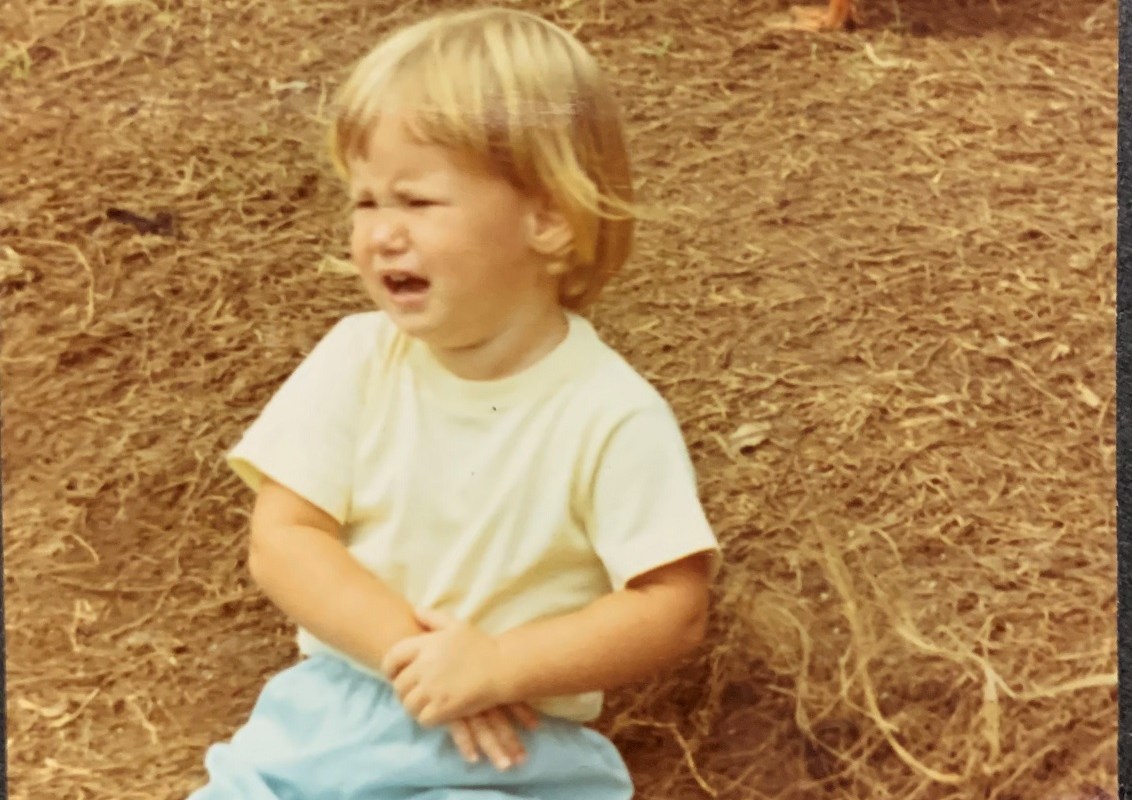
Shame Resilience

“If your compassion does not include yourself, it is incomplete.” – Buddha

Last week when my daughter and I were dropping my son at his daycare, Simon the teacher in the 2’s class was at the check-in table. I was talking to Simon as we did the sign-in and temperature check and then when I went to say good-bye to my son, I distractedly said, “I love you, Simon.” (No, it wasn’t a Freudian slip, I swear). My daughter started to giggle as did I, we waved at my son as he walked away and just slipped out the door laughing.

It was embarrassing to make a mistake in front of my kids. To be clear, I’ve made plenty of mistakes in front of and with my kids but usually privately or before my oldest was socially aware enough to pick up on it. I know from the work of sociologist and researcher Brene Brown how important modeling shame resilience is for kids so that they can see how you can name it, talk about it and survive it instead of keeping it inside where it can percolate for a long time. Just thinking about it and I recall shame that I’ve never given air like the time I was in the toy store with my daughter when she was still in diapers and I overheard one parent say to another, “Someone in here has a poopy diaper.” And it was my kid. <groan>  I still can remember that vividly more than three years later probably because I’ve never talked about it before this post.

Shame resilience was not something that was modeled for me when I was a kid. I had two great parents, my dad who was so likeable and well-intended that it was easy to believe he never suffered and my mom who is such a perfectionist that it’s easy to believe she never did anything wrong. But I remember when I sat my dad to tell his stories when he was in his late 70’s and he told of a story when he had to let go someone on his staff. He’d hired a married couple to play a role in the church my dad was senior pastor of and the husband was noticeably absent. My dad had to let him go and the wife was livid and felt her husband had been terribly mistreated. In the few years that followed she then suffered a miscarriage and her marriage broke up and though those things had no direct relationship to my father, he felt terrible until the end of his days despite the many different ways he tried to apologize over the years.

These were the things we never talked about as a family when we were young. Perhaps that’s too big of an issue to hear about as a kid but it’s the only example I have. So I’m trying to remember that with my kids and stay open to just say a sentence or two. As we left the daycare, I said to my daughter, “That was embarrassing.” She asked why and I said, “Well, I don’t know Simon well enough to love him AND I didn’t properly say good-bye to your brother so I messed up both things.” And then she asked, “What’s embarrassing mean?” It was a great entrée to a little conversation about life. What I said wasn’t wise or big but it was transparent and true which I hope will ventilate my shame and show her how she might endure hers when she feels it.

Whole-Hearted Little People

“I believe that you have to walk through vulnerability to get to courage.” – Brene Brown

Early yesterday morning there was a fly in my daughter’s room. It woke her up early with its buzzing and between her efforts to get it and to get me to get it, my son was awakened early. Which is why my kids were grumpy last night. When I told my daughter to stop taking the toys away from my son, she said, “I know, I know, I’m the worst kid.” And when I told my son to stop picking the flowers and leaves off the plants in the planters, he lay on the ground drumming his hands and fists. In my observations of these little people, it’s pretty consistent that my daughter internalizes negative feelings while my son externalizes them.

I don’t have a strong belief when it comes to male and female energies. I was brought up to believe that I could be whatever I wanted and so I got my degree in electrical engineering and climbed mountains as a hobby even though both were male-dominated activities. Now I’m a single parent combining the traditional roles of mom and dad and I don’t think much about making a distinction. So it is with complete fascination that I watch these two kids come out with different ways of being.

It made me think of a generalized progression of how we can develop into our stereotypical males and females from where we start. For boys who are taught not to express their emotions through thumping their hands on the floor, they can become stoic and unexpressive. For girls who want to avoid the pain of turning their feelings inward, they can start trying to become perfect.

This reminds me of a fascinating passage I read from Canadian psychologist and author, Jordan Peterson who argues that it’s the thousands years of evolution that has created the conditions for the male and female psyches.

“Women are choosy maters … It is for this reason that we all have twice as many female ancestors as male (imagine that all the women who have ever lived averaged one child. Now imagine that half the men who have ever lived have fathered two children, if they had any, while other half fathered none). It is Woman as Nature who looks at half of all men and says, “No!” For the men, that’s a direct encounter with chaos, and it occurs with devastating force every time they are turned down for a date. Human female choosiness is also why we are very different from the common ancestor we shared with our chimpanzee cousins, while the latter are very much the same. Women’s proclivity to say no, more than any other force, has shaped our evolution into the creative, industrious, upright, large-brained (competitive, aggressive, domineering) creatures that we are.”

12 Rules for Life – Jordan Peterson

That extremely long view argues that there isn’t much I can do as a parent to affect the expression of the male and female energies and I’m not sure that I agree with that. In wanting my kids to develop as authentic, healthy and kind beings and good citizens of the Universe, I can’t just throw in the towel and chalk it up to human nature. So I’m borrowing from sociologist and researcher Brene Brown’s work on shame and vulnerability, Dr. Tina Payne Bryson and Dr. Dan Siegel’s work on brain integration and regulation, and developmental biologist John Medina’s work to build up our ability to name our emotions, develop resilience from shame and failure and work on walking through vulnerability to arrive at courage. I believe we can work towards being whole-hearted beings regardless of gender and I’m sticking with that.. and getting a good night’s sleep!

The Crux Move

“One climbs, one sees. One descends, one sees no longer, but one has seen. There is an art in conducting oneself in lower regions by memory of what one has seen higher up. When one can no longer see, one can at least still know.” – Rene Daumal

I can picture the hardest move from one of my favorite routes in the rock climbing gym. It’s after you have climbed halfway up the 50 foot wall and then the wall juts out over your head so that to get past it, you have to lean backwards, reach your hand up where you can’t see and throw your leg out awkwardly to the side to counter-balance. It’s the crux move. The one that takes such balance, confidence and hope to overcome but leads to a gently inclined section that is a breeze to climb to the top.

Even though it’s been five years since I have regularly climbed on that route at the gym, whenever I get to a tough place in life I think of that crux move. It’s how I relate to the hard spots in life like the one I’m facing one now. My brother’s wife, Lindsey, who has nannied for me for five years is quitting to take her dream job. She has been here for me and my kids 2-3 days/week and in the coronavirus era, 4 days week to take care of everything. She has been the closest thing I have to a co-parent.

I am genuinely happy for Lindsey as my friend and sister-in-law and the time feels right for a change. But I’m also facing uncertainty as I wait for the school district to finalize their plan for in-person school. I’m hanging in this space in between what has been and what will be all the while trying to hold the ship steady and work.

The hallmark of these crux moves is the feeling of being off-balance and in fear. Life is pushing a shift, a shift that makes us live more out in the open because we aren’t treading our well-worn path. That exposure creates a tenderness against which fear is so much more palpable. For me, I fear that Lindsey will be relieved to be away from us and if so, does it mean she doesn’t love us and this work of raising kids isn’t worthwhile? And if I imagine Lindsey’s end, she is probably afraid that we don’t need her and aren’t grateful for all the time she gave us.

This fear leaves me feeling so vulnerable. I want to stack up all the irritations and hurts I can find, even though they are relatively few in order to block feeling this way.  But that’s when I come back to the muscle memory of the crux move. Learning to climb them taught me they go better if I’m not tense. The more I cling to whatever hand holds I have, the faster my arms burn out. But if I breathe deeply and relax into it, I preserve my strength for where I’m going. Even when I can’t see the next hand hold yet, I can feel my way into the timing so that I have momentum to help move me up and over. There is great joy in moving through a crux move because it requires the body, mind and spirit to all come together. Applying it this way, I get a glimpse of how no experience in life is wasted because our “play” helps create pathways through “life.”

I read recently that good-bye came about as a short way of saying “God be with you.” Saying it that way reminds me that we are all on a journey and the best way to help others along is to wish them well. So I wish Lindsey, God be with you, and I trust that the next move I make will carry me and my family through our crux move to the next part of our journey.

The Risks You Have to Take

A friend said to me the other day, “I don’t know how you do it.” In this case, “it” was putting my two young kids to bed every night by myself. Of all the tricky parts that come with being a single parent, kids bedtime is definitely high on the list. The answer is that I’ve found a secret power that helps in the tough moments.

Of course, I’m not alone in discovering this – there are many stories about this secret. In Indiana Jones and the Last Crusade, Indiana is searching for the Holy Grail so that he can heal his father who has been wounded. He’s followed the clues and reaches a chasm that seems uncrossable. He’s scared because of the urgency of his need but he trusts that there is a way across and as he steps into that void, a stone bridge reveals itself. Or Joseph Campbell’s work on the journey of the hero that lays out how the pattern unfolds. The hero spends a great deal of time trying to every way to get to his calling without being vulnerable and then finally, with nothing left to lose, plucks up his courage, steps into vulnerability and only then is able to overcome all the obstacles. Or an interview that I recently heard with Melinda French Gates on Brene Brown’s Unlocking Us podcast, she describes how at one point in her career she didn’t like who she was becoming in the early culture of Microsoft that was very dog-eat-dog and before she quit, she decided to just try being herself and as a result, she found her success. Her comment was “no one talks about how much courage it takes.”

I believe we all reach that point where there is something we are called to do and it doesn’t make any sense. It’s a risk. I, for one, spent a lot of time in that “act two” that Joseph Campbell describes trying to find a way to having a family that didn’t require the vulnerability I felt when I voiced “I’m going to choose to do this on my own.” Which is why I had my kids when I was age 46 and 50. But I can affirm that there is a force that greets us on the other side of taking the risks we are called to take. It feels like less friction because our bodies, minds and souls know they are just where they are supposed to be. It feels like faith, joy and delight all bundled together.

There is an opposite force when we are walking a path not our own. I remember this well from the years I spent married, not wanting kids, not wanting to be there and yet not brave enough to own that truth. It was like packing my soul in bubble wrap and asking it not to participate. My favorite poet and author, Mark Nepo describes what happens when we don’t take the risks we are called to, “Despite the seeming rewards of compliance, our souls grow weary by engaging in activities that are inherently against their nature.”

I don’t tell this to my friend when she makes the comment because she doesn’t need the secret right now. She has a great husband and they parent beautifully together. But when she or anyone else in my life meets the next challenge that asks them to be vulnerable in order to walk their path, I will be right next to their side telling them, “Go ahead. There is help once you step onto that path. I promise! But you have to step first.”

Oh, I’m Wounded

“A child can ask questions that a wise man cannot answer.” – unknown

“Mama, why don’t grown-ups cry?” my daughter asked when she was three. There are a lot of possible answers to that question – we do but it’s more often that they leak out of us unexpectedly, or that not as much shocks us because we have experienced more, or that we have more ways to communicate our feelings than young children. But it wasn’t until I was reading something last week that I found my answer.

The passage was a simple meditation on giving air to our wounds. And even though I’d read it before, somehow the light of life hit it just right this time so that when I read it again, I heard it as it related to me for the first time. “Oh, I’m wounded” I thought in surprise.

Twelve years again when my business partner sat me down to lunch to tell me of my husband’s infidelities, it was a clear enough owie. But as the years passed and we divorced, I reshaped my life and my work and then went on to have kids as a single parent, I could easily tell you that is far in the past in a manner and tone that is believable. And in many ways it is. I’ve owned my own part in the failure of our marriage, forgiven him for his and my two darling kids are proof that things worked out the way they were supposed to.

But the wound, I discovered, is in how I see myself. My ex-husband thought I was too independent. At first couldn’t even fathom that could be a deficit. From an early age as the youngest of three children in a family of big achievers, being independent meant I could keep up, being independent was a greatly praised trait and being independent became one of the pillars of who I was proud to be. Then came along my marriage and my ex who could pronounce the word with a particular emphasis and bite that hurt. In-de-PEN-dent.

But what struck me last week as I read that meditation was that I’ve allowed his criticism of a personal characteristic of which I am so proud to undercut my belief that I’m lovable as a partner. My ex-husband’s fear that he was unlovable created a belief in me that I was unlovable and I have never healed that wound. And saying that is hard so I imagine it’s taken me all these years to discover that because I wasn’t ready to air the wound. So here’s my new answer to my daughter’s question: grown-ups don’t cry because we don’t know we are hurt. Grown-ups bury things deep so that they can keep being productive, optimistic and claim some measure of success. Grown-ups need to listen to the advice they give kids when they get hurt: “Be brave and let us see the wound.” Because when we are vulnerable about the way we are wounded and have wounded others, we have a chance to heal it and inspire others to do the same.

Vulnerability and Courage

“I believe that you have to walk through vulnerability to get to courage.” – Brene Brown

My friend sent me an email the other day that made me feel like the wind was knocked out of me. It said in essence that she was hosting Thanksgiving at her house but we weren’t invited. There are so many ways to explain this away – she didn’t mean it to be hurtful, the pandemic has made gatherings risky so to protect our older generation this is wise and so on. But the fact of middle age is that we very rarely wound each other. Our lives and patterns of communication have solidified so that no one needs to either extend themselves very far nor risk being hurt. It was such a surprise for me to feel so pierced that it threw me and my productivity off kilter for the rest of the afternoon.

I’ve been listening to a lot of podcasts about vulnerability. it started with University of Houston research professor Brene Brown but now I’m finding that thread in so much of what I’m reading and listening to. That vulnerability means that we are daring to live out in the open, to try things and to fail, that if marks whether we are doing something meaningful. And by meaningful, I mean meaningful as in measured by personal growth.

So I’ve been consuming all this content about vulnerability, I know it’s one of my weaknesses and then my friend sends that email that hurts me. My first reaction was to hide, to pull back into my shell and just nurse the wound. I’m a pretty affable person and I can shake things off as unintended. But one of the reasons the email wounded me is that it feels like my friend often makes unilateral decisions without consulting me. And the second reason is because I secretly fear that I value her friendship more than she values mine. And the third is because I’ve never told her the previous two reasons.

Instead of hiding, I waited a few hours and sent an email back saying that I was wounded. I’ll be honest here – it felt yucky. Her response was lovely and though we probably won’t still get our families together for Thanksgiving as we have for every year for the past ten, it won’t stick like a turkey bone caught in my throat blocking my ability to breathe or be grateful. I continue to feel a little tender but within that tenderness is a kernel of additional belonging that I didn’t have before. I can speak my truth and still be accepted. My right to be here isn’t conditional on me behaving affably. I feel a little more wise about how to coach my kids about friendship. I crossed that chasm between learning about something and doing something and it makes me feel brave!