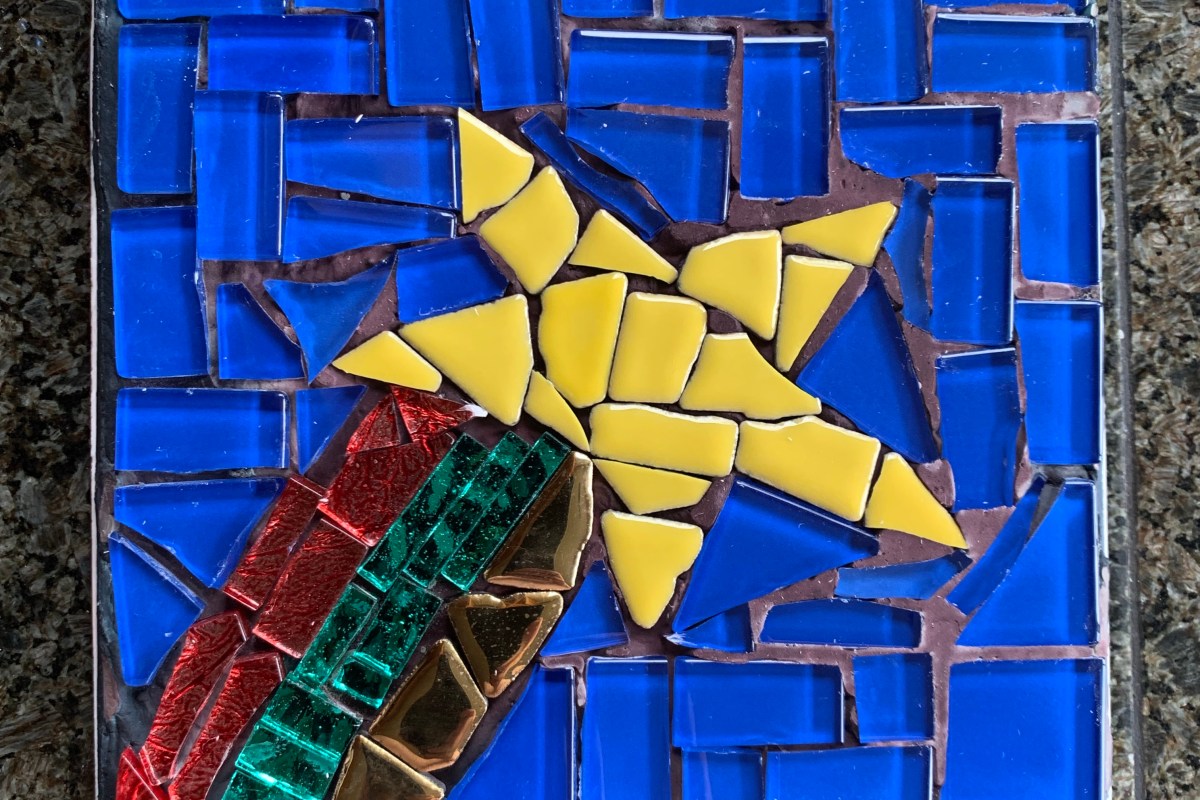
Creative Restoration aka Mouping

Creativity is the power to connect the seemingly unconnected.” – William Plomer

By the time my kids went back to school on Tuesday of this week, we’d been together for 11 days. Christmas, New Year, a few days at an AirBnB on the coast – all great things. But I imagine like a lot of people, the days without a predictable rhythm, rich foods to eat, and special events have left their mark. The house is a mess, my body is out of whack, and my mind needs some help settling down.

I have a young friend, Alia, who told me she made up a name for creative restoration – mouping. When she’s mouping, she’s drawing, crocheting or doing something else creative but also a little mindless and repetitive.

It reminds me of the advice that scrolling social media is not restorative (why is it that I have such trouble putting the phone down?). But doing something like coloring or my recent favorite, glass mosaics, feels to me much more therapeutic.

Trying to connect the dots on why this might be makes me think of something I learned from Brené Brown: “unexpressed creativity is not benign – it’s malignant.”

Here’s one of the points the Brené makes about what she’s learned about creativity from her research:

“If we want to make meaning, we need to make art. Cook, write, draw, doodle, paint, scrapbook, take pictures, collage, knit, rebuild an engine, sculpt, dance, decorate, act sing – it doesn’t matter. As long as we’re creating, we’re cultivating meaning.”

Brené Brown in The Gifts of Imperfection

When I’m in the rush of the holidays, I am spending my time interacting with others at best, and reacting to others at the most exhausting points. But mouping feels like changing the rhythm — moving from ping pong to tai chi. It’s reestablishing the flow of life and balance that exists within me that I’ve suppressed when surrounded by others.

Alia texted me her explanation, “It’s one of my favorite things I’ve done for myself. It doesn’t mean I’m just hanging out when I could be doing other things but is dedicated time to recharging bc that time is just as necessary for me as checking things off a list is. 😊”

I have to say that I’m impressed she’s figured this out at 23-years-old (and actually she started mouping as a teenager) because I’m just now putting my finger on what really works to help renew me. Even Brené didn’t figure it out til she was in her 40’s.

But whenever we figure it out, it’s helpful to know that time mouping is not frivolous but something that helps us cultivate meaning.

Cultivating Play and Rest

Not everything that can be counted counts, and not everything that counts can be counted.” – Albert Einstein

Yesterday my sister-in-law took my daughter for the day and my son was in daycare, I had an entire day to myself. This is so rare, especially since COVID came and we have all been packed into the house on most days. I’ve had a few hours here and there but a whole day?? Of course I needed to work, the house was a mess and I had a to-do list as long as my arm so I was far from bored but the real question was, did I know what refills my cup?

Brené Brown has been doing this podcast series on The Gifts of Imperfection as it’s the 10 year anniversary of that book. And there is a particular guidepost in it “Cultivating Play and Rest – letting go of exhaustion as a status symbol and productivity as self-worth.” It was a reference that Brené made in a podcast to this guidepost and the work of Dr. Stuart Brown, psychiatrist, clinical researcher and founder of the National Institute for Play, that got me interested to read the Gifts of Imperfection in the first place. That to be whole-hearted, that is to say, fully awake and involved in life, we need to play.

My first thought when hearing about cultivating play was that I am a mother of young children, I should be all about play. My second thought was I have no idea what play is for me anymore. When I got my first night off from parenting when my daughter was about two years-old, I went out to drink wine with a friend. It was fine but I ended up feeling like I wasted that precious time. The second time I had an overnight break from parenting was when my daughter was three years-old and I went on a meditation retreat. It was so lovely to eat organic food, do yoga, meditate and cut out pictures for my vision journal. It really worked to refill my cup but isn’t very practical to do very often. The same goes for hiking which is my all-time go-to for refilling my cup but often takes too much time driving to do on these rare days off.

Here’s what I’m slowly realizing about cultivating play and rest for me. I know I’m still learning because I’m trying to be the most productive at rest. 🙂 But with that said, rest for me always involves some combination of reading, writing and exercise. Being quiet including turning off extraneous noise like the tv in the background is important. I never clean my house when my kids are gone unless it’s part of tackling a project that is fun for me. I try to reach out to at least one person that is key to my health and sanity. And when I’m very lucky, I go to a rarely visited neighborhood and find a place to eat lunch with a book.

Last night when my kids were returned to me, I listened to their reports from the day and we galivanted around the neighborhood and talked with neighbors, I felt like a new (renewed?) person. Someone who had a refilled cup to share with everyone else.

Day of Rest

“We are not human beings having a spiritual experience, we are spiritual beings having a human experience.” – Pierre Teilhard de Chardin

Twenty years ago at this time of year I trekked to Everest Base Camp with a couple of my friends who were attempting an Everest summit. It’s a thirty mile trek through beautiful country, crossing over raging rivers on precarious bridges, stopping at little Nepalese villages, staying near Buddhists monasteries with everything (trees, people, commerce) getting sparser and sparser the higher you go. Our rhythm would be to trek one day and rest the next because the climbers needed to let their bodies acclimatize to the thin air.

It was interesting to see what everyone chose to do on the rest day – lie in tents and listen to music or read, try to wash clothes or take a shower if you could find facilities, hike around the local area, go into a little village if one was nearby, play cards, or sit around a tea house table telling stories. It was a day that we weren’t on the move so there was no schedule. I usually would chose some alone time and then some time listening to stories. Amongst mountain guides, especially the ones I was with that trip, the ability to tell stories is nearly as good as their ability to climb.

Thinking back on that trek, I think of not only the amazing adventure and incredible views but the practice of the day of rest. Because we all need that day of rest to restore our spirits and bodies before we can climb again. But at home, the choices are too many and the pace too hectic that I often forget to celebrate the day of rest. So I’m inspired by my choices on that trip – spend a little time alone meditating and then swapping stories with others, even if this time it’s on a blog.

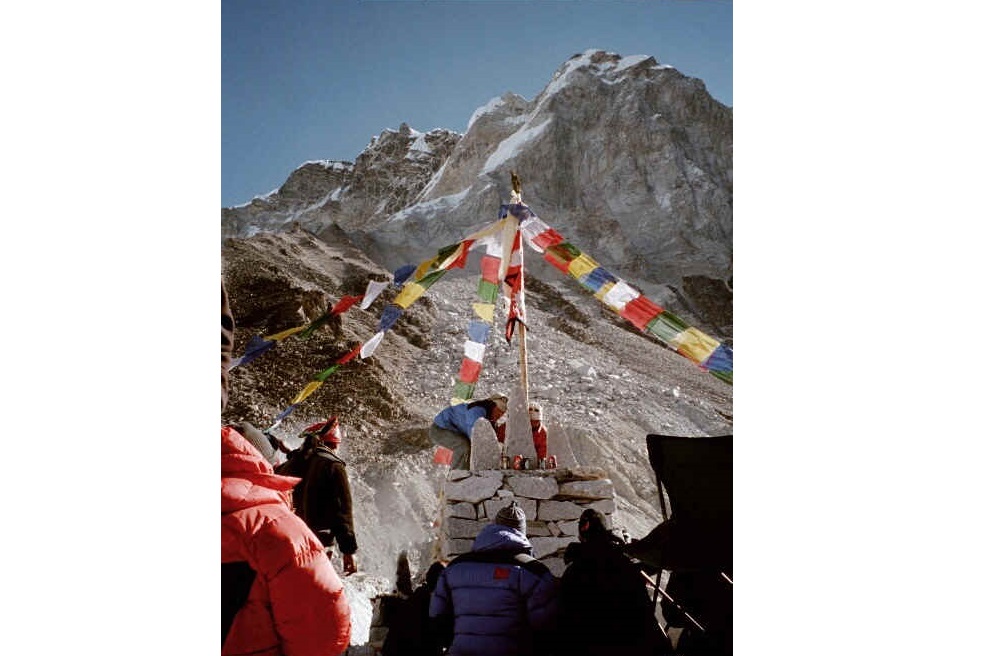
One day at about 15,000 feet of elevation we were trekking to our next camp site when we came across this football sized flat space where rock cairns had been created for people who had died on the mountain. I’m at a loss to explain the intensity of how sacred that place felt. It was, to say the least, an impressive reminder that we will all meet our ultimate resting place and until then, we would be well served to celebrate this sacred life with a day of rest from time to time.