The Choice Between Right and Easy

“Our lives begin to end the day we become silent about the things that matter.” – Martin Luther King Jr.

In the fourth book of the series, Harry Potter and the Goblet of Fire, the dark wizard Lord Voldemort has returned and the headmaster of Hogwarts Academy of Witchcraft and Wizardry, Albus Dumbledore says, “Soon we will all face the choice between what is right and what is easy.”

I don’t know much about fighting dark wizards but making the choice between what is right and what is easy seems like something that describes the job of parenting. Maybe I’m predisposed to think that because I’m reading Harry Potter out loud to my child but nonetheless here are some of the many choices I think we as parents face:

We have to decide whether or not to teach our children manners or let them discover them at the hands of their maybe less tactful peers.

We have to decide whether to inculcate a sense of respect for nature and resources of the earth or risk ruining the earth for themselves or our grandchildren.

We have to choose between instilling a deep sense of kindness and compassion for others or suffer knowing that we might have added to the aggression of this world.

We have to choose between raising children that have a healthy sense of boundaries and self-worth that they inherited from watching us or let them figure it out on their own perhaps after doing great damage to themselves.

We have to choose between letting our kids spend their days immersed in screen time or engaging with them to foster real experiences and adventures in this world.

And none of these choices is easy because it means we have to walk that walk when we are distracted, tired and want to live our own lives reasonably well. But I find it interesting that the distinction is not between right and wrong but between right and easy because it’s effort not evil that defines the choice.

Speaking for myself, I don’t do perfectly on any of the parenting choices but more often than not I make the hard choice as I know most parents do and have done throughout all the ages. There is some science to support why as I learned when I listened to an interview Nicholas Christakis, the Yale sociologist who studies how we have evolved as a species. His view as laid out in his book Blueprint is that our evolution has come with some uniquely wonderful social features – to love, to teach others, to cooperate. He holds that humans are wired for good which is so inspiring to hear.

Because we aren’t alone in our choices. We have the magic and faith that comes from our relationship with the Divine and we have our connection to each other. In Harry Potter, Dumbledore’s pronouncement about choosing between what is right and what is easy is part of a moving speech about how unity and friendship carries us through the hard choices and hard times. Our connection to everything that is bigger than us powers us through the moments when we have nothing left in the tank. Over and over again we discover we can do hard things – and we do!

Irrigating the Irritation

Be kind, for everyone you meet is fighting a hard battle.” – Plato

Yesterday my friend John was trying to get a hold of my friend Eric and I was caught in the middle. Eric wasn’t answering so John called me and left a voice mail. Eric’s phone had died and he was temporarily using another number so I texted him on his other phone that John was looking for him. Eric didn’t have John’s number stored in his temporary phone so Eric called me for it. I texted it to Eric and then John called me.

It seemed to go on and on. They called and texted me while I was working, picking up my son from school, out for ice cream, getting the kids ready for the bed. I was irritated. Then I found out John was calling because our friend Joanie was having to put her beloved 15-year-old golden retriever to sleep. My irritation evaporated instantly.

Compassion is such a powerful tool. For years I’ve said that doing meditation in the morning was irrigating my irritations. I hadn’t identified specifically that it was expanding my compassion for my self and others until I was reminded of this “Just Like Me” meditation from by Buddhist monk, Pema Chödrön:

”There’s a practice I like called ‘Just like me.’ You go to a public place and sit there and look around. Traffic jams are very good for this. You zero in on one person and say to yourself things such as Just like me, this person doesn’t want to feel uncomfortable. Just like me, this person loses it sometimes. Just like me, this person doesn’t want to be disliked. Just like me, this person wants to have friends and intimacy.’

“We can’t presume to know exactly what someone else is feeling and thinking, but still we do know a lot about each other. We know that people want to be cared about and don’t want to be hated. We know that most of us are hard on ourselves, that we often get emotionally triggered, but that we want to be of help in some way. We know that, at the most basic level, every living being desires happiness and doesn’t want to suffer.”

Welcoming the Unwelcome by Pema Chödrön

When we do suffer, it is eased by the compassion of others. I remember talking with Joanie after my golden retriever died and because she knew the depth of the heartache, it was of great comfort to me. I am sending that compassion back to her now so the spirit of love, warmth and understanding continues to ripple out. My daughter wants to make a card for Joanie. She suggested a message of “You are the best even though you only have two dogs and one died.” I love the idea but we might fiddle with the wording…

The Power of Curiosity

“If you see the soul in every living being, you see truly.” – The Bhagavad Gita

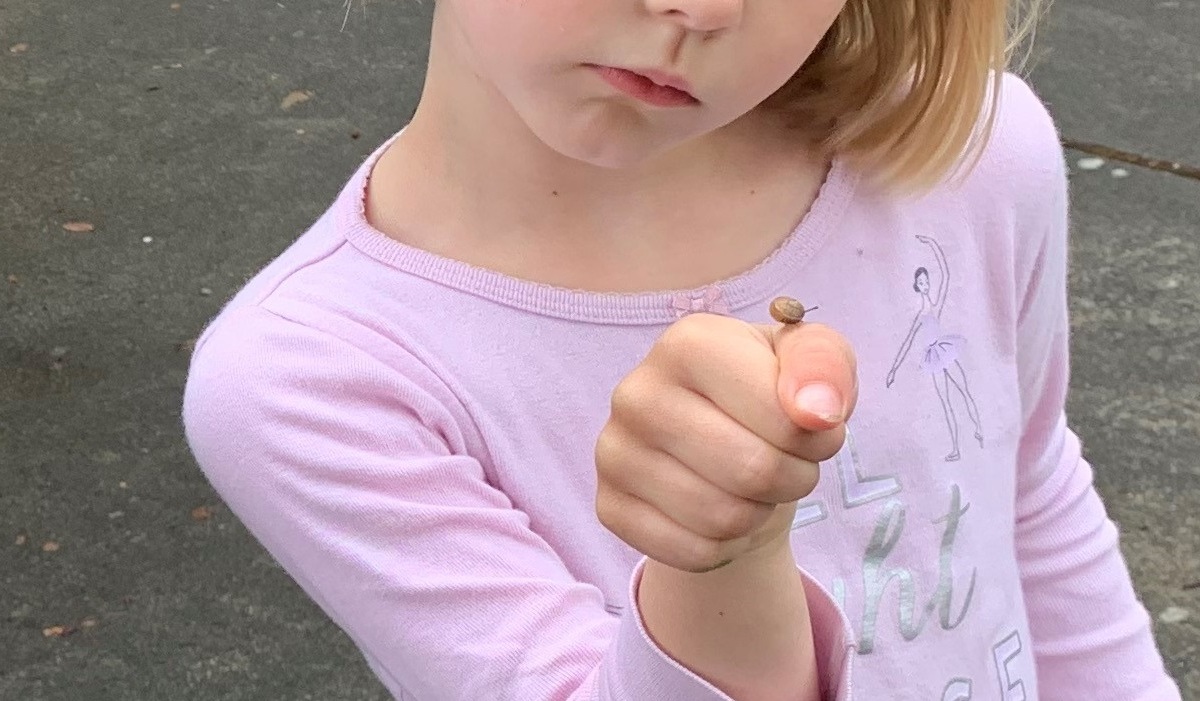
My five-year-old daughter kills snails. Let me pause here and say that it’s not a serial-killer-in-training kind of thing where she tortures and then decapitates them or something like that. It’s very well-intentioned interference in their life where she builds these very elaborate snail houses with pools and vegetation and then stocks them with snails. But then she’ll put them directly in the sun or forget to refill the water and oops, another snail is dead. One of my friends gave her a Bug Hotel terrarium and she put so many unfortunate snails in there that I started to call it the Bates Motel.

I have a friend who does a similar thing with humans (the help thing, not the killing thing). She doles out well-intentioned help to people that she believes need an upgrade in their circumstances. Unfortunately it sometimes backfires when people feel like they are projects and don’t absorb the help they are given.

I recently listened to this Dare to Lead podcast with Brene Brown and Michael Bungay Stanier that talked about the pitfalls of giving advice – the person with a problem may not accurately know what the problem is, any solution that you offer might not solve the root issue and even if you have the perfect solution, it can undercut their ownership of solving the problem themselves. Michael Stanier’s advice was to stay curious a little bit longer.

This seems to be a common theme in the content I’m listening to and reading these days – the power of curiosity. Asking open-ended questions like “how can I help?” and “what makes you think that?” and “say more” changes the nature of the conversation. Curiosity brings the power of mindfulness to an interaction and is a gateway for openness, an antidote to judgment. If we believe that we don’t have enough time to have these conversations, think about how much time it takes to solve problems again and again because we didn’t get it right the first time.

I’m finding curiosity a great tool for parenting because kids have so much of it. I could continue to slip out at night and free the snails or I can flat out tell her not to capture them but both of those solutions undermine her ability to see the soul in everything. Because of course this is not just about my daughter and snails, it’s about our agency in this world and learning not to destroy it. I’m hopeful as we research about whether snails grow out of their shells, what leaves they like best and how long they usually live that we can connect more deeply with compassion for others and retire the Bates Motel.

Mistaken identity

“Before fixing what you’re looking at, check what you’re looking through.” – Mark Nepo

The other day I participated in a conversation with my five-year-old daughter and her seven-year-old best friend and neighbor. She reported that her friend kept interrupting her. Then she asked the friend a question and when the friend started to answer, she said, “See?”

Ah, we see what we expect to see. A chronic condition of being human but I had no idea it started so young! But more than that, I think the two were bickering not because one was interrupting the other but because they were hungry and bored. Another chronic condition of human nature – mistaking one feeling for another. This one is rife with the young!! It seems that they can’t reliably name what being hungry, bored or tired is and everyone around gets an earful until we solve the root problem.

But I’m not sure I do much better. Last year after one of the last times I was able to go to meditation class in person before the pandemic, I went grocery shopping afterwards. I bought so much food without any regard for price or practicality and it wasn’t until I was walking out that I realized that I felt euphoric. A great feeling. Not so great for budgeting!

For me this is the work of mindfulness. Observing the ripples in the water caused by emotions so that I am aware that they are stirring me up and hopefully every so often get a glimpse of my depths when the water is clear. And it is the work of patience and parenting to help others name what is ailing them and hold them until they can become clear. I’m getting a lot of practice these days.

So I asked my daughter what interrupting means. Turns out her definition was something close to feeling irritated whenever you are in conversation. I paused to be sure I didn’t interrupt, offered them a snack and a job to rake up the hedge trimmings and solved both the named and unnamed sources of irritation!

Reconnecting

“Take everything in the palms of your hands and see what’s worth keeping, then blow the rest away with a breath of kindness.” – Cherokee saying

When we returned from our four nights away this past weekend, I noticed that my toddler went around touching everything. He fingered his toys, he opened the pantry, he got down on the floor and felt under the couch, he lifted the top of the toy cubby, he sidled along the couch while running his hand along, he went outside and ran his hand along each planter. It was fascinating to watch him wander around and reconnect.

It reminds me of the way I’ve felt disconnected upon returning home, especially from longer trips. I’ve felt the huge shift between all the newness of what I’ve just seen and experienced and the ease and familiarity of my home. In those moments, my heart feels full wrapped in the comfort of the space I call home but my head is still gone, sorting what’s important.

And it happens not only when I’ve traveled but also when I’ve gone through life events, big like my dad’s sudden death or small like just when I’ve finished a work project. Moments when I’m at a loss about what comes next, untethered and unsure how to integrate what I’ve learned with who I am. When it happens, I realize how much I often rely on routine to tell me what’s next. Somehow my world has changed and I have to reinsert myself in the flow.

It seems like my son’s method of touching everything contains some basic wisdom. It’s a way of being grounded. Touch everything with your hands until your head and your heart catch up.