Checking for Help

If you were waiting for a sign, this is it.” – unknown

Last week I was stressed because my biggest client was 35 days late in paying their invoice for July. I’ve been self-employed for 20 years so it’s not the first time I’ve had a situation like this. I’ve learned on my side, I need to make sure it isn’t an indication of a problem with my relationship with the client and work. If everything is okay and it’s just a payment issue on their side, I’m pretty good at weathering the storm and not worrying about it too much.

So I was fine for the first 2 weeks the payment was late.

But by the 3rd week it was late, I’d started to check the mailbox a few times a day and when on one of those days, an envelope came from my health insurance provider, I ignored it and set it unopened on my desk.

When the 4th week started, I was spending a lot of meditation time both trying to acknowledge and dissipate the stress and praying to the Universe to end the wait.

By the 5th week, I was in a low-grade panic – I’d managed to pay all my commitments but I was down to $14 in my checking account.

Finally the payment came. It was only AFTER it came that I opened the envelope from the health insurance company and found that they’d sent me an unexpected rebate. I’d had a check sitting on my desk for TWO weeks while I sweated out the payment from my client.

It reminds me of the story about a man who gets caught in a flood and is stuck inside his house. He prays for God to save him and while he’s praying, the phone rings. It’s the fire department asking if he needs to be rescued. He answers, “No, I’m sure God is coming to save me.” A little while later after the flood waters have risen even more so he’s hanging out his 2nd story window, some neighbors come by in a boat and ask if he needs help. He replies, “No, I’m sure God is coming to save me.” Finally the flood water is so high that he’s up on his roof and a helicopter comes by and offers to evacuate him. He yells, “No, I’m sure God is coming to save me.”

After he drowns and goes to Heaven, he asks God, “Why didn’t you save me?” And God replies, “I called you, I sent a boat for you and flew in a helicopter to get you but you wouldn’t come.”

The whole experience makes me wonder if life is simply a process of removing our self-imposed blinders. Note to self: when asking for help, be open to any package it might come in, not just the one I expect.

(Photo from Pexels)

Ride the Wave

You can’t stop the waves but you can learn to surf.” – Jon Kabat-Zinn

I started meditating this morning and instead of bringing me peace, more and more fears popped up. Fear of my son’s transition to a new classroom and teachers at school. Fear for how the mornings and evenings would go for me as I try to support him through it and get him to eat, sleep and change diapers. Fear of whether his little friend at school was still enrolled. Fear about whether my fellow carpoolers would remember that it was early release for our daughters at school today and pick them up on time.

Sometimes meditation uncovers crap that I’d prefer to leave boxed up.

I sat on my meditation cushion just trying to observe the fears as they popped up. Soon I was just pouring with sweat and sitting in an uncomfortable heap. But after a few minutes, maybe five or maybe ten, I ran out of worries. All of a sudden I realized I could hear my neighbor’s fountain in their back yard and then I opened my eyes and the sun was coming up. Everything, including me, felt sunnier.

Life keeps teaching me not to interrupt the natural cycles. By letting my worries and fears pop themselves up and wear themselves out til I was empty, I naturally filled back up with faith. Leaning into the process and sweating it out, I am learning to ride the wave instead of fighting the current. My younger self fought the current the whole way insisting on keeping the worries on the inside, the sunniness on the outside and being enervated by the battle the whole day long. But I’ve found when I ride the wave, sooner or later, I am delivered back to solid ground where I continue on with the day, surprisingly refreshed.

Fear of the Dark

Go into yourself and see how deep the place is from which your life flows.” – Rainier Maria Rilke

I have a clock that projects the time and temperature onto the ceiling of my bedroom so that lying in my bed I can open my eyes and when they finally focus, I can see what time it is without so much as moving a muscle. It’s a pretty silly gadget but I’ve had it for more than 10 years and since it continues to display the time, I can’t very well justify getting a new clock. But it has to be dark enough in the room to see the numbers so I was surprised this morning when I awoke at 5:24am and could see it on the ceiling. The 16-hour days of summer have passed and even though it took me a couple more minutes to adjust to that and get myself out of bed, I loved getting up in the dark, it has an extra layer of quiet.

When I was younger, my sister used to call my “Pollyanna.” Which I think was a compliment but our relationship is fraught so it’s hard to tell for sure. Whether she meant it kindly or not, she definitely was using it according the Meriam-Webster definition “a person characterized by irrepressible optimism and a tendency to find good in everything.” In other words, I’m a little bit sunny – or maybe a lot.

So it’s taken me a long time to appreciate my dark sides. Like how uncomfortable I am when things are edgy and pessimistic. And my inability to foresee that things just might not work out. The era of COVID has been a terrible time to be an optimist – I’ve been wrong on every prediction of when things would go back to “normal.”

Just as I’m enjoying the shorter days, I’m also learning to accept that I can be both light and dark. In fact, sunniness without some down time is exhausting. There’s very little I can do about my optimism which seems to be innate but as I’ve learned to listen to my fears, anxieties and wounds I’ve found a deeper humility by leaning into all of me. As I help my kids name their frustration, disappointment, envy and jealousy, I am finding it easier to name mine. The other day when I was feeling envious of a professional colleague who seemingly has no trouble promoting themselves, something that is very difficult for me, I named it and instantly felt more human.

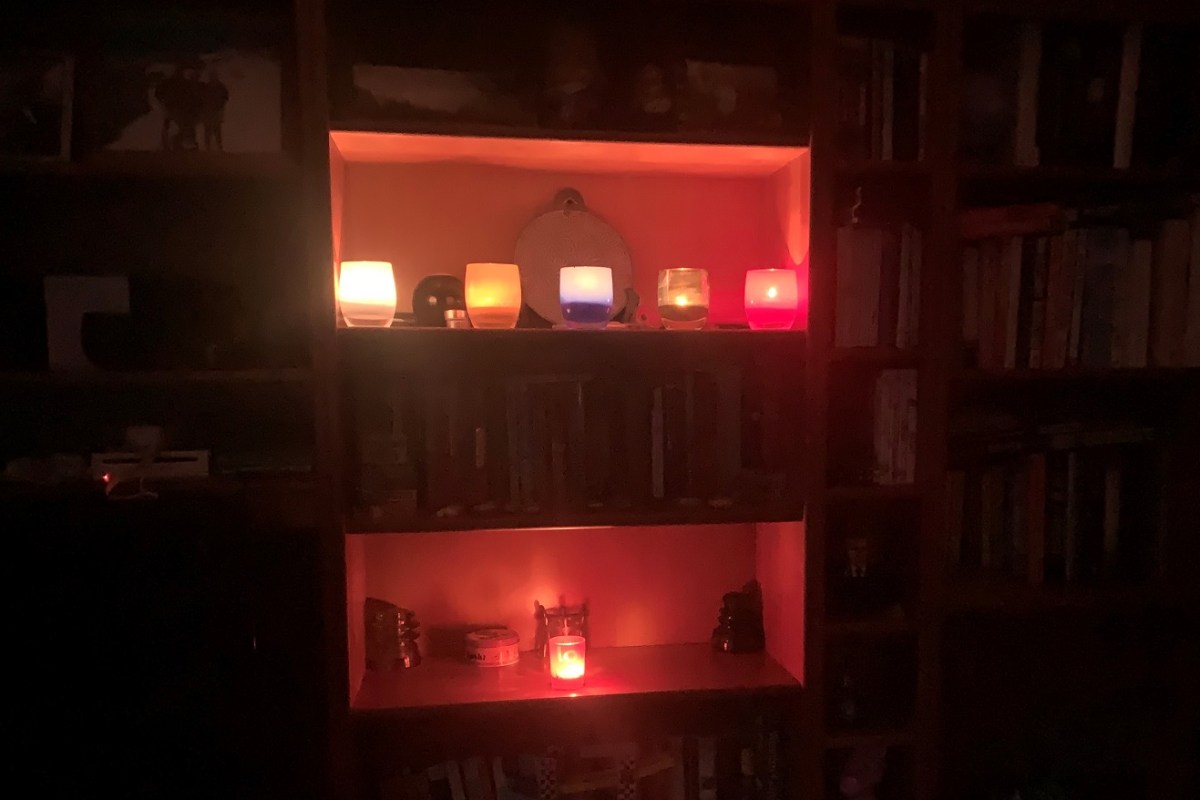
When I rolled out of bed in the dark this morning, I found it more accepting of my sleepiness and more sacred in the quiet. Somehow, it’s easier to bring all of me, light and dark, to the meditation cushion when the sun hasn’t yet come out. The candles I light every morning glow brighter in the dark and I’m starting to discover that I need to accept both in order to fully see.

Whole-Hearted Little People

“I believe that you have to walk through vulnerability to get to courage.” – Brene Brown

Early yesterday morning there was a fly in my daughter’s room. It woke her up early with its buzzing and between her efforts to get it and to get me to get it, my son was awakened early. Which is why my kids were grumpy last night. When I told my daughter to stop taking the toys away from my son, she said, “I know, I know, I’m the worst kid.” And when I told my son to stop picking the flowers and leaves off the plants in the planters, he lay on the ground drumming his hands and fists. In my observations of these little people, it’s pretty consistent that my daughter internalizes negative feelings while my son externalizes them.

I don’t have a strong belief when it comes to male and female energies. I was brought up to believe that I could be whatever I wanted and so I got my degree in electrical engineering and climbed mountains as a hobby even though both were male-dominated activities. Now I’m a single parent combining the traditional roles of mom and dad and I don’t think much about making a distinction. So it is with complete fascination that I watch these two kids come out with different ways of being.

It made me think of a generalized progression of how we can develop into our stereotypical males and females from where we start. For boys who are taught not to express their emotions through thumping their hands on the floor, they can become stoic and unexpressive. For girls who want to avoid the pain of turning their feelings inward, they can start trying to become perfect.

This reminds me of a fascinating passage I read from Canadian psychologist and author, Jordan Peterson who argues that it’s the thousands years of evolution that has created the conditions for the male and female psyches.

“Women are choosy maters … It is for this reason that we all have twice as many female ancestors as male (imagine that all the women who have ever lived averaged one child. Now imagine that half the men who have ever lived have fathered two children, if they had any, while other half fathered none). It is Woman as Nature who looks at half of all men and says, “No!” For the men, that’s a direct encounter with chaos, and it occurs with devastating force every time they are turned down for a date. Human female choosiness is also why we are very different from the common ancestor we shared with our chimpanzee cousins, while the latter are very much the same. Women’s proclivity to say no, more than any other force, has shaped our evolution into the creative, industrious, upright, large-brained (competitive, aggressive, domineering) creatures that we are.”

12 Rules for Life – Jordan Peterson

That extremely long view argues that there isn’t much I can do as a parent to affect the expression of the male and female energies and I’m not sure that I agree with that. In wanting my kids to develop as authentic, healthy and kind beings and good citizens of the Universe, I can’t just throw in the towel and chalk it up to human nature. So I’m borrowing from sociologist and researcher Brene Brown’s work on shame and vulnerability, Dr. Tina Payne Bryson and Dr. Dan Siegel’s work on brain integration and regulation, and developmental biologist John Medina’s work to build up our ability to name our emotions, develop resilience from shame and failure and work on walking through vulnerability to arrive at courage. I believe we can work towards being whole-hearted beings regardless of gender and I’m sticking with that.. and getting a good night’s sleep!

The Lightening Rod for Big Feelings

“The best way out is always through.” – Robert Frost

It’s my sister-in-law’s last day of nannying for me. The kids are aware of it but since they live so much in the now, it’s not as much that they focus on that information but the air is crackling with change and they sense it. It reminds me of the song my daughter sings about lightning: “Electricity gathers in a cloud, When frozen rain and bits of ice are bumping all around, Electricity leaping towards the ground, Lightning is the flash of light, Thunder is its sound.”

Just like with thunder storms, that energy has to go somewhere and in most cases, I find that I’m the lightening rod for my kids. They’ve bravely keep their little selves together until they see me and then it all comes bursting out. Lightning rods work because they draw the strike and then are wired to ground so that the energy is discharged safely into the earth. If a lightning rod is not wired to the ground, it provides no added protection to the structure.

I’m the conduit for my family’s emotion because my kids aren’t old enough to process many of the big feelings that come along with trying, getting hurt and having little control over the circumstances of life. And it’s not just kids that bleed off their pain and uncertainty. But to be the safe place for someone else’s emotions without endangering ourselves, we have to be connected to the ground. The danger of not being is that the electricity stays within us, causing damage to our organs, flashing out somewhere else unexpectedly or perhaps worst of all, building up until it’s a layer of charge that buffers our enjoyment of life. Completing the analogy, if we aren’t grounded we will not provide any added protection to the structure.

As with so much in parenting, I do much better with big feelings and changes if I take care of myself so I find myself continually working on my grounding. All week I have been getting up extra early, meditating to find that awareness that is bigger than my fear of the unknown, writing to process it all, and lying on the ground, ostensibly to stretch but even more to remind myself that there are many things that hold me up as life shifts. Leaning in towards the raw power of transformation and change, I find my center that is there through it all.

The Serenity Prayer for Parents

The other day I was chatting online with a bunch of parents about how to get kids to eat well. One woman said seeing pictures people post of the interesting and nutritious foods they were serving their kids made her feel depressed. Another said she fixes three different dinners every night – one for the grown-ups and a different selection for each of her two kids. I admitted that I get so tired of wasting food that I often forget to try. There were a lot of good suggestions and strategies in our chat but also a lot of frustration and self-flagellation from parents who are trying their best. It reminded me that parents need a serenity prayer to remind us not to beat ourselves up.

God grant me the serenity to accept the things I cannot change. The courage to change the things I can, and the wisdom to know the difference.

The serenity prayer is of course most known as a cornerstone of Alcoholics Anonymous (AA). I asked a friend who goes to AA, how that meshes with a wide variance of belief systems that go along with such a group. He told me, “when a newby is having a problem with the term higher power, or a ‘God of your understanding’….the old timer would say, ‘for now, just believe there is a God, and it isn’t you, go sit down and listen.’ “

So for whatever Higher Power means to you, it is a relief to acknowledge that there are forces beyond our parenting that influence our little people. We want them to eat well for many great reasons that including our own needs because this is a work in progress and we are itching for solid proof that they’ll be fine and because it is our job and we want evidence that we are doing it well. They will grow up – with our help and in spite of our help. I have a friend with older kids who had a son who would only eat bagels when he went off to college. Truly, that is not an exaggeration. He was a great kid – athletic, smart and kind and she was a fantastic parent. He turned out fine.

These years when my kids are young are the ones where I get to practice that finding that wisdom between accepting what I cannot change and having courage to show up for my kids on the things that I can. It starts with the battles over peas and broccoli but these are just stand-ins for our ability to know when to push, improve our ability to listen and not judge ourselves too harshly when we get it wrong. God grant me the serenity…help me find that place to listen…please make cauliflower too pricey as a sign I don’t need to serve it anymore…let me know that my kids will be fine. Amen.

Oh, I’m Wounded

“A child can ask questions that a wise man cannot answer.” – unknown

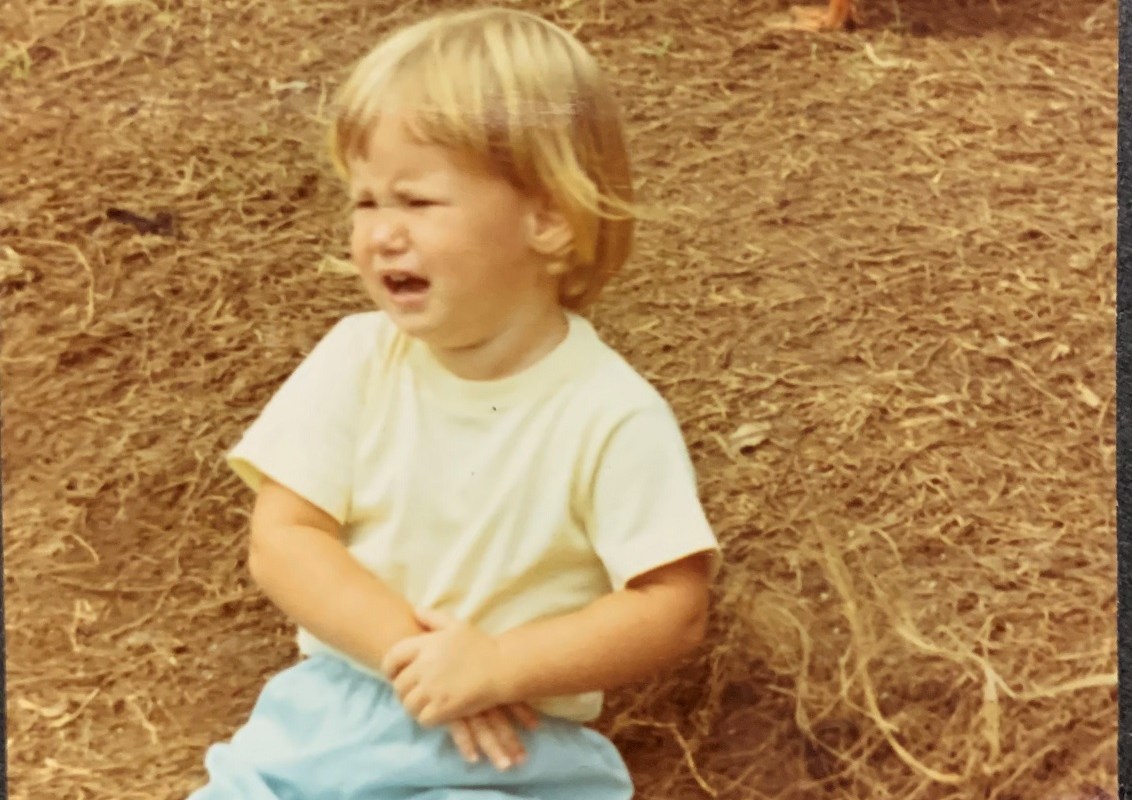
“Mama, why don’t grown-ups cry?” my daughter asked when she was three. There are a lot of possible answers to that question – we do but it’s more often that they leak out of us unexpectedly, or that not as much shocks us because we have experienced more, or that we have more ways to communicate our feelings than young children. But it wasn’t until I was reading something last week that I found my answer.

The passage was a simple meditation on giving air to our wounds. And even though I’d read it before, somehow the light of life hit it just right this time so that when I read it again, I heard it as it related to me for the first time. “Oh, I’m wounded” I thought in surprise.

Twelve years again when my business partner sat me down to lunch to tell me of my husband’s infidelities, it was a clear enough owie. But as the years passed and we divorced, I reshaped my life and my work and then went on to have kids as a single parent, I could easily tell you that is far in the past in a manner and tone that is believable. And in many ways it is. I’ve owned my own part in the failure of our marriage, forgiven him for his and my two darling kids are proof that things worked out the way they were supposed to.

But the wound, I discovered, is in how I see myself. My ex-husband thought I was too independent. At first couldn’t even fathom that could be a deficit. From an early age as the youngest of three children in a family of big achievers, being independent meant I could keep up, being independent was a greatly praised trait and being independent became one of the pillars of who I was proud to be. Then came along my marriage and my ex who could pronounce the word with a particular emphasis and bite that hurt. In-de-PEN-dent.

But what struck me last week as I read that meditation was that I’ve allowed his criticism of a personal characteristic of which I am so proud to undercut my belief that I’m lovable as a partner. My ex-husband’s fear that he was unlovable created a belief in me that I was unlovable and I have never healed that wound. And saying that is hard so I imagine it’s taken me all these years to discover that because I wasn’t ready to air the wound. So here’s my new answer to my daughter’s question: grown-ups don’t cry because we don’t know we are hurt. Grown-ups bury things deep so that they can keep being productive, optimistic and claim some measure of success. Grown-ups need to listen to the advice they give kids when they get hurt: “Be brave and let us see the wound.” Because when we are vulnerable about the way we are wounded and have wounded others, we have a chance to heal it and inspire others to do the same.