Not Too Hot, Not Too Cold: Medium Water

Use your passion to create a job.” – Lailah Gifty Akita

Recently, six-year-old Mr. D announced to his sister and me that he wanted to open a shop. After confessing that he didn’t know what he wanted to sell, we started brainstorming ideas based on his skills and interests.

Ten-year-old Miss O came up with the winning product: medium water. Mr. D’s recent foray into learning how to cook has led him to a new recipe that he calls medium water. He boils water for hot drinks and then adds ice so it isn’t too hot.

He sometimes asks people who come over if they’d like medium water. Funny that it usually takes some explanation what it is.

But I think with enough passion, he can pitch this idea. How about these taglines?

  • Mr. D’s Tepid Tea: All the enjoyment, none of the risk.
  • Mr. D’s Just Right Café: Why wait to sip your favorite beverage?
  • Mr. D’s Medium Water: Order a tall or a short, and get it medium

In Seattle, land of the coffee shops, where the weather is usually not too hot or not too cold, it actually might fly! Or perhaps the response might be lukewarm. If he ever does it, I’ll let you know.

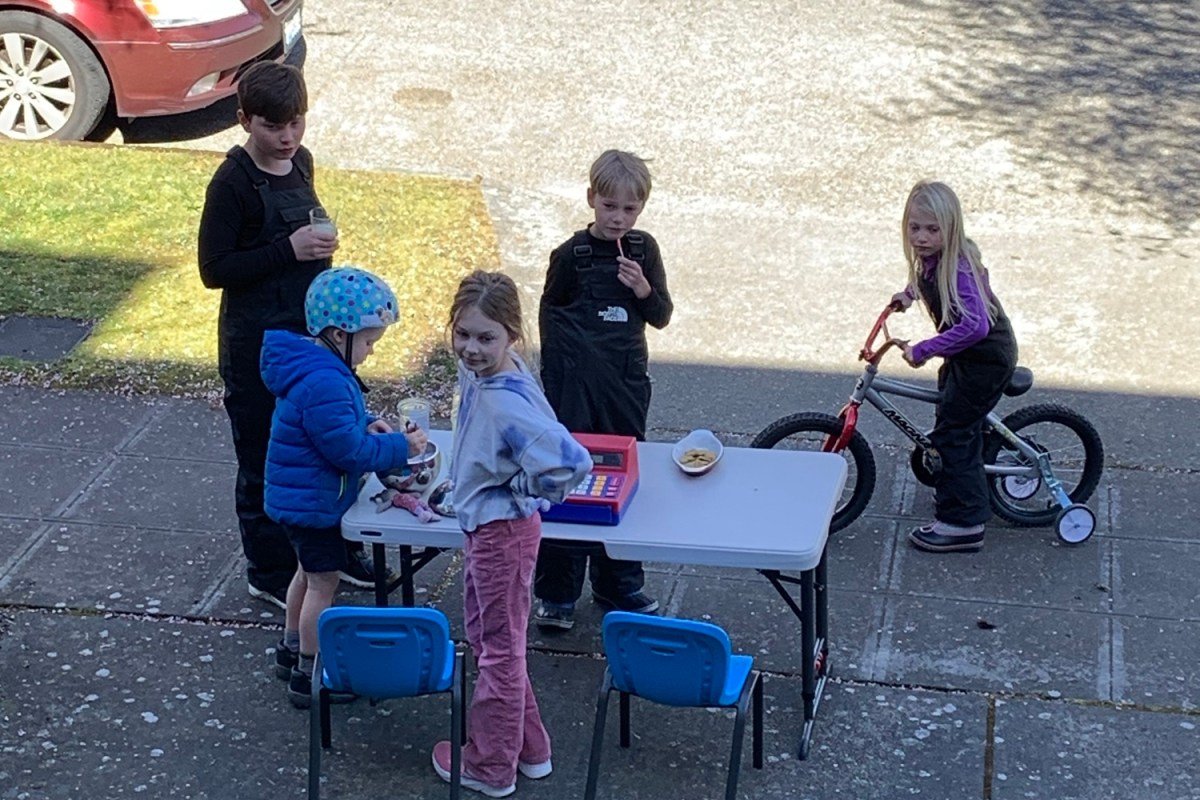
(featured photo is mine of a past lemonade stand)

You can find me on LinkedIn: https://www.linkedin.com/in/wynneleon/ and Instagram @wynneleon

I host the How to Share podcast, a podcast about collaboration – sharing leads to success.

I also co-host the Sharing the Heart of the Matter podcast, an author, creator and storytelling podcast with the amazing Vicki Atkinson.

How to Share Humor

Laughter without a tinge of philosophy is but a sneeze of humor. Genuine humor is replete with wisdom.” – Mark Twain

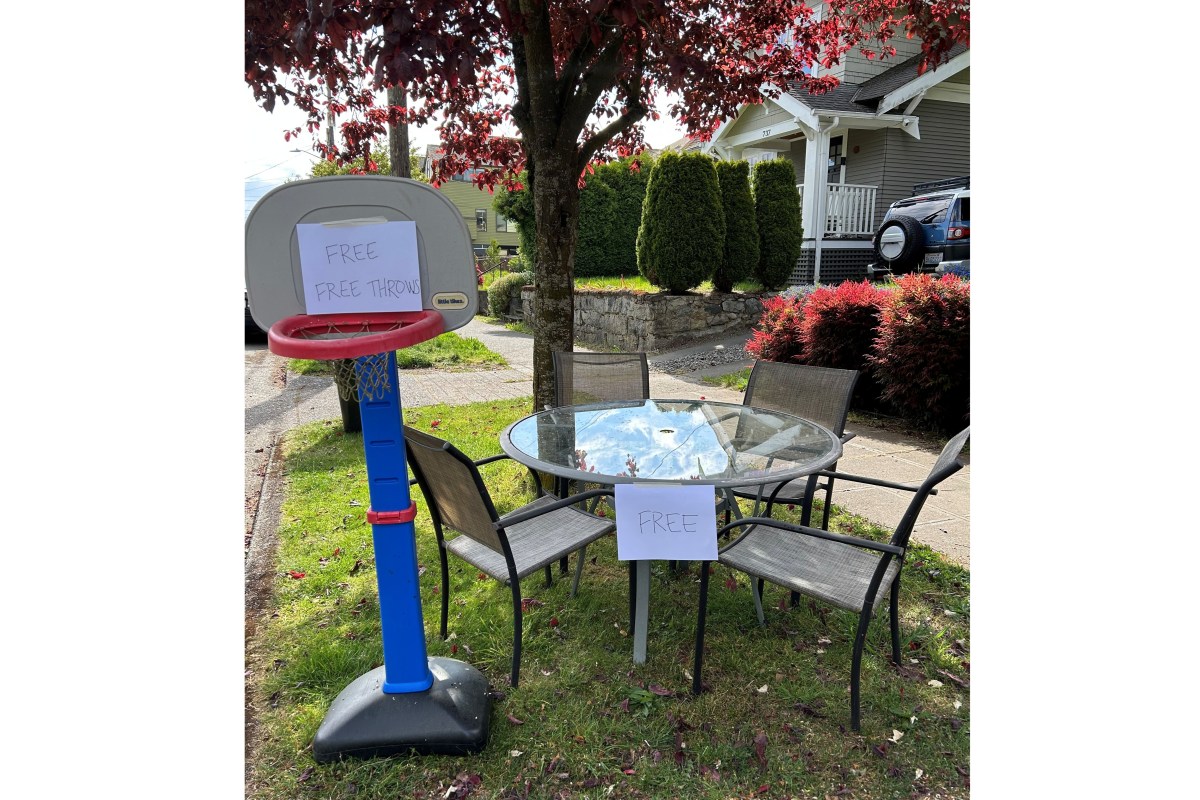
A couple of months ago, I was getting rid of a couple of disparate things from my backyard. I hauled my round patio table and chairs along with a toddler’s basketball net out to the curb and put a FREE sign on them. When I texted my friend, Eric, a picture, he replied, “Court side dining! Nice.

That reply perfectly encapsulates Eric’s witty marketing genius. So I wrangled him to come on the How To Share podcast to talk about how to share humor.

In this episode, PR and marketing professional Eric Knudson and I explore the multifaceted nature of humor, discussing its role in relationships, politics, and corporate settings. We delve into the elements that make humor effective, such as shared experiences and cultural differences, while also addressing the challenges of navigating humor in today’s society. Our conversation highlights the importance of humor as a tool for connection and communication, offering insights and tips for sharing humor effectively.

Takeaways

  • Humor is an effective tool for winning friends and influencing people.
  • Not everyone generates humor, but most people appreciate it.
  • Shared experiences are crucial for humor to resonate.
  • Cultural differences significantly impact humor appreciation.
  • Humor can serve as a coping mechanism in difficult times.
  • Political humor varies greatly among different leaders.
  • Humor can help build relationships in corporate settings.
  • Modern society presents challenges for sharing humor due to self-selection.
  • Humor is a muscle that needs to be exercised regularly.
  • Finding opportunities to use humor can invite people in.

This is a great episode filled with funny stories that will have you laughing – and thinking about how you can share laughter. I know you’ll love it.

Here’s a short clip to give you a taste of the great conversation with the clever and charming Eric Knudson:

Here are some ways you can listen and watch to the full episode:

Please listen, watch, provide feedback and subscribe.

How to Share Our Luck with Gil Gillenwater How To Share

In this enlightening conversation, Gil Gillenwater is with host Wynne Leon and shares his experiences and insights from over 35 years of philanthropic work along the US-Mexico border. He discusses his book, 'Hope on the Border,' which highlights the transformative power of education and community service. Gil emphasizes the importance of enlightened self-interest over traditional charity, advocating for a model that empowers individuals and fosters dignity. He explores the duality of poverty, the need for sustainable opportunities, and the joy found in serving others, ultimately presenting a vision for a more connected and compassionate world.TakeawaysEducation is the key to breaking the cycle of poverty.Enlightened self-interest can lead to personal and communal growth.Charity should not be viewed as a sacrifice but as a mutual benefit.Volunteering provides a sense of purpose and fulfillment.Welfare can disempower individuals and communities.Community service fosters connections and shared humanity.The disparity in wealth is a significant issue that needs addressing.Experiencing poverty firsthand can change perspectives.Creating opportunities in one's home country can reduce migration.The joy of service is a pathway to personal happiness.Links for this episode:How to Share homeHope on the Border at AmazonGil's organization: Rancho FelizGil Gillenwater on FacebookWynne’s book about her beloved father: Finding My Father’s Faith; Blog: https://wynneleon.com/; Substack: https://wynneleon930758.substack.com/
  1. How to Share Our Luck with Gil Gillenwater
  2. How to Share 1970's Chicago with Doug. E. Jones
  3. How to Share Feedback with Dr. Vicki Atkinson
  4. How to Share the Next Generation with Mari Sarkisian Wyatt
  5. How to Share Impactfully with Social Media Friends with Amy Weinland Daughters

Links for this episode:

Eric Knudson’s company website: ⁠Basecamp Communications⁠

Eric Knudson on LinkedIn: ⁠(24) Eric Knudson | LinkedIn⁠

Marketing, For What It’s Worth

“It is not easy to find happiness in ourselves, and it is not possible to find it elsewhere.” – Agnes Repplier

My utilitarian corkscrew gave out in the middle of Thanksgiving dinner. It raised one arm on a broken gear and announced that it had served with honor and now was done.

Which left me with the corkscrew I bought from the J. Peterman catalog more than 20 years ago. Do you remember that catalog? I used to keep it on my desk for when I needed a creative break – or just to dream a little. I loved the little micro stories so much that I felt guilty putting it in the recycling bin, even if I had a new version in hand.

For anyone that isn’t familiar, here’s a sample description from their website. The Howdaseat is a folding chair:

Howdaseat.

This wonderful contraption is only for people over 40, or under.

Made of basswood slats and tough, natural canvas duck, its only role in life is to support your back properly.

The way it holds you is like a hug, and like all hugs, it will make you feel good. If your back hasn’t felt good for the last 19 years, this thing will make you feel very, very good. And surprised it took so long.

Roll it up and carry it under your arm. Room to room. House to car to office. For reading, driving, concerts; and staring across the pond at that stand of maples there and marveling at how really well designed the human back is, after all. Made in USA.

I bought several things from that catalog back in the day. The funny thing was that the things, once in hand, never lived up to their marketing. The words, the stories, the mystique stayed with the stories and not with the object itself.

Which I remembered once again as I wrestled with the J. Peterman corkscrew this past weekend. It reminded me of the magic of stories. And that when it comes to marketing, finding things that are undersold and overdelivered is better. May we remember both things this holiday season.

(featured photo from Pexels)

The Whole-Hearted Profile

Very often what people would accurately claim as what they DO isn’t where they want to GO.” – Dr. Vicki Atkinson

I wonder if Leonardo da Vinci would have had trouble creating a LinkedIn profile. Here’s how Wikipedia describes him: painter, draughtsman, engineer, scientist, theorist, sculptor, and architect.

We might not have a list as long as da Vinci’s but we’re all Renaissance people to a degree, right? People who pivot between roles and evolve to own different titles throughout life. Writers, moms or dads, professionals, leaders, caretakers, gardeners, woodworkers, advocates, seekers, athletes to name a few.

A few months ago I asked my dear friend, Dr. Vicki Atkinson, for some tips about updating my LinkedIn profile. And then I sat on her expert advice for two months because marketing one’s self seems so vulnerable.

When I sat down to actually follow her clear and helpful advice, it only took me about 90 minutes. So we podcasted about this effort to build profiles that honor all our facets.

Dr. Atkinson has so much good guidance on how to build a presence that reflects our many facets. Her professional experience as a career counselor, therapist, and educator comes shining through in this episode. We learn some great how-to’s in this episode.

I found updating my LinkedIn profile to be challenging. I have 30+ years in the technology industry and I’m unsure how to marry that with my writing and experience as an author.

So Vicki walks me through using headlines instead of titles. She provides a great tip about using tags to introduce some dynamism into our profile and ability to be found.

Dr. Atkinson talks me through the idea of integrity as it applies to building a profile that honors ALL of who we are. As we pivot from professional experiences, interests and passions, she coaches us to do the story-telling to paint a picture of our whole-hearted experience.

And finally, we talk about the use of images to compliment our presentation.

I’m confident you’ll learn a lot — and also love the scenic and beautiful places we explore as we share the power of storytelling in our profiles.

We know you’ll love it!

Search (and subscribe!) for Sharing the Heart of the Matter on Apple, Amazon, Spotify or Pocket Casts OR Listen to it from your computer on Anchor: Episode 87: LinkedIn Tweaks for Authors with Dr. Vicki Atkinson

AND subscribe to our YouTube channel to see a video clip of each story: @SharingtheHeartoftheMatter.

Links for this Episode:

HoTM episode 87 transcript

PDF presentation of Vicki’s recommendations and LinkedIn changes

Wynne Leon | LinkedIn

Dr. Victoria Atkinson, Ed.D. | LinkedIn

It’s Never Too Late for Courage – Victoria Ponders

Realizing Potential – Victoria Ponders

Vicki’s book: Surviving Sue

The Imposter Syndrome In Blogging

Write without pay until somebody offers to pay.” – Mark Twain

The was originally published on 5/3/2023. Heads up – you may have already read this.


On a recent podcast, Dan Harris was telling a story about when he suggested to his wife, a physician who graduated top in her class from a prestigious medical school and has practiced at some of the best teaching hospitals, that she might suffer from Imposter’s Syndrome. His wife’s response made me laugh out loud. Dan said it was something like “It’s interesting that some other people felt like that but I really AM an imposter.”

This Ten Percent Happier podcast with Dr. Valerie Young, an expert on the syndrome for more than 40 years, is fascinating for their deep dive in Imposter Syndrome or “feeling like a fraud, despite evidence to the contrary.” She also noted that some areas are more susceptible to this kind of thinking and being creative is one of them. According to Dr. Young, “when you are in a creative field, you are only as good as your last book or your last performance.

Or, to expand on the professor’s point — your last blog post. That really resonated with me. Here’s why I think that.

I didn’t go to school for it.

In my professional life, I’m an expert in Microsoft collaboration software – things like creating structure and process about where people put and find their files, and workflow (e.g. how do I submit something for approval?).

Does my electrical engineering degree have any bearing on that? No. Outside of some basic troubleshooting and thinking skills, there isn’t any relationship between my degree and what I do now. I could draw a similarly loose relationship between the writing classes and I took in college and writing now, but I wouldn’t ever call myself an expert because….

Writing has been around a long time.

Writing has been around for about 5,500 years. I’m pulling that number from this delightful Psychology Today article about The Evolution of the Written Word. It’s a lot easier to feel like I know a good deal about collaborative software even though it changes daily and I’m always have to look something up. But writing? Well, there’s been Shakespeare, Fitzgerald, Garcia Marquez, Rushdie, and Hemingway and just typing that list makes me remember all that I don’t even know about the great writers, much less about writing.

No one pays me to write

For whatever I do and do not know about Microsoft software, I’ve been able to make a living out of a career providing consulting services around it. I’ve even published a couple of technical books, some of the least profitable parts of my career, which doesn’t bode well for me making a living from writing. But no one pays me to write, or at least not that I’ve managed to figure out yet, which makes me lack in the most basic form of transactional affirmation.

For some people, and I’m thinking of my colleague, Jack Canfora, who have made a go of writing as a career, the mantel of a writer seems to fit a lot better. Which affirms my inclination to think of myself as just a hobbyist.

And yet…

So why persist as a writer? Because writing feels more meaningful than any single consulting project I’ve ever done. Because writing requires me to dig deep and put myself out there is a way that is not required with computer consulting. Because writing about life creates a goodness in my experience that increases my enjoyment in life.

Here’s what I’ve concluded. Sure, sometimes (or a lot of times), I feel like an imposter as a writer and I know I’m not alone in that feeling. But every one who lives their authentic words out on paper can’t be an imposter to their experience. Any one who has hit the word “publish” has indeed created something. No one who uses words to create feelings in others and communicate should suffer from the distinction that others may have done it better. All who bleed, figuratively speaking, to put themselves out there should be proud of the effort.

What about you? Do you feel like you’ve suffered from Imposter Syndrome as a creative? What have you done to combat it?

(featured photo from Pexels)