The Journey Is The Destination

Tell me and I will forget, teach me and I will remember, involve me and I will learn.” – Benjamin Franklin

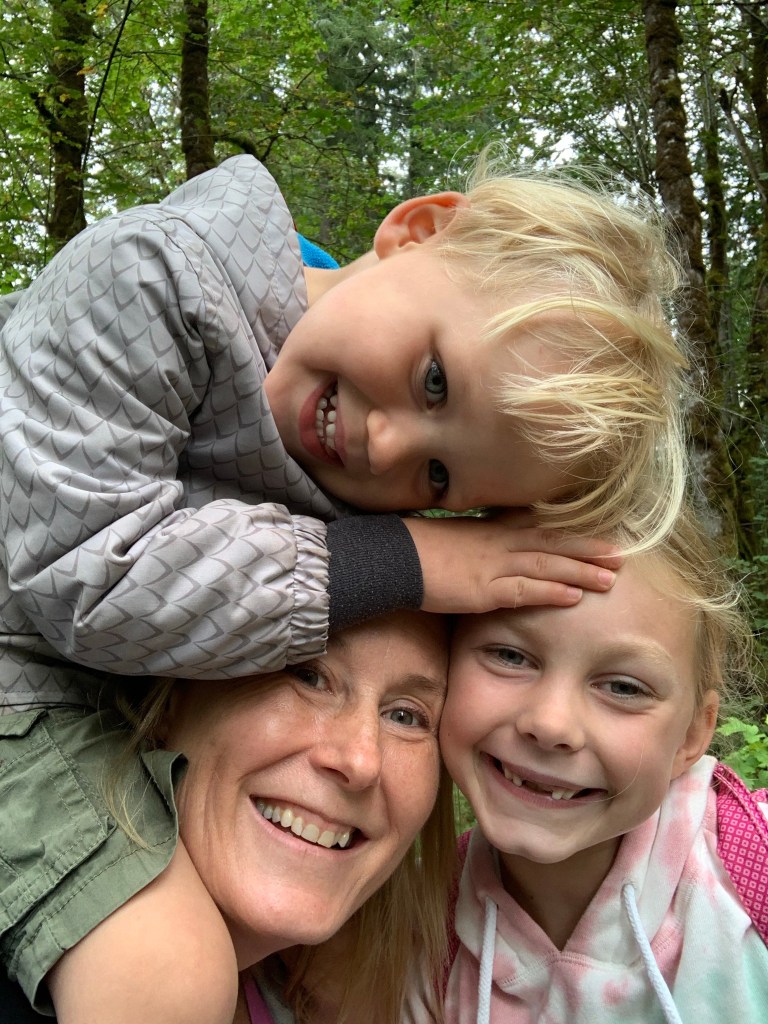
I took the kids out hiking last weekend. Before I had kids, I used to hike every Saturday morning starting in the years one of my friends was preparing to climb Everest (the trick of hiking with someone in that good of shape – make her talk all the way up and you talk all the way down). So hiking with my kids feels like going back to my roots.

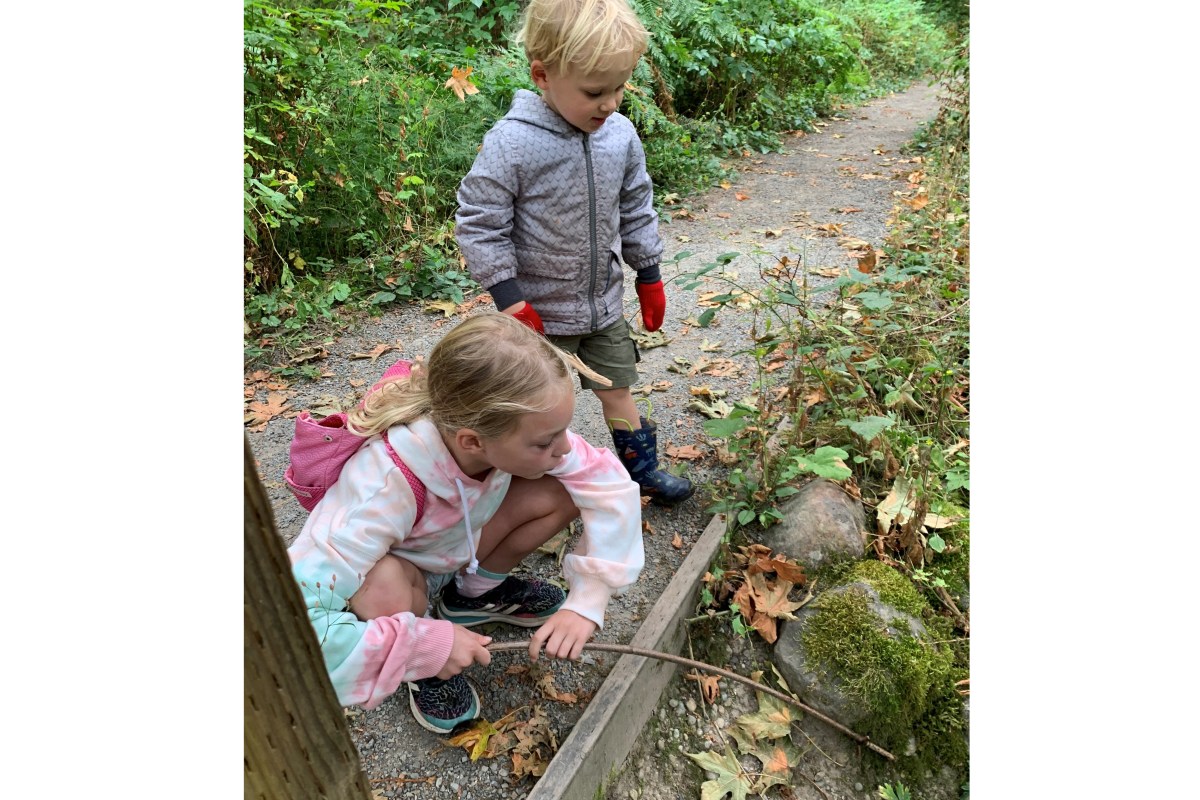
But instead of hiking up Tiger Mountain as I would if it was just me, I choose a flat trail to Tradition Lake that the sign says is 1.5 miles away. As we head out with high energy, I had great hopes that we’d actually GET to the lake this time. Because we’ve tried this before and about a half mile in, after we’ve looked at countless sticks, rocks, bugs and slugs, Mr. D gets tired of “hiking.” I put him on my shoulders and carry him back to the parking lot.

I consider not making the goal to be good practice for me. I love finishing and as I wrote in the messy middle post, I find myself often rushing to the end. To enjoy the process of getting there, and to enjoy all the slugs along the way, is a way of slowing down my adult brain that is so intent on goals. It’s another opportunity to immerse myself in my kids lantern awareness, to use the term from researcher Dr. Alison Gopnik.

Of course I could carry Mr. D farther and get to the lake even if my knees, hips and shoulders might disagree. I think Miss O could do the trail all the way no problem. But I think developing the endurance to get there himself is something that is worth leaving it to Mr. D to do.

What I’m learning about accomplishments is not only to be flexible about what the end-point is but also to value the progression along the way. “Hiking” with my kids is like a walking meditation for me, another chance to learn that sometimes the goal isn’t what the sign says. It’s a practice of learning when to say we’ve gone far enough instead of pushing through. It’s honoring the deep knowing that comes with celebrating the beauty of the journey.

And sure enough, at about half mile in, we reached the end of Mr. D’s desire to hike. My reward for being willing to turn around was that we laughed the whole way back.
How do you feel about not reaching the end-point on the sign? Do/did you hike with your kids?
Pushing Our Limits

Only those who risk going too far can possibly find out how far one can go.” – T.S. Eliot

I just took care of my kids for 11 days without a break. Turns out that was two days too long. It was fine -we had lots of fun activities with our family and friends, new Christmas toys to play with and even two nights away at a cabin on the water. But without taking some intentional time to myself to take an hour’s walk alone or just sit on a bench and listen to sounds around me that wasn’t my kids’ voices, I hit my limit of tolerating chaos, my patience was thin and I didn’t have any of my usual zest for the experience.

Being pushed to the limit makes me think of the judgment calls mountain guides have to make on a climb. The ones that I’ve climbed with are very good at assessing an individual’s physical and mental state and making that call whether to push through or turn back.

On a five-day expedition climb of Mt. Rainier that I once did, there was a team member who when we did the group introduction said that he’d come from St. Louis, hadn’t worked out in preparation and was there for the most painful experience of his life. Then he disappeared for a few minutes while we were all packing up and returned with a chili dog. Just the thought of a chili dog in my gut as I cinched down the waist belt on my pack made me a little queasy.

When we left the lodge at 5,400 feet altitude for a five-hour climb to our camp for the night, the climber from St. Louis fell behind right away. A guide stayed with him and started the process of understanding his limits as I’ve seen practiced in the mountains several times.

Guides start by asking how you are doing to gauge a sense of your mental state and attitude. In between the lines of answers like “I just got a stitch in my side”, “I didn’t sleep well last night” or “I just can’t seem to get it together” are clues about how the climber is feeling about the journey.

Then they slow the pace down for the climber or take an extra break to see if that will help restore the equilibrium. I’ve often wondered why they don’t just turn people around right away if it seems to be a problem. But sometimes just a few minutes of rest can change the attitude from “I can’t” to “I can.”

And then, if someone is still struggling, the guide will walk the climber to the base. I’m know this is a safety thing to not leave people wandering around a mountain trying to get back but it’s always struck me as a beautiful act of kindness to walk someone home when they are done.

The climber from St. Louis hit his limit pretty early on that first day of climbing and turned back about three hours in. I never saw him again so I don’t know whether it was the chili dog or approaching the trip as the most painful experience ever that did him in.

As we face this new week, new month and new year, I think about the guides’ formula for understanding our limits: talking through how we feel, slowing down and take a rest and if necessary, having someone walk us safely back to the base when we have reached our limit so that we can climb again another day. It gives me inspiration for not only knowing when I’ve had enough but guiding others through theirs.

Sometimes we have to carry on in spite of our limits – like I had to my kids because the unusual Seattle snow hampered the breaks that I had planned. It worked out fine but I learned once again to respect the balance of life, pushing my limits and also finding a way back to home base when I’ve reached them.