
Figuring Out Feelings

These pains you feel are messengers. Listen to them.” – Rumi

There’s nothing like watching a kid trying to figure out what they’re feeling to remind me how hard it is to name what’s wrong.

We traveled this weekend to San Francisco for a family party. Tons of fun! Also lots of people to coordinate with. I’m sure I don’t need to tell you how traveling can decrease the easy access to food, increase how far we need to walk, and obliterate the routine. All in the name of doing fantastic things, of course, but a little disorienting nonetheless.

At one point on Friday afternoon, we walked to the Lucas Films office building to see the Star Wars memorabilia on display. They had the R2D2 in the lobby as well as the original Darth Vader costume. And tucked in glass shelving, they had Han Solo’s light saber and some other guns from the movie.
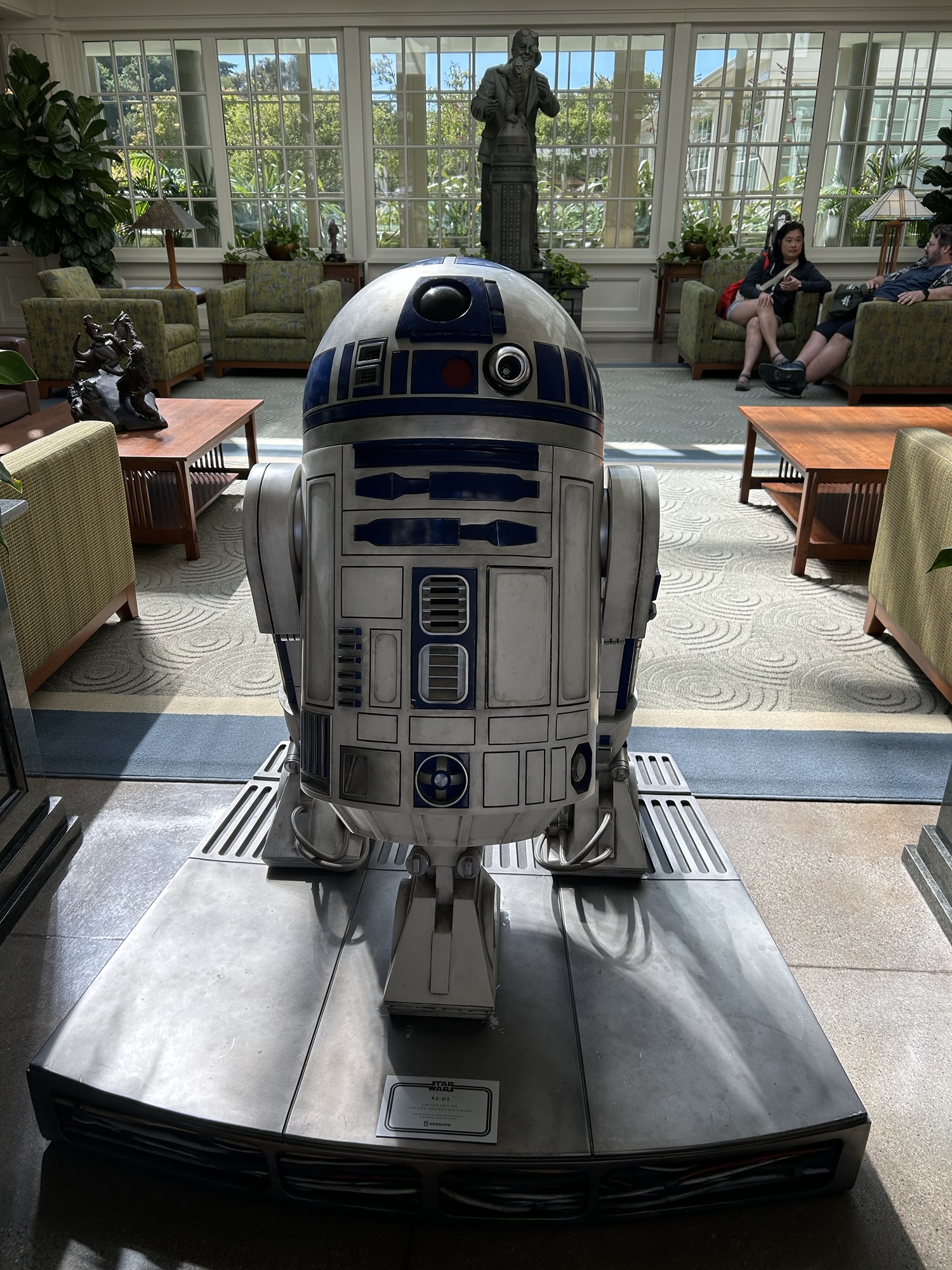
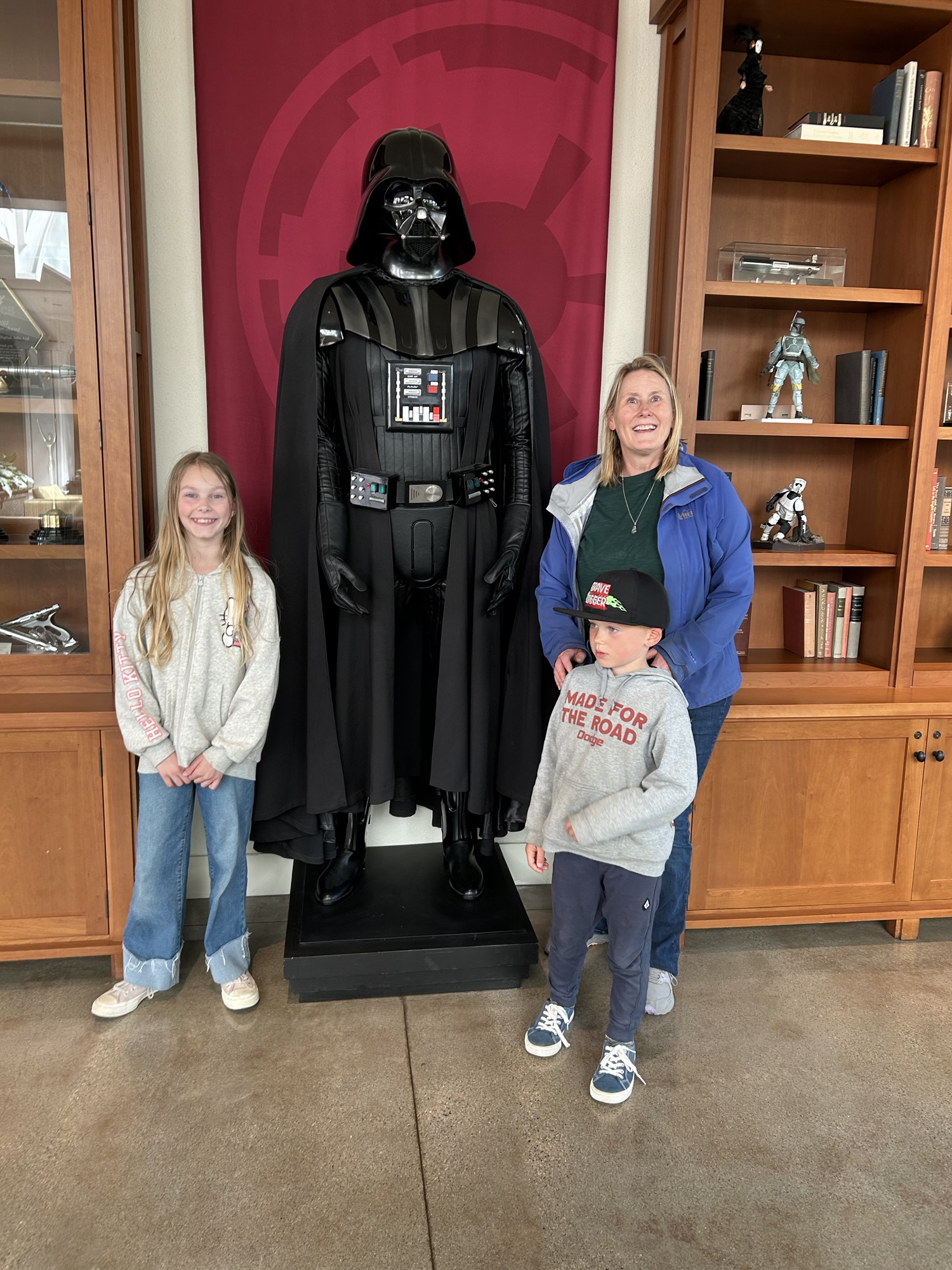
Yeah, you don’t even need to be a huge Star Wars buff to think that was cool!

We walked out of there and my son was upset. He wasn’t crying or saying anything but he parked himself on a wall a half dozen steps from the door and wouldn’t move. When I finally got him to talk, he said, “It’s not fair that they get to have those guns when I want one.”

Hmm… I didn’t think that was the root of it. Granted I’m not a five-year-old boy, but the guns didn’t seem amazing enough to spark a protest.

After some minutes of silent protest with his sister and me at his side and our family patiently waiting about 50 feet away, he finally could be persuaded to walk around the corner to a Starbucks. At least that was a little slice of familiar territory.

Even so, it probably was another ten minutes before he ate and drank enough to come back to himself. He still wanted a Star Wars original light saber but he could move on.

It made me wonder how many times I’ve hit the wall, mistaken the source of my depletion, and tried to climb the wrong tree to get over it. More times than there are Star Wars movies, for sure!

Being human is hard. Borrowing social psychologist Jonathan Haidt’s metaphor for the body (elephant) and the mind (rider) — the elephant stops moving and the rider, thinking it’s in charge, finds the best story why, but not necessarily the most accurate. And then we can find ourselves wanting to shoot our way into the Lucas Films lobby to steal priceless memorabilia when all we really need is a snack.

May the Force (of stopping long enough to get to the bottom of our angst) be with you.

(featured photo is mine)

You can find me on LinkedIn: https://www.linkedin.com/in/wynneleon/ and Instagram @wynneleon

I host the How to Share podcast, a podcast about how to share anything – to the appropriate audience, with the right permissions, at the most opportune time.

I also co-host the Sharing the Heart of the Matter podcast, an author, creator and storytelling podcast with the amazing Vicki Atkinson.

Where Does The Spark Come From?

At the center of the being you have the answer; you know who you are and you know what you want.” – Lao Tzu

Cognitive and Computational Neurosience Professor Anil Seth related an experiment from about 50 years ago on a Ten Percent Happier podcast that caught my attention. In the study, participants, who were all male, had to either walk over a low, sturdy bridge or a high, rickety bridge over a raging torrent. On the other side of the bridge was a female researcher who asked them some questions and then gave them her phone number in case they had any follow-on questions. The outcome was that many more of the male participants who had walked over the rickety, precarious bridge phoned the researcher to ask for a date or talk to her after the fact.

Anil Seth summed it up as “The interpretation of this ethically very, very dubious experiment is that the creepy walk across the rickety bridge misinterpreted their physiological arousal caused by the scariness of the bridge as some kind of sexual chemistry with the female researcher.”

The point that Anil Seth was making is that our emotions, whether it is fear of a snake or chemistry with another person, often start in our body and then are interpreted by our brain instead of the other way around even though it appears that our brains are running the show. This matches the metaphor presented by psychologist Jonathan Haidt in his book The Happiness Hypothesis of the elephant and the rider. The rider is our conscious mind and the elephant is everything else – our sensations, subconscious motives, internal presuppositions. We think the rider is in charge but that’s only the case if the elephant agrees.

This reminds me of a recent conversation I had with a couple of friends about online dating. I tried online dating about 10 years ago after my divorce and before I decided to start a family on my own. I dutifully filled out the surveys that catalogued interests and personality preferences, wrote the essay and subsequently met a number of nice men. In fact, my friend Eric was someone who I met online and we became great friends after deciding that dating wasn’t right for us.

It seems to me that online dating asks us to essentially name what we want – and that we don’t know what we want. We can’t quantify the mystery or adrenaline or whatever else it is that causes us to feel attraction. Of course from there, a committed relationship is a decision as much or more than a feeling but for that initial emotion, it seems might come from the body as it did in the experiment that Anil Seth described.

Unfortunately, codes being what they are these days in Seattle, I can’t think of any rickety bridges either to cross or to stand on the other side of. 😊

What do you think of online dating? What about the idea that emotion starts in the body and is interpreted by the mind?

(featured photo was taken by me in Nepal on the trek to Everest base camp in 2001)