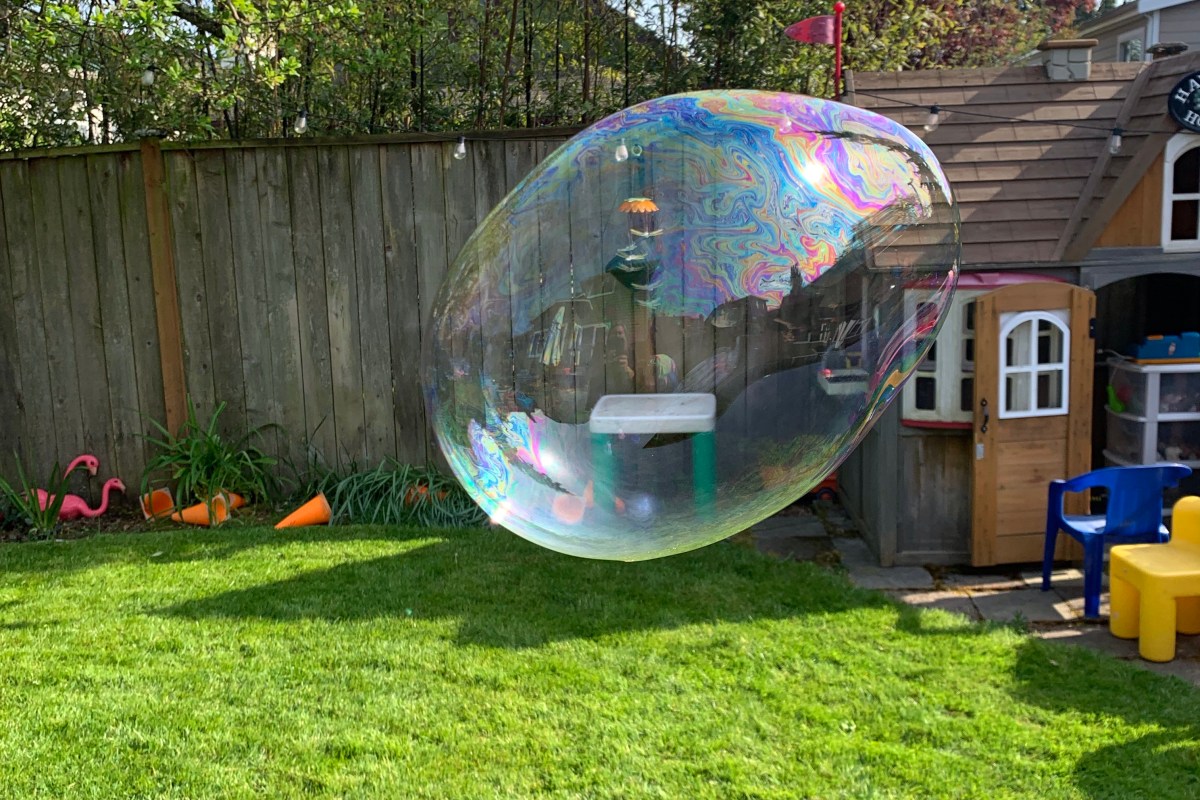
“I am becoming water; I let everything rinse its grief in me and reflect as much light as I can.” – Mark Nepo
Last week there was an open house at school so all the kids could meet the new principal and find out their teachers. Before we had a chance to check the official list, the 2nd grade teacher that Miss O wanted to have saw her and said, “Yay, you are in my class!”
This was great news – two of her best school friends were also on the list and she was thrilled. Except as we walked away, a dad of one of her good friends gently said to me, “There are two O’s this year and I think your daughter is in the other class.”
Devastating! We checked the official list and he was right, she was not in the class she preferred. Her body mirrored her mood as she went from elated to deflated. I watched in horror as she crumpled even as she tried to hold it together in the crowd.
Just bearing witness to this made me feel terrible. It was as if had taken on the disappointment for my daughter’s 2nd grade hopes dying. And this happens not just with my kids but in other relationships too – I feel the heart ache of my friend going through relationships troubles. Or the exhaustion of another friend who didn’t get the job she wanted.
I suspect I’m not alone in taking on the feelings of others that I care about. As I listen to their experience, I can feel myself take on the rise and fall of their journey. Long after I’ve left them or hung up the phone, I carry the echo of their experience. It goes beyond being an empathetic listener because I’m carrying an emotion that isn’t mine to carry.
Which is a bit ridiculous because it’s a feeling of how I would react to having the same experience which is more or less meaningless. That is to say, my feelings may or may not match those of the person who is actually going through it.
So, I don’t think this makes me a better parent of friend. In fact, I suspect it diminishes my effectiveness. Thinking about the Buddhist Tonglen practice where you imagine a specific suffering in the world and you breathe it in, there is also the completion of the practice where you breathe out relief for everyone experiencing that suffering. It’s a full circle practice. Looking at it another way, the river doesn’t hold on to the water that flows through it.
This reminds me of every mountain guide I’ve climbed with. First, their stuff is well-organized so that they can be efficient and also carry a lot of gear for the group. They don’t often carry stuff for the climbers but when someone is really struggling, they will take part of their load for a time. However, they always give it back when we get to camp. They don’t keep carrying it on top of their own load.
At the school event, Miss O was upset and her first reflex was to go back to that teacher she wanted to tell her that she wasn’t in her class. Once she did that, she was able to move on and meet the teacher she’s assigned to for 2nd grade. Her new teacher is also lovely and nice.
Miss O moved on much more quickly than I did as I still feel echoes of that disappointment. I’m trying to learn from her example and shake off the feelings that I don’t need to carry for those I love.
Do you take on the feelings of loved ones? How do you shake them off?
 Surprised By Joy
Oh what a change. I think sometimes that is worst. If your daughter had just seen the list and saw that she didn’t have her preferred teacher, that would be one thing to process. But to hear one thing, and learn something else, is so hard. What a brave young lady. Takes a lot of courage to move on. Good for her. Who knows, maybe it will be the best thing for her, a blessing in disguise!
LikeLiked by 5 people
Oh, you nailed it – it was the change that was hard. But you are right, I think it’ll be just fine. Her new teacher seems lovely! Thanks for reading and commenting!
LikeLiked by 1 person
I didn’t know about the Buddhist Tonglen practice. Thank you for this, Wynne.
As to the heart of your essay, it might be helpful to consider the perspective helping professionals must take, including therapists and physicians. The trick is to find a “therapeutic distance.”
If a surgeon, to take the most extreme example, were to be emotionally preoccupied that a slip of his knife could kill or impair a person such as himself or someone to whom he is close, he could not do his job. On the other hand, clinical psychologists cannot be indifferent to the human suffering about which they hear story after story. They must be in touch with enough of the emotion of bear witness but not so much that they suffer every spoken grief of the other.
The surgeon and therapist share the possibility that their empathy will destroy their ability to help and have a decent life once the day ends. In my own case, I sometimes came to the point of a tear in listening to my patient’s breaking heart. It made me a better counselor and human being, but there had to be a limit. No one wants a therapist for whom they are “too much.”
LikeLiked by 5 people
Wow, Dr. Stein – what great examples and you gave me the term for what I’m seeking. Yes, therapeutic distance. Something I need to work to develop and I appreciate you giving me much to think about!
LikeLiked by 2 people
I am quite a bit higher in cognitive empathy than emotional empathy, and I don’t tend to take on the emotions of others. I think working as a mental health nurse would have been more difficult (or at least more likely to be draining) had I been relatively high in both.
LikeLiked by 4 people
That’s fascinating and helpful to break down empathy into those two types. I’ve never heard of those terms but it makes so much sense. You are right, it would be draining as a nurse to be high in both. Thank you for this comment which really helps me think it through!
LikeLiked by 1 person
I’m emphatic by nature, so I easily, often unwillingly, take on the feelings of others. It’s one of things about being an introvert that I’ve learned to be aware of– and try to remember that I need boundaries, distance. But often when it comes to family… I get overwhelmed. They breach my boundaries with ease.
LikeLiked by 4 people
What an interesting connection you’ve made between introversion, empathy and being overwhelmed. I can totally relate to how easy that can happen – especially with the people closest to us. As you say, it takes awareness and boundaries. Thanks, Ally!
LikeLiked by 2 people
Oh, Wynne. I’m right there with you – and echo what Ally just said. I sometimes call myself ‘the sponge’ because I can soak up far too much of everyone else’s angst and in my career as a therapist, that was a mighty big challenge. Like everything else, it’s a balancing act. That which makes you remarkable and caring and loveable ALSO makes you vulnerable — those terrific qualities make it too easy for you to carry what doesn’t need to be yours.
I’ve taken to meditation – the practice of reminding myself that I can be big-hearted while also letting others pain FLOW THROUGH me rather than nest is helpful. xo to you, as always! ❤
LikeLiked by 2 people
Oh, what valuable experience you add to this conversation, Vicki! Yes, the meditation practice of letting it flow – rather than NEST (love how you put it). Indeed, a practice that I’m inspired by your words to re-envision!! Thank you!
LikeLiked by 1 person
xo! ❤
LikeLiked by 1 person
I understand completely – you are an empathizer and a problem solver! It’s easy to take on the worries of your loved ones
LikeLiked by 6 people
Oh Gwen – what an insightful comment to add in the problem solving component too. Yes, you are right on! Thanks for reading and commenting!
LikeLiked by 1 person
It is sometimes a little too easy to take on the worries of your loved ones, how can you not if you truly love them? I love the sage advice of the mountain climbing guides that you shared as the counterpoint: there’s helping when someone really struggles, but there’s also the time to “hand back” the burden when you’ve reached the safety of camp. How many of us remember to do that?
I really like how you brought the two sides of the spectrum, and the idea of finding that golden path that, I will openly admit, often eludes us…
LikeLiked by 2 people
I love your phrase, “how can you not if you truly love them?” So true, EW! Yes, the golden path that often eludes us – a very poetic way to remind us to keep seeking. Thanks for this lovely and wise comment, as always!
LikeLiked by 1 person
Ah, feeling and carrying the pain of our children is another level of anguish, and I don’t think it ever goes away. I wasn’t familiar with the Buddhist Tonglen practice, but it sounds like something we all should try. Hugs to you and Miss O. Second grade rocks! ❤️💫🥰
LikeLiked by 2 people
I love the perspective that you bring to this, Natalie. I’m sure you are right about the pain of our children never going away — and you have longer experience than I do with this practice! May we all figure out how to move through it gracefully! ❤
LikeLiked by 1 person
Another very rich post, Wynne; thank you for sharing your insights with us. I hope that Miss O will have a very good school year with the new teacher.
I loved what you shared about the guides giving back your stuff after they had carried it for a while. I believe that all of us do–at least to some degrees–carry the “stuff” of our family members of humankind. I’ve found my greatest relief came when I stopped carrying the character named “Art.” To do so, knowingly, is liberation. 🙏
LikeLiked by 2 people
Thank you, Art! Yes, there are all sorts of things we need to stop carrying! Thanks for pointing that out. Sending my best to you.
LikeLiked by 1 person
You’re very welcome! I agree. Thanks for your kind wish. Sending my best to you and your lovely family, too! 🙏
LikeLiked by 1 person
So many great points being voiced in the comments on this topic. I will toss in the social view surrounding childhood and the responsibilities many children are made to take on when they live in households that struggle. I think most are aware of the burdens many kids face based on their circumstances. They are not born seeking that burden yet some take it on and carry it throughout life as an obligation. I wonder if it is harder for those adults to let that go?
LikeLiked by 2 people
Wow, that is an interesting and thought-provoking question, Deb. I would think if they take it on young, it’s harder to let it go. But maybe it’s also personality based? My ex came from a dysfunctional household growing up and his response was to pretty much only be worried for himself. So whatever the response, maybe the trick is to recognize it and work from a place of awareness?
LikeLiked by 2 people
Oh my goodness, you could be describing me. I carry things deeply that aren’t mine to carry, just as you said. But the stoics have so much to offer and I LOVE the quote by Nepo. I’m going to capture it and put it somewhere prominent. 🤍Good luck to your sweet girl too! 🤍
LikeLiked by 3 people
I’m happy that I’m in good company doing this, Kendra, but sorry that you struggle with it too! Thank you for your good wishes and may we all become a little more like water! ❤
LikeLiked by 2 people
Love that miss O had to say good bye of sorts to her other teacher before meeting her new one. She is processing life better than many adults.
As to taking on others emotions- I have done quite a bit of work around this precisely the last few years. You should check out Dave markowitz books and YouTube videos on empathy. I really learned how to not take on the energy of others. I used to not be able to go to social events but now I can thanks to him and also a dear friend. She just got her doctorate around this topic and I have been her Guinea pig and quickest learner. I need to restudy it though so going to watch his videos today and probably blog about it. We can compare notes lol. Thanks Wynne! Great blog as usual and love the helpful comments❤️☺️
LikeLiked by 2 people
Oh, thank you for the helpful pointers, Victoria. I’m so glad to know that you’ve made great progress on this as it’s inspiring to me!
LikeLiked by 2 people
“…the river doesn’t hold on to the water that flows through it… “, wise words Wynne.
Often we can best move on to calmer waters by ‘going with the flow’, knowing, as life inevitably flows on, we never step in the same river twice.
Be blessed!
LikeLiked by 2 people
We never step in the same river twice – such a wonderful reminder, Fred! Thank you!
LikeLiked by 1 person
My granddaughter is in second grade this year and she (and I) was crushed when she found out her best friend was in the other class! She’s been in school for a few weeks now and is enjoying new relationships. But I hear you, I’m very sensitive to the emotions of others, and find it impossible to shake off or ignore. I have to retreat and spend time alone to recover. Hope your daughter has an unexpectedly fabulous year. 💕C
LikeLike
Oh, what a horrible disappointment. I was about to type feelings of elation for you both and then I kept reading the story. But boy, is Miss O ever resilient. She bounced back and I’m glad her new teacher sounds lovely.
I agree that we tend to carry the emotional load for others. But as I’ve learned over time, you are not lesser of a friend or loved one by creating emotional and objective boundaries. It in fact, as you noted through your mountain climbing analogy, more effective to help others.
LikeLiked by 1 person
I know you can so well imagine the drama, Ab! You are so right, more effective to help others when we can put down the load. And I love how you call it emotional and objective boundaries – that’s brilliant. I’m inspired that you have done that work! Thanks, my friend!
LikeLiked by 1 person
Wow, I can’t remember the last time I “liked” every single comment, like a stalker! Yet, everyone’s perspectives hit home for me. I had been told I was an empath and an intuitive, which basically meant I took on board everyone’s emotions and troubles as though they were my own. I had to learn where I ended and where they began in order to set healthy boundaries, because when we have that gift, it isn’t obvious. Empaths and very empathetic people struggle to learn this, feel guilty for “abandoning” people, when it isn’t our load to carry. Unfortunately, there are people who have a radar and are able to pick us out of a crowd, very easily, and they let us think that their load rightfully belongs on our shoulders, and as lo g as we keep accepting g to carry it, they are willing to let us do the heavy lifting.
Simply becoming aware of where those limits are is important to see when someone else’s load gets taken on-board. Bravo to you for becoming aware!
Bravo to Miss O for seeking closure! How wonderful for her and for the teacher!
LikeLike
Lovely post, Wynne.
I know what you mean. I used to carry stuff for others. However, as I have aged, I have learned “to go thus far and no further.” I empathize with the people whose stuff I am carrying and help as much as I can without upsetting their self-esteem or independence. Then I keep reminding them that I am here 24/7 whenever they want and wait. I steel myself to detach slowly. It wasn’t easy at first. Especially where immediate family and close friends were concerned. But, over the years I have realized that as much as I feel for people, I can’t “Fix” everything.
My wise mentor and close friend cautioned me when I would be distressed about not being able to help some of my students by saying, “My dear, your circle of concern will always be larger than your circle of influence.”
Love.
LikeLiked by 1 person
Wow, wow, wow, Chaya. There is so much in your comment that I find myself reading it again and again. The discernment of delivering help without upsetting their independence. And “I steel myself to detach slowly.” and the “circle of concern being larger than your circle of influence.”
Three huge points that I’m slowly taking to heart. Thank you, my friend!
LikeLiked by 1 person
Thank you. Love
LikeLiked by 1 person
I’m so glad that miss O was resilient and I just know that you will get there too. Yet I also understand feeling frustrated about your kid not getting the teacher you think is most suitable. Hopefully she will make new friends and have an incredible year regardless 🙂
LikeLiked by 1 person
Thanks, LaShelle. I’m sure she’ll have a great year as a second grader — and appreciate your good wishes so much!
LikeLike
Anytime sweet friend!!
LikeLiked by 1 person
I loved this post. I take on the feelings of those around me and you make a great point. If you can’t let them out as well, it can become a problem. I loved how you phrased it: “It’s a full circle practice.”
Our hearts break with our children, and my experience mirrors yours – they bounce back faster. Perhaps because for them, the disappointment is a singular event but for us it is reminders and memory?
At any rate, I’m glad Miss O is look forward to her year at school 💖
LikeLiked by 1 person
Oh, Michelle – what a great point about disappointment being a singular event for a child but it brings about reminders and memories for us. Wow – that’s an incredible insight!
Yes, a full circle practice. Glad to know I’m not alone in this boat but may we all remember that practice!
LikeLiked by 1 person
So many layers to this post. In short I often find myself asking my family/friends three things: “Are you telling me a story, or are you looking for a solution” or “How can I help you through this?” Listening to their answers often helps guides me and my emotions. I have also found that asking these questions allows them to pause and think about the experience as the initial human being’s reaction is to react…
I am proud of the way Miss O, handled her situation, and wishing her a fabulous school year
LikeLiked by 1 person
I love those questions, MSW! And that the answers help guide your emotions. And the pause that you insert. Beautiful practices – thank you for inserting them here for me to spark ideas for me!
And thanks for the good wishes on 2nd grade. I think it’ll be a good year!
LikeLiked by 1 person
I carry fear and worry for others, even if they don’t. Maybe it’s the ‘mother’ in me. Or the sister. Or just the humanness.
LikeLiked by 3 people
What an interesting perspective! “Or just the humanness.” You are an incredible poet!
LikeLiked by 1 person
You are so kind. Thank you.
LikeLiked by 1 person
Oof this is a tough one. I think I def try to just sympathize and not fix when my loved ones are in pain, but I’m actually not sure how it comes across. I think I struggle more when my loved ones can’t seem to allow me to be upset. It’s lovely bc I know they love me so much. And I’m such a spunky person that they get really thrown off when I’m not in an UP mood. So yes sometimes I just want to be able to feel my feelings and have them not try to get me out of that feeling. I’m certainly not uncomfortable with my darker emotions but they seem to be. And so that’s when it gets frustrating bc it’s like “oh you’re still making this about you, and now I feel like I have to suppress my feelings” or whatever. Does that make sense? Wow didn’t mean for this comment to be a vent sesh ha! You just always write things that I have so much to say about! So thank you as always 💖
LikeLiked by 1 person
That totally makes sense – especially the part about “you’re making this about you?” It’s such a balance to listen and be helpful, especially when being helpful means letting things be! Thanks for adding this dimension to the conversation which makes it even more interesting! Love it!
LikeLiked by 1 person
Wonderful post! Many thought-provoking comments from your readers too.
LikeLiked by 1 person
Yes, I love the comments! Thanks for reading and commenting, Mary!
LikeLiked by 1 person
I love the line about the river not holding the water that passes through it! Even with adult kids, it’s still sometimes hard not to struggle with just what you spoke of in the story. My wife is a bit more empathetic that I am and I see her wrestling with this more often, especially when it comes to the students in her classroom (she teaches 4th grade).
LikeLiked by 1 person
Oh, I can only imagine all the opportunities one would have to empathize and hang on to those feelings as a teacher. Yes! Thanks for reading and the lovely comment, Todd!
LikeLiked by 1 person
Oh, I relate to this SO MUCH. I’ve been working on it, but it nearly crippled me when my kids were little. I’d need to teach them a lesson in fairness but what I’d really want to do was fix it for them so they didn’t have to feel the sting of injustice. I’m still working on separating my emotions from others, but I am getting better with practice.
LikeLiked by 1 person
Oh Bridgette – your sentence, “I’d need to teach them a lesson in fairness but what I’d really want to do was fix it for them so they didn’t have to feel the sting of injustice.” Oh yes! So glad to hear that it gets better with practice. Thanks for reading and commenting!
LikeLiked by 1 person
You’re a classic empath. There’s nothing wrong with that! I take on those feelings myself.
LikeLiked by 1 person
Glad it’s not just me! 🙂
LikeLike
Thank you for sharing!!.. you will naturally have deeper feelings for your children than others “ The love a mother has for her children is legendary, it is said a child is the mother’s heart outside her body.” (Author Unknown) and your heart will know when to let go.. 🙂
Until we meet again..
May the dreams you hold dearest
Be those which come true
May the kindness you spread
Keep returning to you
(Irish Saying)
LikeLiked by 1 person
Very true about children being my heart outside my body. Thanks for that perspective, Dutch!
LikeLike